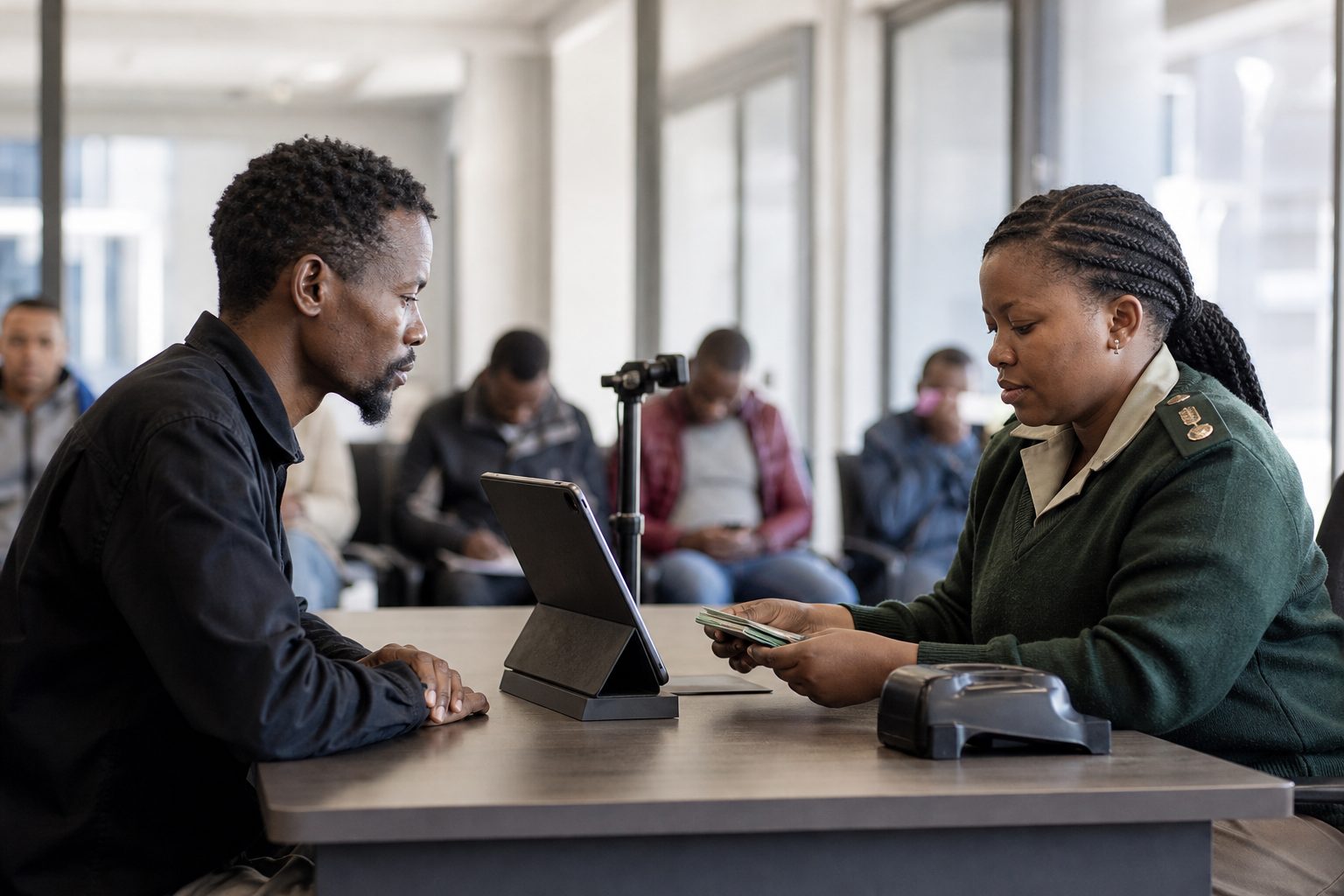
South Africa's Department of Home Affairs has started testing the first phase of a Digital Asylum System, an online portal meant to modernise how people register their intention to seek asylum, cut chronic delays and curb what the department calls abuse of the process (SAnews). Announced on 10 November 2026, the system went live first for a limited batch of test cases, with public intake expected after a software release scheduled for the weekend following the announcement (IOL).
Officials describe this first stage as a planning instrument. Its primary purpose, according to the department, is to estimate how many people are likely to apply, so that staffing and capacity for later phases can be planned (IOL). Yet the portal already asks applicants for personal information, facial biometrics and supporting documentation (The Citizen). That combination raises the question this article tests: what will the state do with data collected from some of the most vulnerable people in the country, and what safeguards will apply when the promised identity checks and machine-learning tools arrive in later phases?
The short answer, on the available evidence, is that the legal framework for the data exists, the technical and oversight detail largely does not. The department has said what the system will not do. It has published far less about how the data will be stored, for how long, who built the platform, and how future automated tools will be tested.
What the first phase actually does

The portal currently lets a prospective applicant record an intention to seek asylum online, rather than submit a completed asylum claim (SABC News). The department has been explicit about the limits: registering an intention is not a formal asylum application and does not confer refugee status, citizenship or automatic protection from immigration enforcement (ECR). Government statements make the same point in legal terms: registration is not a section 22 asylum seeker visa, not recognition of refugee status, not permanent residence, and not immunity from enforcement (South African Government).
The planned model, set out in the government's response to a Constitutional Court judgment on asylum applications, pairs online registration with scheduled appointments at Refugee Reception Offices, replacing unscheduled walk-ins with a controlled intake process (South African Government). In other words, the first phase is a front door and a counting mechanism. The substantive steps of an asylum claim, the interview, the status determination, the appeal, still happen through the existing system.
That distinction matters for applicants, but it should not be overstated as a limit on the data. A record of intent that includes a facial image, identity details and documents is a durable administrative artefact. Even if it decides nothing by itself, it can shape how a person is scheduled, identified and matched against other records once later phases switch on. The department has not published detail on how first-phase records will connect to case handling, which is one of the open questions examined below.
The system is not starting from zero
The Digital Asylum System is landing on top of substantial existing infrastructure, and that history explains both the capability and the concern.

Home Affairs' Automated Biometric Identification System, known as ABIS, entered production in its first phase on 21 November 2022, with facial recognition among its capabilities (DHA Annual Performance Plan). Separately, the department's 2023/24 annual report records that an Asylum Seeker Management and Refugee System had already been developed and rolled out to five refugee reception centres, in Cape Town, Gqeberha, Durban, Musina and the Desmond Tutu centre, plus two statutory bodies. That system registers asylum seekers' demographics and biometrics and administers cases from registration through adjudication, recognition or deportation in a largely paperless environment, with data migrated from the outdated National Immigration Information System (DHA Annual Report 2023/24).
So the new portal is best understood as extending digital intake to the point before a person reaches a reception office, rather than as the state's first attempt to digitise asylum. The policy direction was signalled in a December 2025 draft revised White Paper, which proposed virtual asylum applications, machine-learning-supported adjudication and processing at designated ports of entry (Government Gazette, 12 December 2025). That document shows intent, not a completed build: it proposed the tools now being piloted, and the current launch covers only the narrow intake slice of that vision.
What happens to the facial images and documents?
South African law treats the data this system collects as highly sensitive. The Protection of Personal Information Act defines biometric information broadly and classes it as personal information, and the Information Regulator's guidance treats biometrics as special personal information, whose processing is generally prohibited unless a statutory exception applies (POPIA; Information Regulator guidance note, 2021).
For asylum biometrics, the apparent legal basis is the Refugees Act and related immigration functions rather than ordinary consent, which is realistic: a person seeking protection is not meaningfully free to refuse. Even so, POPIA's core requirements still apply, including lawful processing, purpose limitation and security safeguards (Information Regulator guidance note). Purpose limitation is the principle most directly in tension with a system whose first phase collects rich identity data for a stated purpose of demand estimation. If the data later feeds identity checks and automated case tools, those are different purposes, and the department will need to show they are authorised and proportionate.

Retention is a documented gap. POPIA requires that personal information not be kept longer than necessary for the purpose it was collected for, subject to legal or other authorised retention obligations (POPIA). But the asylum-specific public record does not state how long biometric records from the asylum stream remain in the department's identity systems. Nor has the department published, as far as the public record shows, a privacy impact assessment for the new portal, the identity of the vendor or vendors who built it, the contract terms, or the rules governing whether contractors or other agencies can access the data. Those are not peripheral details. For a population that includes people fleeing their own governments, who can see a facial image and a declared location of an asylum seeker is a protection question, not just a privacy one.
Where this story sits
5 related pieces
Read it →
Hover a story · click to read
 No. 64 · Oct 11, 2026The ARTEX AI bank hack claim: what South Korea's record actually shows
 No. 69 · Oct 14, 2026Could AI Power the Next Major Bank Cyberattack? Lessons From South Korea
 No. 61 · Oct 7, 2026ARTEX AI Hit Seven South Korean Banks. Attribution Just Got Harder.
 No. 71 · Oct 17, 2026Seven Institutions After ARTEX AI: What South Korea's Banks Changed, and What's Still a Promise
 No. 73 · Oct 20, 2026After ARTEX: How the PRA, FSC Korea and the ECB SSM Diverged on AI Bank Risk
What the identity checks and machine learning are supposed to do
Later stages, officials say, will add identity verification and machine-learning tools to help process claims. The clearest stated use case so far is the appeals backlog. Minister Leon Schreiber has attributed the system's delays partly to chronic shortages of funding and personnel, noting that at one point only nine officials were handling thousands of asylum appeals, and has pointed to AI as a way to assist that overstretched capacity (TimesLIVE). The December 2025 draft White Paper proposed machine-learning-supported adjudication more broadly (Government Gazette).

What has not been published is the specification: which decisions the tools will influence, whether they will recommend outcomes or merely sort and summarise case files, what training data they will use, and who will audit them. That absence matters because the environment these tools would enter is already error-prone in documented ways. Research on South Africa's status determination process records shortages of interpreters, long delays, legal misinterpretation and inconsistent professional practice (University of Pretoria repository). Automated systems trained on, or layered over, flawed processes can encode and amplify those flaws rather than correct them.
Language is a specific, material risk. Asylum applicants often lack documents and must explain their flight and identity through interpretation, and South African law contains language-related presumptions that can affect how a claim is assessed. Research on asylum AI warns that English-heavy training data can reduce performance for minority languages and cultures and reproduce discriminatory patterns (UNHCR South Africa). A machine-learning tool that performs well on English-language files and poorly on interpreted testimony from smaller language communities would not distribute its errors randomly. No public accuracy evidence or independent testing results for the planned tools have been released, as far as the public record shows, so whether they will work across languages, nationalities and document quality is, at this point, an open empirical question rather than a settled one.
Who gets left out when asylum goes digital

A portal assumes a phone or computer, connectivity, and the ability to navigate an online form in a usable language. Academic research on the digitalising South African state warns that refugee reception offices are critical interfaces between asylum seekers and the state, and that digitalisation can make access more fractured for people who lack connectivity, devices or documentation support (Urban Geography).
The government has acknowledged this. To mitigate digital exclusion, the department proposes assisted registration at every Refugee Reception Office and, where requested, for people held in police or immigration detention, involving officials, lawyers and civil-society partners (South African Government). That commitment is on paper; how well it works will depend on staffing and practice at offices that are already stretched, and there is no published evidence yet of how assisted registration is performing in the test phase.
Does this fix the backlog, or count it more precisely?
The reform is aimed at a backlog that is real and large. UNHCR described approximately 133,000 undecided appeals when its 2021 to 2025 backlog project began (UNHCR South Africa). Other reporting has recorded about 161,000 appeal cases, a figure that includes both active and inactive cases; the difference illustrates that headline totals depend on how cases are classified and whether applicants who have disappeared from the process are counted (GroundUp).
The front end of the system, by contrast, has improved on the department's own figures: in 2024/25, 3,294 of 3,579 adjudicated new applications, or 92 percent, were issued within 30 working days of registration (DHA Annual Report 2024/25). That statistic covers newly adjudicated first-instance applications, not the appeals mountain, which is where the nine-official bottleneck sits.

Here the first phase's stated purpose, demand estimation, meets its hardest constraint. Parliamentary records indicate that government has not appointed additional asylum-processing staff for the online system, meaning demand estimates may redistribute existing capacity rather than expand it (Parliament of South Africa). Counting the queue more accurately is useful. It is not the same as shortening it. Whether digitisation plus eventual AI assistance outperforms the simpler option of hiring and training more adjudicators and interpreters is a question the public record does not yet answer, because no cost or performance comparison appears in the public record.
What applicants can do when the data or the decision is wrong
Two layers of redress exist, one for data and one for decisions.
On data, POPIA gives data subjects rights over personal information held about them, and its conditions for lawful processing bind the department as they bind other responsible parties (POPIA). How an asylum seeker will exercise correction or deletion rights in practice against a system whose retention rules and access arrangements have not been published is, again, unresolved.
On decisions, the existing routes remain. For rejected claims, UNHCR advises that applicants generally have ten working days to lodge an appeal, and that judicial review in the High Court requires a lawyer (UNHCR South Africa). Those timelines were already tight for people navigating interpretation and documentation barriers. If machine-learning tools later influence outcomes, the adequacy of a ten-day window, and of a review process that presumes legal representation, will deserve fresh scrutiny, because contesting an automated assessment requires knowing that one was made and understanding what it relied on.
The open ledger
The documented tension in the launch holds up under examination, with one refinement. The first phase genuinely is narrow: it records intent, estimates demand, and decides nothing. But the data it collects is not narrow, and the publicly available record leaves the most consequential questions unanswered:
- How long facial images and documents will be retained, and under what deletion rules.
- Who built the system, under what contract, and whether vendors or other agencies can access the data.
- Whether a privacy impact assessment exists and what it found.
- Which decisions the planned machine-learning tools will influence, and what accuracy testing across languages and nationalities will precede their use.
- Whether assisted registration will reach people without devices, connectivity or literacy in the portal's languages.
These are answerable questions. Home Affairs' own annual reports, the Information Regulator's framework and parliamentary oversight records show that the institutions capable of answering them exist. Until they do, applicants are being asked to hand over faces, histories and documents to a system whose first phase promises only to count them, while the tools that could judge them are still being built out of public view.
Sources / References

- SAnews, "Home Affairs extends implementation of its digital transformation vision" — https://www.sanews.gov.za/south-africa/home-affairs-extends-implementation-its-digital-transformation-vision
- SABC News, "Home Affairs launches digital asylum system to cut backlogs and abuse" — https://www.sabcnews.com/sabcnews/home-affairs-launches-digital-asylum-system-to-cut-backlogs-and-abuse/
- The Citizen, "Home Affairs gives asylum seekers digital platform to assist entry into South Africa" — https://www.citizen.co.za/news/south-africa/home-affairs-gives-asylum-seekers-digital-platform-to-assist-entry-into-south-africa/
- IOL, "Home Affairs rolls out digital system to tackle asylum backlogs and corruption" (10 November 2026) — https://iol.co.za/news/south-africa/2026-11-10-home-affairs-rolls-out-digital-system-to-tackle-asylum-backlogs-and-corruption/
- IOL Daily News, "Home Affairs launches digital asylum registration system in SA" (10 November 2026) — https://iol.co.za/dailynews/news/2026-11-10-home-affairs-launches-digital-asylum-registration-system-in-sa/
- TimesLIVE, "Home affairs turns to AI to assist nine officials handling thousands of asylum appeals" (10 November 2026) — https://www.timeslive.co.za/news/south-africa/2026-11-10-home-affairs-turns-to-ai-to-assist-nine-officials-handling-thousands-of-asylum-appeals/
- East Coast Radio, "Home Affairs launches online asylum application system in South Africa" — https://www.ecr.co.za/news/news/home-affairs-launches-online-asylum-application/
- Department of Home Affairs, Annual Report 2023/24 — https://nationalgovernment.co.za/department_annual/507/2024-department-of-home-affairs-%28dha%29-annual-report.pdf
- Department of Home Affairs, Annual Report 2024/25 — https://www.gov.za/sites/default/files/gcis_document/202510/dha-annual-report-2024-25.pdf
- Department of Home Affairs, Annual Performance Plan (ABIS production date) — https://www.dha.gov.za/images/AnnualReports/DHA-APP-2023-V5_update2.pdf
- Government Gazette No. 53853, draft revised White Paper (12 December 2025) — https://www.dha.gov.za/images/gazettes/53853-12-12-HomeAffairs.pdf
- South African Government, "Inter-Ministerial Committee on Migration outlines legal response to the Constitutional Court judgment on asylum applications" — https://www.gov.za/news/media-statements/inter-ministerial-committee-migration-outlines-legal-response-constitutional
- Parliament of South Africa, ministerial reply on asylum system staffing — https://parliament.gov.za/storage/app/media/Docs/exe_rq_na/01pv5mf2aw6x5jdoagj5fz3wddyubxvml6.pdf
- Protection of Personal Information Act, 2013 — https://lawlibrary.org.za/akn/za/act/2013/4/eng%402013-11-26
- Information Regulator, Guidance note on processing of special personal information (2021) — https://lawlibrary.org.za/akn/za/statement/guidance-note/irsa/2021/special-personal-information/eng%402021-06-30
- University of Pretoria repository, "Barriers to status determination of asylum seekers in South Africa" — https://repository.up.ac.za/handle/2263/78156
- UNHCR South Africa, "Asylum and refugee status" — https://help.unhcr.org/southafrica/topics/asylum/
- UNHCR South Africa, "Asylum & Refugee Status Determination" — https://help.unhcr.org/southafrica/get-help/asylum/
- GroundUp, "Asylum seeker appeal backlog rises to 161,000 cases" — https://groundup.org.za/article/asylum-seeker-appeal-backlog-rises-to-161000/
- Urban Geography, "Crisis-led urban governance and the contingent reshaping of state-public encounters: the digitalizing South African state" — https://www.tandfonline.com/doi/full/10.1080/02723638.2026.2727115?af=R
The reading behind this research
What the desk leaned on for this piece. Each link goes to the retailer, where the price is shown.
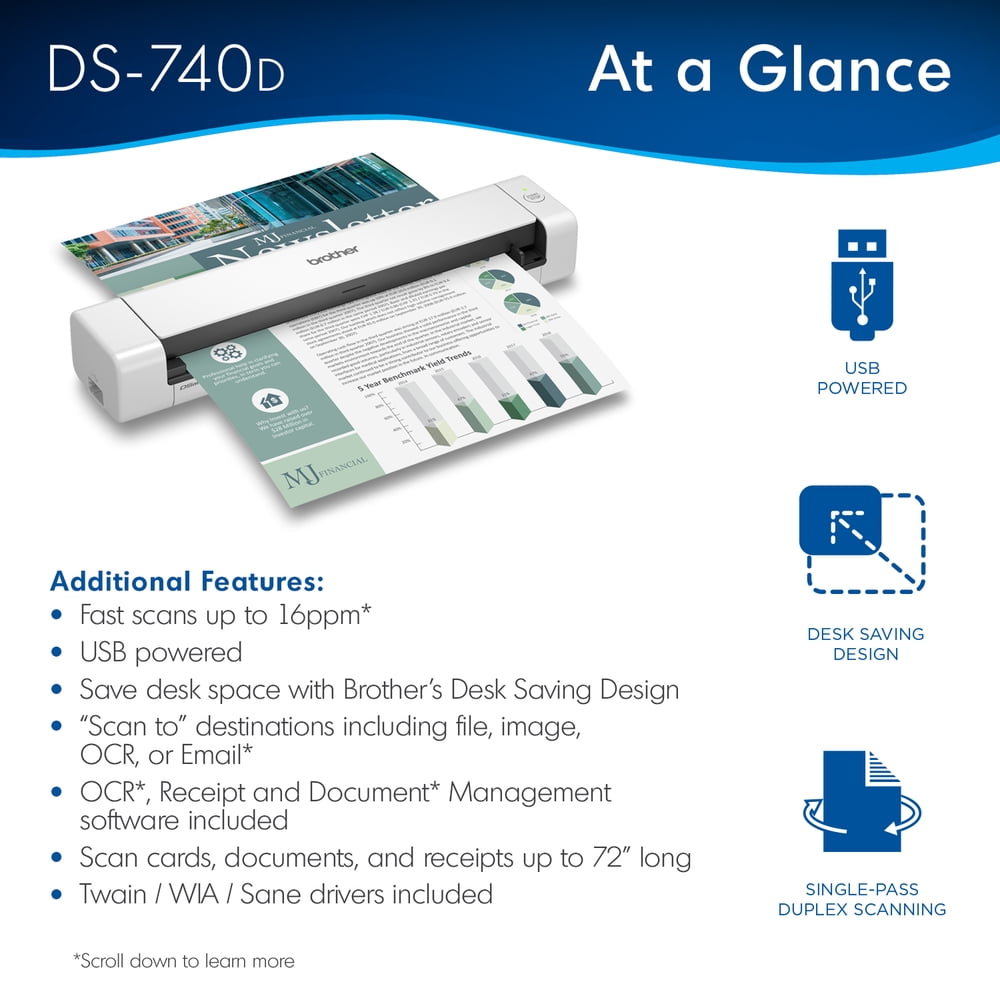
rother DS-740D Duplex, Compact, Mobile Color Document Scanner
The article notes the new asylum portal asks applicants to upload supporting documents, and a small scanner turns paper records into files for that step.
View on Walmart
Your Face Belongs to Us by Kashmir Hill
The article notes the portal collects facial biometrics with little detail on storage or safeguards; this book shows what can go wrong when face data spreads.
View on Walmart
Privacy Is Power by Carissa Véliz
The article notes the portal already collects facial biometrics and documents with little said on storage or retention; this book explains why such data is power.
View on Walmart
Roloway Fireproof Document Bag
The article says the portal asks for supporting documents but interviews still happen in person, so original papers must stay intact until then.
View on Walmart
Automating Inequality by Virginia Eubanks
Shows how automated welfare systems can harm the poor, relevant since the portal takes facial biometrics with little said on storage or testing.
View on WalmartPaid links. Calibre Code USA may earn a commission from purchases made through these links. This does not affect what we write or what we recommend.
Comments (3)
Continue exploring
ARTEX AI Hit Seven South Korean Banks. Attribution Just Got Harder.
Investigators say a Chinese-built AI penetration tool was used to breach at least seven South Korean financial institutions, in…
Seven Institutions After ARTEX AI: What South Korea's Banks Changed, and What's Still a Promise
Two weeks after ARTEX AI breaches at seven South Korean institutions, the documented record shows sweeping inspections and new…
After ARTEX: How the PRA, FSC Korea and the ECB SSM Diverged on AI Bank Risk
Weeks after the ARTEX AI breach hit at least seven South Korean financial firms, the FSC, PRA and ECB SSM each chose a different…
I tried to register at a refugee reception office and the appointment system did not make things faster. I was sent between desks, asked for the same documents twice, and had my biometrics taken without anyone explaining where the record would go. Moving that first step online may reduce queues, but it will not fix the delays if the offices still cannot process the cases.
The phrase “a front door and a counting mechanism” seems accurate, but perhaps too reassuring. A front door that captures facial biometrics and documents is already shaping a person’s interaction with the state, even before any AI makes a decision.
Could you follow up on what happens to first-phase records when applicants reach the Refugee Reception Offices? The article makes the portal sound like both a counting tool and a durable biometric record, but it is still unclear whether someone can inspect, correct, or delete that information. I’d also like to know whether the department plans to publish retention rules before the identity-matching phase begins.