China's Rare-Earth System Can Disrupt U.S. Supply Chains Despite Licenses | The Calibre Brief Ep. 24
About this episode
This episode of The Calibre Brief investigates how China can exert control over global supply chains critical to U.S. defense and technology sectors, through an intricate system of export licenses and technology controls. Documented controls now affect rare earths, magnets, and related technologies, creating risks for defense, semiconductor, vehicle, and energy industries.
Verified reports show China has expanded export controls and licensing across key minerals and components, but the system's impact goes beyond raw materials. While a valid license might seem sufficient for trade, U.S. buyers could face shipment issues if exporters feel pressure from Chinese regulations or anticipated consequences.
Speculation persists around the unconfirmed August 2026 report alleging shipment stoppages due to unspoken pressure or fears among Chinese suppliers. However, without independent verification, this remains an attributed account rather than established fact.
The episode also looks at the dilemma faced by U.S. industries trying to build resilience, as domestic capacities are still years from matching the comprehensive control exerted by China's export licensing system.
Key topics
Key moments
- 0:07 The real power in a supply chain may not be a public ban
- 0:18 Imagine a U.S
- 0:43 That uncertainty begins long before a port
- 1:09 Here is the distinction that matters
- 1:43 The timing leaves little room for easy reassurance
- 2:09 Opening a mine cannot solve a chokepoint that lives in the industrial…
- 2:24 This is The Calibre Brief from Calibre Code USA
Transcript
Show transcript
Welcome to The Calibre Brief, a Calibre Code USA production.
The real power in a supply chain may not be a public ban. It may be permission that looks valid until a shipment never arrives.
Imagine a U.S. manufacturer holding a valid Chinese export license for rare-earth material, then watching the cargo stay with the supplier. Reuters reported such an episode in August 2026: some suppliers allegedly paused U.S. shipments despite licenses. No exporter was named, and neither government confirmed those conversations. The cargo is the tangible uncertainty.
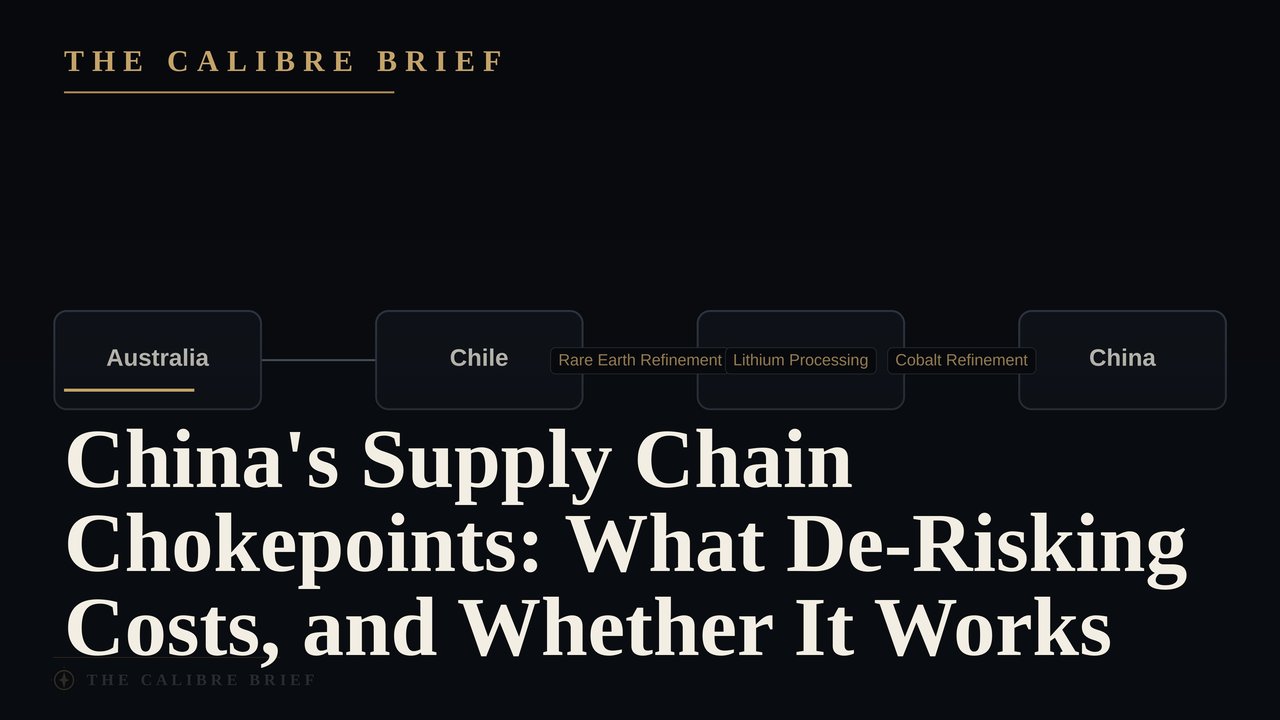
That uncertainty begins long before a port. Since 2023, China has shifted important minerals into licensing, requiring exporters and buyers to identify end users and uses. In 2025, controls expanded to rare earths, magnets, processing equipment, and certain foreign-made goods. The leverage sits in the industrial middle, where ore becomes usable components.
Here is the distinction that matters. The record establishes a Chinese regime over materials, technology, licenses, and the supply-chain information needed for approval. It has constrained shipments and created risks for Western industry. It does not establish why particular suppliers reportedly stopped in August. Reuters' account was secondhand and unconfirmed. Due-diligence pressure and counter-espionage and anti-sanctions rules can encourage caution, without proving official instructions.
The timing leaves little room for easy reassurance. U.S. and allied projects are building separation, refining, recycling, and magnet capacity, yet major U.S. magnet production is targeted for 2028. Meanwhile, routine U.S. waivers for Chinese specialty metals and rare-earth magnets tighten in January 2027, near the decision on a temporary trade suspension.
Opening a mine cannot solve a chokepoint that lives in the industrial middle. Dependable supply requires the ability to process, make magnets, verify routes, and trust permission.
This is The Calibre Brief from Calibre Code USA. If exporters can halt trade without a published ban, what safeguards would make a license dependable? Comment, like and subscribe on YouTube, and follow the podcast.