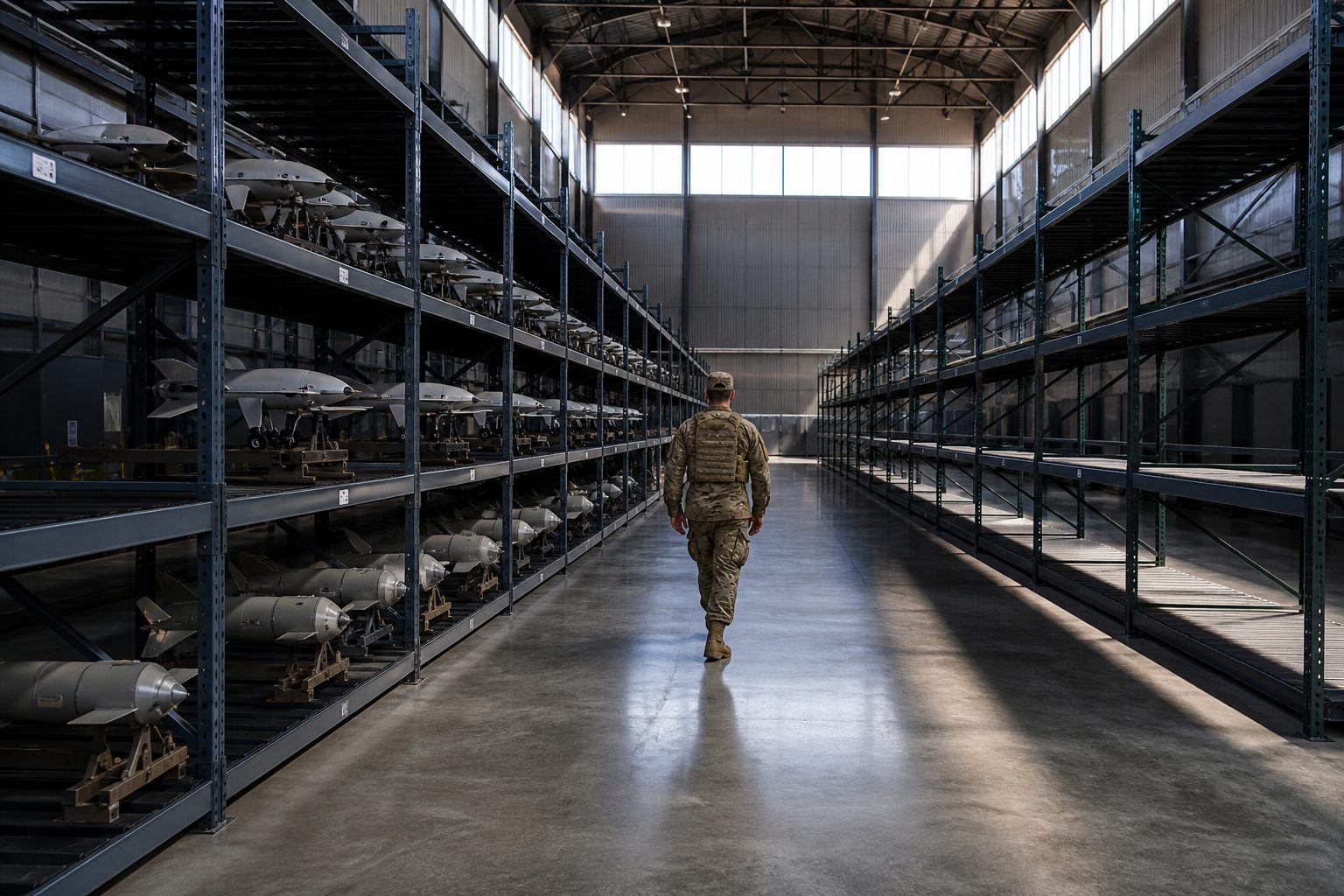
The Pentagon's most publicized drone experiment reached its own deadline in mid-August 2025 without a final tally, a delivery announcement, or a public list of what had actually arrived. The Replicator initiative, launched two years earlier as the Defense Department's answer to China's industrial mass, had promised to field "multiple thousands" of low-cost autonomous systems across warfighting domains within 18 to 24 months. When that window closed and reporters asked how it went, the department offered a single sentence: it was "taking steps to ensure the successful transition of proven Replicator capabilities to the appropriate end state users in the services and military operations community." It declined to say how many systems had been delivered, at what cost, or how they were performing, and several Pentagon and military spokespeople did not respond to repeated requests for updates (DefenseScoop, September 3, 2025).
The most specific count on the public record came from the man who had just run the program. T.S. Allen, the former director of Replicator-1 at the Defense Innovation Unit (DIU), told a Brookings Institution audience on August 21, 2025 that the effort had delivered, "at least initially, hundreds of drones to warfighters, not just for exercises, but directly into the hands of the joint force," with "thousands more" on contract and still rolling off assembly lines (MeriTalk, August 22, 2025). Several current and former defense officials gave DefenseScoop a consistent account: hundreds of uncrewed systems delivered against an accelerated clock.

Hundreds is a real achievement against the Pentagon's ordinary acquisition timelines. It is also smaller than the advertised goal, and the distance between the announcement numbers and the fielded numbers is the question Replicator was created to answer. The initiative was a test of whether the United States could build and field autonomous systems fast enough, and cheaply enough, to matter against China. What has been counted, what remains classified, and what has never been measured publicly now determine whether that test produced a new procurement model or a renamed collection of old ones.
What did Replicator promise?
Deputy Defense Secretary Kathleen Hicks unveiled Replicator on August 28, 2023, at a defense technology conference in Washington, with DIU as the lead organization and Hicks and the Vice Chairman of the Joint Chiefs of Staff overseeing the effort (Congressional Research Service, August 20, 2024; Defense News, November 13, 2024). The first line of effort, Replicator 1, would deliver what the Pentagon called all-domain attritable autonomous systems, or ADA2, "at a scale of multiple thousands, across multiple warfighting domains, within 18-24 months, or by August 2025" (Defense Innovation Unit, Replicator program page).
"Attritable" carried a specific meaning: systems cheap enough that the department could tolerate losing them. The logic, drawn heavily from the war in Ukraine, where observers estimated Ukrainian forces were employing as many as 10,000 low-cost attritable systems per month, was to disperse combat power across large numbers of inexpensive platforms, complicate an adversary's targeting, and invert the cost-exchange ratio so that shooting down a U.S. system cost more than the system itself. Hicks stated the strategic purpose plainly: Replicator was meant to help the United States overcome the Chinese military's "advantage in mass," including "more ships, more missiles, more forces." Officials stressed that attritable swarms would supplement, not replace, high-end platforms like aircraft carriers (CRS).
The money was modest by Pentagon standards. By May 2024, the department said it had secured roughly $500 million for fiscal 2024 and was requesting another $500 million for fiscal 2025 (DefenseScoop, May 15, 2024). MeriTalk reported that the initiative was initially funded through a reprogramming request that shifted under-executed funds rather than new appropriations, and was later boosted by DIU's roughly $1 billion allocation.
Replicator also was not a conventional program of record. It was better understood as senior-leader pressure applied to existing service programs. A Pentagon spokesperson described the method as "applying high-level, enterprise-wide attention, to eliminate bureaucratic barriers and use our funding and authorities to put these systems into the hands of our warfighters at greater scale and speed" (Breaking Defense, November 13, 2024). That design choice explains nearly everything about what happened next, including how the counting got complicated.
How many Replicator systems actually reached warfighters?

Three numbers get blurred in most coverage of Replicator, and they describe different things: systems contracted, systems delivered, and systems fielded.
On the contracted side, the Pentagon said in November 2024 that it had assessed 500 commercial firms, awarded contracts to 30 companies, and included a further 50 as subcontractors (Defense News). Allen added in August 2025 that when he departed, thousands of additional systems were on contract and still moving down assembly lines. Nothing in the public record contradicts that claim, but DOD has not itemized the contract totals.
On the delivered side, the on-the-record figure is hundreds. Allen's August 2025 account, corroborated by several current and former defense officials who spoke to DefenseScoop, covered deliveries spanning late 2023 through mid-2025. Officials framed it as a win: Allen called the thousands still in production "a win," and Deputy Secretary Hicks had written months earlier that Replicator was "demonstrably reducing barriers to innovation, and delivering capabilities to warfighters at a rapid pace" (MeriTalk; Defense News).

On the fielded side, there is no public census at all. Defense Secretary Pete Hegseth told a House Appropriations oversight hearing on June 10, 2025 that Replicator-1 "has made enormous strides towards delivering and fielding multiple thousands of unmanned systems across multiple domains, with thousands more planned under this budget" (DIU). That is progress-toward language, not a landing announcement, and as of the archived capture of DIU's program page in March 2026, the department had never published a figure confirming that the "multiple thousands" objective was met. The arithmetic offered by officials in the weeks after the deadline was, in their own accounting, smaller than the original goal (DefenseScoop).
What the Pentagon has named is a partial inventory. Tranche 1 of Replicator-1 included AeroVironment's Switchblade 600 loitering munition, uncrewed surface vessels being pursued through DIU's PRIME maritime solicitation, and counter-drone systems including Anduril's WISP surveillance technology tied to the Marine Corps' Ground Based Air Defense program; Anduril's Dive-LD undersea vehicle was also reportedly selected (DefenseScoop May 2024; CRS). Tranche 1.2, announced November 13, 2024, folded in two Army drones already selected that September for its Company-Level Small Uncrewed Aircraft System program, Anduril's Ghost-X and Performance Drone Works' C-100, along with Anduril's Altius-600 for the Marine Corps' Organic Precision Fires effort and the Air Force's Enterprise Test Vehicle prototype competition (Reuters, November 13, 2024; Breaking Defense). Other systems, including low-cost, long-range strike capabilities, remain classified.
What separates a delivered drone from a fielded capability?
Replicator's critics and champions agree on one point: handing over hardware is the easy part. Senators pressed the issue at a May 2024 appropriations hearing, asking whether efforts like Replicator had rigorous transition plans covering how the services would employ, field, and maintain the systems at scale. William LaPlante, then the undersecretary for acquisition and sustainment, answered that the services, not the Office of the Secretary of Defense, own fielding at scale, and that what matters beyond the widget is doctrine, training, and operations, or, as he put it, "otherwise, it just doesn't really matter" (DefenseScoop, May 15, 2024).
That mechanism defines what "fielded" should mean: not pallets arriving, but units that have trained on the systems, integrated them into tactics, stocked spares, and budgeted for replacements. Navy acquisition chief Nickolas Guertin made the sustainment version of the argument in testimony to lawmakers: "we want to make sure we carry forward the sustainability and support work to make sure that our soldiers, sailors, airmen, Marines, guardians can actually use this stuff in a reliable way when they need to in a fight" (DefenseScoop, May 15, 2024).

Congress had already written that concern into law. The 2024 Further Consolidated Appropriations Act requires the Pentagon to brief lawmakers on the concept of operations, updated spending profiles, and sustainment requirements through fiscal 2029 for every system selected for Replicator funding (DefenseScoop, May 15, 2024). Sustainment matters in a different register here than for a ship or a fighter, because attritable systems are designed to be consumed. The Ukraine lesson cuts both ways: a drone force is a logistics pipeline, and the recurring bill is production throughput, training hours, software updates, and replacement airframes, not the first delivery wave.
Almost none of that data is public. No operational availability rates, no per-platform sustainment costs, and no attrition or recovery figures for Replicator systems have been released. In September 2025, DOD declined to provide status, cost, or progress information to DefenseScoop at all. The secrecy is partly deliberate: Hicks said early on that the department would reveal details "at a time and place and manner of our choosing," citing operational security concerns (CRS). But the blackout extends to Congress. The Congressional Research Service recorded that some members "have stated that it has been difficult for them to obtain information about Replicator," and warned that the "lack of information on Replicator, either in the classified or unclassified realms, has the potential to raise doubts about whether DOD has adequately analyzed the initiative in terms of capabilities and costs."
So the honest answer to what early fielding data shows is that the public record contains anecdotes, and the systematic data sits behind classification and congressional-mandated briefings that lawmakers say have been hard to get.
What did the first units send back?
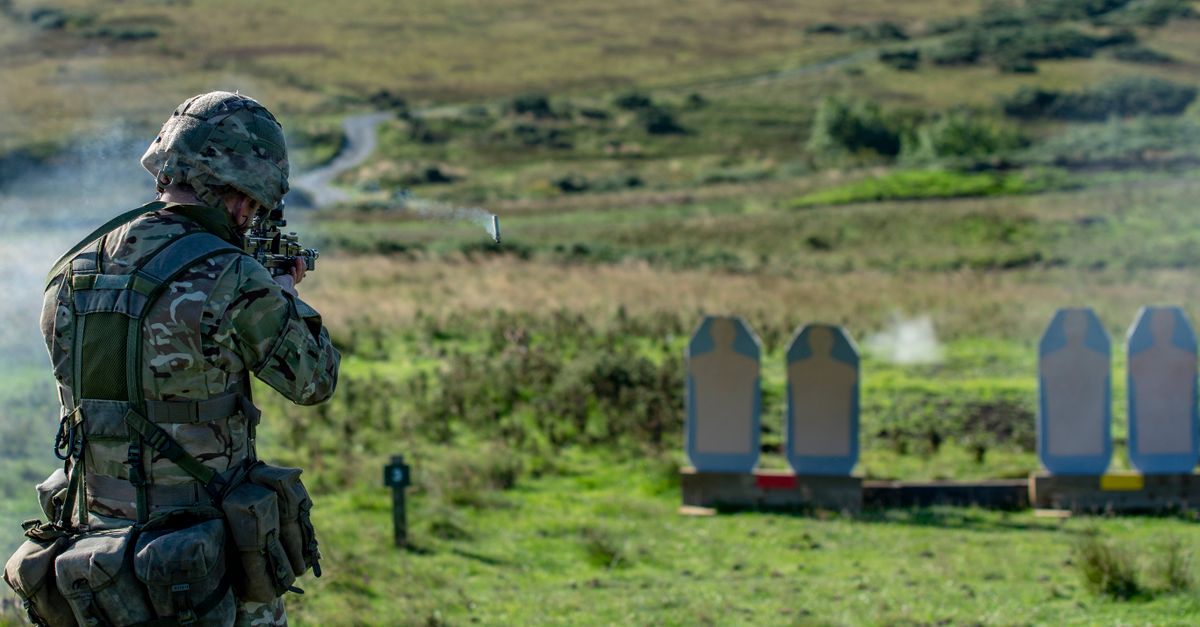
The documented fielding instances are real but fragmentary. Allen recounted a May 2025 visit from an Army brigade commander whose unit had deployed Replicator-supplied drones and munitions in recent operations. "When he took command, his brigade had no modern drones," Allen said. "Now he counts these systems among his most lethal assets." The same brigade left DIU and Army teams with what Allen called a laundry list of fixes (MeriTalk). An Army photograph accompanying later reporting showed a 25th Infantry Division soldier conducting new equipment training with Switchblade 600 loitering munitions at Pohakuloa Training Area in Hawaii (DefenseScoop). Army acquisition chief Doug Bush credited Replicator with putting the service in position to accelerate its LASSO program through increased Switchblade 600 production (DefenseScoop, May 2024).
In the maritime domain, Allen said Replicator's partnership with the Navy had accelerated development of uncrewed surface vessels built on modular software and shared data systems, and MeriTalk reported the Navy is now on track to field what could become the world's largest fleet of such vessels by the late 2020s. On software, Allen argued that the changes to how the department manages data for autonomous systems "will pay off for years" (MeriTalk).

Allen's own bottom line kept the scale honest. "We probably need to 10x what Replicator delivered to meet the full demands of the modern battlefield," he said, adding that "we went from zero to one," and "that was the goal." Former DIU deputy director Aditi Kumar framed the achievement as institutional rather than numerical: the department had "this perennial innovation problem rooted more in culture than in budget," and Replicator broke through it "by focusing senior leadership on a specific capability and demonstrating delivery" (MeriTalk).
How concentrated is the vendor pool?
On paper, Replicator is a wide funnel: 500 firms screened, about 30 primes, more than 50 subcontractors. The disclosed scoreboard looks narrower. Across the systems the Pentagon has publicly named, two companies recur. Anduril Industries supplies the Ghost-X, the Altius-600, and the WISP counter-drone system, is one of four finalists for the Enterprise Test Vehicle alongside Integrated Solutions for Systems, Leidos Dynetics, and Zone 5 Technologies, and was reportedly selected for its Dive-LD undersea vehicle. AeroVironment supplies the Switchblade 600, the single most publicly documented Replicator system in troop hands (DefenseScoop May 2024; Reuters; Defense News; CRS). Anduril said in November 2024 that it was "rapidly" increasing production of its Altius and Barracuda drones to meet Pentagon demand (Defense News).
Replicator's design pushed the portfolio that direction. The November 2024 tranche did not open new competitions; it scaled programs the services had already chosen, and the newly added systems, per Breaking Defense's account, were "either already bound for troops or in design." Accelerating existing winners is how you deliver quickly. It is also how concentration compounds. Whether the pattern amounts to lock-in cannot be measured from outside, because the classified remainder of the portfolio, including the long-range strike capabilities, hides the full vendor mix from public view.
Where does Replicator 2 stand?
In September 2024, the Pentagon announced a second iteration aimed at the mirror-image problem: countering the small drones that forces in the Middle East had spent a year destroying with interceptors costing far more than their targets (Defense News). Replicator-2 would address production capacity, technology innovation, authorities, policies, open-systems architecture, integration, and force structure for countering small drones (DIU). Defense Secretary Lloyd Austin's directive charged Hicks with seeking funding in the fiscal 2026 budget and fielding "meaningfully improved" counter-drone capabilities within 24 months of receiving congressional money (Breaking Defense).
By the summer of 2025, the initiative's institutional footing had shifted. DIU's commercial engagement director, Sarah Pearson, described Replicator at an industry conference as a "prototype effort" the unit was now "transitioning" to the military services, and DIU director Doug Beck had resigned (DefenseScoop). MeriTalk reported that exact fiscal 2026 budget details remained undisclosed. No Replicator tranche has been publicly announced as cancelled or formally descoped. What changed was the framing: the officials stopped quoting the multiple-thousands deadline metric and started describing the initiative in the past tense, as a prototype whose outputs the services would now own.
What the numbers show, and what they hide
Two years after Hicks set a public clock, the evidence supports three findings. First, the count is established in only one direction: hundreds of systems reached warfighters by mid-2025, thousands more were on contract, and DOD has not published a tally reconciling either figure against the "multiple thousands" goal. Second, the data that would actually answer the question, unit-level availability, sustainment cost, and attrition, exists somewhere inside the department and Congress's mandated briefings, but not in public, and lawmakers have complained about access since 2024. Third, the disclosed portfolio concentrated delivery around a small set of vendors, led most visibly by Anduril and AeroVironment, with the classified systems preventing a full accounting.
Replicator did change something. A brigade that had no modern drones now counts them among its most lethal assets, and that change came far faster than a conventional program of record would have delivered. But autonomous mass, the capability the initiative was built to prove, is a standing industrial pipeline, not a milestone. Whether the joint force gets the tenfold increase Allen said it would probably need will be decided in service budget lines for LASSO, Ground Based Air Defense, Organic Precision Fires, PRIME, and the counter-drone effort, line items that remain difficult for even Congress to inspect.
The department picked 18 to 24 months as the measure of whether it could move fast. The deadline arrived in August 2025. It has yet to publish what arrived with it.
Sources
- Brandi Vincent, "DOD touts 'successful transition' for Replicator initiative — but questions linger," DefenseScoop, September 3, 2025. https://defensescoop.com/2025/09/03/dod-replicator-drone-tech-transition-fielding-questions-linger/
- Jon Harper, "Military services face sustainment burdens from Replicator systems," DefenseScoop, May 15, 2024. https://defensescoop.com/2024/05/15/replicator-systems-sustainment-burdens-military-services/
- Defense Innovation Unit, "The Replicator Initiative" (archived capture, March 2, 2026). https://web.archive.org/web/20260302143028/https:/www.diu.mil/replicator
- Lisbeth Perez, "Replicator Drone Initiative Earns Good Grades Two Years In," MeriTalk, August 22, 2025. https://www.meritalk.com/articles/replicator-drone-initiative-earns-good-grades-two-years-in/
- "Pentagon buys two new types of drones under Replicator initiative," Reuters, November 13, 2024. https://www.reuters.com/business/aerospace-defense/pentagon-buys-two-new-types-drones-under-replicator-initiative-2024-11-13/
- Noah Robertson, "Pentagon announces new batch of drones for Replicator program," Defense News, November 13, 2024. https://www.defensenews.com/unmanned/2024/11/13/pentagon-announces-new-batch-of-drones-for-replicator-program/
- Ashley Roque, "Pentagon announces 4 drones, loitering munitions now under Replicator," Breaking Defense, November 13, 2024. https://breakingdefense.com/2024/11/pentagon-announces-4-drones-loitering-munitions-now-under-replicator/
- Congressional Research Service, "DOD Replicator Initiative: Background and Issues for Congress," updated August 20, 2024. https://s3.documentcloud.org/documents/25053686/dod-replicator-initiative-background-and-issues-for-congress-aug-20-2024.pdf
Comments (7)
Continue exploring

The Kidnappers Outsmart Nigeria’s Surveillance State
Nigeria has more tools to track kidnappers than ever, but fragmented data systems and slow institutional response leave criminal…
U.S.-China AI talks could make autonomous cyberattacks a matter of strategic stability
Reuters reports the U.S. and China are preparing a mid-September AI safety dialogue. What it can realistically deliver: an…
The Helium Chokepoint: What Qatar's Shutdown Revealed About Semiconductor Supply Chains
A war in the Gulf knocked out roughly a third of world helium supply in March 2026, exposing how little buffer stands between…
Follow the contracted-but-undelivered thread in your next piece. Allen said thousands were still rolling off assembly lines when he departed, yet the article notes nothing public confirms or denies that — so a piece naming which of the 30 contracted vendors had actually shipped a serial production lot by the August deadline, and which slipped, would move the conversation past 'hundreds vs. thousands' and show whether an industrial base actually stood up. Until that's on the record, Replicator's defenders and critics are arguing about the same word ('delivered') while meaning three different things, and the Pentagon has every incentive to leave it that way.
Worked a similar rapid-acquisition portfolio at a much smaller scale and the 'high-level attention to remove barriers' description in this article matches what we saw — the friction wasn't contracts, it was the services treating shipments as someone else's problem until the day someone needed accountability.
The section laying out what attritable actually means and why the cost-exchange ratio mattered was the most useful part of the article. It clarified that the goal was never parity with Chinese mass but inversion — making each U.S. loss cost more than it saved — which is a much sharper benchmark than the raw fleet-size debate that dominates coverage.
Watching Anduril and Shield AI push the same 'attritable at scale' thesis on private capital right now makes the Replicator delivery gap look even sharper — the market is pricing the very proposition the Pentagon only partially executed.
The Ukraine 10,000-per-month figure keeps doing heavy lifting throughout the article, but that battlefield is permissive in ways the Pacific isn't — Ukrainian forces operate close to supply depots, against an adversary with limited deep-strike capacity, and inside a manageable electronic-warfare environment. The attritable cost-exchange argument doesn't collapse, but using that monthly burn rate as the yardstick overstates how directly the two problems map onto each other.
Recommending that DoD publish contracted, delivered, and fielded counts separately is obviously the right call, but the harder implementation problem is that 'fielded' is defined differently across the services — for the Army it might mean a connex full of systems at a depot, for the Marines it might mean an operator has qualified on them. Without a standardized fielding definition, even a more transparent count will just restart the same argument at finer resolution.
For a much smaller buyer — say a NATO ally's special operations command trying to field a few hundred loitering munitions on a compressed timeline — which parts of the Replicator playbook actually translate? The senior-leader pressure and the reprogramming-style funding seem Pentagon-specific, but the dual-source vendor strategy and the bias toward commercial platforms over bespoke ones look portable. Could you sketch what a scaled-down version would require in terms of acquisition authority, money, and stable demand signal — and where the model would break for a buyer that doesn't sit at the top of the queue?