
The Night Before and the Morning After
The night before Manchester United's 2026–27 Premier League season opener, Hull City's players could scarcely have imagined what Saturday would bring. Their captain, Lewie Coyle, who grew up in the city and now captains the club, said as much afterward: "Before we went to bed last night, we couldn't have dreamt it any better."[^1]
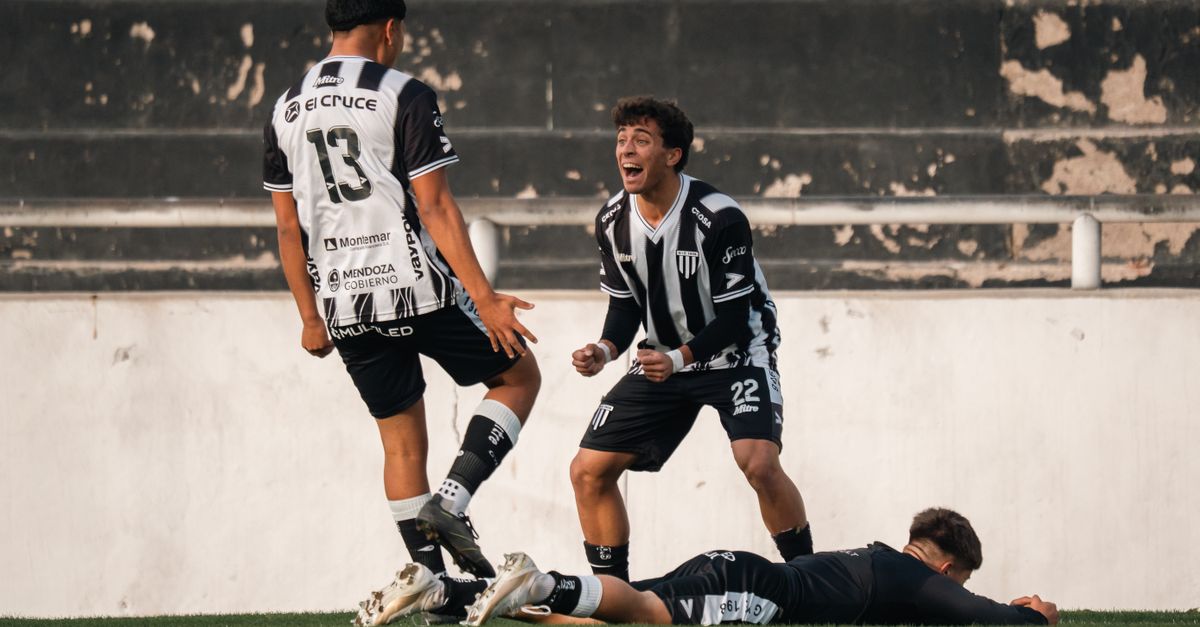
By Saturday afternoon, August 22, 2026, that dream had become Manchester United's nightmare. Hull City 2, Manchester United 0. Two first-half goals from set pieces. A performance so listless that former England striker Alan Shearer, watching as a television pundit, concluded United "were dreadful in all positions" and "offered nothing."[^2] An announcer informing the traveling United supporters that most of their return trains had been canceled prompted a roar from Hull fans nearly as loud as the celebrations that followed the goals, before they broke into a chant of "You're going home in an Uber."[^1]
Hull, playing in the top flight for the first time since a 7–1 home defeat to Tottenham in May 2017, had not beaten United in a league match since 1974.[^1] They had finished sixth in the Championship the previous season despite possessing the fourth-worst defense in the division, and their owner, Acun Ilicali, had spent the summer reveling in the fact that everyone was writing his side off as relegation fodder.[^3] Hull striker Oli McBurnie had joked in a preseason interview that he thought Hull were "already down" given the way they had been spoken about over the summer.[^1]
Not on this evidence. And not on the evidence of a Manchester United performance that raised a question no one at the club wanted to confront after one game of a new season: Is it time to worry?
What Happened at the MKM Stadium
The match kicked off at 12:30 p.m. on Saturday at the MKM Stadium under what should have been an atmosphere of cautious optimism for United. Michael Carrick's side had finished the previous season strongly, and a £70 million deal for Brighton midfielder Carlos Baleba had been agreed, news that filtered through on Friday evening.[^1][^2] The opening minutes were, in the ESPN reporter's assessment, "reasonably bright."[^1]
Then Hull began to play with aggression, intensity, and purpose, and United wilted.
The first goal arrived in the 17th minute from a corner. Hull's combative striker Oli McBurnie had been causing problems by peeling off onto 19-year-old United defender Ayden Heaven rather than engaging in a physical battle with Harry Maguire. McBurnie got a powerful close-range effort on target; United goalkeeper Senne Lammens pushed it onto a post, but Semi Ajayi drove home the rebound.[^2][^3]
The second came in the 38th minute from a free kick. Regan Slater delivered the ball into the box, and Nobel Mendy got his head to it despite the close attentions of Luke Shaw and Noussair Mazraoui.[^2][^3] Mendy powered the header past Lammens. Two set pieces, two goals, and United's defensive frailty laid bare.
At halftime, Carrick made a change that carried its own narrative weight. Off came Patrick Dorgu, who had been "lifeless as a forward,"[^1] and on came Marcus Rashford, wearing the No. 9 shirt, making his first competitive appearance for United in 618 days.[^1][^3] Whatever attacking onslaught Carrick envisioned never materialized. United managed just five shots on target across the entire 90 minutes, one of which was a desperation effort from Harry Maguire outside the penalty area in the 84th minute.[^1] Their only genuine second-half chance came through Bryan Mbeumo on a breakaway, but Hull goalkeeper Konstantinos Tzolakis stood firm.[^3]
In the 96th minute, Tzolakis collected another aimless punt forward from Shaw. The full-time whistle followed. Hull's players walked off to chants of "You're getting mauled by the Tigers" and "Can we play you every week."[^1]
Carrick's Calm and the Dissonance Around It
Michael Carrick's post-match demeanor was, by all accounts, the epitome of composure. He has been associated with Manchester United for 20 years—as a player, a coach, a head coach, and a fan—and he has lived through enough opening-day shocks to know that one result does not define a season.[^2]
"We've done a lot of good things today, but I understand it will get lost, but it doesn't get lost from our point of view," he told reporters.[^2]
A couple of questions later, he offered: "Just because we lost the game today, we don't have to dissect the whole picture."[^2]
When it was put to him—by his close friend Wayne Rooney, analyzing on Match of the Day—that United had been "too passive" and lacked intensity, Carrick pushed back: "Just because you get beat, it doesn't mean you are passive. It's one game. Results can happen in football. We all understand that. It's not nice when they do, but it does happen."[^2]
He was calm to the point of defiance. "We just don't all have to shout and scream and create some chaos," he said. "Calmness doesn't mean there's no emotion in it. It hurts, of course, but it doesn't change the direction of where the football club is going."[^1]
Carrick acknowledged the pain beneath the surface. "It's hugely disappointing—of course it is," he said. "We came here to win, so to not take anything away is hugely disappointing. It's not more than that, not less. We have to soak it up and come back stronger."[^1]
On the halftime substitution of Dorgu, he was careful to separate the decision from any judgment of the player: "It was nothing personal. Pat's a fantastic player. We love him to bits. But sometimes you have to make decisions."[^2]
The calm was deliberate. Whether it was warranted was another question entirely, and one that the evidence of the performance itself made harder to dismiss.
Where this story sits
5 related pieces
Hover a story · click to read
 No. 7 · Aug 25, 2026The Price of Certainty: How the Premier League’s Big Six Are Rewiring European Football’s Transfer Market
 No. 4 · Aug 25, 2026NFL Season Preview 2026–27: The Strongest Teams and the Storylines That Will Define the Year
 No. 41 · Sep 7, 2026Stress-Testing the American Empire: Real Decline or Cyclical Strain?
 No. 33 · Sep 5, 2026U.S.-China AI talks could make autonomous cyberattacks a matter of strategic stability
 No. 3 · Aug 25, 2026When the Money Runs Out: The Economics of the Breaking Point
What Went Wrong: Fitness, Tactics, and the Set-Piece Scourge
Three threads of explanation emerged from the match analysis: fitness, tactical preparation, and set-piece defending. None of them was flattering to United.
The Fitness Question
Alan Shearer's assessment was blunt. "United were dreadful in all positions, particularly up front. They offered nothing," he said. "There was only one team going to win. It's a worrying thing. You know what you are going to get going up against a promoted team. You need to match them."[^2]
Shearer identified it as a fitness issue—a striking claim given that six of the players who started at Hull had been present from the very beginning of preseason training on July 9.[^2] United's players, in Shearer's view, "didn't look fit at all."[^2]
That observation gained traction when a prior interview with summer signing Youri Tielemans resurfaced. Less than two weeks before the Hull defeat, Tielemans had told Rio Ferdinand that as players began returning from World Cup duty, preseason training had been focused on ball work rather than running.[^2] The 2026 World Cup, held in the United States, Canada, and Mexico, had recently concluded, meaning many of United's international players returned late to preseason camp. A training regimen heavy on ball work and light on conditioning could plausibly leave a team unable to match the physical intensity of a newly promoted side playing on adrenaline.
Carrick resisted this interpretation, but the evidence on the pitch supported it. Hull, who had been written off as relegation fodder, played with an energy and ferocity that United simply could not match. Every time Hull went forward, United's defense looked unsure.[^3]
The Tactical Failure
Hull's manager, Sergej Jakirovic, had done his homework. Having watched a couple of United's preseason matches—including a 4–2 defeat by AC Milan, engineered by former United boss Ruben Amorim, in which Amorim repeatedly switched play to his wing-backs and United's defense failed to cover—Jakirovic altered his tactics accordingly.[^2] He identified the same weakness and exploited it, creating the space to deliver balls into the box for McBurnie to feed on.
The strategy worked. McBurnie did not score, but his physical presence and intelligent movement—particularly in isolating the 19-year-old Heaven rather than engaging Maguire—created the conditions for both goals. Heaven, making what amounted to a baptism by fire, "found it difficult to cope," as the BBC reported.[^2]
United, by contrast, appeared tactically unprepared. Luke Shaw's post-match comments were revealing: "We knew Hull's strengths. At times we defended well, but the goals and set-plays weren't good enough and it cost us. We knew it was coming. As a group we could probably prepare better, especially knowing how good they are at set-plays and what their dangers are."[^2]
"We knew it was coming" was a remarkable admission. Shaw was saying, in effect, that United had identified the threat, understood the danger, and still failed to deal with it. Sources close to Shaw insisted the criticism was focused on what happened on the pitch rather than what United had done in the buildup,[^2] but the distinction may be academic. A team that knows what is coming and fails to prevent it has a preparation problem as much as an execution problem.
The Set-Piece Problem
Both goals came from dead-ball situations. The first from a corner, the second from a free kick. This was not a one-off vulnerability but a pattern that Hull's coaching staff had identified and targeted. United's set-piece defending was disorganized—the second goal saw Mendy win a header despite two defenders, Shaw and Mazraoui, in close attendance—and it reflected the broader defensive deficiencies that Sky Sports readers were already demanding be addressed in the transfer window, with around ten days remaining.[^3]
The calls from supporters were specific and urgent. One reader identified as Clive228 wrote: "Until Manchester United sign better defenders then they will not make progress. This obsession with signing midfielders and strikers when our defence is broken is ridiculous."[^3] Another, Rambo741, demanded United "splash the cash on a top central defender and full backs," calling the performance "awful."[^3]
A Familiar Pattern: The Burnley Parallel

Carrick himself drew, or at least recognized, the historical parallel. He was part of the Manchester United side that lost in similarly meek fashion to Burnley in August 2009, when Turf Moor was hosting its first top-flight game in 33 years.[^2] That result—a 1–0 defeat on the opening day of the 2009–10 season—provoked an external inquest despite the fact that, as the BBC noted, "United's undoubted class and Sir Alex Ferguson's legendary status as manager did not stop an external inquest then."[^2]
(The BBC article references that "seven of the starting line-up faced Barcelona in the Champions League final at Wembley" three months earlier. The 2009 Champions League final between Barcelona and Manchester United was in fact held at the Stadio Olimpico in Rome, not Wembley; the United-Barcelona final at Wembley took place in 2011. This appears to be a factual error in the BBC source.[^2])
The Burnley parallel is instructive but not entirely reassuring. That United side, managed by Sir Alex Ferguson and containing players of the caliber of Rio Ferdinand, Wayne Rooney, and Carrick himself, went on to mount a serious title challenge that season. A single opening-day defeat, even an embarrassing one, did not derail a genuinely elite team.
But that is precisely the question hanging over this United side: are they a genuinely elite team capable of absorbing an opening-day shock and recovering, or are they a team whose deficiencies—defensive frailty, lack of intensity, set-piece vulnerability—are structural rather than circumstantial?
The 2009 comparison cuts both ways. It suggests that one bad result does not define a season. But it also serves as a reminder that when Ferguson's United lost to Burnley, they had a proven manager, a squad that had just reached a Champions League final, and a track record of sustained excellence. Carrick's United have a manager in only his second full season, a squad that was exposed by a team that finished sixth in the Championship, and a track record that remains to be established.
The Transfer Window: Too Many Holes, Too Little Time
The £70 million agreement for Carlos Baleba, announced on the eve of the Hull match, was a statement of intent. Baleba, a midfielder from Brighton, will add "energy and athleticism in midfield," as ESPN noted, "but he won't fix everything."[^1] His minor ankle injury is expected to prevent him from featuring against Ipswich on August 30.[^2]
The deeper problem is that United's deficiencies extend beyond midfield. The debate among fans on social media as the Hull match drifted toward its conclusion crystallized the problem: some argued for a new left back, others for a new center back, still others for a striker or a winger.[^1] When a fan base cannot agree on which position is the most urgent priority, it usually means there are problems everywhere.
Summer signings Andrey Santos and Youri Tielemans "looked rushed and flustered" against Hull.[^1] Bruno Fernandes, described as "so influential last season," was "largely anonymous."[^1] Dorgu was withdrawn at halftime. The defensive unit—Shaw, Maguire, Heaven, Mazraoui—was exposed from set pieces and in open play. The attacking unit, even with Rashford's long-awaited return, could not trouble Tzolakis more than once.
With approximately ten days remaining in the transfer window, the calls for reinforcements were growing louder.[^3] But the breadth of the needs—defenders, a striker, potentially a winger—suggests that no single signing will be sufficient. And the club's inability to address these issues before the season began, leaving the squad exposed on opening day against a team everyone expected United to beat, raises questions about recruitment planning that go beyond any individual match.
The Road Ahead: Ipswich and Beyond
United's next fixture is against Ipswich Town at Old Trafford on August 30.[^2] Carrick may have changes available. Lisandro Martínez for the struggling Heaven would be "an obvious one," as the BBC noted. Kobbie Mainoo could come into contention. The extent of the injury that ruled Amad Diallo out of the Hull match had yet to be confirmed.[^2]
Carrick's response to the defeat—measured, calm, and resistant to panic—will be tested quickly. "It's two set-plays," he said. "It's disappointing. We are hurting. But we can be better and we will be better."[^2]
The question is whether "better" means incremental improvement from a base of genuine quality, or merely a less embarrassing version of the same limitations. Hull exposed problems that were visible in preseason—the 4–2 defeat by AC Milan, in which Amorim exploited the same wing-back switching that Jakirovic later targeted—and those problems were not addressed in the weeks between that friendly and the season opener.[^2] If the tactical vulnerability was known, documented, and demonstrated again on opening day, the issue is not one of bad luck or a single bad performance. It is one of failure to adapt.
Perspectives: Calmness vs. Alarm
Three distinct perspectives emerged from the aftermath of the Hull defeat, each with its own logic and its own limitations.
Carrick's view is that one result does not warrant systemic overhaul. He has lived through opening-day shocks before, both as a player and now as a coach, and he knows that the Premier League season is a marathon, not a sprint. His refusal to "shout and scream and create some chaos" is consistent with his personality and his philosophy. It also carries a strategic purpose: a manager who panics publicly after one defeat risks destabilizing a squad that needs confidence, not recrimination. The risk is that calmness can shade into denial. "Just because we lost the game today, we don't have to dissect the whole picture" is a defensible position after one match. It becomes an evasion if the same problems recur against Ipswich, and then again in the weeks that follow.
The pundits' view, articulated most forcefully by Shearer and Rooney, is that United's problems were not merely about results but about performance indicators that reveal deeper issues. Shearer's fitness concern is specific and measurable: were United's players physically capable of matching Hull's intensity, and if not, why not? Rooney's observation about passivity and the need for United to "become a team other teams are scared of" speaks to a cultural and competitive deficit that goes beyond tactics.[^2] These are not knee-jerk reactions; they are diagnoses from experienced professionals who watched the same match and saw the same patterns.
The players' view, as expressed by Shaw, occupies a middle ground. His admission that "we knew it was coming" and that "as a group we could probably prepare better" is neither panic nor complacency. It is an honest acknowledgment that the team failed to execute a plan they knew they needed, and that the responsibility is collective.[^2] Shaw's additional comment—"No disrespect to them, but we should be coming to Hull and winning the game"—reflects the professional pride that should drive a response, but it also carries a trace of the complacency that may have contributed to the defeat in the first place.[^2]
Is It Time to Worry?
The honest answer is that it is too early to conclude that Manchester United's season is doomed, but it is not too early to worry.
The evidence from Hull is concerning on multiple levels. United were out-fought, out-thought, and out-played by a team that was widely expected to be one of the weakest in the Premier League. Both goals came from set pieces, a known vulnerability that the team had identified but failed to address. The tactical weakness exposed in preseason by Ruben Amorim's AC Milan was exploited again, unchanged, by Hull's Jakirovic. Key signings looked unsettled. Key players were anonymous. A 19-year-old defender was left isolated against a physical striker and struggled. The fitness of the squad was questioned by a former England international who watched the match as a pundit. And the manager, while acknowledging the hurt, resisted the idea that the performance revealed anything systemic.
One game is one game. Carrick is right that results can happen in football, and the Premier League's history is full of opening-day shocks that meant nothing by season's end. United themselves lost to Burnley on the opening day of 2009–10 and mounted a serious title challenge. The season is long, the transfer window is still open, and Ipswich at home on August 30 offers an immediate opportunity to respond.
But the specific nature of the defeat—the set-piece vulnerability, the tactical naivety, the lack of intensity, the breadth of underperformance across positions—suggests problems that are structural rather than random. When a team concedes twice from set pieces despite knowing the opponent's strengths, that is not bad luck. When a manager's tactical weaknesses are identified in preseason and exploited again in the competitive opener, that is not coincidence. When a squad's fitness is questioned despite six starters being present from the first day of preseason, that is a preparation issue that demands examination.
Carrick's calm is his prerogative and, in one sense, his strength. But calmness is only defensible if it is paired with honest assessment and corrective action. "We can be better and we will be better" is a promise, not a plan. The test comes against Ipswich, and then against every opponent that watches the Hull match footage and identifies the same weaknesses that Jakirovic exploited.
The trains from Hull were canceled. United's supporters made the long journey home by whatever means they could find. The question they carried with them—whether this was a bump in the road or an early warning sign—will not be answered by calm words at a post-match press conference. It will be answered by what happens on the pitch, starting August 30 at Old Trafford.
The noise from Hull was deafening. Whether United heard it remains to be seen.
Sources / References
- ESPN — "Too soon to panic? Man United see problems exposed in Hull City defeat." ESPN.in. August 22, 2026.
URL: https://www.espn.in/football/story/_/id/49691465/too-soon-panic-man-united-see-problems-exposed-hull-city-defeat
- BBC Sport — "Man Utd: What went wrong in defeat by Hull City?" BBC.co.uk. August 23, 2026.
URL: https://www.bbc.co.uk/sport/football/articles/cvgxg1g8nkro
- Sky Sports — "Hull City 2-0 Man Utd: Michael Carrick's side left stunned by newly-promoted Tigers in Premier League opener." Skysports.com. August 22, 2026.
URL: https://www.skysports.com/football/hull-city-vs-man-utd/report/559447
Comments (8)
Continue exploring
Stress-Testing the American Empire: Real Decline or Cyclical Strain?
Interest costs, gold hoarding and allied rearmament say decline; chips, energy and capital markets say resilience. Here is the…
U.S.-China AI talks could make autonomous cyberattacks a matter of strategic stability
Reuters reports the U.S. and China are preparing a mid-September AI safety dialogue. What it can realistically deliver: an…
When the Money Runs Out: The Economics of the Breaking Point
In the first half of August 2026, the warning lights began to flash. Consumer sentiment tumbled in the University of Michigan's…
Hearing the traveling United fans get mocked with 'You're going home in an Uber' because their return trains were canceled is genuinely hilarious in the most brutal way possible.
I actually watched Hull away a couple of seasons back and their set-piece organization was already their strongest suit, so the idea that McBurnie peeling onto Heaven was purely improvised feels like a stretch to me.
I'd love a follow-up that unpacks how Rashford's return is meant to function tactically, because handing a forward the No. 9 shirt after 618 days away and expecting an 'attacking onslaught' from one halftime substitution is a thread that deserves its own piece.
The article frames Carrick's 'one game' dismissal as wise restraint, but given United managed just five shots on target against a side that hadn't been in the top flight since 2017, I'd want to know what specific evidence backs up the 'direction' he keeps invoking.
I'm not sure a club outside the top six could absorb being written off as 'relegation fodder' and turn it into motivation the way Hull apparently did, so how much of that underdog chip-on-the-shoulder actually translates to a mid-table side with less to prove?
The £70 million Baleba agreement landing the night before makes this defeat look even more like a squad that simply hasn't gelled yet, especially since he wasn't even registered for this match.
Bottom line: when a promoted side with the fourth-worst Championship defense shuts you out from two set pieces, the problem isn't motivation or bad luck, it's structural. Carrick has to fix the dead-ball routine and find a way to generate more than five shots, or this loss becomes the pattern instead of the outlier.
Recommending Carrick hold his nerve is sensible in principle, but practically speaking at what point does composure stop being steadiness and start tipping into denial if these set-piece frailties keep surfacing?