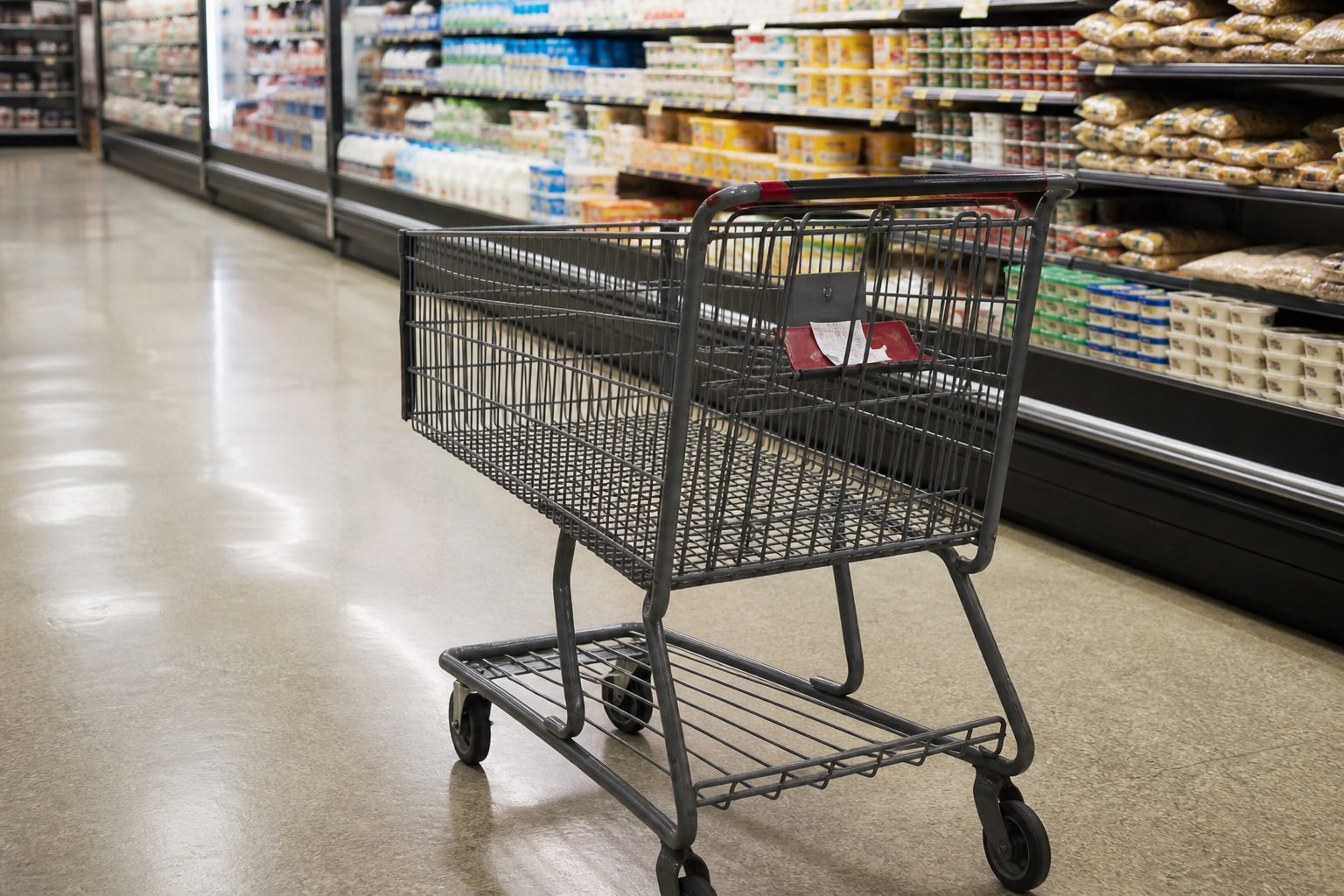
In the first half of August 2026, the warning lights began to flash. Consumer sentiment tumbled in the University of Michigan's preliminary survey for the month, dragged down by rising energy prices as the war in Iran heated up. Retail sales in July fell more than half a percent from June. The nationwide average price of a gallon of regular gasoline reached $4.06, near a record for August [1]. After years in which American households kept spending through a pandemic, an artificial intelligence boom, multiple wars, and years of inflation, the question that economists, executives, and politicians had been circling for months suddenly felt urgent. What happens when the money runs out?
The question has a name in economics. It is called demand destruction: the point at which the cost of goods finally surpasses what consumers are willing or able to pay, causing them to slow their buying, stop altogether, or leave a category entirely [2]. The evidence gathered through the summer of 2026 suggests that the United States, and the world's second-largest economy alongside it, may be reaching that point.
The Long Run-Up
The breaking point did not arrive without warning. It was the product of a long accumulation of pressure. For the better part of a decade, American consumers had absorbed shock after shock and kept spending. "The last decade has been turbulent, yet despite all odds, consumer spending has remained relatively unshakable," the advertising and data publication The Outcome observed in July. "Americans have been holding up the economy on weary shoulders amid a pandemic, the AI boom, multiple wars, and inflation" [2].
By May 2026, that resilience had begun to erode. The University of Michigan's consumer sentiment index set a historic low that month, a dip driven primarily by the Iran war and supply disruptions in the Strait of Hormuz [2]. Energy prices climbed, and the cost of living followed. By August, only 8 percent of American consumers believed their income growth would outpace inflation, according to Joanne Hsu, director of the University of Michigan surveys. "What we're seeing is that consumers are expecting to be squeezed," Hsu said. "They're not anticipating anything catastrophic" [1].
That distinction matters. The data did not point to panic. It pointed to something slower and more corrosive: a broad, quiet retreat.
The Cracks Appear
The retreat showed up first in the places where spending is most optional. Food delivery, a habit that exploded during the pandemic, began to decline. According to first-party purchase data from the firm Attain, the median transaction amount on food delivery apps rose nearly 21 percent over 24 months, while the average number of transactions per month fell 15 percent. As one Reddit user put it, "buying a taxi for a burrito is too expensive" [2].
The same logic spread across the grocery store. Aaron Kaufman, a 32-year-old in Manhattan, used to hit his daily protein target with ground beef. Then he saw the price at his new local store: $8 a pound, up from $6 in Brooklyn. He switched to chicken. "Every once in a while, I'll treat myself if it's on sale," he said [3].
Kaufman was not alone. After absorbing nearly two years of surging beef prices, American consumers finally showed signs of reaching their limit. Beef sales volumes in the 13 weeks ending in mid-July, a stretch that includes both Memorial Day and the Fourth of July, fell 0.3 percent from a year earlier, according to the research firm Circana. In the same period in each of the previous two years, volumes had grown about 5 percent. Chicken, meanwhile, kept rising, with sales volumes up 2 percent while ample supplies kept prices flat [3].
"Consumers are stretched," said Chris DuBois, an executive vice president at Circana. "It's not always just about the price of food, there's the price of life that hits, so that puts some of the pressure on total volume in the store" [3].
The shift was not confined to protein. The Conference Board's chief economist, Dana Peterson, described a consumer who is still spending, but spending differently. "Consumers, yes, they are spending," she said. "But they're starting to spend less, and the things they are spending the most on are things that they need. And if they do spend on discretionary items, it's on the cheap" [1].
Big-ticket purchases stalled. Asked about plans to buy cars or furniture over the next six months, "most people are saying 'maybe?'" Peterson said [1]. Discretionary services lost ground to necessities. Streaming and internet held up, but moviegoing fell, for a simple reason: taking a family of four to the movies now costs at least $100, before popcorn [1].
Corporate executives began to describe the same reality from the other side of the register. Kraft-Heinz CEO Steve Cahillane said the company was seeing consumers run out of money at the end of the month. McDonald's CFO Ian Borden said higher gas prices were hitting lower-income households especially hard. Planet Fitness, a budget gym chain, suffered the biggest stock drop in its history after slashing its revenue outlook [2].
Where this story sits
5 related pieces
Read it →
Hover a story · click to read
 No. 42 · Sep 7, 2026After the Last Dollar: What Actually Catches People at Zero
 No. 23 · Sep 1, 2026Inside India's Plan to Let AI Agents Spend Money on UPI
 No. 60 · Oct 4, 2026Inside the KillSec Takedown: What a Teenage-Led Ransomware Crew Reveals About RaaS Economics
 No. 13 · Aug 26, 2026America's Invisible Clock: What Happens If GPS Timing Fails?
 No. 45 · Sep 12, 2026China's Supply Chain Chokepoints: What De-Risking Costs, and Whether It Works
The Beef Supply Chain: A Case Study in the Ceiling
The beef market offers the clearest answer to the question at the heart of this article. Producers kept raising prices. Consumers kept paying, for a while. Then they stopped. And when they stopped, the money did not simply flow somewhere else. It vanished from the chain entirely.
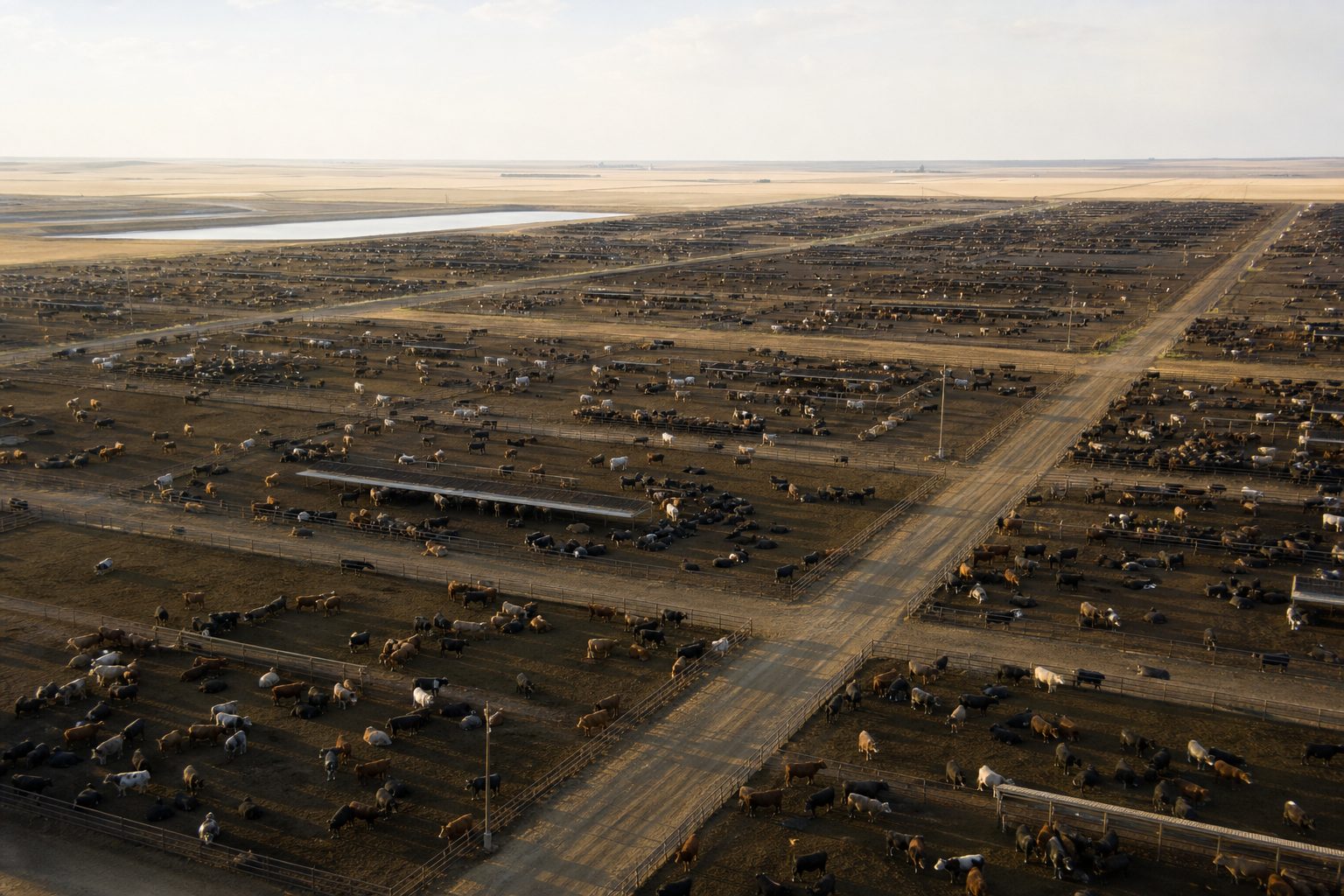
The starting point was a genuine supply shock. A combination of drought and disease pressure left the United States with fewer cattle at the start of 2026 than at any point since 1951 [4]. With so few animals, prices rose at every step. In supermarkets, beef cost 12 percent more than a year earlier, a rise more than three times the rate of general inflation [4].
The natural assumption is that someone, somewhere, was getting rich. The BBC's "Follow the Money" series spent a week tracing the American beef supply chain to find out who. The answer was: nobody.
Eric Gropper, a rancher in southwest South Dakota, was selling his calves for record prices, around $2,500 for a 600-pound animal, up from $2,000 two years earlier. But his costs had climbed just as fast. A pickup truck that once cost $40,000 now ran to $100,000. A wooden fence post had gone from about $6 to as much as $19. A quarter-mile roll of barbed wire had doubled, from $60 to $130. Drought had dried up the 13 natural wells on his land, forcing him to haul water by tanker. "I'm able to pay my bills, but my input costs are so drastically high that if we didn't have these record prices we'd all be broke," he said. "I sit down to do my taxes, and it feels like I made a lot of money. But in the end I really didn't make any more" [4].
The feedlots that fatten cattle on corn faced the same squeeze. They sold animals at record prices, but they had bought them at all-time highs in the first place, said Brenda Boetel, a professor of agricultural economics at the University of Wisconsin-River Falls [4].
The meatpackers fared worst of all. Four companies, Tyson, JBS, Cargill, and National Beef, control around 85 percent of American beef processing, a concentration that has drawn accusations of price-fixing even from President Trump [4]. Yet Tyson, the largest of the four, reported in May that it had lost more than $500 million on beef in the first half of its financial year [4]. The reason was structural: packers bought cattle at record prices, but they could not pass the full cost on to supermarkets and restaurants, because consumers had begun to switch to chicken and cheaper imported beef. Jamie Crumley, who owns Harpley's Meatpacking in central North Carolina, said the price her company pays for live animals had risen as much as 60 percent over three years. Her plant, built to handle 425 to 450 cattle a day, was running at 350 because it could not get enough animals. The building, the line, and the staff cost the same either way, so the fixed costs spread across fewer animals. On any given day, she said, she could lose $100 to $400 on a single head of cattle [4].
At the end of the chain sat Paul and Jessica Urban, who own Block 16, a burger restaurant in Omaha, Nebraska. They go through about 300 pounds of ground beef a week, making 2,800 burgers a month [4]. They could not raise prices without losing customers, and they could not absorb the cost of beef without losing money.
This is what demand destruction looks like from the inside. The consumer's refusal to pay is not a single dramatic event. It is a slow re-pricing of the entire economy, working backward from the checkout counter to the ranch. By July, the ceiling had become visible in the data. Average ground beef prices were flat for the month, a sign that retailers and consumers had resisted further increases. A pound averaged $7.116, according to the Bureau of Labor Statistics. The 9.4 percent increase from July 2025 was the most modest year-over-year jump in 17 months [3].
Weaker demand signals helped drive a steep slide in wholesale beef prices and live cattle futures starting in late June. Futures in Chicago touched their lowest price since December in late July [3]. "It's been a chain of events that we've seen on the demand side that has led to this point," said Abby Greiman, a livestock market adviser at Ever.Ag Insights. "It feels a lot softer than it has for a long time" [3].
The softening arrived at the worst possible moment, during the summer grilling season, when beef demand should be strongest. "When demand begins to soften during peak grilling season, it suggests affordability is becoming a more important factor," said Shawn Sparks, a managing director at The Sparks Group [3].
The Deeper Question: China's Deflationary Spiral
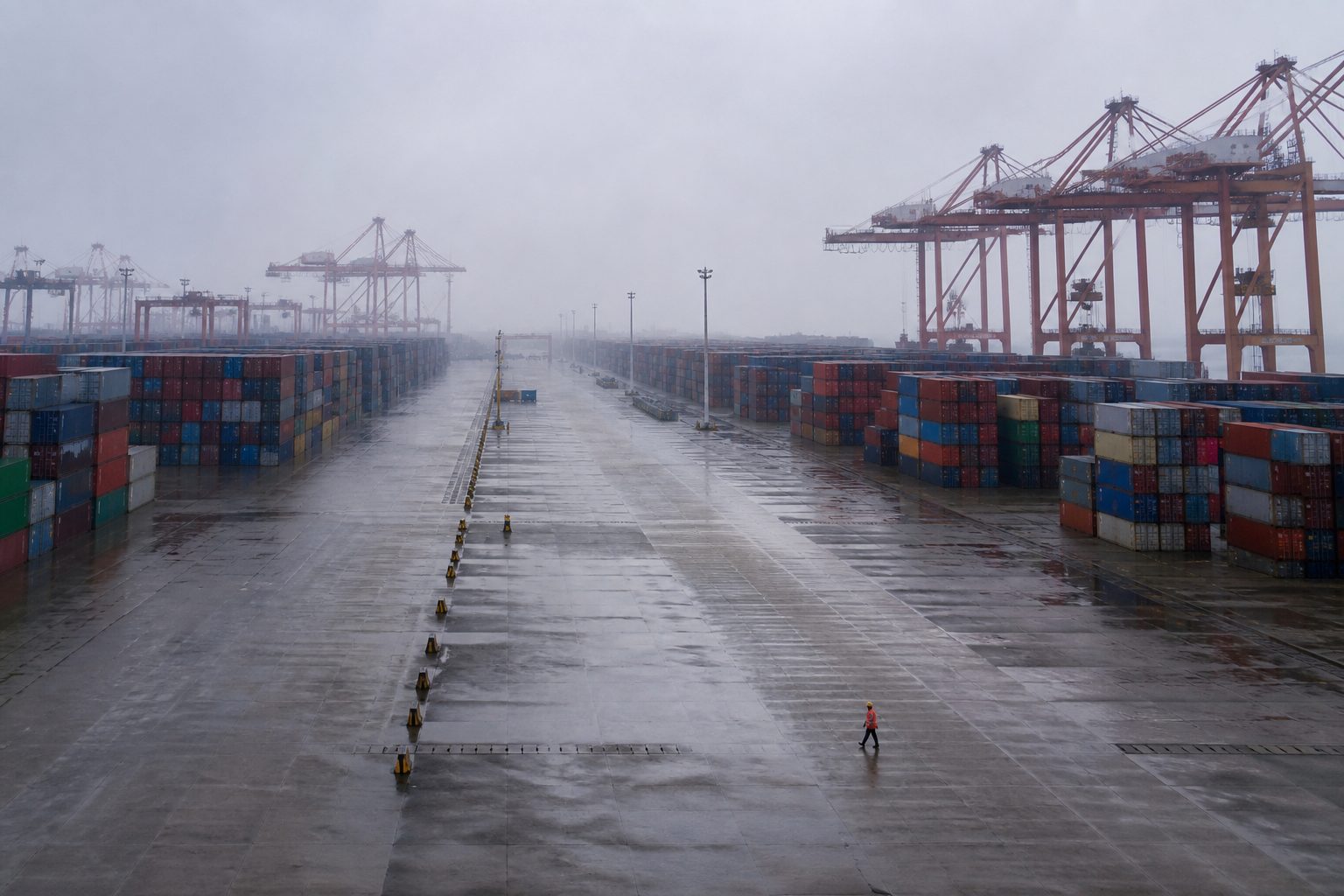
If the United States is testing the ceiling, China shows what happens when an economy crashes through it and keeps falling.
China's economy entered the summer of 2026 in deep stress. Retail sales shrank. Property values continued to fall. Households cut back on major purchases. Auto sales plunged 16.1 percent year over year in May 2026. Home appliances and electronics fell 5.6 percent. Building materials dropped 13.6 percent. Jewelry declined 8.9 percent [5].
These are the purchases that signal confidence. When people stop buying refrigerators and cars in double-digit numbers, they are not merely tightening their belts. They are bracing for something worse.
At the China Macroeconomic Forum's mid-year session in Beijing on June 27, 2026, current and former central bank advisers broke from the usual script. They identified the core contradiction openly: supply is strong, but demand is collapsing, feeding a loop in which weak spending drags down prices, which drags down incomes, which drags down spending further [5].
This is the deflationary spiral, and it is the most dangerous answer to the question of what happens when the money runs out. In a deflationary spiral, falling prices are not a relief. They are a symptom. When prices fall, businesses earn less, so they cut wages and jobs, so households have less to spend, so prices fall further. The economy does not simply slow down. It contracts on itself.
One adviser at the forum argued that Chinese households' savings rate needs to fall, and that pension payments for rural and unemployed urban residents, currently a paltry 200-plus yuan a month, roughly $30, should quadruple to around $150 [5]. The fact that such proposals were floated publicly by insiders, rather than dissidents, signals how serious Beijing's own technocrats believe the problem has become.
But the leadership has resisted. In a 2022 party journal article, Xi Jinping explicitly warned against adopting Western-style welfarism, arguing that generous social spending breeds laziness, strains public finances, and risks trapping China in the middle-income trap. That framing has been echoed repeatedly in Politburo and State Council meetings. The result is a social security budget that consumes only about 8 percent of GDP, far below the 20 to 25 percent typical of developed economies, and even below the 15 percent-plus seen in developing peers like Brazil, South Africa, and Thailand [5].
The contrast is instructive. In the United States, the question is whether consumers will keep spending enough to avoid a recession. In China, the question is whether the state will put money into people's hands at all. The American consumer is stretched but still spending. The Chinese consumer is, in the words of one report, standing in a fully stocked supermarket where "almost nobody is buying" [5].
What Actually Happens When the Money Runs Out
The evidence from both economies points to a consistent answer. When producers raise prices beyond what consumers can pay, the system does not simply stop. It re-prices itself, and it does so in a predictable sequence.
First, consumers substitute. They switch from beef to chicken, from restaurants to groceries, from movie theaters to streaming, from brand names to store brands. The substitution is not random. It moves toward whatever is cheaper and still adequate. Aaron Kaufman still prefers ground beef, but chicken meets his protein goal for less money [3].
Second, consumers trade down within categories. They buy cheaper cuts, smaller packages, and budget options. Kraft-Heinz responded by lowering prices and prioritizing smaller-size products. Planet Fitness canceled planned membership increases [2]. The Conference Board's Dana Peterson described the pattern precisely: spending on needs, and on discretionary items, "it's on the cheap" [1].
Third, the ceiling appears. Retailers and producers discover that further price increases reduce volume enough to hurt revenue. Ground beef prices went flat in July. Wholesale beef prices and cattle futures slid. The market, in the words of one analyst, had been "looking for an opportunity to catch its breath" after dealing with high prices for so long [3].
Fourth, the pain spreads backward through the supply chain. The beef case shows that higher consumer prices do not automatically mean higher profits for anyone. Ranchers, feedlots, packers, and restaurants all absorbed higher costs, and when the consumer finally balked, the losses landed on the packers, who could not pass costs forward and could not force them backward. Tyson lost half a billion dollars on beef in six months [4].
Fifth, and most dangerously, the retreat can become self-reinforcing. This is the paradox of thrift. What is rational for any single household, cutting spending to protect itself, becomes destructive when everyone does it at once. Total demand falls, incomes fall, and the need to cut deepens. China's deflationary spiral is the extreme version of this dynamic. The United States has not reached it, but the warning signs are present: wage gains falling behind inflation, only 8 percent of consumers expecting their incomes to beat rising prices, and a job market that has weakened [1].
The answer to the question, then, is not that the economy collapses the moment the money runs out. It is that the economy re-prices, substitutes, and contracts, and that the contraction can feed on itself if nothing intervenes. The money does not need to be given away all at once. It is withdrawn, category by category, until the system finds a new, lower equilibrium.
Where Things Stand
As of late August 2026, the American consumer had not fallen off a cliff. Jeffrey Roach, chief economist at LPL Financial, cautioned that July's weak retail sales were "a one-month report," and that the numbers had been strong throughout the year [1]. The most likely path, as Marketplace summarized the survey evidence, is that consumer spending does not fall off a cliff, but it does not rebound to the stronger levels of earlier this year, either [1].
The earnings reports told the same story in finer detail. Walmart posted disappointing sales, while Home Depot showed strength among budget-conscious do-it-yourselfers. Middle-class consumers were growing more tight-fisted, directing most of their spending toward essentials and putting off big projects, while still making room for affordable treats and occasional splurges. Wealthier shoppers, meanwhile, kept supporting luxury brands like Ralph Lauren [6]. Business publications reported the same pattern in plainer terms: middle-class shoppers tightening spending as costs rise [7].
The split is itself a warning. An economy in which the affluent keep spending while everyone else retreats is an economy losing its broad base of demand. The Trump administration, facing midterm elections, has treated the cost of staples like eggs, ground beef, and gasoline as a political emergency, seeking to ease pressure by importing more meat from Argentina and resuming live cattle shipments from Mexico [3]. But those measures can only do so much. The domestic cattle herd remains near its lowest level in more than five decades, and lower beef prices would not flow through to consumers until the end of the third quarter at the earliest [3].
The Ceiling, and What Comes After
The question posed at the outset, what happens when producers keep raising prices and there is no more money to be given away, has a concrete answer in the data of 2026. The consumer does not disappear. The consumer re-prices the economy.
The beef supply chain is the clearest demonstration. Prices rose for two years, consumers kept paying, and then, during the season of peak demand, they stopped. Volumes fell, prices flattened, futures slid, and the losses traveled backward to the very companies that had raised prices in the first place. No one in the chain got rich. The money was absorbed by drought, disease, and the rising cost of everything else, and when the consumer hit the ceiling, the system contracted.
China shows the darker version of the same story. When demand collapses and the state refuses to put money into people's hands, the result is not a pause but a spiral: falling prices, falling incomes, falling spending, in a loop that erodes growth and, as Beijing's own advisers warned, the capacity for innovation itself [5].
The American consumer is not there yet. Sentiment is weak, spending is cautious, and the cracks are visible in beef, in food delivery, in big-ticket purchases, and in the quiet retreat of the middle class. But the evidence suggests the system is doing what markets do when the money runs out. It is finding the ceiling, and beginning the long, uneven process of adjusting to it.
Sources / References
- Hartman, Mitchell. "Is the consumer engine of the economy starting to slow down?" Marketplace, August 17, 2026. https://www.marketplace.org/story/2026/08/17/is-the-consumer-engine-of-the-economy-starting-to-slow-down
- "Are Consumers Finally At Their Breaking Point? It Depends on What You're Selling." The Outcome, July 7, 2026. https://www.theoutcome.com/articles/are-consumers-finally-at-their-breaking-point-it-depends-on-what-youre-selling
- "Skyrocketing beef prices finally have Americans reaching their spending limit." The Seattle Times / Bloomberg. https://www.seattletimes.com/business/skyrocketing-beef-prices-finally-have-americans-reaching-their-spending-limit/
- Fenwick, Sam. "US beef prices have soared but farmers aren't making more money." BBC News, August 5, 2026. https://www.bbc.com/news/articles/cdrv0k0j662o
- "China's economy in deep stress as consumer demand crumbles: Report." IANS, August 25, 2026. https://ianslive.in/chinas-economy-in-deep-stress-as-demand-crumbles--20260825133903
- Tabassum, Juveria, and Anuja Bharat Mistry. "Americans are spending more cautiously. Retail earnings show why." USA Today / Reuters, August 21, 2026. https://www.usatoday.com/story/money/economy/2026/08/21/why-consumers-are-more-cautious/91404922007/
- "Middle-class shoppers tighten spending as costs rise." Finance & Commerce, August 2026. https://finance-commerce.com/2026/08/middle-class-consumers-cut-spending/
Comments (4)
Continue exploring
Inside the KillSec Takedown: What a Teenage-Led Ransomware Crew Reveals About RaaS Economics
Operation KillSwitch seized KillSec's servers and arrested its suspected 16-year-old administrator, a case that shows how…
America's Invisible Clock: What Happens If GPS Timing Fails?
The Night the Clocks Went Wrong in San Diego On a January evening in 2007, residents of San Diego, California, began noticing…
China's Supply Chain Chokepoints: What De-Risking Costs, and Whether It Works
Export controls on minerals, medicines, circuit boards, and legacy chips have turned supply chains into instruments of coercion…
Love the framing here but I'm genuinely not convinced this counts as demand destruction when beef volumes only slipped 0.3% and chicken climbed 2% in the same period. That's textbook substitution, not a category collapse, so what evidence would actually tip the scales toward real destruction?
Curious how this 'spending on necessities, cheap on discretionary' pattern plays out for a small-town diner owner trying to set prices right now?
The chicken substitution story is fascinating and totally tracks with what I'm seeing in my own grocery cart, but I'm worried this is just kicking the can down the road. When chicken producers realize they have inelastic demand and start raising prices 10-15% a year, won't we just have the same breaking point all over again, except now with no backup protein?
On the food delivery data, transactions fell just 15% while the median ticket rose 21%, which reads as elastic pricing rather than the category collapse the article's framing requires.