The Night the Clocks Went Wrong in San Diego
On a January evening in 2007, residents of San Diego, California, began noticing something strange. Cell phones lost signal. Pagers went silent. Light aircraft reported disruptions. It took considerable time to locate the source of the interference. Unintentional jamming of GPS signals in San Diego Harbor had knocked out systems that depended on GPS timing to function [1][2].
Nobody died. Nobody made headlines for weeks. But for the people who study infrastructure vulnerability, the San Diego incident became a case study in how a relatively minor, localized disruption to GPS could cascade through systems that most people never associate with satellites. The cell towers went down not because the jamming was interfering with a phone's ability to determine its position, but because the towers had lost the precise timing signal they use to stay synchronized with each other. The navigation function was beside the point. The clock had stopped [2].
That distinction, between GPS as a navigation tool and GPS as a clock, is the thread that runs through nearly every discussion of America's GPS vulnerability. Most people think of GPS as the blue dot on their phone or the voice telling them to turn left in 500 feet. But the system's deeper, more pervasive function, the one that holds modern infrastructure together, is timekeeping. And the United States has built its digital society on that clock without building a backup.
The Clock in the Sky
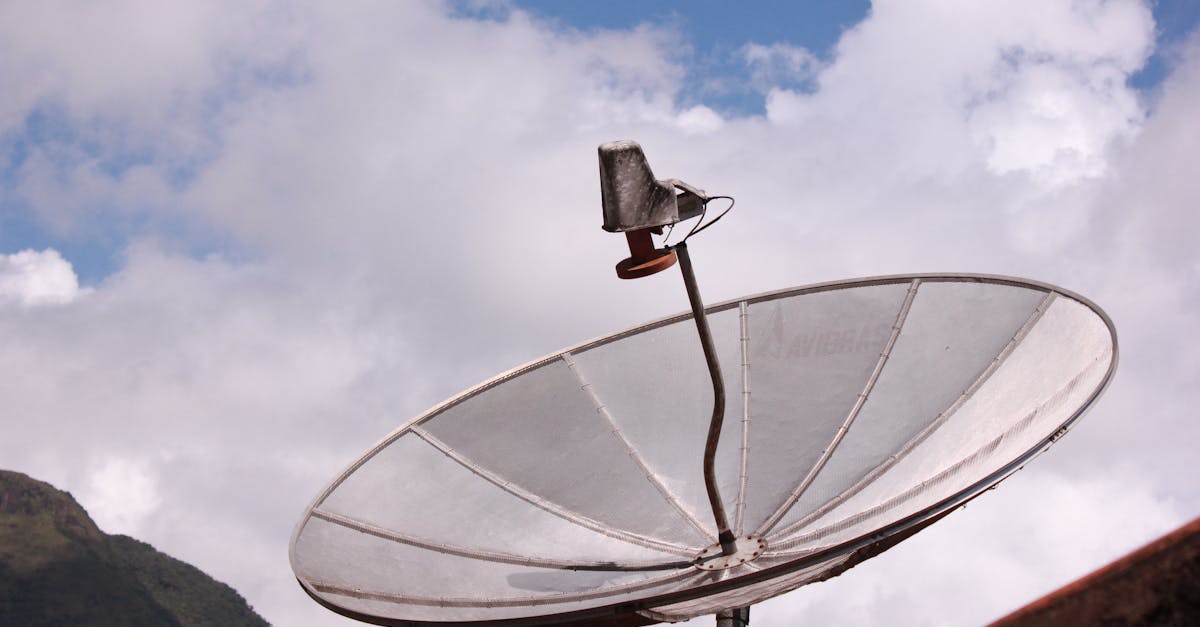
The Global Positioning System consists of approximately 32 satellites orbiting 12,500 miles above the Earth, each carrying a suite of highly precise atomic clocks, typically rubidium or cesium oscillators. These satellites continuously broadcast their time and position. A GPS receiver determines its location by measuring how long signals from at least four satellites take to arrive, then solving for the only position consistent with those travel times. Position falls out of timing. The clock is the load-bearing element [3][4].
The system works because the atomic clocks aboard the satellites are extraordinarily accurate, and because the signals are continuously corrected and synchronized by ground control stations. GPS provides the world's primary distribution of accurate, sub-microsecond time, a level of precision that previously required expensive laboratory-grade atomic clocks and specialized expertise to achieve [4].
But the timing signal can be used independently of positioning. If a receiver already knows its location, for example because it is permanently installed at a surveyed site like a cell tower or a power substation, it can derive precise time from a single satellite. This is what makes GPS so valuable as a timing source. It provides, free of charge, a level of timing accuracy that was difficult and costly to achieve before GPS. After GPS became fully operational for civilian use in 1993, building a sub-microsecond timing system became almost trivial and nearly free [4].
The result was rapid adoption across every sector that needed precise time. The 2001 Volpe Report, the first comprehensive government assessment of GPS vulnerability, noted that GPS was already "the most frequently selected method for precise synchronization" in telecommunications systems and that "GPS-based timing synchronization is being used for transportation-related digital communication links and other applications such as telecommunications, banking, commerce, and the Internet" [4].
What the Volpe Report did not fully anticipate was how deeply this dependency would grow over the next two and a half decades.
Where this story sits
5 related pieces
Read it →
Hover a story · click to read
 No. 14 · Aug 26, 2026The Quiet Relay: How China-Linked Hackers Turned IoT Devices Into Espionage Highways
 No. 16 · Aug 27, 2026Lake America: The Hidden Technology Problems Behind Trump’s Lake Ontario Order
 No. 3 · Aug 25, 2026When the Money Runs Out: The Economics of the Breaking Point
 No. 26 · Sep 2, 2026Orbital Grappling: Inside the Quiet U.S.–China Race to Build Maneuverable Spacecraft
 No. 46 · Sep 13, 2026Could a "Rogue AI" Cyberattack Push America Onto Stablecoin Rails?
The Invisible Thread: Financial Markets
When you buy a share of stock, the transaction is recorded with a timestamp. That timestamp is not a courtesy. It is a regulatory requirement and a functional necessity. Financial transaction systems require timing accurate to about one second for some operations. More demanding applications, such as audit trail systems and network logging, require tens of milliseconds [2].
GPS provides the reference clock for much of this infrastructure. Financial exchanges and trading firms use GPS-disciplined oscillators and network time servers that derive their accuracy from GPS signals. When GPS timing is available, these systems maintain synchronization automatically. When it is not, they rely on internal oscillators that drift over time. How long they can maintain acceptable accuracy depends on the quality of the oscillator. A cheap crystal oscillator might drift beyond acceptable limits in hours. A high-quality rubidium oscillator might hold for days. But eventually, without an external reference, they all drift [4][5].

The risk is not theoretical. A 2019 RTI International study commissioned by NIST estimated that a GPS outage could cost approximately one billion dollars per day [3]. The financial sector is not the most timing-dependent sector in absolute terms. That distinction belongs to telecommunications and the power grid, as the Volpe Center's own analysis emphasized by giving particular attention to those two sectors because of their direct impact on all other critical infrastructure sectors [2]. But finance is the sector where the economic consequences of timing disruption are most immediately quantifiable.
Keeping the Lights On: The Electric Grid
The North American electric power grid is an engineering marvel and a timing problem. Alternating current flows through the grid at 60 hertz, meaning the current reverses direction 60 times per second. For power to flow efficiently and safely across the transmission network, every point on the grid must stay in phase. If the phase at one end of a transmission line drifts even slightly relative to the other end, power flows in unintended directions, equipment can be damaged, and in extreme cases, the grid can become unstable [4][6].
For decades, grid operators managed phase synchronization through local measurements and manual coordination. But as the grid became more interconnected and as operators needed to detect and respond to disturbances faster, the industry adopted Phasor Measurement Units, or PMUs, also called synchrophasors. PMUs measure the phase and magnitude of voltage and current at precise moments, and they timestamp every measurement using GPS timing. This allows operators to compare measurements from thousands of points across the grid in real time and detect problems before they cascade into blackouts [4][6].
PMUs require timing accurate to within one microsecond, and some applications demand 50 nanoseconds or better. GPS is the primary practical source of this level of accuracy for widely distributed measurement devices. The 2008 Volpe Center timing criticality assessment noted that electric power distribution experts "predict a growing dependence on GPS time (hence, on the backup to GPS) for real time maintenance and grid stability" [2].
Without GPS, PMUs lose their common time reference, and their measurements become useless for cross-grid comparison. Grid operators would lose their real-time situational awareness and would have to fall back on slower, less precise monitoring methods [4][6].
How long the grid could operate without GPS timing depends on the specific system and the conditions. Some PMUs are equipped with holdover oscillators that can maintain accuracy for hours or days. But a prolonged GPS timing outage would degrade situational awareness and could complicate the response to any grid disturbance that occurred during the outage. The grid would not instantly collapse, but it would become harder to manage, and the margin for error would shrink.
The Talking Network: Telecommunications
Of all the sectors that depend on GPS timing, telecommunications has the deepest and most immediate dependency. Cellular networks are essentially distributed timing systems. Every cell tower in a network must stay synchronized with every other tower, and the tolerances are tight.
Code Division Multiple Access (CDMA) networks, which include much of the older infrastructure built by Verizon and Sprint, require synchronization between base stations accurate to within plus or minus 10 microseconds. CDMA networks have the most stringent timing requirement of the mobile telephone networks. GPS provides a cost-effective method of meeting this requirement, and nearly all CDMA base stations are equipped with GPS-disciplined oscillators [2].
Newer technologies demand even tighter synchronization. The tolerances for modern LTE and fifth-generation networks are more demanding still, with timing requirements that can reach the nanosecond range for advanced features such as coordinated multipoint transmission [4][6].
The San Diego incident in 2007 provided a real-world demonstration of what happens when cell towers lose GPS timing. When the jamming knocked out the GPS signal, cell towers in the area lost their timing reference. Calls dropped. Pagers went silent. The disruption was temporary and localized, but it revealed how quickly the loss of GPS timing could affect everyday communications [2].
Telecommunications providers are aware of the vulnerability and most maintain some level of backup timing, typically in the form of high-quality oscillators that provide holdover during short GPS outages. But these oscillators drift, and their accuracy degrades over time. A short outage of minutes or hours is manageable. A prolonged outage of days or weeks would progressively degrade network performance.
Beyond the Obvious: Other Critical Dependencies
The financial sector, the power grid, and telecommunications are the most frequently discussed GPS timing dependencies, but they are not the only ones. The 2021 NIST technical report by Michael Lombardi identified GPS timing dependencies across multiple critical infrastructure sectors, and other analyses have extended the list further [4][3].
Data centers and cloud infrastructure rely on precise timing for database replication, log correlation, and distributed system consistency. Data centre operations use GPS timing to coordinate backup replication, log correlation, and the forensic audit trails that security investigations depend on [5].
Emergency services depend on cellular networks for 911 communications and location. If cellular networks lose timing synchronization, 911 location accuracy degrades.
Transportation systems use GPS timing for railroad signaling, air traffic control synchronization, and maritime navigation.
Broadcasting depends on GPS timing for Single Frequency Network configurations used in digital television and radio broadcasting, where multiple transmitters broadcast on the same frequency and must stay synchronized to avoid interference.
Agriculture uses GPS-guided precision farming equipment that depends on both positioning and timing.
Brandon Karpf, writing in June 2026, noted that fifteen of the sixteen critical-infrastructure sectors the Department of Homeland Security tracks run on this one signal [3]. The NIST report focused specifically on the financial, telecommunications, and electric power sectors as the most thoroughly documented dependencies [4]. The broader claim is plausible given the pervasiveness of GPS timing, but the precise count depends on how one defines "depends on."
The Fragile Signal
The GPS signal that all of this infrastructure depends on is, by design, extraordinarily weak. The satellites broadcast a very faint spread-spectrum signal, attenuated to sub-nanowatt levels by the time it reaches a receiver on the ground. The system works because GPS receivers use spread-spectrum techniques to extract the signal from the noise, but the signal's weakness means that any radio-frequency energy on or near the GPS frequencies can overwhelm it [4][7].
Dana Goward, president of the Resilient Navigation and Timing Foundation and a former member of the National Space-Based Positioning, Navigation, and Timing Advisory Board, explained it this way: if this were cybersecurity, GPS jamming would be a denial of service attack. The signal is so faint that "just about any radio noise on or near the frequency can deny reception to your receiver, depending on how close the transmission is to you" [7].
The European Union conducted a survey that identified over 450,000 signals with the potential to interfere with GPS and other global navigation satellite systems. According to Goward, only about 10 percent of those were intentional. The rest were random radio noise from machinery, accidental transmissions, and similar sources [7].
Jamming
Jamming is the simplest and most common form of GPS disruption. A jammer transmits radio-frequency energy on or near the GPS frequency, overwhelming the weak GPS signal and preventing receivers from locking onto it. The San Diego incident demonstrated that even unintentional jamming could disrupt civilian infrastructure over a significant area [2][7].
In recent years, GPS jamming has become a routine feature of conflict zones. A June 2026 article in Foreign Policy catalogued interference from the Baltic to the Strait of Hormuz. The physics YouTube channel Veritasium, working from research by Todd Humphreys at the University of Texas at Austin, traced jamming across Europe to a space-based Russian source [3].
Spoofing
Spoofing is more insidious than jamming. Instead of blocking the GPS signal, a spoofer transmits a false GPS signal that causes receivers to calculate incorrect positions or incorrect times. Goward described spoofing as "hacking" in the cybersecurity analogy, "transmitting false GPS signals so that the receiver thinks that it's someplace where it's not" [7].
The consequences of spoofing can be severe. Goward cited an incident in which thieves used a GPS spoofer device to misdirect a truck carrying a million dollars' worth of Guy Fieri's tequila, stealing it after the truck was diverted to a location of their choosing. More dangerously, spoofing can cause aircraft to wander into prohibited airspace and ships to collide. Both have been documented [7].
What makes spoofing particularly troubling is that it has become easier as technology has advanced. In the early days of GPS, building a spoofer required specialized expertise and expensive equipment. Today, anyone with a software-defined radio and hobby-level knowledge can transmit fake GPS signals. The barrier to entry has dropped dramatically [7].
Space Weather
GPS signals pass through the Earth's ionosphere, and disturbances in the ionosphere caused by solar activity can degrade GPS accuracy or cause loss of signal. Solar flares and coronal mass ejections can create ionospheric conditions that disrupt GPS for minutes to hours over large areas. A severe space weather event, similar to the Carrington Event of 1859, could potentially disrupt GPS and other satellite systems for an extended period. The likelihood of such an event in any given year is low but not negligible, and the consequences would extend far beyond GPS.
System and Equipment Failures
GPS is not a single piece of equipment but a system of systems, comprising the satellite constellation, the ground control segment, and millions of receivers. Failures can occur at any point in this chain.
In April 2026, the U.S. Space Force cancelled the program meant to modernize GPS's own ground control, after sixteen years and $6.27 billion spent against an original estimate of $3.7 billion. The Space Force called the integration timeline "insurmountable." The cancellation meant that the most advanced military on earth could not complete the upgrade to the system that has no backup, leaving the existing ground control segment in place with no clear path to modernization [3].
The Covert Channel Discovery
In June 2026, Steven Murdoch, a security researcher at University College London, discovered that every GPS satellite has been quietly broadcasting encrypted military key traffic for approximately twenty years in a 176-bit field that every receiver on Earth pulls down but almost nobody had ever examined. This finding, reported by 404 Media, meant that GPS was not merely a positioning and timing utility but also a covert military communications channel. The discovery heightened the targeting calculus: an adversary that could kill the GPS signal would not merely disrupt positioning and timing but also the secure communications that depend on the cryptographic key material distributed through the signal. One strike could render dependent forces both blind and mute [3].
The Day the Clock Stopped: Scenarios and Consequences
What would actually happen if GPS timing became unavailable, unreliable, or untrustworthy for an extended period? The answer depends on the duration, the scope, the nature of the disruption, and the specific systems affected. But based on the documented dependencies and the real-world incidents that have occurred, a picture emerges.
The First Minutes
In the first minutes after GPS timing is lost, most systems continue to function normally. GPS-disciplined oscillators in cell towers, power substations, and financial exchanges switch to holdover mode, maintaining accurate time using their internal clocks. High-quality oscillators can maintain microsecond-level accuracy for hours. Calls continue. The grid stays synchronized. Trades execute.
But some systems degrade immediately. In areas where GPS jamming is active, as in the San Diego incident, cell towers that lose timing synchronization may begin dropping calls. PMUs that lose their timing reference stop producing useful cross-grid measurements. Emergency services that depend on cellular networks begin to lose location accuracy.
The First Hours
As hours pass without GPS, the quality of holdover oscillators begins to matter. Cheap crystal oscillators, common in consumer-grade equipment, may drift beyond acceptable limits within hours. Higher-quality temperature-compensated oscillators can maintain accuracy for several hours. Rubidium oscillators, found in higher-end infrastructure, can maintain microsecond accuracy for a day or more.
Financial systems that depend on precise timestamping begin to face reconciliation problems. If different nodes in a trading system disagree about the time by more than the regulatory tolerance, audit trails become unreliable. Disputes about order sequencing become harder to resolve. In practice, most exchanges have procedures to halt trading if timing becomes unreliable, which would prevent errors but also halt market activity.
Cellular networks experience progressive degradation. As more towers drift out of synchronization, handoff failures increase. Calls drop more frequently. In areas with dense tower deployment, the effects compound. Network operators can implement temporary measures, such as reducing the number of active towers or adjusting handoff parameters, but these are workarounds, not solutions.
The First Day
After 24 hours without GPS timing, the situation becomes more serious. A 2019 RTI International study commissioned by NIST estimated the cost of a GPS outage at approximately one billion dollars per day [3]. This figure encompasses losses across multiple sectors.
Power grid operators lose their synchrophasor-based situational awareness. They can still operate the grid using traditional monitoring tools, but their ability to detect and respond to disturbances in real time is degraded. If a fault occurs during the outage, operators have less information available to manage it. The grid does not automatically fail, but it becomes more vulnerable to cascading failures.
Telecommunications networks continue to degrade. If the outage affects a large area, the cumulative effect of timing drift across thousands of towers becomes increasingly difficult to manage. Some networks may begin to partition, with groups of towers that are still synchronized with each other but out of sync with neighboring groups.
Days to Weeks
If GPS timing remains unavailable for days or weeks, the effects become increasingly severe and increasingly difficult to predict. The Digital Security Insights advisory firm noted in May 2026 that the Iran war had moved GPS from the "constants column" to the "variables column" for enterprise business continuity planning, with documented incidents of GPS degradation affecting infrastructure between February and May 2026 [5].
At this timescale, the question becomes whether the affected systems have meaningful backup timing sources. For most of them, the answer is no. The holdover oscillators that bridged the first hours and days have long since drifted beyond useful accuracy. Without an external timing reference, there is no way to resynchronize.
A cascading failure across otherwise unrelated systems becomes technically plausible at this point. If the power grid loses stability because operators cannot manage phase synchronization, the resulting instability could affect telecommunications infrastructure that depends on grid power. If telecommunications networks degrade, the coordination systems that grid operators use to manage the grid become less reliable. The systems are not directly connected, but they share dependencies, and the failure of one can amplify the failure of another.
Whether such a cascade would actually occur depends on many factors, including the scope of the outage, the time of year, the load on the grid, and the specific systems affected. But the interdependencies are real, and they run through GPS timing.
The Backup That Wasn't

The question of what to do about GPS vulnerability is not new. In 1998, Presidential Decision Directive 63 called for "a thorough evaluation of the vulnerability of the national transportation infrastructure that relies on the Global Positioning System" and an "independent, integrated assessment of risks to civilian users of GPS-based systems." This directive led to the 2001 Volpe Report, which explicitly warned that "the GPS system cannot serve as a sole source for position location or precision timing for certain critical applications" and that "backups for positioning and precision timing are necessary for all GPS applications involving the potential for life-threatening situations or major economic or environmental impacts" [4].
The Volpe Report's recommendation was clear. So was the initial response. Beginning in 1997, even before the report was published, a significant effort had begun to develop a backup system by modernizing the existing Loran-C system. Loran-C was a radio navigation system that had preceded GPS by several decades, with the first stations beginning operation during World War II. Its signals originated from ground-based transmitters rather than satellites, broadcasting in the low-frequency part of the radio spectrum at 100 kHz, as opposed to GPS's ultra-high frequency signals at 1575.42 MHz. Loran-C stations broadcast at high power levels, sometimes as much as one megawatt, compared to GPS's sub-nanowatt spread-spectrum signals [4].
These differences were the appeal. Loran-C operated independently of GPS, used a completely different part of the radio spectrum, and was immune to the sources of interference that affected GPS. The modernization effort added a digital time code to the legacy signal, installed new timing hardware at existing stations, and improved modulation techniques. The result was called enhanced Loran, or eLoran [4].
From a timing perspective, eLoran compared favorably to all other existing systems as a potential backup to GPS. This conclusion was reached in several studies, most notably by an Independent Assessment Team organized through an inter-governmental effort. The 2008 Volpe Center paper by James Carroll and Kirk Montgomery presented preliminary results from testing of an Enhanced Loran Research Receiver, with Symmetricom, NIST, and the Volpe Center among the organizations evaluating the technology [1][4].
But eLoran was never fully deployed as a national system. The U.S. Coast Guard, which operated Loran-C, terminated the system in 2010 as part of a budget decision. The termination was controversial. Supporters of eLoran argued that it was premature, that the system was being shut down just as it was being proven as a viable GPS backup. Critics argued that the system was obsolete and that maintaining it was not cost-effective. In either case, the result was that the United States lost the most readily available terrestrial backup to GPS, and no replacement has been deployed since.
The situation has persisted for more than fifteen years. The National Defense Authorization Act for Fiscal Year 2018 included provisions requiring the Secretary of Transportation to establish a backup to GPS, but implementation has been slow. The Department of Transportation has conducted studies and issued reports, but no terrestrial backup system has been built at scale.
Meanwhile, other nations have moved forward. The AEI analysis noted in March 2026 that adversaries like China and Russia have already built thorough backup systems, while the United States faces what the article characterized as a "massive national security concern" with its GPS vulnerability [7]. The United Kingdom conducted eLoran trials and deployed a limited eLoran service for maritime navigation. South Korea has also invested in eLoran as a GPS backup, motivated in part by repeated GPS jamming attributed to North Korea.
What the Government Is Doing, and Not Doing
Multiple federal agencies have responsibilities related to GPS timing and its vulnerabilities, but coordination has been a persistent challenge.
NIST (the National Institute of Standards and Technology) maintains the official U.S. time standard using an ensemble of atomic clocks at its laboratories in Boulder, Colorado. This standard is independent of GPS. NIST distributes time through various means, including the WWV and WWVH radio stations, NTP servers, and other services. NIST has published technical reports documenting GPS timing dependencies in critical infrastructure, including the 2021 technical note by Michael Lombardi that provides the most comprehensive recent assessment of the problem [4]. NIST's role is primarily measurement, standards, and research, not operational resilience.
DHS (the Department of Homeland Security), through CISA (the Cybersecurity and Infrastructure Security Agency), has identified GPS as a potential single point of failure for critical infrastructure. CISA has published guidance on GPS dependency and has encouraged infrastructure operators to assess their timing dependencies. However, CISA does not have the authority to mandate backup timing systems in the private sector.
The Department of Transportation has studied GPS vulnerability extensively, beginning with the Volpe Report in 2001. The DOT has responsibility for civil GPS and has been directed by Congress to establish a backup timing capability, but progress has been limited.
The Department of Defense operates the GPS system through the Space Force, which manages the satellite constellation and ground control segment. The cancellation of the ground control modernization program in April 2026 left the existing ground control segment in place with no clear modernization path [3]. The military's own dependence on GPS for both positioning and secure communications creates a vulnerability that adversaries have incentives to exploit.
The PNT Executive Committee and the National Space-Based PNT Advisory Board exist to coordinate positioning, navigation, and timing policy across federal agencies. The advisory board, which includes experts from outside government, has repeatedly recommended the deployment of a terrestrial backup to GPS. These recommendations have not been implemented at scale.
The fundamental challenge is institutional. GPS is free, and it works. Competing with a free government service is difficult. As Goward noted, it is "kind of hard to compete with something that's free and provided by the government" [7]. The market for backup timing systems is thin because most users see no need to pay for something they already get for free. And the agencies responsible for addressing the vulnerability do not have the budget, the authority, or the institutional mandate to build and operate a national backup timing system. The result is a gap between the documented risk and the institutional response that has persisted for more than two decades.
Why the Risk Receives So Little Attention
GPS timing vulnerability is a hard problem to communicate. It is invisible. There is no burning oil rig, no collapsed bridge, no flood footage to put on television. The infrastructure that depends on GPS timing is largely invisible to the public, and the timing function of GPS is invisible even to many people who work in the infrastructure sectors that depend on it.
When most people think about infrastructure threats, they think about physical attacks, cyber intrusions, natural disasters, and aging equipment. These are visible, understandable, and dramatic. GPS timing is none of these things. It is a signal you cannot see, received by equipment you do not know about, that enables systems you take for granted, and the failure mode is not a bang but a gradual drift that compounds over time.
The policy community has been aware of the problem since at least 1998, when Presidential Decision Directive 63 called for an assessment of GPS vulnerability. The Volpe Report in 2001 made the risk explicit. Multiple studies, congressional hearings, and advisory board recommendations have followed. But awareness has not translated into action at the necessary scale.
One reason is cost. Building a national eLoran system or an equivalent terrestrial backup would require significant capital investment and ongoing operational costs. In a budget environment where every dollar is contested, spending money to prevent a problem that has not yet occurred is a hard sell.
Another reason is the complexity of the institutional landscape. No single agency owns the problem. GPS is operated by the Department of Defense, used by civilians through the Department of Transportation, protected by DHS, studied by NIST, and depended on by the private sector. Coordinating a response across these stakeholders requires leadership that has not been consistently provided.
A third reason is the absence of a triggering event. The San Diego incident in 2007 was significant but not catastrophic. GPS jamming in conflict zones is ongoing but distant. No incident has yet occurred that is severe enough, prolonged enough, and visible enough to generate the political will for a large-scale response. Until one does, the gap between risk and response is likely to persist.
The Clock Is Ticking
The history of timekeeping is, in part, a history of disasters caused by not knowing the time. In October 1707, Admiral Sir Cloudesley Shovell's fleet of four Royal Navy ships struck the rocks of the Scilly Isles in the dark. Two thousand sailors drowned. The fleet had charts, compasses, and experienced sailors. What it did not have was the time. Longitude, your east-west position on a spinning globe, is a clock problem. Your local time comes from the sky, but the sky does not tell you the time at a fixed reference point. In 1707, no clock could hold that time on a pitching ship. The fleet did not know where it was, and it sailed into rocks that had always been there [3].
The disaster led to the Longitude Act of 1714, in which Parliament offered up to £20,000, about $5 million in today's currency, to anyone who could solve the problem of finding longitude at sea. The solution came not from the astronomers who expected it but from John Harrison, a self-taught clockmaker from Yorkshire who spent four decades building a sea clock that would hold Greenwich time through anything the ocean could throw at it [3].
The lesson is simple and ancient. When you depend on knowing the time, you need a clock you can trust. And when the clock that everyone depends on is a constellation of satellites broadcasting a faint signal from 12,500 miles overhead, with no terrestrial backup, the question is not whether the clock will fail but what happens when it does.
The United States has known about this vulnerability for at least twenty-five years. It has studied the problem thoroughly. It has identified the dependencies, quantified the risks, and evaluated the alternatives. It has even developed and tested a backup system. But it has not deployed one.
The infrastructure has continued to grow more dependent on GPS timing in the meantime. Cellular networks require tighter synchronization than their predecessors. The power grid has deployed more synchrophasors. Financial markets have moved to faster trading systems with more precise timestamping requirements. Data centers have grown larger and more distributed. Every year that passes without a backup, the dependency deepens and the potential consequences of disruption grow.
The San Diego incident in 2007 was a warning shot. GPS jamming in conflict zones is ongoing. The cancellation of the GPS ground control modernization program in 2026 removed one of the paths to a more resilient system. The discovery that GPS has been quietly distributing military cryptographic key material added a new dimension to the targeting calculus. The geopolitical environment has become more contested, not less.
The clock in the sky is still ticking. The question is how long it will keep ticking, and what happens when it stops.
Sources / References
[1] Carroll, J. & Montgomery, K. (2008). "Global Positioning System Timing Criticality Assessment: Preliminary Performance Results." John A. Volpe National Transportation Systems Center. Presented at the 40th Annual Precise Time and Time Interval (PTTI) Systems and Applications Meeting. URL: https://rntfnd.org/wp-content/uploads/2013/09/GPS-Timing-Criticality-Volpe-Paper-2008.pdf
[2] Carroll, J. & Montgomery, K. (2008). Ibid. References the San Diego Harbor GPS interference incident of January 2007, including effects on cellular communications, pagers, and light aircraft. The paper notes that GPS disruption has resulted in lost utility billing information and predicts growing dependence on GPS time for grid stability. Also documents timing accuracy requirements across sectors: one second for some financial transactions, tens of milliseconds for network logging and NTP, tens of microseconds for CDMA base stations, and microsecond to 50 nanoseconds for power grid phasor measurements.
[3] Karpf, B. (2026, June 10). "The Backup Was Always a Clock." A Discipline of Seeing (Substack). URL: https://karpf.substack.com/p/the-backup-was-always-a-clock. Sources cited within include: Foreign Policy article "The Epidemic of GPS Jamming" (June 1, 2026); Veritasium forensic investigation of European GPS jamming (June 5, 2026); 404 Media report on Steven Murdoch's discovery of encrypted military key traffic in GPS satellite broadcasts; Space Force cancellation of GPS ground control modernization program on April 17, 2026, after 16 years and $6.27 billion against a $3.7 billion original estimate; 2019 RTI International study commissioned by NIST estimating GPS outage cost at approximately $1 billion per day; historical account of the 1707 Scilly Isles disaster and the Longitude Act of 1714; observation that 15 of 16 DHS-tracked critical infrastructure sectors depend on GPS.
[4] Lombardi, M. A. (2021). "An Evaluation of Dependencies of Critical Infrastructure Timing Systems on the Global Positioning System (GPS)." NIST Technical Note 2189. National Institute of Standards and Technology. URL: https://doi.org/10.6028/nist.tn.2189. Primary source for: GPS as "the world's primary system for the distribution of accurate (sub-microsecond) time"; GPS declared fully operational for civilian use in 1993; Presidential Decision Directive 63 (1998); the 2001 Volpe Report findings on GPS timing dependency; eLoran development history and comparison to GPS; GPS signal characteristics (UHF, spread-spectrum, sub-nanowatt); Loran-C characteristics (LF, 100 kHz, high-power, up to one megawatt); sector-specific timing requirements for financial, telecommunications, and electric power sectors.
[5] DSI Advisory Services. (2026, May 20). "When the Sky Goes Dark." Digital Security Insights Briefings. URL: https://digitalsecurityinsights.com/briefings/when-the-sky-goes-dark. Source for: enterprise dependencies on GPS timing including financial transaction processing, power grid management, telecommunications, internet routing, and data centre operations; the impact of the Iran war on GPS reliability assumptions between February and May 2026; the concept of GPS assumptions moving from constants to variables in business continuity planning.
[6] NIST (Lombardi, 2021) [4] and DSI Advisory Services (2026) [5] collectively document power grid and telecommunications timing dependencies. The NIST report covers PMU timing requirements. The DSI report covers data centre dependencies and telecommunications infrastructure.
[7] Tews, S. (2026, March 5). "Why America's GPS Dependency Is a National Security Crisis." American Enterprise Institute. URL: https://www.aei.org/technology-and-innovation/why-americas-gps-dependency-is-a-national-security-crisis/. Transcript of interview with Dana Goward (Resilient Navigation and Timing Foundation) and retired Coast Guard Rear Admiral Jeff Hathaway. Source for: Goward's description of GPS satellites as "suites of highly precise clocks, usually three rubidium or cesium clocks"; characterization of timing as "the one ring that rules them all"; explanation of GPS signal weakness and vulnerability to jamming; EU survey finding 450,000 potential interfering signals with about 10% intentional; spoofing description and examples including Guy Fieri tequila cargo theft; Goward's observation that it is "kind of hard to compete with something that's free and provided by the government"; article's characterization of GPS dependency as a "massive national security concern" and note that adversaries like China and Russia have built thorough backup systems.
Comments (3)
Continue exploring
When the Money Runs Out: The Economics of the Breaking Point
In the first half of August 2026, the warning lights began to flash. Consumer sentiment tumbled in the University of Michigan's…
Orbital Grappling: Inside the Quiet U.S.–China Race to Build Maneuverable Spacecraft
A Chinese tug towed a dead satellite out of geostationary orbit in 2022. Both Washington and Beijing are now building spacecraft…
Could a "Rogue AI" Cyberattack Push America Onto Stablecoin Rails?
A cyberattack blamed on rogue AI could accelerate America's shift toward stablecoins and tokenized deposits, and the legal…
The article's framing aligns closely with the 2020 executive order on responsible use of PNT, which directed federal agencies to develop GPS backups like enhanced Loran and explicitly flagged the same single points of failure in telecom and finance.
I'm not fully convinced the $1 billion per day figure tells us much without knowing how long the hypothetical outage lasts, since the worst costs would likely compound rather than scale linearly from one day to the next.
Mandating backup timing receivers at every cell tower sounds reasonable on paper, but the cost and ongoing maintenance burden will fall on small carriers who already operate on razor-thin margins.