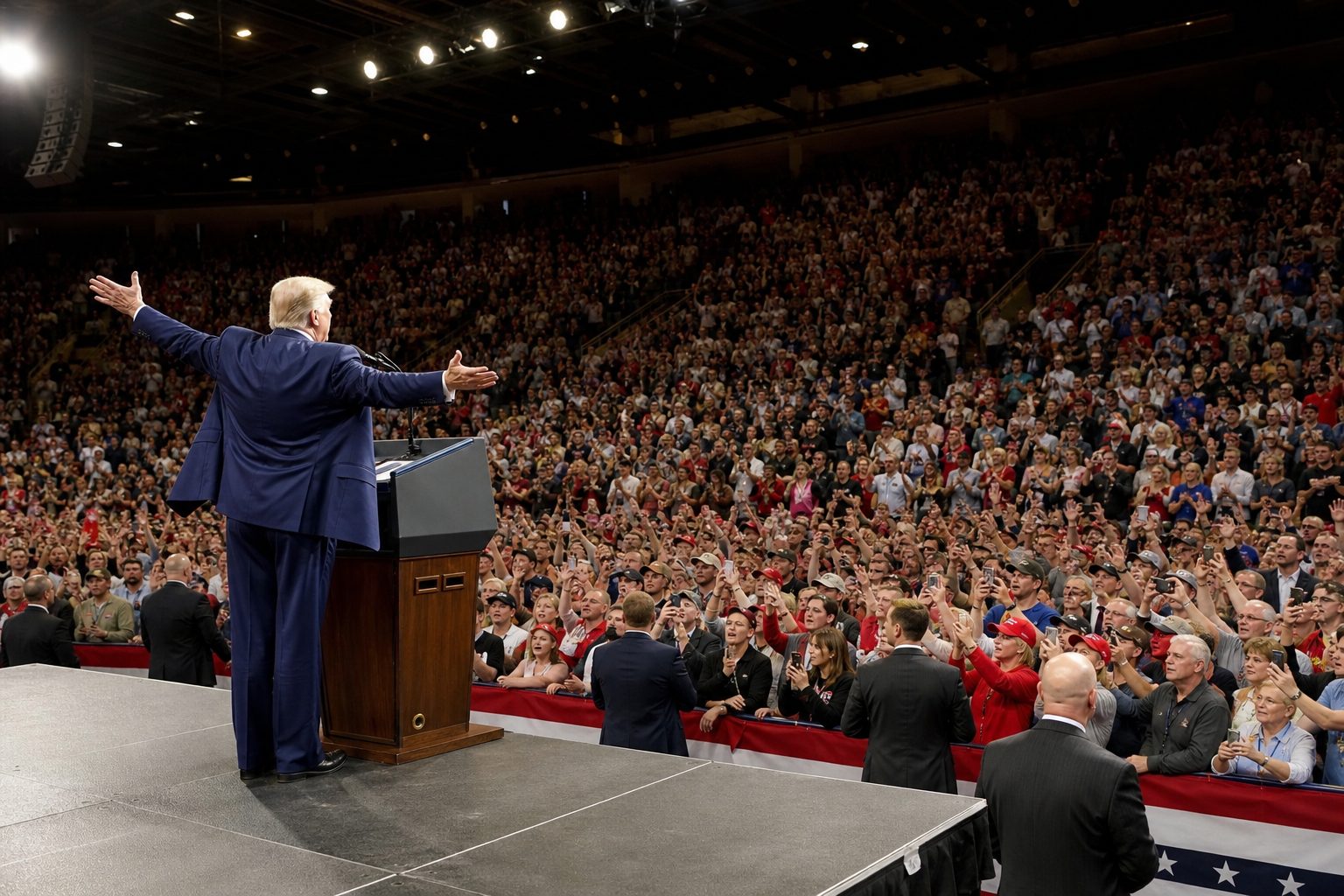
Donald Trump’s remarks about Senator Jon Husted began as a story about football. At a rally in Youngstown, Ohio, on October 12, 2026, Trump praised Husted’s college athletic background, physique, jawline, and toughness after former NFL coach Jon Gruden described Husted as an outstanding player. In later appearances, the football anecdote became a recurring joke about Husted’s backside.
At a Northern Kentucky rally on October 17, Trump said he had “examined” Husted’s backside and had never done that with a man before, according to the full rally transcript. CNN transcripts show that he returned to the subject at a North Carolina rally the following week, describing Husted’s backside as “a pile of muscle” and saying the senator’s shoulder felt like steel. Roll Call Factba.se, October 17, 2026; CNN transcript, October 21, 2026
The remarks are unusual, but unusual does not mean medically meaningful. They raise a more difficult question: can artificial intelligence detect whether a politician’s speech is changing over time, and can it distinguish a real linguistic change from a familiar speaking style, deliberate humor, improvisation, aging, editing, or simple variation from one speech to the next?
The answer is partly yes and mostly conditional. AI can measure changes in speech. Researchers have used computational systems to identify patterns associated with cognitive impairment in carefully designed clinical studies. But no responsible system can diagnose a president from a few rally clips, and no current evidence establishes that Trump’s repeated comments about Husted indicate cognitive decline.
The Husted remarks show a recurring bit, not a diagnosis
The available record matters because short clips can make a remark appear more disconnected than it was.
The October 12 Youngstown speech placed Trump’s comments inside a longer discussion of Husted’s football career and Republican campaign politics. The available transcript indicates that Trump first described “studying” Husted after hearing about his athletic background. At the October 17 rally, he expanded the story by saying he had “examined” Husted’s backside. CNN’s October 13 transcript records an earlier formulation in which Trump said he had examined Husted’s body and looked at his “ass,” hands, legs, and overall build. Roll Call Factba.se, October 12, 2026; CNN transcript, October 13, 2026
That sequence establishes repetition. It does not establish confusion.
CNN transcripts also describe Trump praising the appearance of other Republican candidates, including Mike Collins, Rick Jackson, Ed Gallrein, and Tim Sheehy. The pattern suggests that comments about candidates’ looks and physical presence have become part of his political performance, while Trump has also mocked Democratic candidates’ appearance and masculinity. CNN transcript, October 21, 2026; The Atlantic, “All the President’s Hotties”
The most defensible description is therefore narrow: Trump repeatedly revived a sexualized and physical joke about a male senator during campaign rallies. That repetition may be rhetorically revealing. It is not, by itself, evidence of a neurological disorder.
The Associated Press described the comments as a recurring assessment of Husted’s appearance connected to his football history. That interpretation fits the available chronology better than the claim that the remarks were random or that they prove a clinical problem. Associated Press, “Trump’s new pitch for Republican candidates: they’re really good looking”
What AI can actually measure in speech
Speech-analysis systems do not detect “dementia” directly. They measure features of language and delivery that may correlate with particular conditions in particular populations.
A system might examine:
- how often a speaker repeats a word, phrase, or story;
- the diversity of the speaker’s vocabulary;
- sentence length and grammatical complexity;
- pauses, speech rate, hesitations, and repairs;
- pronoun use and references to specific people or objects;
- whether a speaker maintains a topic or shifts abruptly;
- how clearly ideas connect across sentences;
- pitch, volume, rhythm, and vocal stability.
Some of these features come from the transcript. Others require audio. That distinction matters. A transcript can show repeated words and sentence structure, but it cannot reliably measure pauses, articulation, pitch, intensity, or changes in speaking rate unless the original recording and accurate timing information are available.

Researchers often combine these signals through machine-learning models. The model is trained on examples from people whose clinical status is already known, then tested on new examples. A result such as an area under the receiver operating characteristic curve, or AUC, measures how well the model separates two groups across different decision thresholds. It is not the same as a diagnosis, and it is not automatically the same as accuracy in ordinary public speech.
A model that performs well on recorded clinical interviews may fail when applied to a political rally. The recording environment, microphone, crowd noise, teleprompter use, speech length, subject matter, emotional intensity, and speaker’s performance style may all differ from the data on which the model was trained.
Clinical research shows promise, but under controlled conditions
There is real evidence that AI can identify speech patterns associated with cognitive impairment.
The National Institute on Aging reported on a study that used transcripts from 166 people with mild cognitive impairment and predicted which participants would progress to Alzheimer’s disease within six years. The reported prediction accuracy exceeded 78 percent in that research population. That is a significant result, but it does not mean that an AI system can determine whether an unscreened public figure has Alzheimer’s disease from a speech clip. The study began with participants already identified as having mild cognitive impairment, and its prediction concerned progression within a defined research design. National Institute on Aging, “AI speech analysis predicted progression of cognitive impairment to Alzheimer’s with over 78% accuracy”
A prospective multicenter Korean study tested a voice-based screening tool called SPICK. It reported 83.71 percent accuracy, 85.71 percent sensitivity, 74.29 percent specificity, and an AUC of 0.800 for cognitive impairment. The tool performed differently across conditions, with reported sensitivity of 91.98 percent for Alzheimer’s disease and 79.64 percent for mild cognitive impairment. Those differences illustrate why early impairment is harder to identify than established disease. Clinical validation of a voice-based AI tool for screening cognitive impairment
A 2025 systematic review of 63 studies involving 18,540 participants found that researchers have examined prosodic, temporal, spectral, and linguistic features. In many studies, systems separated people with established Alzheimer’s disease from controls with AUCs above 0.80. Performance was less reliable for mild cognitive impairment. The review also identified recurring weaknesses, including small samples, single-center recruitment, inconsistent diagnostic definitions, controlled tasks, and limited external validation. Artificial Intelligence-Related Voice and Speech Biomarkers of Alzheimer’s Disease: A Systematic Review
Another review of explainable AI methods described candidate signals such as reduced vocabulary diversity, changes in pronoun use, less specific language, longer pauses, slower speech, and altered pitch or intensity. A separate study emphasized lexical choice, syntax, discourse cohesion, sentiment, and connected-speech structure rather than any one verbal mistake. npj Digital Medicine; SAGE study on linguistic patterns in Alzheimer’s disease and mild cognitive impairment
These findings support a limited conclusion: speech contains measurable information about cognitive and neurological states, and statistical models can sometimes detect that information. They do not support the stronger conclusion that a model can diagnose an individual from public remarks.
Where this story sits
5 related pieces

Hover a story · click to read
 No. 38 · Sep 5, 2026The Architecture of Loyalty: How Trump's Coalition Absorbs Every Shock
 No. 16 · Aug 27, 2026Lake America: The Hidden Technology Problems Behind Trump’s Lake Ontario Order
 No. 59 · Oct 3, 2026How One IP Address Change Cost HSI Months of Wiretap Downtime
 No. 78 · Oct 22, 2026The Election Machine: How Campaigns Turn Data Into Your Political Feed
 No. 71 · Oct 17, 2026Seven Institutions After ARTEX AI: What South Korea's Banks Changed, and What's Still a Promise
Trump’s speaking style complicates every measurement
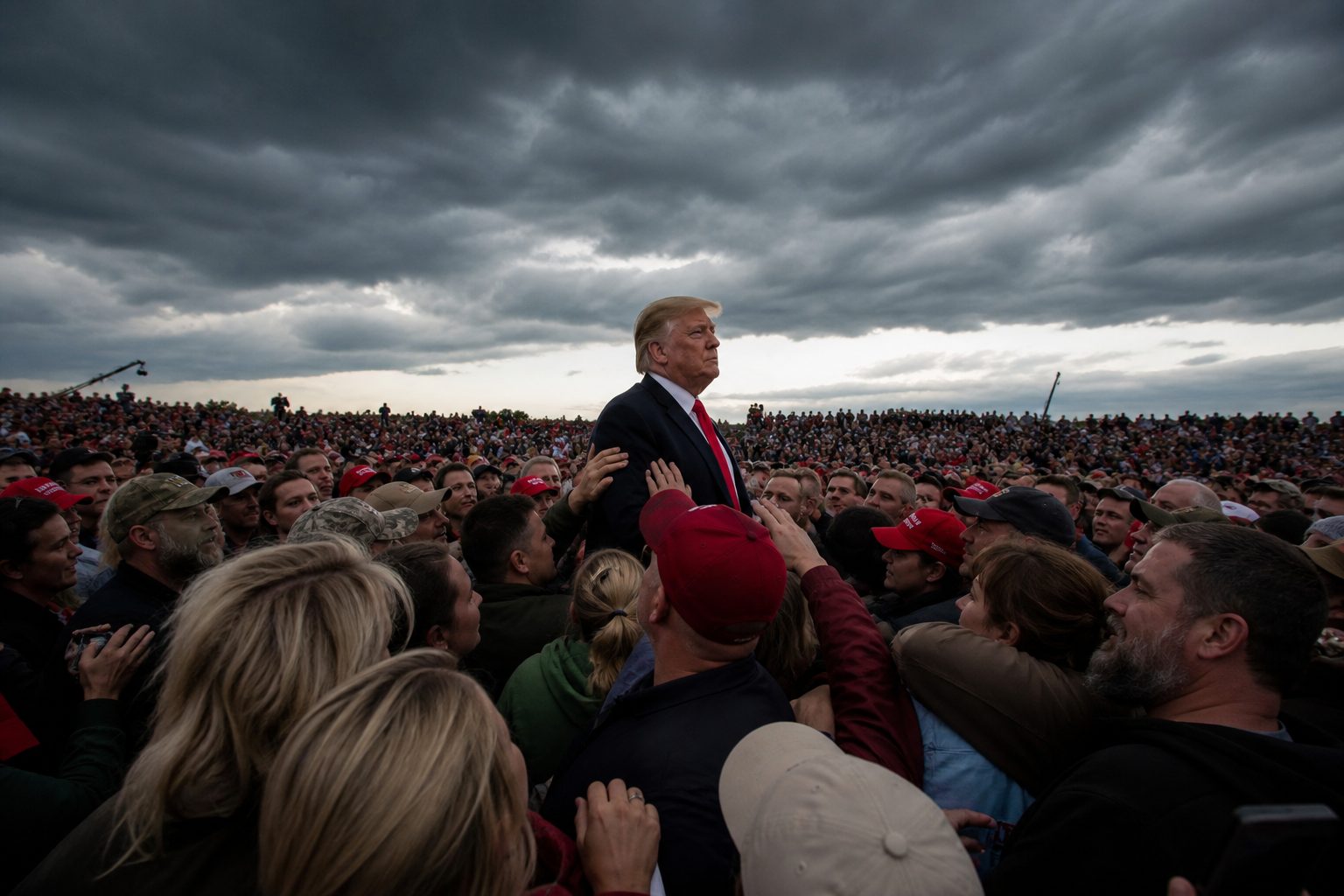
Trump has never been a neutral baseline for a speech-analysis system.
Research on his earlier speeches found unusually simple, repetitive, informal, and syntactically direct language during the 2015 to 2017 campaign period. That means a later analyst cannot treat repetition or short sentences as new symptoms without comparing them with a properly matched earlier sample. “An Empirical Analysis of Popular Press Claims Regarding Linguistic Change in President Donald J. Trump,”
A study in PNAS Nexus likewise identified Trump as a statistical outlier in presidential discourse, with shorter and simpler sentences, distinctive syntax, divisive vocabulary, and repetition used for emphasis. “Quantifying the uniqueness and divisiveness of presidential discourse,” PNAS Nexus
Other longitudinal research has reported changes in the themes of Trump’s speeches between 2015 and 2024, including more violent vocabulary and fewer references to economic performance. That study interpreted the shift as rhetorical and political rather than evidence of neurological deterioration. The distinction is essential. A speaker can become darker, more repetitive, more aggressive, or more tangential because of political incentives, audience expectations, topic, age, fatigue, or changes in the political environment. Donald Trump’s words, SSRN
Research on political language more broadly has found long-term changes toward simpler analytic structures and greater expressed confidence across presidential and other political corpora. Those shifts show that rhetoric changes for historical and stylistic reasons, not only because of disease. “Examining long-term trends in politics and culture through language of political leaders and cultural institutions,” PNAS
The same words can have different meanings in different settings. Repeating a phrase in a rally can be a memory failure, but it can also be branding. Repeating an insult can signal fixation, or it can be a deliberate attempt to make a line memorable. An abrupt topic change may indicate impaired organization, or it may reflect the loose structure of an unscripted political speech.
AI can measure the behavior. It cannot determine the cause without additional evidence.
Humor and performance can look like impairment
Political speech is designed for audiences. Speakers repeat applause lines, return to stories that worked before, exaggerate for effect, and test material in public. Humor can involve pauses, unusual emphasis, changes in tempo, and repeated wording. Research on political humor identifies functions including attacking opponents, building solidarity with an audience, managing embarrassment, and promoting the speaker’s image. Prosodic research also finds that timing, rhythm, pauses, and intonation can intensify a joke. Angela Garcia, “The Types and Functions of Humor in the Work of a United States Senator”; “Prosodic enhancers of humorous effect in political speeches”
That creates a central problem for any attempt to evaluate Trump’s speech. A system might detect more repetition in 2026 than in an earlier sample, but that increase could reflect a change in the campaign’s format. A rally speech may be longer, less scripted, and more interactive than a televised interview. A speaker may repeat a story because the crowd responded to it. A candidate may use more familiar words because the message is intended for a large audience.
Even vocabulary diversity is difficult to interpret. A recent study of Trump and Kamala Harris’s 2024 debate language found that lexical diversity depends heavily on transcript length, genre, topic, scripting, and the way repetition is counted. Claims that Trump’s vocabulary has simply shrunk cannot be evaluated without controlling for those factors. “Red and blue language: Word choices in the Trump and Harris 2024 presidential debate”
What a defensible Trump speech study would require

A serious longitudinal analysis would begin by defining the question before selecting the evidence.
Researchers would need recordings and transcripts from comparable settings across time. A 2016 campaign rally should not be compared casually with a 2026 presidential address, a television interview, or a private conversation. The study would need separate samples for rallies, debates, interviews, formal speeches, press conferences, and unscripted exchanges.
It would also need to account for:
- Speech length. Longer speeches naturally contain more repeated words and more opportunities for digressions.
- Topic. Immigration, war, the economy, and campaign strategy each produce different vocabularies.
- Audience and setting. A rally encourages repetition and performance. An interview imposes a different structure.
- Scripted versus spontaneous language. Teleprompter text, prepared remarks, and improvisation should not be mixed without clear controls.
- Transcription quality. Automatic speech recognition can omit words, confuse names, merge sentences, and misplace punctuation.
- Audio conditions. Crowd noise, microphone distance, music, applause, and overlapping speech can distort pauses and timing.
- Media editing. Broadcast packages and social-media clips may splice, shorten, reorder, or contextualize remarks.
- Speaker-specific baselines. Trump’s earlier rhetorical habits must be measured before researchers can call a later pattern a change.
- Independent validation. A model trained on one archive should be tested on recordings from another archive and, ideally, by researchers who did not build the original system.
The NBER study of Trump’s words illustrates why corpus construction matters. It selected speeches at consistent monthly intervals, compared Trump with other major-party candidates across comparable periods, and corrected some transcript errors against video. It also emphasized that closed-caption transcripts can contain missing words and other inaccuracies. NBER, “Donald Trump’s words”
A dataset assembled from every available Trump clip would not necessarily be better. It might be worse if it overrepresented viral moments, edited television packages, or speeches that received unusual media attention.
Transcripts and clips can manufacture a change
A public speech exists in several versions: the live performance, the recording, the transcript, the edited broadcast segment, the social-media clip, and the caption generated by an automated system. Each version can introduce error.
Fact-checking organizations recommend preserving the original recording, transcript, correction history, speaker labels, timestamps, and confidence judgments when analyzing speech. That procedure is especially important when a single misplaced word could support a claim about cognitive change. FactCheck.org, “Our Process”
Edited video creates another problem. The Associated Press’s reporting on a disputed 60 Minutes interview noted why researchers should distinguish linguistic change from editorial change. A broadcast package may shorten or rearrange remarks that appear continuous in a clip. Associated Press, “Anatomy of a news story: ‘60 Minutes’ invites audience into the editing process with Trump interview”
Even when a clip is authentic, an AI-generated transcript may assign the wrong words to the speaker. A credible analysis therefore needs provenance: where the recording came from, whether it is complete, whether it has been altered, and how the transcript was produced.
The viral Husted clips demonstrate the basic lesson. The complete rally transcript places the comments inside a longer football and campaign discussion. A short excerpt can preserve the words while removing the setting that explains their rhetorical function.
What neurologists cannot infer from a rally
Cognitive health cannot be assessed reliably from verbal behavior alone in an uncontrolled public setting.
Speech reflects many interacting processes, including language, memory, executive function, motor control, hearing, emotion, attention, and social behavior. A change in any one of those systems can affect speech without proving a neurodegenerative disease. Conversely, a person with cognitive impairment may compensate well in familiar settings or during prepared remarks. “Responsible development of clinical speech AI: Bridging the gap between clinical research and technology,” npj Digital Medicine
A public speech also provides little reliable information about sleep, hearing, stress, pain, medication effects, mood, private functioning, or whether a speaker received assistance preparing the remarks.
That does not make public speech irrelevant. It means that public speech can support questions, not conclusions. A sustained and independently verified change might justify closer reporting or professional evaluation. It cannot establish a diagnosis.
What AI can tell readers, and what it cannot
AI-based analysis could responsibly show that:
- Trump repeats certain stories or phrases more often in one defined setting than another;
- his vocabulary or sentence structure differs statistically from an earlier matched sample;
- his pauses, speech rate, or turn-taking patterns have changed;
- his rhetoric has shifted toward different topics or emotional language;
- a particular clip has been edited or transcribed inconsistently;
- a pattern is unusual relative to his own baseline or to comparable politicians.
Those findings would still require interpretation. A statistical difference is not necessarily a medical difference.
AI cannot responsibly tell readers, from the Husted remarks or a collection of rally clips alone, that Trump has dementia, Alzheimer’s disease, mild cognitive impairment, or another neurological condition. It cannot distinguish ordinary aging from illness without clinical context. It cannot infer intent from repetition. It cannot convert a political joke into a neurological symptom.
The strongest conclusion available today is therefore modest. Trump’s remarks about Jon Husted form a documented recurring performance, and AI could measure that recurrence. Modern speech-analysis systems can identify patterns associated with cognitive impairment in some clinical research settings. But the gap between detecting a linguistic pattern and explaining its cause remains wide.
The Husted episode supplies material for studying rhetoric, repetition, humor, media editing, and presidential speech. It does not supply medical evidence. Any analysis that claims otherwise is using the authority of AI to make a judgment the underlying data cannot support.
Sources/References

- Roll Call Factba.se, “Speech: Donald Trump Holds a Midterm Political Rally in Youngstown, Ohio,” October 12, 2026
- CNN transcript, October 13, 2026
- Roll Call Factba.se, “Speech: Donald Trump Holds a Midterm Political Rally in Northern Kentucky,” October 17, 2026
- CNN transcript, October 21, 2026
- CNN transcript, October 21, 2026
- Associated Press, “Trump’s new pitch for Republican candidates: they’re really good looking”
- The Atlantic, “All the President’s Hotties”
- National Institute on Aging, “AI speech analysis predicted progression of cognitive impairment to Alzheimer’s with over 78% accuracy”
- “Artificial Intelligence-Related Voice and Speech Biomarkers of Alzheimer’s Disease: A Systematic Review”
- “Clinical validation of a voice-based AI tool for screening cognitive impairment: a prospective multicenter study”
- “A systematic review of explainable artificial intelligence methods for speech-based cognitive decline detection,” npj Digital Medicine
- “Artificial intelligence-driven natural language processing for identifying linguistic patterns in Alzheimer’s disease and mild cognitive impairment”
- “An Empirical Analysis of Popular Press Claims Regarding Linguistic Change in President Donald J. Trump”
- “Quantifying the uniqueness and divisiveness of presidential discourse,” PNAS Nexus
- Donald Trump’s words, SSRN
- “Red and blue language: Word choices in the Trump and Harris 2024 presidential debate”
- “Examining long-term trends in politics and culture through language of political leaders and cultural institutions,” PNAS
- NBER, “Donald Trump’s words”
- FactCheck.org, “Our Process”
- “Responsible development of clinical speech AI: Bridging the gap between clinical research and technology,” npj Digital Medicine
- Angela Garcia, “The Types and Functions of Humor in the Work of a United States Senator”
- “Prosodic enhancers of humorous effect in political speeches”
- Associated Press, “Anatomy of a news story: ‘60 Minutes’ invites audience into the editing process with Trump interview”
The reading behind this research
What the desk leaned on for this piece. Each link goes to the retailer, where the price is shown.
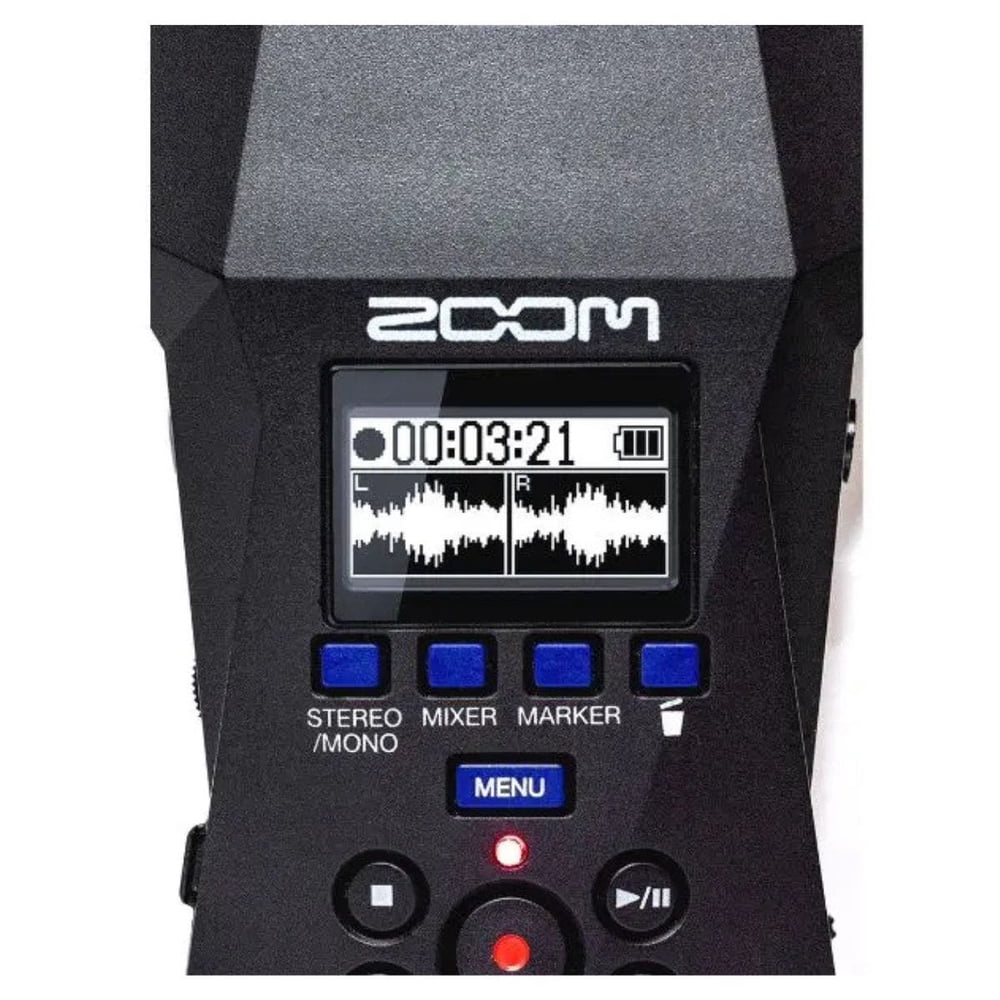
Zoom H1 XLR Bit Float Handy Recorder
Accurate audio lets AI assess pauses, pitch and speech rate, which the article says transcripts alone can’t capture.
View on Walmart
Clear, consistent audio lets AI examine pitch, volume and rhythm—key for the speech‑pattern analysis discussed in the article.
View on Walmart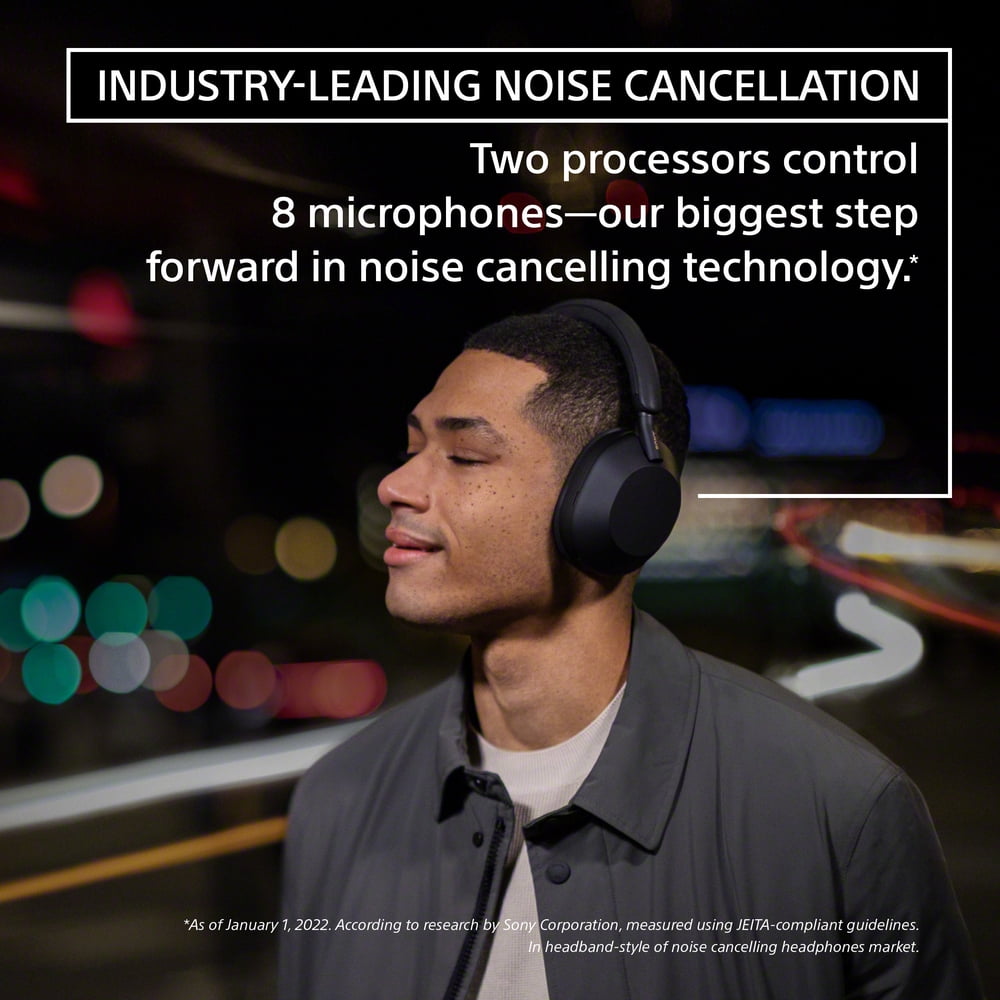
Sony WH 1000XM5 The Best Wireless Noise Canceling Headphones Black
They let you hear rally recordings without background noise, so you can spot the pauses and pitch changes the article says are needed for AI analysis.
View on Walmart
Regular brain puzzles can support mental agility, helping maintain the vocabulary and sentence complexity AI systems analyze for speech changes.
View on Walmart
Because AI analysis relies on clear recorded speech, a sturdy slim case lets your Pixel stay safe while you capture reliable audio.
View on WalmartPaid links. Calibre Code USA may earn a commission from purchases made through these links. This does not affect what we write or what we recommend.
Comments (9)
Continue exploring
How One IP Address Change Cost HSI Months of Wiretap Downtime
An ICE procurement record reveals how one 2025 ISP change severed the static-IP links carrying HSI wiretaps from roughly 50…
The Election Machine: How Campaigns Turn Data Into Your Political Feed
Campaigns use voter files, consumer data, and automated ad systems to shape political messages. The result is a fragmented…
Seven Institutions After ARTEX AI: What South Korea's Banks Changed, and What's Still a Promise
Two weeks after ARTEX AI breaches at seven South Korean institutions, the documented record shows sweeping inspections and new…
How would this work for a small campaign team with only a few speeches, inconsistent audio, and no clinical baseline? A model trained on controlled interviews seems like the wrong tool for that context.
I’ve seen this exact issue in meeting analysis: a speaker who repeats a story gets labeled inconsistent until the full recording shows that the audience laughed and prompted the retelling. The article’s distinction between a recurring bit and confusion matches that experience.
The section separating transcript features from audio features was the most useful. Repeated words can be counted from the text, but pauses, pitch, and speech rate require the original recording, so a clipped transcript cannot support all the conclusions people want to draw.
I’m slightly less convinced that the praise of Collins, Jackson, Gallrein, and Sheehy proves a broader performance pattern, since the examples may reflect selective coverage rather than a systematic sample of his remarks.
The article’s warning about clinical speech models reminds me of recent work I’ve followed on voice biomarkers for Parkinson’s and dementia, where performance drops outside the original study setting. I’m not sure political rallies could ever provide the stable recordings and comparable tasks those systems need.
I’m skeptical of the article’s suggestion that the available chronology is enough to favor a performance explanation so confidently. What evidence beyond these transcripts shows that the repetition reflects deliberate humor rather than some other change?
The takeaway is simple: AI can flag changes, but people still have to explain whether they mean anything.
The rally setting is a major edge case that deserves more attention. A politician may repeat a line because it reliably gets applause, not because the line has become cognitively sticky. Teleprompter use, crowd noise, selective video clips, and speechwriters also complicate comparisons across dates. Without a consistent sample of full recordings and a baseline from earlier rallies, even a well-designed model could mistake campaign technique for decline.
I agree that repetition alone is not a diagnosis. In my own transcript-review work, speakers often repeat a phrase because the crowd reacts to it, and that feedback loop can look like a linguistic change if you ignore the event setting.