
Companies should treat vendor accounts as privileged, temporary identities, not as trusted exceptions. The strongest controls combine narrow permissions, phishing-resistant multifactor authentication, time-limited access, segmented systems, session-level logging, and clear customer control over the evidence. A login alert alone cannot reliably distinguish legitimate vendor work from misuse when the account, device, and access path all appear authorized.
Key takeaways
- Valid credentials can let attackers move through approved access paths while bypassing alerts designed to detect unfamiliar logins.
- Vendors should receive only the records, systems, and time required for a defined task, with access approved by an accountable internal owner.
- Companies need logs they can independently review, not just records held inside a vendor’s platform.
- Contracts should assign investigation, notification, cooperation, and response costs before an incident occurs.
When the login looks legitimate
A New York attorney general investigation found that attackers entered systems operated by Perry Johnson & Associates through a remote-access application using compromised credentials. The attackers exfiltrated database files containing information on more than 13.3 million people, including about 4.2 million New Yorkers. Monitoring software recorded malicious activity as early as March 29, 2023, but did not alert staff because it was improperly configured. (New York Attorney General)
That sequence exposes the central weakness in vendor access. Authentication answered one question: did the credentials work? It did not answer the more important questions: was the person using them authorized for this task, at this time, from this device, against this dataset, and at this volume?
A password, token, or multifactor approval can indicate control of an account. It does not prove that the account holder is acting within the business purpose approved by the customer. CISA advises organizations to monitor both compromised credentials and misuse by legitimate insiders because authentication alone cannot distinguish the two. (CISA)

That is why a vendor login can pass ordinary security checks while still exposing sensitive records. The activity may originate from a known account, use an approved remote-access tool, and follow a permitted network route. The warning signs may appear only in the details: an unusual time, an unfamiliar device, a sudden increase in downloads, access to records outside the assigned work order, or searches that do not fit the vendor’s role.
Give vendors less access, for less time
The first control is not a better alert. It is reducing what a compromised account can reach.
A vendor maintaining a database may need access to application health and error logs, but not full customer records. A claims processor may need selected fields for assigned cases, but not an unrestricted export of the underlying database. A technician repairing a server may need administrative rights for one session, not a permanent administrator account.
A practical approval record should identify:
- the vendor and individual user;
- the systems and records requested;
- the business purpose;
- the internal employee responsible for approval;
- the start and expiration dates;
- any elevated privileges;
- and the evidence required after the work is complete.
NIST guidance calls for formal, attributable approval that considers business need, least privilege, and segregation-of-duties concerns before access is provisioned. (NIST) The Federal Trade Commission similarly recommends just-in-time, time-limited access tied to a documented work order and automatic expiration when the task ends. (FTC)
Time limits matter because vendor relationships change. People leave, contracts end, projects pause, and emergency permissions can remain active after the emergency. Reviews should compare active accounts and permissions with current contracts, job responsibilities, last-use records, and termination or transfer information. (NIST)

The review schedule should reflect risk. Critical systems and sensitive records may require more frequent checks than low-risk applications. The important point is that “the vendor still works with us” is not sufficient evidence that every old permission remains necessary.
Where this story sits
5 related pieces
Read it →
Hover a story · click to read
 No. 75 · Oct 21, 2026Are Banks Hiding Security Risks That Could Put Your Money at Risk? Inside the ARTEX Breach
 No. 62 · Oct 7, 2026The Authorized Leak: When Lawful Access to National ID Systems Becomes the Vulnerability
 No. 37 · Sep 5, 2026U.S. Grid Cyber Rules Are Finally Catching Up With Virtualized Operations
 No. 48 · Sep 14, 2026Inside the Pentagon's new vendor lane: how Anduril, Shield AI and Saronic actually get on the budget
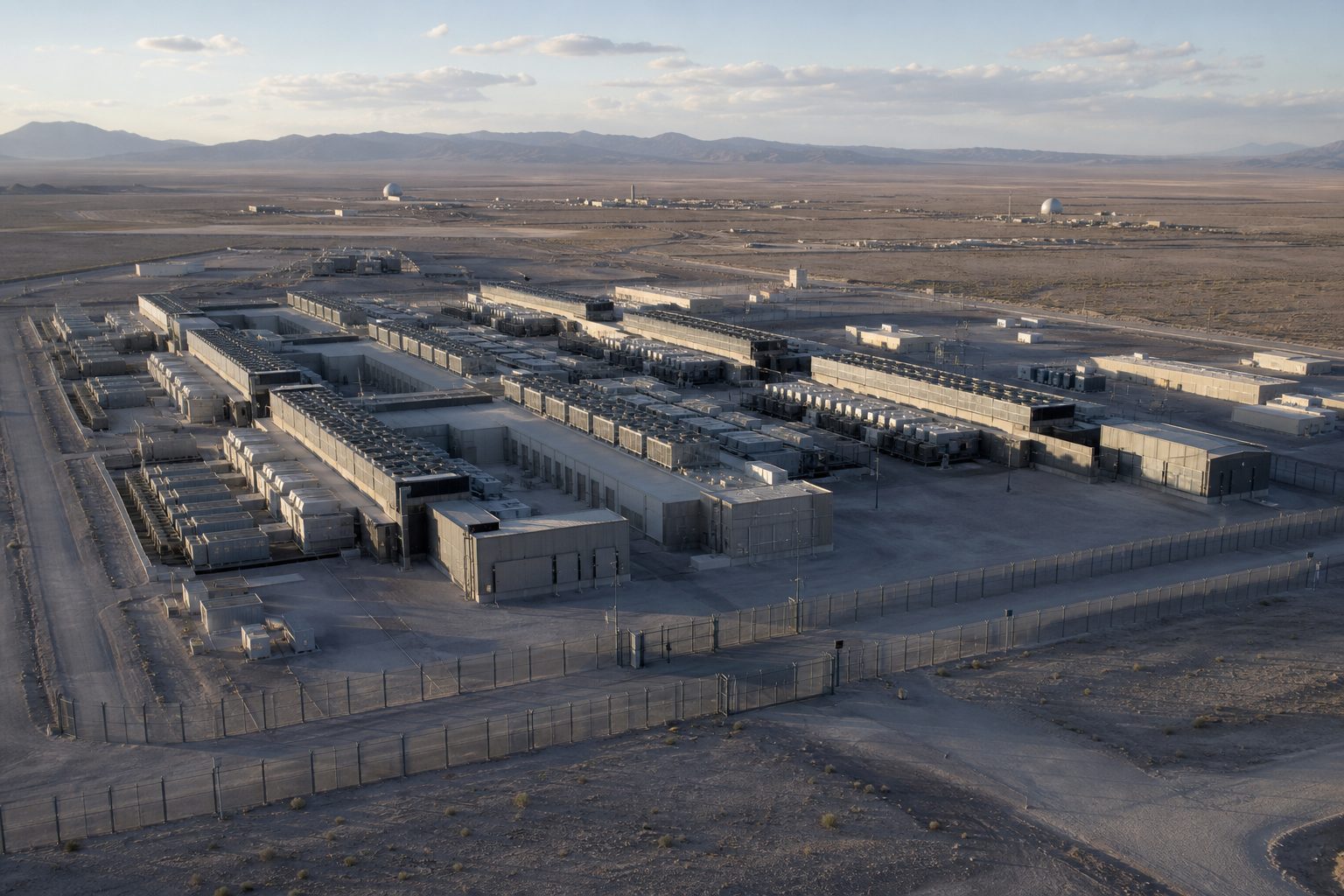 No. 36 · Sep 5, 2026The Army Is Turning Military Land Into an AI Compute Platform
Make misuse harder to hide

Least privilege limits the damage. Other controls make unauthorized use harder to perform and easier to investigate.
Multifactor authentication should apply to every vendor account, including accounts used by managed-service providers. For high-risk access, phishing-resistant methods are preferable to codes that attackers can steal or trick users into approving. CISA recommends treating vendor accounts that reach customer environments as privileged, regardless of the vendor employee’s job title. (CISA; FTC)
Companies should also separate vendor access from critical systems. A remote-management account should not automatically provide a route to production databases, backups, identity systems, and administrative consoles. CISA recommends dedicated access paths, restricted network traffic, and separate administrative accounts for vendor connections. (CISA)
Useful monitoring should connect identity, device, session, resource, and behavior data. Examples include:
- a vendor accessing records outside its assigned customer or case group;
- activity outside the approved maintenance window;
- a sudden change in download volume;
- access from an unfamiliar device or location;
- use of an account after the associated work order closed;
- attempts to reach systems unrelated to the vendor’s role;
- and administrative actions that differ from the vendor’s normal pattern.
Session logging and recording can establish what a vendor actually did, rather than merely showing that a login occurred. A 2025 academic survey of healthcare organizations identified session-level records as useful for accountability, forensic investigation, and detecting activity outside approved windows. (PMC)

The goal is not to block every unusual action. Vendor work can be genuinely unusual during an outage or upgrade. Alerts need an owner, a severity level, a response deadline, and an escalation path. Otherwise, behavioral monitoring can produce noise without producing decisions.
Own the logs and the investigation
A recurring problem is that the vendor may control the system where the most useful evidence exists. The customer sees a successful login in its identity provider, while the vendor controls remote-session recordings, database queries, endpoint telemetry, or cloud audit logs.
That division can create an evidence gap. NSA and CISA advise customers to determine how managed-service-provider identities, access, and actions appear in cloud-native logs, then audit those events. They also recommend centralized logging so investigators can correlate activity across systems. (NSA and CISA)
Contracts should therefore specify who generates logs, who owns them, how long they are retained, how quickly they must be produced, and whether the customer can conduct or commission an investigation. The Federal Reserve’s interagency guidance also recommends defining time synchronization, access rights, cooperation with investigators and regulators, incident exercises, and root-cause remediation. (Federal Reserve)

The same contract should define what counts as an incident. Waiting for confirmed data theft can delay action when there is already evidence of unauthorized access, a failed security control, or a suspected compromise. Notification deadlines should give the customer enough time to meet legal and regulatory duties.
Responsibility for costs also needs to be explicit. Depending on the contract and applicable law, expenses may include forensics, notification, call centers, legal advice, public communications, credit monitoring, remediation, settlements, and regulatory response. (SEC filing) A promise to “maintain security” is less useful than specific duties, evidence requirements, response times, and consequences for noncompliance.
A workable baseline for smaller companies

Smaller companies may not be able to deploy a full privileged-access platform or record every session. They can still remove the most dangerous exceptions.
A reasonable baseline is:
- Inventory every vendor identity, system, permission, sponsor, and expiration date.
- Eliminate shared accounts and require unique accounts for vendor personnel and service accounts.
- Use multifactor authentication for every vendor remote and administrative connection.
- Replace standing access with work-order-based permissions that expire automatically.
- Separate vendor access from backups, identity administration, and unrelated production systems.
- Centralize high-value logs first, including identity events, remote access, cloud administration, database exports, and activity involving sensitive records.
- Assign someone to review alerts and define how quickly suspicious activity must be investigated.
- Test account removal when a contract ends or a vendor employee changes roles.
The FTC advises automobile dealers to prohibit shared or reused administrator credentials, uniquely identify vendor users, minimize the fields exposed to vendors, and use masking, tokenization, or segmented datasets when full records are unnecessary. (FTC)
These controls create costs and friction. Emergency work may take longer when access requires approval. Session recording consumes storage and analyst time. Narrow permissions can interrupt legitimate troubleshooting when the original request did not anticipate every dependency. Centralized monitoring can generate false positives.
Those tradeoffs are real, but they can be managed by defining emergency procedures, using preapproved role-based access, setting clear response windows, and reviewing exceptions afterward. The dangerous alternative is convenience without an expiration date.
The most useful test is simple: for every vendor account, can the company state who approved it, what it can reach, why it needs that access, when the permission ends, what the person did, and how investigators would obtain the evidence? If any answer depends entirely on the vendor’s memory or cooperation after a breach, the control is weaker than the login suggests.
Sources / References

- Cybersecurity and Infrastructure Security Agency, “Guide to Securing Remote Access Software.” https://www.cisa.gov/sites/default/files/2023-06/guide_to_securing_remote_access_software.pdf
- Cybersecurity and Infrastructure Security Agency, “Identity and Access Management: Recommended Best Practices for Administrators.” https://www.cisa.gov/sites/default/files/2023-12/ESF%20IDENTITY%20AND%20ACCESS%20MANAGEMENT%20RECOMMENDED%20BEST%20PRACTICES%20FOR%20ADMINISTRATORS%20PP-23-0248_508C.pdf
- Cybersecurity and Infrastructure Security Agency, “Protecting Against Cyber Threats to Managed Service Providers and Their Customers.” https://www.cisa.gov/news-events/alerts/2022/05/11/protecting-against-cyber-threats-managed-service-providers-and-their-customers
- Federal Trade Commission, “Start with Security: A Guide for Business.” https://www.ftc.gov/business-guidance/resources/start-security-guide
- Federal Trade Commission, “Automobile Dealers and the FTC’s Safeguards Rule Frequently Asked Questions.” https://www.ftc.gov/business-guidance/resources/automobile-dealers-ftcs-safeguards-rule-frequently-asked-questions
- New York Attorney General, “Perry Johnson & Associates, Inc. Assurance of Discontinuance,” 2026. https://ag.ny.gov/sites/default/files/settlements-agreements/perry-johnson-associates-inc-et-al-assurance-of-discontinuance-2026_0.pdf
- National Institute of Standards and Technology, “NIST SP 800-53A Revision 1.” https://tsapps.nist.gov/publication/get_pdf.cfm?pub_id=906065
- National Institute of Standards and Technology, “Protecting Controlled Unclassified Information in Nonfederal Systems and Organizations,” SP 800-171 Rev. 3. https://nvlpubs.nist.gov/nistpubs/SpecialPublications/NIST.SP.800-171r3.html
- National Security Agency and Cybersecurity and Infrastructure Security Agency, “Mitigate Risks from Managed Service Providers in Cloud Environments.” https://media.defense.gov/2024/Mar/07/2003407859/-1/-1/0/CSI-CLOUDTOP10-MANAGED-SERVICE-PROVIDERS.PDF
- Board of Governors of the Federal Reserve System, “Interagency Guidance on Third-Party Relationships.” https://www.federalreserve.gov/frrs/guidance/interagency-guidance-on-third-party-relationships.htm
- “Third-Party Access Cybersecurity Threats and Precautions: A Survey of Healthcare Delivery Organizations.” https://pmc.ncbi.nlm.nih.gov/articles/PMC12575072/
- U.S. Securities and Exchange Commission, Exhibit 10.1. https://www.sec.gov/Archives/edgar/data/1756064/000149315225017274/ex10-1.htm
The reading behind this research
What the desk leaned on for this piece. Each link goes to the retailer, where the price is shown.
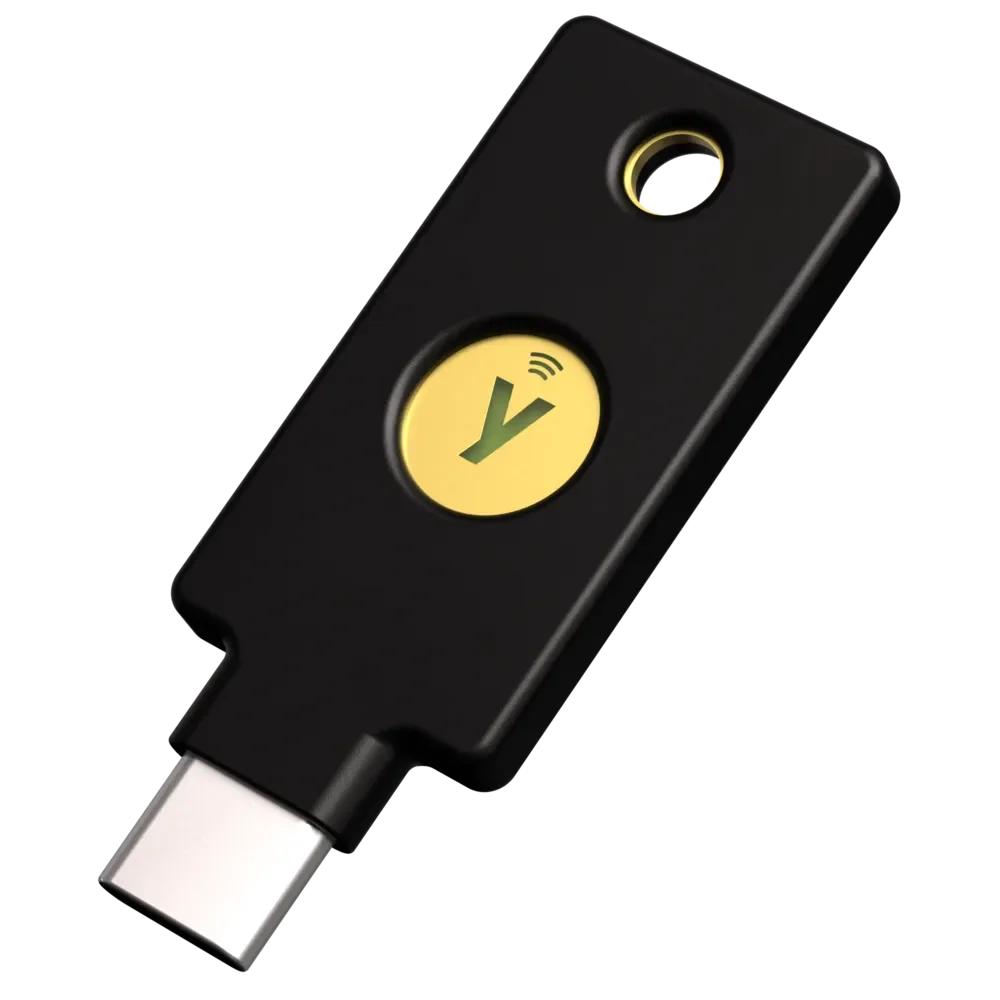
The article says vendor accounts should use phishing-resistant multifactor authentication; a hardware key is one way to stop stolen credentials working alone.
View on Walmart
Norton 360 with LifeLock Select
If a vendor breach like Perry Johnson's exposes your records, identity monitoring can flag misuse of your data that the company itself missed.
View on Walmart
The article says attackers got in with stolen vendor credentials; a fingerprint-based hardware key is the phishing-resistant MFA it calls for.
View on WalmartPaid links. Calibre Code USA may earn a commission from purchases made through these links. This does not affect what we write or what we recommend.
Comments (6)
Continue exploring
U.S. Grid Cyber Rules Are Finally Catching Up With Virtualized Operations
FERC now lets U.S. grid operators virtualize critical control systems; whether resilience outpaces the new risks depends on…
Inside the Pentagon's new vendor lane: how Anduril, Shield AI and Saronic actually get on the budget
How Anduril, Shield AI and Saronic crossed from press release to programme of record: the OT agreements, SBIR bridge money…
The Army Is Turning Military Land Into an AI Compute Platform
Carlyle and CyrusOne won exclusive negotiations to build commercial hyperscale data centers on roughly 2,600 acres of Army land…
How would these controls be scaled for a five-person company that relies on one managed-service provider and cannot run separate access paths or frequent reviews?
How should a company set the download-volume threshold when the vendor’s approved task legitimately involves a large export?
The just-in-time access point matches what I’ve been following in recent guidance on cloud admin roles. More teams are moving from standing vendor accounts to expiring approvals tied to a ticket. It feels especially relevant after the Perry Johnson example, where valid remote access and badly configured monitoring let activity continue without a warning.
The article is right that least privilege beats better alerts; in our database migration, restricting the vendor to masked records would have prevented the bulk export we found in testing.
I’m not fully convinced that the first control should be reducing access rather than improving detection. Least privilege limits blast radius, but the Perry Johnson timeline says monitoring recorded malicious activity as early as March 29, 2023 and still failed to alert because it was misconfigured. A narrow account can still abuse every permission it has, so alert tuning and independent logs need to be treated as first-line controls too.
The “Give vendors less access, for less time” section was the most useful. The approval checklist—named user, exact systems, business purpose, owner, and expiration—turns least privilege into something an operations team can actually verify.