
You earned it. You deposited it. The account says it's yours. But when you ask for $10,000 in cash, your bank may tell you to come back in two days.
Videos of exactly this kind of standoff circulate constantly: a customer at a teller window, a sufficient balance, and a bank that will not hand over the money on the spot. The outrage writes itself. What the videos rarely explain is that the bank is usually acting within rules the customer already agreed to, under a legal framework that was never designed to guarantee anyone a stack of banknotes on demand.
The uncomfortable answer to "who decides when I can take my money home?" is this: for large amounts of physical cash, the bank does, within limits set by federal law and its own deposit agreement. Understanding why requires separating three things that viral videos routinely blur together: what a bank balance legally is, how much currency a branch actually holds, and what the famous $10,000 rule actually does.
Which viral withdrawal story is this, exactly?
Start with the incident itself, because the first finding of any honest look at this subject is that there is no single, verified "$10,000 withdrawal delay" video behind the outrage. There is instead a rotating cast of similar stories, some real, some distorted, and some that were never about withdrawal rights at all.
A widely shared account from October 2026 describes a Ghanaian man in the United States who was questioned by bank staff before withdrawing $20,000. The employee reportedly asked whether anyone was directing or pressuring him, or telling him to misrepresent the purpose of the withdrawal. The bank's stated rationale was fraud prevention, specifically scams in which criminals coach victims into pulling out cash. According to the available reporting, the money was released after the checks were complete. That case involved questioning, not a confirmed multi-day refusal (Ghana Guardian).
Other viral bank-cash stories are about something else entirely. The Chase "infinite money glitch" that spread on TikTok around Labor Day weekend in 2024 was not a withdrawal-rights story; it was check fraud. Participants deposited counterfeit checks, withdrew cash during the provisional availability window, and later faced negative balances and lawsuits from JPMorgan (The Guardian). In July 2025, officials reported that a separate TikTok-linked scheme drained about $17 million from New York payment cards tied to a youth-employment program, with individual withdrawals reaching $10,000 or more (The Star).
So the premise needs a correction before anything else. The viral confrontation, as a single authenticated event, cannot be confirmed. What can be confirmed, from primary regulatory and contractual sources, is that the scenario the videos depict is entirely possible and entirely lawful. A U.S. bank can require you to wait for a large cash withdrawal. The interesting question is why.
Your balance is a claim, not a pile of cash
The foundation of the whole issue is a legal fact most account holders never think about: when you deposit money, the bank does not store your dollars in a drawer with your name on it. The deposit becomes the bank's money, and you become the bank's creditor. Your balance is a debt the bank owes you, backed for insured accounts by FDIC deposit insurance up to $250,000 per depositor, per bank, per ownership category (FDIC).
That debt is very safe, but it is not the same thing as physical currency. Banks lend out and invest most of what they take in. Their business model transforms short-term, withdrawable deposits into loans and securities, keeping only a fraction as immediately available liquidity, because ordinary withdrawal demand is predictable and can be met through cash replenishment, borrowing, or asset sales (Federal Reserve Bank of Minneapolis).
Even "liquidity" is broader than cash. A large bank can hold substantial reserves at the Federal Reserve, Treasury securities, and borrowing capacity while keeping relatively little actual currency in any given branch vault (Liberty Street Economics, Federal Reserve Bank of New York). Physical banknotes earn nothing and create security, insurance, handling, and storage costs, so banks hold as few of them as service demands allow (FRED Blog, Federal Reserve Bank of St. Louis).
A branch's cash inventory is calibrated to ordinary local demand: everyday teller transactions and ATM refills, not one customer's unusually large request (IMF working paper on currency logistics). When a branch needs more, it orders specific denominations through Federal Reserve cash offices and armored-carrier networks, which is precisely why banks ask for advance notice: the currency often has to be physically shipped in (Federal Reserve Financial Services, FedCash).

Your $10,000 is real. It just may not be in the building.
Can a bank legally make you wait?
Yes, and the legal gap that makes this possible is narrower than it sounds but very real.
The federal law governing access to deposits is the Expedited Funds Availability Act, implemented by the Federal Reserve's Regulation CC. That law controls when deposited funds must become available for withdrawal, with specific schedules and hold rules. It does not dictate the form in which a branch must pay out, and it does not require a teller to produce any particular quantity of physical currency on demand (FDIC Consumer Compliance Examination Manual, Expedited Funds Availability Act).
The Federal Reserve's own regulatory commentary makes the distinction explicit: a bank may treat deposited funds as legally available while still limiting teller or ATM cash disbursements because the branch lacks sufficient notes, and banks may require advance notice for large cash withdrawals so they can maintain appropriate cash levels (12 CFR Part 229, Appendix E).
The second layer is the contract you signed. Major banks' deposit agreements spell this power out in plain terms:
- Bank of America reserves the right to require "reasonable advance notice" for large cash withdrawals and to refuse a request that would create undue hardship or a security risk. Its agreement says customers may be required to order cash in advance, return when it arrives, or arrange pickup through a cash vault and armored courier at the customer's own expense (Bank of America Deposit Agreement and Disclosures).
- Wells Fargo similarly reserves the right to impose reasonable restrictions on large cash withdrawals, including advance notice so the branch can keep enough currency on hand (Wells Fargo consumer disclosures). Notably, Wells Fargo does not publish a universal dollar threshold or fixed waiting period; the restriction is discretionary and situational (Wells Fargo checking and savings help).
- PNC's consumer account agreement states that a branch may require advance notification for a large cash withdrawal to ensure adequate cash is available (PNC Consumer Account Agreement).
Smaller institutions use similar language, and some agreements expressly permit the bank to offer a cashier's check instead of currency when a cash payout would create hardship, security risk, or operational problems (Tri Counties Bank Consumer Deposit Account Agreement).
Note what is absent from all of this: a fixed industry-wide limit or waiting period. There is no uniform rule saying withdrawals above a certain amount require two days' notice. Policies differ by bank, by branch, and often by how much cash the vault happens to hold that morning (Chase ATM guidance). The practical decision-maker is the bank's own cash-management policy, implemented by branch staff under the account agreement (Federal Reserve Consumer Help).
One important caveat: if your balance includes recently deposited checks, large deposits, or new-account funds, a delay may not be a cash-logistics issue at all. It may be a funds-availability hold, which is a different mechanism with its own federal rules and its own required disclosures (Federal Reserve Consumer Help).
Where this story sits
5 related pieces
Read it →
Hover a story · click to read
 No. 75 · Oct 21, 2026Are Banks Hiding Security Risks That Could Put Your Money at Risk? Inside the ARTEX Breach
 No. 3 · Aug 25, 2026When the Money Runs Out: The Economics of the Breaking Point
 No. 107 · Nov 16, 2026What November's Bank Outages Reveal About America's Digital Financial Plumbing
 No. 23 · Sep 1, 2026Inside India's Plan to Let AI Agents Spend Money on UPI
 No. 71 · Oct 17, 2026Seven Institutions After ARTEX AI: What South Korea's Banks Changed, and What's Still a Promise
The $10,000 rule is a report, not a restriction
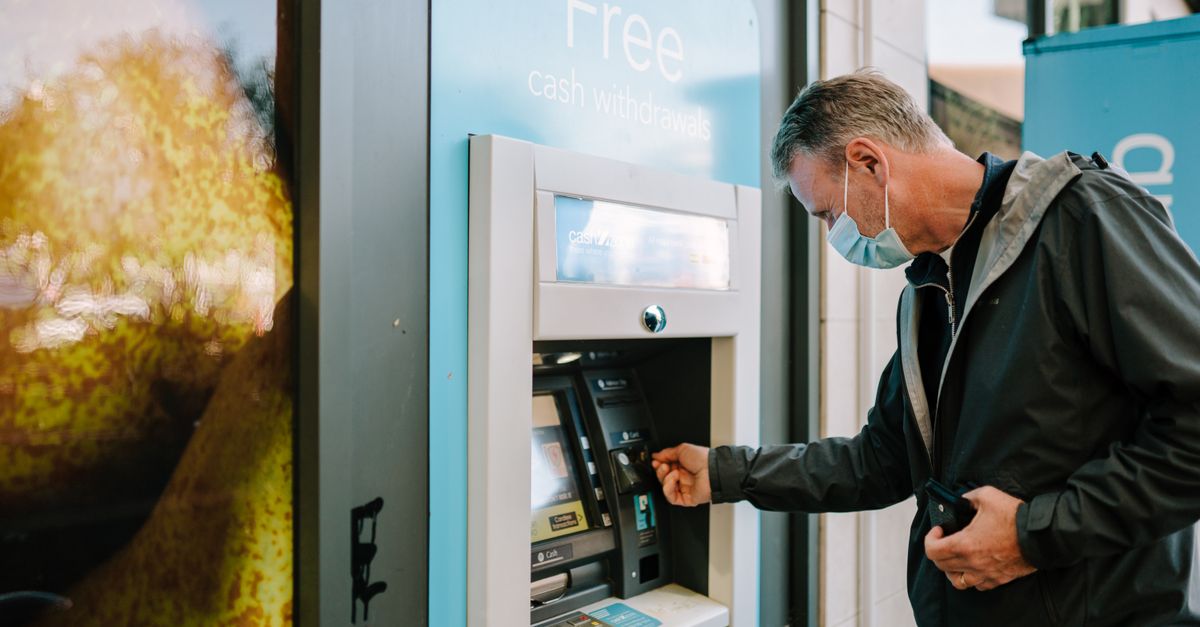
Much of the online anger around large withdrawals rests on a persistent confusion: the belief that $10,000 is a legal ceiling, or that crossing it freezes the transaction. Neither is true.
Under the Bank Secrecy Act, a bank must file a Currency Transaction Report, or CTR, with the Treasury Department's Financial Crimes Enforcement Network when a customer's cash deposits, withdrawals, exchanges, or transfers exceed $10,000 in a single business day (IRS, Bank Secrecy Act). The details matter:
- The threshold is "more than $10,000," so a withdrawal of exactly $10,000 does not, by amount alone, trigger a CTR (FinCEN CTR electronic filing requirements).
- The rule covers withdrawals as well as deposits, and the bank must aggregate multiple same-day cash transactions it knows involve the same person or beneficiary (FinCEN CTR FAQ).
- It applies to physical currency. A wire transfer or check over $10,000 is not a CTR-reportable cash transaction merely because of its size (FinCEN examination manual).
- The $10,000 figure is a reporting threshold, not a legal limit on how much you may withdraw (FFIEC BSA regulations, 31 CFR).
A CTR is an administrative disclosure for law-enforcement and financial-intelligence purposes. Filing one does not allege that the customer did anything wrong, and it is not an automatic freeze or denial (U.S. Government Accountability Office, GAO-25-106500). Separate rules require banks to file a Suspicious Activity Report, generally at $5,000, when the institution knows or suspects the transaction involves misconduct, lacks an apparent lawful purpose, or appears designed to evade reporting (IRS, Bank Secrecy Act).
That last point carries a warning worth taking seriously. Deliberately splitting a large withdrawal into smaller ones to dodge the CTR, say, three visits for $4,000 each, is called structuring, and federal regulation expressly prohibits it (31 CFR § 1010.314). The paperwork is harmless. Evading the paperwork is a crime.
Why the teller asks what the money is for
To a customer, "What do you need this cash for?" can feel like an interrogation about spending their own money. From the bank's side, the question is usually a fraud-control script, and the $20,000 case described earlier shows the pattern: staff asked whether anyone was directing the customer, pressuring him, or coaching him to lie about the purpose (Ghana Guardian).

Those questions map directly onto how modern cash scams work. Romance scams, impostor scams, and "your account is compromised, withdraw everything" schemes all depend on the victim pulling out cash while believing a false story. The TikTok-era episodes make the stakes concrete: the Chase check-fraud wave left participants with negative balances and lawsuits (WRAL), and the 2025 New York payment-card scheme cost roughly $17 million (The Star).
You generally are not legally obligated to explain your plans, and refusing to answer is not itself unlawful. But the bank retains contractual discretion over large cash payouts, so an unanswered question can slow things down. Questioning the purpose reflects ordinary bank controls; actually refusing or delaying the cash is a separate business decision the bank makes under its agreement, not an automatic consequence of any federal reporting rule (GAO-25-106500).
What you can do when the bank says wait
If you are standing at the counter and the answer is "not today," you have more leverage than the viral videos suggest, most of it procedural rather than confrontational.
Ask for the specific reason. "We can't do that" can mean at least four different things: the branch lacks the notes, your balance includes uncleared deposits, a fraud flag was raised, or policy requires advance notice. Each has a different fix. You are entitled to your account's available-balance and hold information, and banks must disclose their funds-availability policies and notify you when a specific deposit is held longer than the ordinary policy (12 CFR § 229.18; interagency deposit guidance).
Give notice and come back. For a genuine cash-inventory problem, calling the branch a few business days ahead usually dissolves the issue, because the bank can order the currency through the Federal Reserve's cash-distribution system (FedCash Services).
Take the money in another form. A cashier's check or a wire transfer moves the full amount immediately without any currency logistics, and for most large purchases the recipient prefers it anyway. Some deposit agreements explicitly offer a cashier's check as the alternative to a large cash payout (Tri Counties Bank agreement).
Escalate if the explanation does not hold. The Consumer Financial Protection Bureau accepts complaints about deposit accounts, and federal error-resolution rules require investigation when electronic transactions are erroneous or unauthorized and you give timely notice (CFPB). Note the scope, though: those rules protect you against errors and unauthorized activity. They do not create a right to unlimited same-day currency.
Were you actually warned?
Here the banks are legally covered and practically vulnerable. Every provision discussed above, advance notice, refusal for security risk, armored-courier alternatives, appears in deposit agreements that customers accept when opening an account. Federal rules require banks to disclose their funds-availability policies (12 CFR § 229.18). On paper, everyone was told.

In practice, these terms live deep inside agreements that run dozens of pages, and nothing in the account-opening experience signals that "your available balance" and "cash you can walk out with today" are different numbers. The viral videos are evidence of the gap: customers are not discovering secret rules, they are discovering disclosed rules for the first time, at the worst possible moment, on camera. That is a disclosure-design failure even where it is not a legal one.
Security measure or overreach?
So does the system give banks too much control? The evidence supports a narrower conclusion than either side of the viral argument wants.
The restrictions themselves rest on real constraints. Currency is expensive to hold and dangerous to concentrate, branch inventories are sized for normal traffic, and the questioning that offends customers is aimed at intercepting scams that would otherwise empty their accounts. Federal law deliberately regulates when funds must be available, not how many banknotes a teller must count out, because the alternative, forcing every branch to stock cash for any conceivable request, would raise costs and robbery risk for everyone (Federal Reserve, Regulation CC resources; 12 CFR Part 229, App. E).
But the discretion is real too, and it is largely one-sided. No uniform standard says how much notice is "reasonable," no rule caps how long a bank may take to assemble a large amount of currency once funds are legally available, and the customer's practical remedies, asking questions, filing complaints, switching banks, all operate after the fact. The $10,000 reporting threshold, meanwhile, has been set at the same nominal level since the 1970s while prices have risen severalfold, pulling ever more ordinary transactions into the reporting net, a burden the GAO itself has examined (GAO-25-106500).
The honest takeaway is less cinematic than the videos: your bank balance is a rock-solid claim on money, backed by federal insurance and law. It is not a locker full of cash. The moment you want physical currency in quantity, you stop being an owner retrieving property and become a creditor negotiating logistics. The rules that govern that negotiation are legal, disclosed, and mostly defensible. They are also rules almost nobody reads until a teller says the two words that launch a thousand videos: "come back."
Sources / References

- Ghana Guardian, "Ghanaian man questioned by US bank before withdrawing $20,000" — https://ghanaguardian.com/ghanaian-man-questioned-by-us-bank-before-withdrawing-20000-2/
- The Guardian, "JPMorgan sues customers over alleged fraud linked to TikTok viral glitch" (Oct 29, 2024) — https://www.theguardian.com/business/2024/oct/29/jpmorgan-sues-customers-glitch-tiktok-bank-atm-checks
- WRAL, "Viral videos of people stealing money from Chase ATMs were just plain check fraud" — https://www.wral.com/archive/21606087/
- The Star, "US officials: US$17mil lost in ATM scam that spread on TikTok" (Jul 25, 2025) — https://www.thestar.com.my/tech/tech-news/2025/07/25/us-officials-us17mil-lost-in-atm-scam-that-spread-on-tiktok
- FDIC, Consumer Compliance Examination Manual, "VI-1 Expedited Funds Availability Act" — https://www.fdic.gov/consumer-compliance-examination-manual/vi-1-expedited-funds-availability-act
- 12 CFR Part 229 (Regulation CC), Appendix E commentary — https://www.govinfo.gov/content/pkg/CFR-2025-title12-vol3/pdf/CFR-2025-title12-vol3-part229.pdf and https://www.govinfo.gov/content/pkg/CFR-2024-title12-vol3/pdf/CFR-2024-title12-vol3-part229-appE.pdf
- Legal Information Institute, 12 CFR § 229.18, "Additional disclosure requirements" — https://www.law.cornell.edu/cfr/text/12/229.18
- Federal Reserve Board, Regulation CC compliance guide — https://www.federalreserve.gov/supervisionreg/regcccg.htm
- Federal Reserve Consumer Help, "Deposits & Withdrawals" — https://www.federalreserveconsumerhelp.gov/deposits-withdrawals/
- Bank of America, Deposit Agreement and Disclosures (February 2024) — https://info.bankofamerica.com/content/dam/consumer-info/en/consumer/cra/deposit-agreement-disclsoures-february-2024_alttext_ada.pdf
- Wells Fargo, consumer account disclosures — https://www.wellsfargo.com/assets/pdf/about/community-reinvestment/2023-nj-consumer-disclosures.pdf
- Wells Fargo, "Checking and Savings Help" — https://www.wellsfargo.com/help/checking-savings/
- PNC, Consumer Account Agreement — https://www.pnc.com/content/dam/pnc-com/pdf/personal/Checking/Account%20Agreement%20for%20Personal%20Accounts.pdf
- Tri Counties Bank, Consumer Deposit Account Agreement and Disclosure — https://www.tcbk.com/application/files/8617/9078/7212/Consumer-Deposit-Account-Agreement-and-Disclosure.pdf
- Chase, "How to Use an ATM: A Guide" — https://www.chase.com/personal/banking/education/basics/how-to-use-an-atm.html
- FRED Blog, Federal Reserve Bank of St. Louis, "How much cash do banks keep in the vault?" — https://fredblog.stlouisfed.org/2018/12/how-much-cash-do-banks-keep-in-the-vault/
- Federal Reserve Bank of Minneapolis, "Liquidity Crises" — https://www.minneapolisfed.org/article/2011/liquidity-crises
- Liberty Street Economics, Federal Reserve Bank of New York, "How Do Large Banks Manage Their Cash?" — https://libertystreeteconomics.newyorkfed.org/2019/07/how-do-large-banks-manage-their-cash/
- IMF, "Enabling Deep Negative Rates to Fight Recessions: A Guide" — https://www.elibrary.imf.org/view/journals/001/2019/084/article-A001-en.xml
- Federal Reserve Financial Services, FedCash Services — https://www.frbservices.org/financial-services/cash
- IRS, "Bank Secrecy Act" — https://www.irs.gov/businesses/small-businesses-self-employed/bank-secrecy-act
- FinCEN, "Frequently Asked Questions Regarding the FinCEN Currency Transaction Report (CTR)" — https://stg2.fincen.gov/resources/frequently-asked-questions-regarding-fincen-currency-transaction-report-ctr
- FinCEN, CTR Electronic Filing Requirements — https://bsaefiling.fincen.treas.gov/docs/FinCENCTRElectronicFilingRequirements.pdf
- FinCEN, MSB Examination Manual (Currency Transaction Reporting overview) — https://www.fincen.gov/system/files/shared/MSB_Exam_Manual.pdf
- FFIEC BSA/AML regulations, 31 CFR (including § 1010.314, structuring prohibition) — https://bsaaml.ffiec.gov/docs/manual/regulations/31CFR.pdf
- U.S. Government Accountability Office, "Currency Transaction Reports: Improvements Could Reduce Filer Burden While Still Providing Useful Information to Law Enforcement" (GAO-25-106500) — https://www.gao.gov/products/gao-25-106500
- CFPB, "How do I get my money back after I discover an unauthorized transaction or money missing from my bank account?" — https://www.consumerfinance.gov/ask-cfpb/how-do-i-get-my-money-back-after-i-discover-an-unauthorized-transaction-or-money-missing-from-my-bank-account-en-1017/
- CFPB and federal banking agencies, "Interagency Guidance Regarding Deposit Reconciliation Practices" — https://files.consumerfinance.gov/f/documents/201605_cfpb_interagency-guidance-regarding-deposit-reconciliation-practices.pdf
- FDIC, Deposit Insurance — https://www.fdic.gov/resources/deposit-insurance
The reading behind this research
What the desk leaned on for this piece. Each link goes to the retailer, where the price is shown.
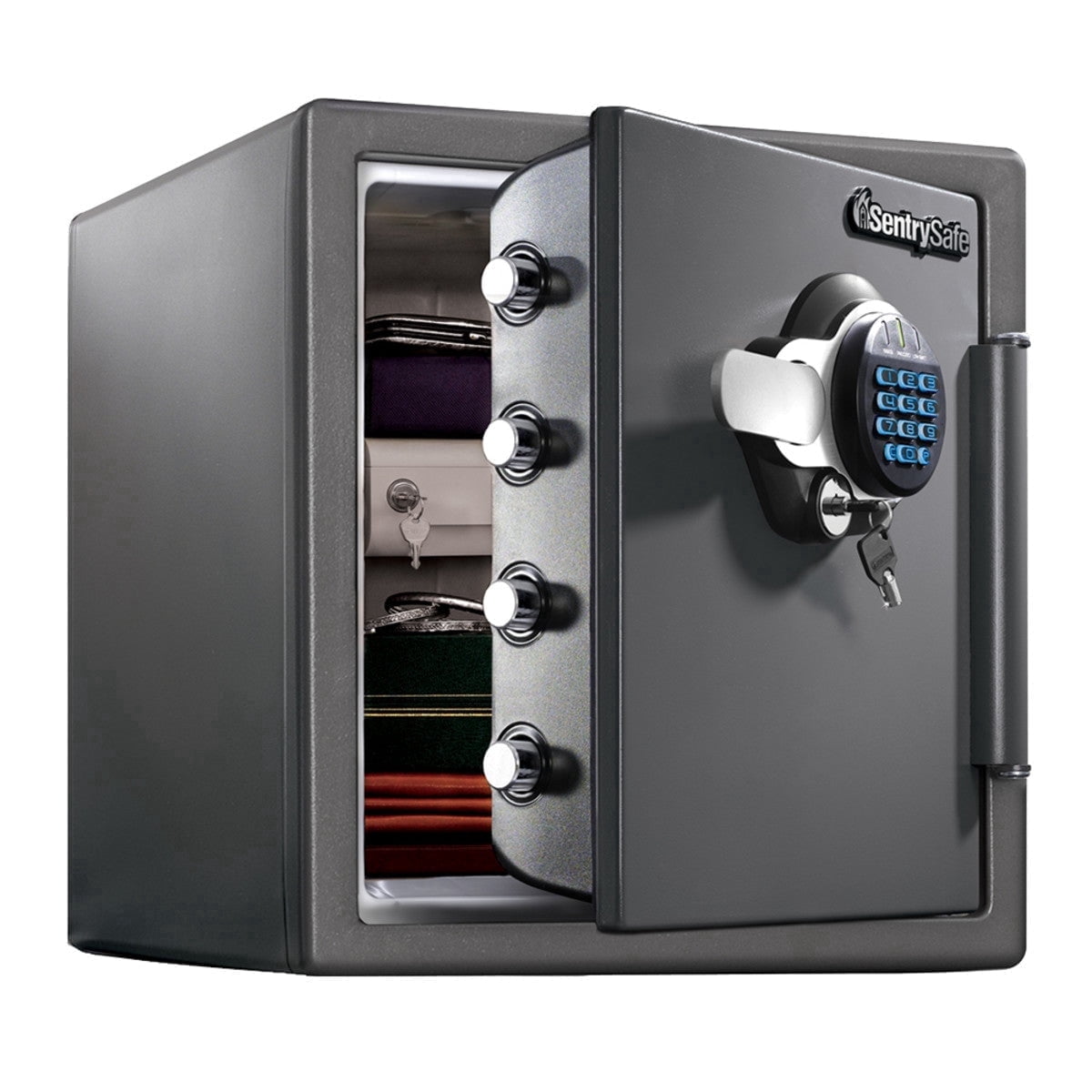
SentrySafe SFW123GDC Fireproof and Waterproof Safe
Since branches stock little cash and can delay big withdrawals, any cash kept at home needs protection from fire, water, and theft.
View on Walmart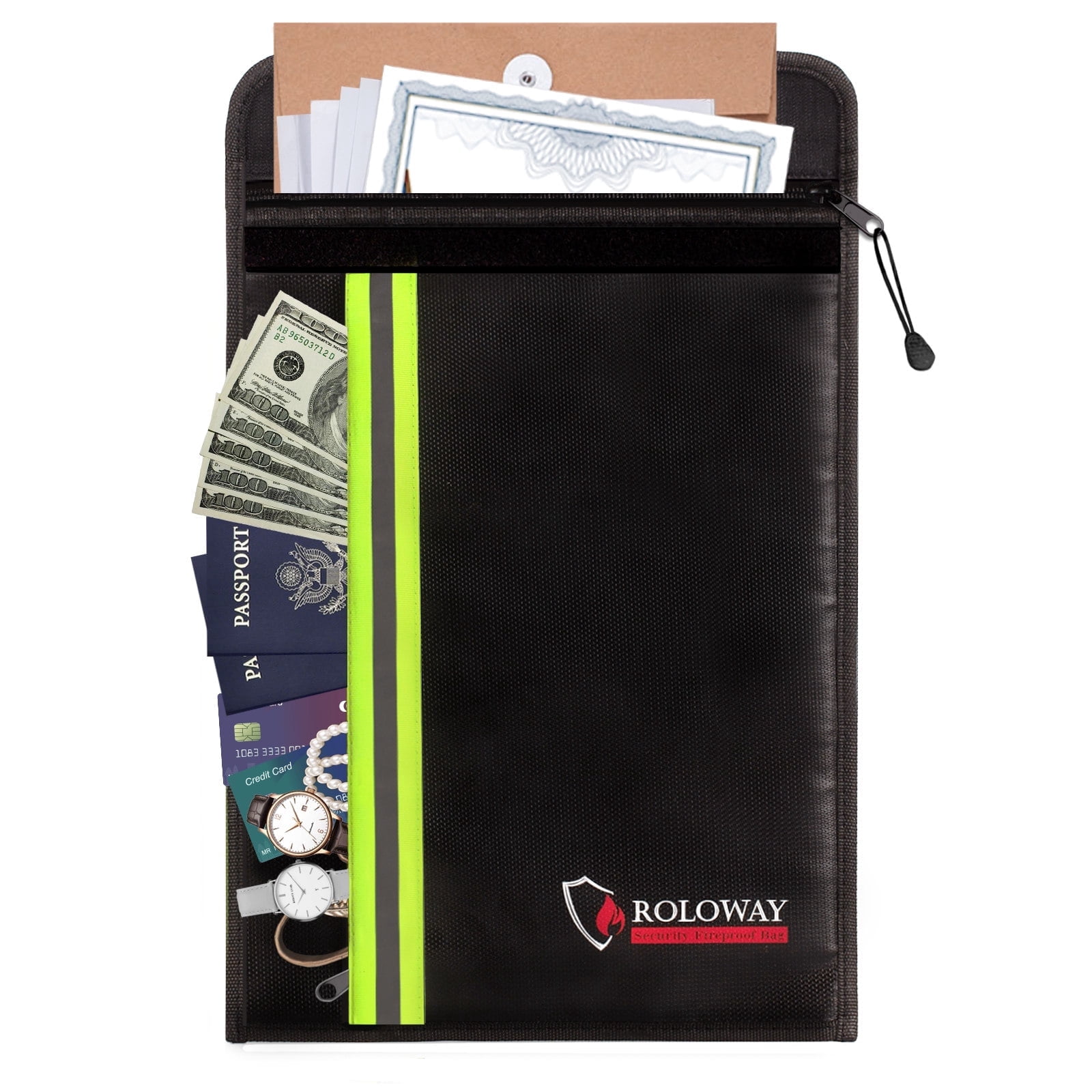
ROLOWAY Fireproof Document Bag
The article notes branches keep little cash on hand, so if you hold some at home, it should be stored where fire or water can't reach it.
View on Walmart
The article says banks screen big cash withdrawals for scams; if you end up holding that much paper money, a counter with UV checks helps verify it.
View on Walmart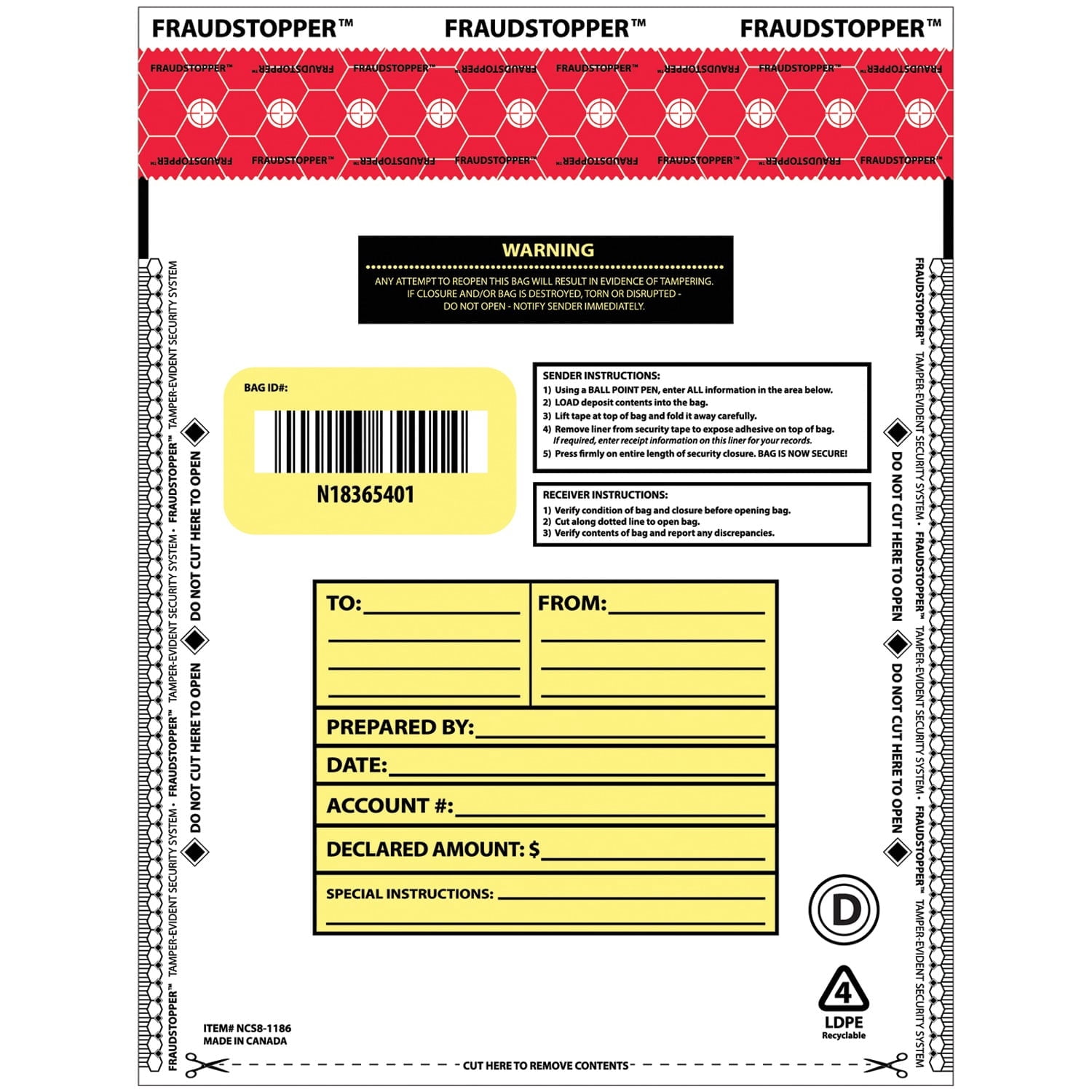
Nadex Coins NCS8-1186 Tamper-Evident 12-inch x 16-inch Bank Deposit Bags, Opaque, 100 pack
The article notes branches keep little cash because banknotes bring security and handling costs; these sealed bags are how banks move cash safely.
View on Walmart
Money: The True Story of a Made-Up Thing by Jacob Goldstein
The article notes your deposit is really a debt the bank owes you, not cash in a drawer; this book explains how money became an idea rather than a thing.
View on Walmart
The Ascent of Money by Niall Ferguson
It explains how deposits became bank loans, not stored cash, which is why the article says your balance is a debt the bank owes you.
View on WalmartPaid links. Calibre Code USA may earn a commission from purchases made through these links. This does not affect what we write or what we recommend.
Comments (3)
Continue exploring
What November's Bank Outages Reveal About America's Digital Financial Plumbing
Major U.S. banks suffered simultaneous access failures on November 16, 2026; the evidence shows no cyberattack or systemic…
Inside India's Plan to Let AI Agents Spend Money on UPI
India is exploring how AI agents could spend money on UPI without a human approving each transaction, a test of machine identity…
Seven Institutions After ARTEX AI: What South Korea's Banks Changed, and What's Still a Promise
Two weeks after ARTEX AI breaches at seven South Korean institutions, the documented record shows sweeping inspections and new…
I’m wondering how the article’s point about a branch holding only enough cash for ordinary demand applies to a small community bank with just one location, or to a credit union serving a rural area. Would it typically have less flexibility and need more notice than a national bank, or could local demand make its cash planning easier?
I once tried to withdraw $8,000 from a branch, and the teller said they did not have enough of the right denominations in the vault. They had me come back the next day after ordering the cash, which made the article’s point about physical currency being different from the balance on the screen feel very familiar.
If the $10,000 rule is mainly about reporting cash transactions rather than setting a withdrawal limit, what exactly would the bank report when a customer takes out $20,000 after the fraud-screening questions?