The Microsoft 365 Outage Was a Cascading Infrastructure Failure | The Calibre Brief Ep. 82
About this episode
On November 12, 2026, failures in Exchange Online widened across Outlook.com, Teams, SharePoint, OneDrive, and other Microsoft 365 services. Reports came from 74 countries and territories within roughly an hour, while healthcare, government, schools, courts, banks, and other institutions worked through degraded communications. The outage was global but not every Microsoft service or user was disconnected.
Microsoft’s account points to a network-capacity defect associated with an earlier upgrade and exposed by a later network change. Automated health checks removed servers from service, shifting traffic onto a shrinking pool and creating further overload. Microsoft says it found no evidence of a cyberattack or malicious activity.
Recovery remained uneven on November 13. The precise initiating defect, the complete dependency chain, and why safeguards failed to contain the disruption remain open questions. Outside analysts proposed gateway, routing, or DNS-related explanations, but those theories have not been confirmed by Microsoft.
0:00 This is the story of a flaw that went global 0:34 A later network change exposed it 0:52 Microsoft says it found no evidence 1:14 That caution kept service patchy into the next day 1:46 That was The Calibre Brief from Calibre Code USA
Stock footage: AlexKopeykin via Pexels (https://pixabay.com/videos/id-39892/) Stock footage: Hassas_Arts via Pexels (https://pixabay.com/videos/id-49809/)
Key topics
Key moments
Transcript
Show transcript
Welcome to The Calibre Brief, a Calibre Code USA production.
When one company runs the world's office software, its private mistakes stop being private. This is the story of a flaw that went global.
Picture an Outlook mailbox after midday on November 12, unable to send, receive, or search. Within roughly an hour, Downdetector had logged trouble reports from 74 countries and territories. That figure counts places complaining, not people cut off. And the outage was never total, because Teams and some other tools kept working for many users.
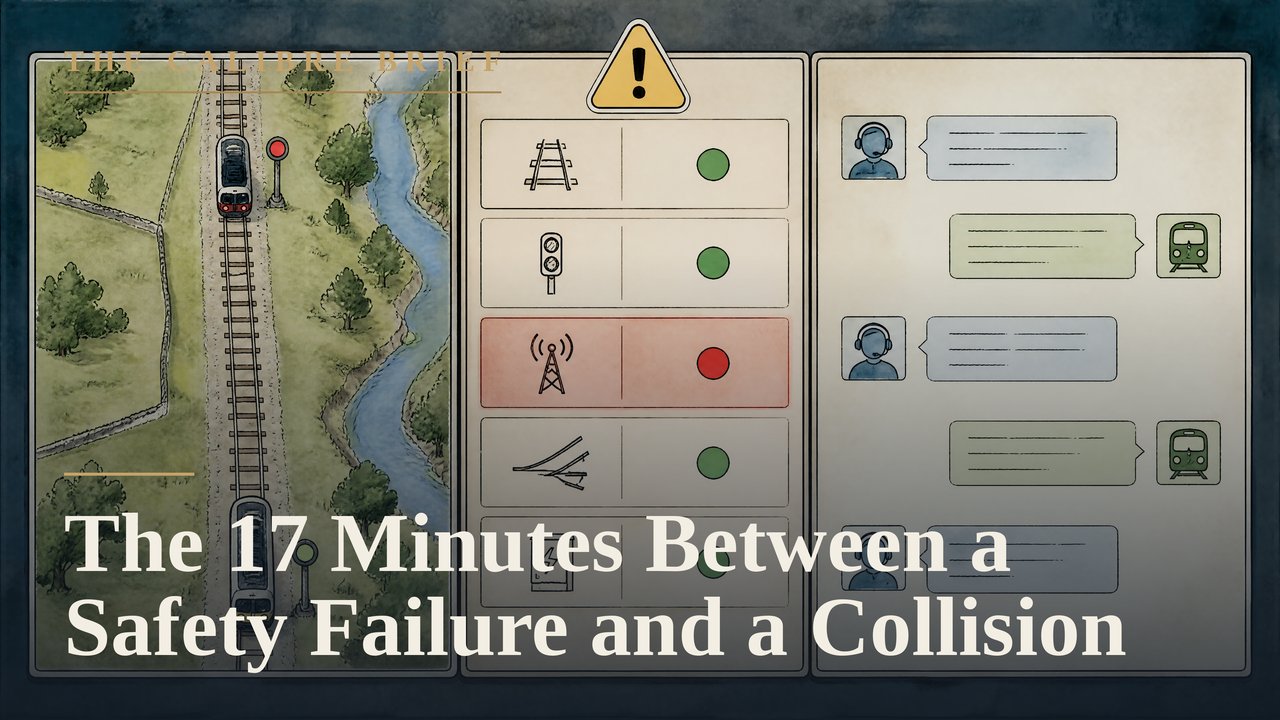
Microsoft traced the trouble to its network, where an upgrade meant to add capacity had left a hidden defect. A later network change exposed it. Automated health checks pulled failing servers out of service, and their traffic shifted onto the machines still standing. Those machines took on more load, buckled, and shrank the pool further.
Microsoft says it found no evidence of a cyberattack, and nothing public contradicts that claim. The record points to an engineering failure inside Microsoft's systems, not a flood of user demand. But the exact defect is still not public, and neither is why the safeguards failed to contain it. Outside analysts floated routing and DNS theories, yet Microsoft has confirmed none of them.
The damage reached far beyond inboxes, into hospitals, police, courts, banks, and trading desks. Microsoft switched things back on slowly, region by region, so the load would not spike again. That caution kept service patchy into the next day. And a working inbox does not undo the dependence that let one firm's defect go global.
The deepest question is not what broke inside Microsoft. It is how much real backup the rest of us had when the safeguards themselves spread the damage.
That was The Calibre Brief from Calibre Code USA. When vital services run on one provider, how much backup should they have to keep? Comment below, like and subscribe on YouTube, and follow the podcast.