
If a cyberattack takes your bank offline, most payments still happen, but many arrive late. Wages and benefits move on batch systems that run apart from your banking app, so they are usually delayed, not lost. Cards and cash machines often keep working. What nobody is required to pay is the cost of the delay: the late fee, the overdraft, the missed rent.
Key takeaways
- Paychecks and benefits usually still arrive, sometimes days late, because they do not depend on the app or website.
- Your own bills may go out, wait in a queue, or fail. Sending one again can mean paying twice.
- Deposit insurance and fraud rules do not cover a bank that is offline but has not failed, or a real payment that never went through.
- Banks often refund fees after an outage, but by choice, and usually only when you can show the loss.
Who gets paid, at a glance
A bank is not one system. The app, the website, branches, cash machines and card payments all lean on shared account systems, and each can fail on its own (Quartz). So the answer depends on what kind of payment it is.
| Payment | What usually happens | What it is based on |
|---|---|---|
| Wages and benefits paid into your account | Arrive, sometimes late | 2015 RBS incident (MoneySavingExpert) |
| Bills you pay automatically | Run, queue, or fail | Depends on the bank and the timing (The Scotsman) |
| Card purchases and cash withdrawals | Often keep working | UK incidents (Lloyds Banking Group) |
| Transfers and wires you send yourself | Often blocked | Recent US outages (CBS News) |
| Payments involving another bank | Can be delayed there too | JPMorgan Chase problem (AP News) |
"Often" matters in that table. When Singapore's OCBC had a software failure, cash machines, card payments in shops and electronic payments all went down together (CNA).
Your paycheck is usually late, not lost
Wages and benefits travel in batches, through systems such as ACH in the United States. Those systems run separately from the app you log in to.
That separation cuts both ways. In the 2015 RBS incident, roughly 600,000 batch payments were delayed, including wages, benefits and direct debits. Cards, cash machines and online banking kept working. The accounts were reachable; the money had not arrived.
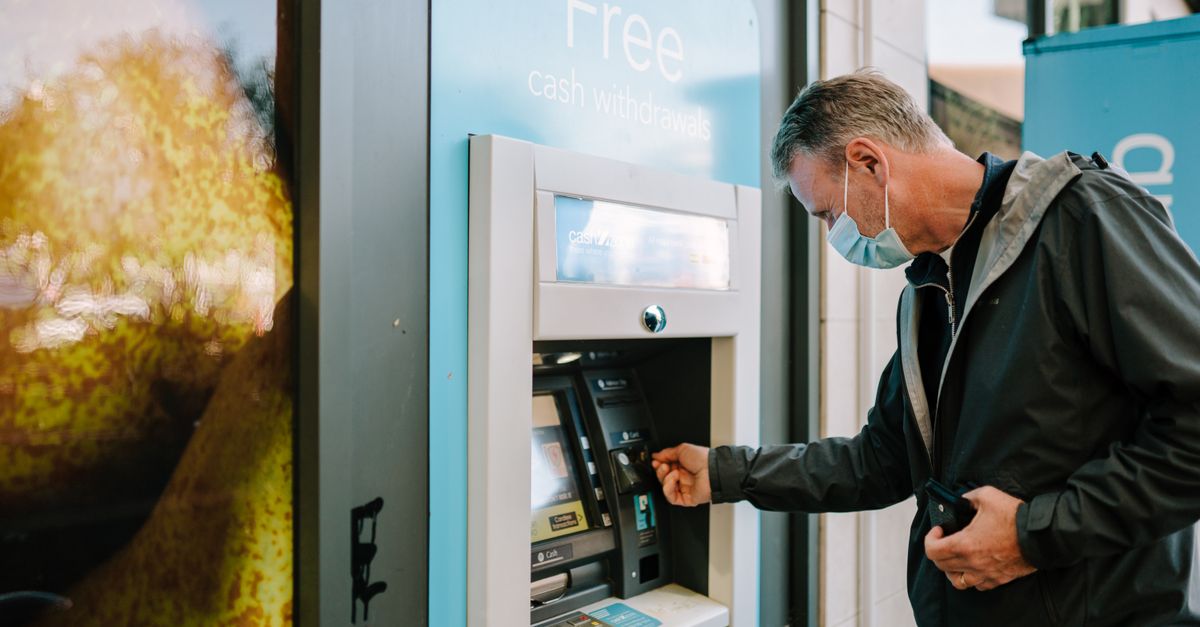
A late paycheck causes its own damage. If rent, a mortgage or a utility bill falls due before the wages land, the account can run short and trigger late fees, overdraft charges or insufficient-funds charges (Financial Ombudsman Service).
Where this story sits
5 related pieces
Read it →
Hover a story · click to read
 No. 69 · Oct 14, 2026Could AI Power the Next Major Bank Cyberattack? Lessons From South Korea
 No. 101 · Nov 14, 2026Your Money. Their Rules. Why Banks Can Make You Wait to Withdraw Your Own Cash
 No. 75 · Oct 21, 2026Are Banks Hiding Security Risks That Could Put Your Money at Risk? Inside the ARTEX Breach
 No. 3 · Aug 25, 2026When the Money Runs Out: The Economics of the Breaking Point
 No. 107 · Nov 16, 2026What November's Bank Outages Reveal About America's Digital Financial Plumbing
The people you pay, and the double-payment trap

Your landlord, lender and utility company are in the same position you are. Automatic payments may run as normal, wait in a queue, or fail outright.
The trap is paying twice. A payment that looks stuck may only be queued. If you send it again, both can go through once systems recover, leaving you with a double charge or an overdraft (Kiplinger).
Expect a messy statement afterwards. As the backlog clears, entries can appear twice, out of order, or briefly negative while transactions post in batches (Moraph). Most of that corrects itself. A payment you sent twice does not.
The trouble also spreads beyond your bank. An attack on one critical provider can reduce payments flowing between banks and squeeze banks that were never attacked, according to Federal Reserve research (Federal Reserve).
Who pays you back? Mostly nobody has to
The protections most people have heard of sit around an outage without covering it. For US customers:
| Rule | What it covers | What it leaves out |
|---|---|---|
| FDIC insurance | Deposits up to $250,000 per ownership category if the bank fails (CFPB) | A bank that is offline but still in business |
| Regulation E | Transfers you did not authorize (CFPB) | A real payment that failed, and the late fees that followed |
| 36-hour incident rule | The bank must tell its federal regulator about a serious computer-security incident (Federal Reserve SR 22-4) | Any duty to tell customers straight away |
So relief comes down to what each bank decides. Wells Fargo promised to reverse outage-related fees after its 2019 disruption (CBS News). Patelco Credit Union waived or refunded many overdraft and late fees after its incident (BBB complaints record).

In the UK, Barclays paid some customers £25, £75 or £100. The ombudsman's position is that compensation depends on losses you can prove, not on inconvenience alone (FOS decision DRN-5735185).
Does it matter whether it was an attack?
For your money in the first hours, hardly. An attack and a failed software update look the same from outside: you cannot get in. Often the bank itself does not yet know whether the fault is its own, a supplier's, or in a shared payment network (Tom's Guide).
It is also worth knowing what the record shows. In the November 2026 run of bank outages, JPMorgan Chase blamed a software bug and ruled out a cyberattack, though Visa did confirm an apparent cyberattack in the same period (TechRadar). Claims that attackers used AI against the banks have no public evidence behind them so far (Cloud Security Alliance).
What to do before it happens
Three steps cover most of the risk.
- Keep some cash. Cash can keep working when card networks fail, and withdrawals spike during payment outages (UK Parliament, Treasury Committee).
- Hold a second account at an unrelated bank. A paycheck or bill money split across two banks is harder to strand.
- Keep records during an outage. Take screenshots of errors and note the times. Refunds follow evidence.
And when a payment looks stuck, wait before sending it again.
Sources / References
- CFPB, "What happens if my bank or credit union has an outage and I can't access my account?" https://www.consumerfinance.gov/ask-cfpb/what-happens-if-my-bank-or-credit-union-has-an-outage-and-i-cant-access-my-account-en-2143/
- CFPB, "How do I get my money back after I discover an unauthorized transaction?" https://www.consumerfinance.gov/ask-cfpb/how-do-i-get-my-money-back-after-i-discover-an-unauthorized-transaction-or-money-missing-from-my-bank-account-en-1017/
- Federal Reserve, SR 22-4 / CA 22-3, Computer-Security Incident Notification Requirements. https://www.federalreserve.gov/supervisionreg/srletters/SR2204.htm
- Federal Reserve, "Cyberattacks and Financial Stability: Evidence from a Natural Experiment." https://www.federalreserve.gov/econres/feds/cyberattacks-and-financial-stability-evidence-from-a-natural-experiment.htm?share=tumblr
- TechRadar Pro, "Visa confirms apparent cyberattack, hackers also claim hit on JPMorgan." https://www.techradar.com/pro/security/visa-confirms-apparent-cyberattack-hackers-also-claim-hit-on-jpmorgan
- AP News, "What to know about the online banking delays that affected major US banks." https://apnews.com/article/aeb4b0d6b6789c8c96bb2520454a6d1e
- Cloud Security Alliance, research note PDF, Key Takeaways. https://labs.cloudsecurityalliance.org/wp-content/uploads/2026/11/CSA_research_note_november_outage_cluster_correlated_fragility_20261118-csa-styled.pdf
- CBS News, "Widespread service outages at major U.S. banks appear to be over." https://www.cbsnews.com/news/banks-online-service-outages-jpmorgan-chase-bank-of-america-wells-fargo/?shem=aimgspe
- CBS News, "Wells Fargo outage: Customers say direct deposits aren't showing up." https://www.cbsnews.com/news/wells-fargo-outage-impacts-direct-deposits-says-it-will-reverse-fees/
- Quartz, "Bank app outage causes: 10 reasons banking apps go down." https://qz.com/bank-app-outage-causes-explained
- Tom's Guide, "How to tell if it's an outage or a cyberattack." https://www.tomsguide.com/computing/online-security/flights-banks-and-email-keep-going-down-heres-how-to-tell-if-its-an-outage-or-a-cyberattack
- Lloyds Banking Group letter to the Treasury Committee, UK Parliament. https://committees.parliament.uk/publications/46939/documents/242225/default/
- CNA, "Disruption of OCBC's banking services caused by software failure that was undetected." https://www.channelnewsasia.com/singapore/disruption-ocbcs-banking-services-caused-software-failure-was-undetected-5723631
- MoneySavingExpert, "NatWest/RBS glitch: Full Q&A as wages, benefits and more go missing." https://www.moneysavingexpert.com/news/2015/06/natwest-and-rbs-payments-missing/
- The Scotsman, "Online banking down as payday service issues reported." https://www.scotsman.com/business/consumer/online-banking-nationwide-lloyds-halifax-down-payday-service-issues-problems-5011479
- Financial Ombudsman Service, "Bank outages and IT failures." https://www.financial-ombudsman.org.uk/consumers/complaints-can-help/banking-and-payments/it-problems-at-banks
- Financial Ombudsman Service, Decision DRN-5735185. https://www.financial-ombudsman.org.uk/decision/DRN-5735185.pdf
- Kiplinger, "Here's How to Prepare for a Bank Outage." https://www.kiplinger.com/personal-finance/online-banking/when-tech-fails-what-to-do-when-your-bank-goes-offline
- Moraph Insights, "A credit union's promises in an outage." https://insights.moraph.com/credit-union-outage-promises-are-set-by-architecture
- BBB, Patelco Credit Union complaints record. https://www.bbb.org/us/ca/dublin/profile/credit-union/patelco-credit-union-1116-41866/complaints?page=6
- UK Parliament, Treasury Committee, "Acceptance of cash." https://publications.parliament.uk/pa/cm5901/cmselect/cmtreasy/324/report.html
The reading behind this research
What the desk leaned on for this piece. Each link goes to the retailer, where the price is shown.

SentrySafe 1200 Fireproof Cash Box
The article notes cash machines often keep working but can also fail, as at OCBC; a small stash of cash at home covers rent or bills while payments sit in a queue.
View on Walmart
Clever Fox Budget Planner & Bill Organizer
The article says a late paycheck can trigger late fees or overdrafts; knowing your bill due dates on paper helps you see what falls due before wages land.
View on Walmart
Quicken Classic Deluxe (1-year subscription)
The article warns post-outage statements show duplicate or out-of-order entries; tracking expected payments yourself makes spotting a double charge easier.
View on WalmartPaid links. Calibre Code USA may earn a commission from purchases made through these links. This does not affect what we write or what we recommend.
Comments (3)
Continue exploring
Are Banks Hiding Security Risks That Could Put Your Money at Risk? Inside the ARTEX Breach
AI-driven ARTEX attacks hit seven South Korean financial firms and exposed data on over 68,000 people. Here is what the banks…
When the Money Runs Out: The Economics of the Breaking Point
In the first half of August 2026, the warning lights began to flash. Consumer sentiment tumbled in the University of Michigan's…
What November's Bank Outages Reveal About America's Digital Financial Plumbing
Major U.S. banks suffered simultaneous access failures on November 16, 2026; the evidence shows no cyberattack or systemic…
My bank’s outage took debit-card purchases and cash withdrawals down too, so the claim that they often keep working did not match my experience.
The article treats delayed wages and benefits as if the batch route is the main variable, but employer timing and payroll-provider retry policies can matter just as much. A payroll file submitted after a bank’s cutoff may miss the next processing window even when the bank itself is operating normally.
Mostly nobody has to” is too sweeping. The article itself says Wells Fargo and Patelco refunded outage-related fees. Those refunds are discretionary rather than guaranteed, but they still make “nobody” inaccurate; the clearer conclusion is that compensation is inconsistent and usually requires proof of loss.