
In the early hours of November 15, 2021, the seven crew members of the International Space Station were ordered out of their sleep quarters and into the two spacecraft docked to the station, a SpaceX Crew Dragon and a Russian Soyuz, in case they needed to abandon ship. A Russian direct-ascent missile had smashed into a defunct Soviet-era satellite, Cosmos 1408, roughly 480 kilometers above Earth, and the station was about to pass through the debris field. Among the crew sheltering in those capsules were two Russian cosmonauts, riding out the fragments of their own country's weapon test. The U.S. government said the test produced more than 1,500 trackable pieces of debris and would likely generate hundreds of thousands of smaller ones. NASA Administrator Bill Nelson condemned it as "reckless and dangerous," and the incident became the defining image of a certain kind of space war: one in which the weapon cannot tell friend from foe.
That image is worth holding onto, because it contains the central puzzle of the next era of conflict in orbit. For decades, military space power meant a small number of exquisitely expensive satellites parked in geosynchronous orbit, each one a crown jewel that an adversary might be tempted to knock out in the opening hours of a war. That architecture is now being dismantled in favor of proliferated constellations of hundreds or thousands of small, cheap satellites in low Earth orbit: the Pentagon's new missile-tracking mesh, the intelligence community's proliferated imaging fleet, and commercial systems like Starlink that have already fought a war in Ukraine. The shift changes the physics of attacking space assets, the economics of replacing them, the forensics of attributing attacks, and the politics of escalation. It also creates a strange new form of deterrence: because debris in low orbit is indiscriminate, a major kinetic attack on a Western constellation could cripple the orbital shells the attacker increasingly depends on for its own intelligence and communications. A tactical strike becomes, in effect, mutual self-isolation.
What follows is an examination of how far that logic actually runs, where it breaks down, and what it means for deterrence stability and the credibility of alliances when space assets are contested.
The architecture that invited a "Space Pearl Harbor"
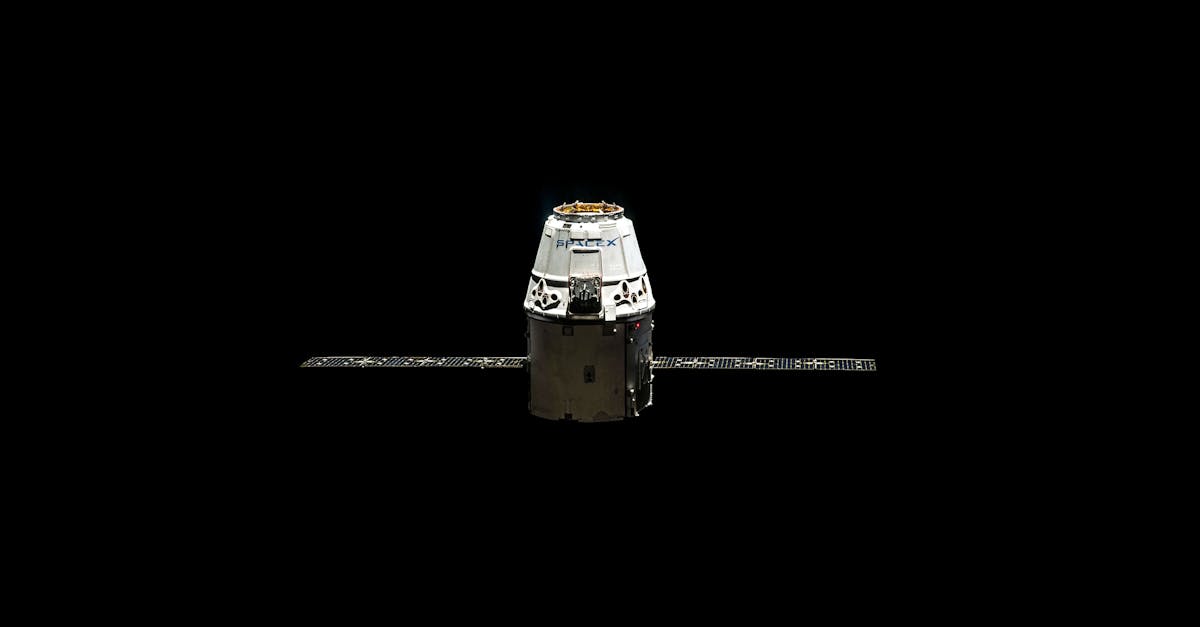
For most of the military space age, the United States concentrated its most important capabilities in a handful of satellites. Missile warning rides on the Space Based Infrared System, six large spacecraft in geosynchronous orbit plus payloads in highly elliptical orbits. Protected nuclear-survivable communications ride on the six-satellite Advanced Extremely High Frequency constellation. Wideband military communications ride on the Wideband Global SATCOM fleet. GPS, the positioning and timing signal on which Western precision warfare depends, is maintained by about 31 operational satellites in medium Earth orbit, around 20,200 kilometers up, according to GPS.gov. These spacecraft routinely cost on the order of a billion dollars each, take years to build, and cannot be quickly replaced. The U.S. Government Accountability Office's annual weapons assessments have for years documented the cost and schedule growth characteristic of such one-of-a-kind satellites.
The vulnerability of that architecture was understood long before it was tested. The 2001 report of the commission chaired by Donald Rumsfeld, formally the Commission to Assess United States National Security Space Management and Organization, warned that the United States was "more dependent on space than any other nation" and flagged the danger of what it called a "Space Pearl Harbor": a disabling surprise attack on a small set of assets whose loss would cascade through every military operation that depended on them. Forrest Morgan's 2010 RAND study, "Deterrence and First-Strike Stability in Space", formalized the fear: when targets are few, hard to defend, and nearly impossible to reconstitute, space becomes offense-dominant, and deterrence there is inherently shaky.
Low Earth orbit constellations were built to break precisely that logic. The Space Development Agency, created in 2019 inside the U.S. Space Force, is deploying what it now calls the Proliferated Warfighter Space Architecture: a mesh of small satellites in low Earth orbit, divided into a Transport Layer for communications and targeting data and a Tracking Layer designed to follow hypersonic glide vehicles that legacy geosynchronous sensors struggle to see. Tranche 0, roughly two dozen demonstration satellites, launched in 2023 and 2024. Tranche 1, about 150 satellites, was scheduled to begin launching in 2025 and continue through 2026, with Tranche 2, more than 200 additional satellites, planned to follow into 2027. Instead of billion-dollar singles, the architecture is built from spacecraft bought in batches, iterated on roughly two-year cycles, at unit prices measured in the tens of millions.
The commercial world ran the same experiment faster. SpaceX has launched well over 7,000 Starlink satellites, accounting for roughly two-thirds of all active satellites in orbit by the mid-2020s, and holds U.S. regulatory authorization for thousands more, with filings contemplating tens of thousands. Eutelsat OneWeb operates roughly 630 satellites at about 1,200 kilometers. Amazon began launching its operational Project Kuiper constellation of more than 3,200 planned satellites in April 2025 and faces a U.S. regulatory milestone requiring half the licensed fleet to be in orbit by mid-2026.
How many hits before a constellation actually fails?
The attack threshold question now has two very different answers, one for the old architecture and one for the new.
Against the concentrated architecture, the math was genuinely alarming. Disable a small number of missile-warning geosynchronous satellites and you have degraded a strategic function. The loss of even two or three large craft would have been a military event of the first magnitude.
Against a proliferated mesh, kinetic attrition scales badly. Small satellites are bought at unit prices far below that of a single direct-ascent interceptor campaign's opportunity cost, and the constellation degrades gracefully: each node lost trims coverage or revisit rate slightly rather than amputating a capability. There is no reputable public analysis suggesting that a missile-per-satellite campaign against a constellation of thousands is operationally practical. That was the point. Proliferation was sold to Congress and to analysts precisely as an attack-threshold raiser: to produce a militarily meaningful effect, an attacker must now attempt something so large and so visible that it would be indistinguishable from an act of major war.
Two qualifications matter. First, the threshold rises only for the destructive kinetic case. Low-intensity interference, such as jamming uplinks and downlinks, dazzling optical sensors, or intruding into ground networks, does not require destroying any satellites at all, and it happens routinely. Second, the same multiplication that makes each node cheap also makes each node individually unimportant, which cuts the other way in crisis politics: an adversary might judge that destroying a handful of commercial satellites is too trivial to trigger a major response, and probe that judgment. The threshold for meaningful attack has moved up sharply. The threshold for symbolic attack may have moved down, and nobody is certain where the political line sits between them.
Debris is indiscriminate: the self-isolation problem
This is where the physics of low Earth orbit does something geosynchronous orbit never did. A kinetic kill in GEO produces fragments that mostly stay in the GEO ring, sparsely populated and far from everything else. A kinetic kill in low orbit produces a cloud that expands around the victim's orbital path, drifts across all orbital planes at that altitude as Earth's rotation carries everything beneath it, and endangers every spacecraft that passes near that shell for years afterward: friends, foes, neutral commercial operators, and human spaceflight stations alike.
The historical ledger is unambiguous about persistence.
China's January 2007 destruction of the Fengyun-1C weather satellite at roughly 865 kilometers produced more than 3,000 trackable fragments, the largest debris-generating event in the history of the space age, and NASA's Orbital Debris Program Office has estimated an additional 150,000 or more fragments too small to track from the ground. Some 2,600 to 2,800 of the trackable pieces were still in orbit well over a decade later, according to NASA and the Secure World Foundation. At that altitude, natural atmospheric decay takes decades. Russia's Cosmos 1408 intercept at 480 kilometers generated more than 1,500 trackable fragments whose elliptical orbits repeatedly cut across the station's altitude. India's 2019 Mission Shakti test at about 300 kilometers was engineered low enough that most of the roughly 400 fragments NASA identified decayed within about a year, though the agency noted that some pieces were thrown to apogees above the station's orbit; the head of NASA publicly criticized the test even so. The U.S. interception of its own failing USA-193 satellite in 2008, at roughly 240 kilometers, saw nearly all tracked debris reenter within about a year and a half, though outside analysts questioned the stated hydrazine-tank rationale at the time.
Altitude is destiny for debris. At 400 kilometers, fragments typically decay in weeks to months. At 550 kilometers, where the densest part of Starlink sits, years. At 800 kilometers, decades; the accidental 2009 collision between Iridium 33 and a dead Russian satellite at about 790 kilometers produced more than 2,300 tracked fragments, many still aloft. Above about 1,000 kilometers, debris persists on the scale of centuries, and that altitude range is heavily used by weather, imaging, and mapping constellations. ESA's statistical models estimate on the order of 40,000 debris objects larger than 10 centimeters and about 1.1 million between 1 and 10 centimeters already in orbit, against the background of the risk Donald Kessler and Burton Cour-Palais described in their 1978 analysis: beyond some density, collisions breed debris that breeds further collisions, a cascade that no one controls once it starts.
The consequence for war planning is the central revelation of the proliferated era. China's crewed space station, Tiangong, has already maneuvered around approaching Starlink satellites, and Beijing filed a formal note with the United Nations in December 2021 documenting two close approaches that year. China's planned national mega-constellations, and its large fleet of Yaogan reconnaissance satellites operating across low orbit, are exactly the kind of assets a debris cloud in a busy shell would threaten without distinction. A Chinese missile barrage against Starlink's shells would not conveniently confine itself to American hardware. The self-isolation logic is not hypothetical: Russia's 2021 test physically endangered Russian cosmonauts within hours.
The limits of deterrence by debris
Honesty requires stress-testing this deterrence mechanism, because it is weaker than it sounds.
First, a single intercept does not produce a cascade. Debris fields from individual tests remain localized hazards for years, not instant no-go zones; the self-deterrence argument operates cumulatively and probabilistically, on the scale of a sustained campaign, not one shot. Second, altitude and inclination selectivity matter. China's two national constellations, the Guowang system that launched its first satellites in December 2024 and the Qianfan or "Thousand Sails" system first launched in August 2024, are planned largely at shells around 800 to 1,100 kilometers, above Starlink's densest layers. An attacker can study the geometry and choose targets whose debris prefers the victim's shells over its own, to a degree. Third, wartime discount rates are short: the knowledge that debris will inconvenience one's own constellation in five years does not weigh heavily against a commander's desire to blind the enemy this week. Fourth, and most consequentially, debris risk steers rational attackers away from missiles and toward the gray zone. If kinetics are self-harming, the logic of self-interest pushes coercion into jamming, dazzling, and cyberattack, means that produce no debris, scale silently, and sit far below any plausible retaliation threshold. Deterrence by debris may therefore be real and still make low-level interference more, not less, likely. That tradeoff recurs throughout the escalation question below.
Who fired? Attribution in a crowded sky
Attribution is usually framed as the great weakness of space conflict. The actual evidence divides sharply by method.
Kinetic attacks are the easiest to attribute
A direct-ascent missile launch from Chinese or Russian territory is tracked at liftoff by missile-warning systems, and the resulting breakup is characterized within hours by ground radar and telescopes, including commercial networks that now publish their analyses. When Cosmos 1408 shattered, both the U.S. government and commercial trackers attributed it to a Russian Nudol interceptor within a day. The forensic problem in the kinetic case is not hard, and it is getting easier as commercial space surveillance proliferates the sensors. Proliferation of targets, counterintuitively, has come with proliferation of witnesses.
The gray zone is where attribution goes to die
Reversible interference is a different matter. Uplink jamming is localized, transient, and deniable: you can geolocate the source, as open mapping of GPS interference along Russia's borders demonstrates, without proving national intent. The Baltic region has recorded sustained GPS disruption severe enough that in 2024 Finnair temporarily suspended flights to Tartu, Estonia, after two aircraft had to abort approaches, and Estonian and Finnish officials attributed the interference to Russia; Moscow denied responsibility as a matter of routine. Lasers dazzling imaging satellites leave no debris at all. Cyberattack is hardest of all: a state can work through proxies, and effects may masquerade as ordinary failure. The 2022 Viasat KA-SAT outage that knocked out tens of thousands of modems across Europe, including remote monitoring of thousands of German wind turbines, on the morning of Russia's full-scale invasion of Ukraine was formally attributed to Russia by the EU and partners only in May 2022, weeks later, after intelligence review.
Proliferated constellations make kinetic attacks futile and attributable, and thereby channel conflict toward the methods where attribution is slow or impossible. That is not a solution to the attribution problem; it is a redistribution of it.
The commercial entanglement problem
There is a second attribution crisis, legal rather than technical: when the target is a constellation that serves civilians, allied governments, and belligerent militaries simultaneously, what exactly was attacked? International humanitarian law applies to armed conflict in space, but its application to dual-use infrastructure is contested; the 2022 Woomera Manual, the most comprehensive independent expert restatement, finds that a commercial satellite used for military operations can be a lawful military objective, while stressing that proportionality and precautions bind any attack on it. No operational consensus exists on where the proportionality line falls for a constellation whose loss degrades both a belligerent army's targeting and a continent's broadband. Moscow exploited the ambiguity explicitly: in October 2022, a senior Russian diplomat told the UN First Committee that "quasi-civilian infrastructure" supporting an adversary "may become a legitimate target for retaliation," a threat aimed plainly at Starlink's role in Ukraine. And the provider is a private actor who might refuse to be a belligerent's infrastructure: Walter Isaacson's 2023 biography of Elon Musk reported, and Musk substantially confirmed, that he declined a Ukrainian request to activate Starlink coverage around Crimea for an attack on the Russian fleet, a private citizen adjudicating the geography of a war between states. When the asset is the target and its owner is a third sovereign in the room, attributing not just who attacked but who is a party becomes genuinely hard.
Does shooting at a swarm stay tactical?
Missile warning and nuclear entanglement
The sharpest escalation concern has nothing to do with broadband. It is that missile-warning and attack-assessment sensors are moving into the proliferated layer. The Tracking Layer of the Pentagon's proliferated architecture and the Missile Defense Agency's Hypersonic and Ballistic Tracking Space Sensor, whose first demonstration satellites launched in February 2024, exist to follow hypersonic glide vehicles. But a sensor that can track a conventionally armed glide vehicle looks identical, from far away, to infrastructure relevant to nuclear attack assessment. James Acton's influential argument on "Escalation through Entanglement" in International Security explains the resulting trap: when conventional and nuclear capabilities ride the same systems, an attack meant to degrade conventional warfighting can be read as an attempt to blind nuclear command and control, generating the pressure to respond, or even to use nuclear systems before losing them. Russia's 2020 Basic Principles on nuclear deterrence, an official decree, lists attacks on critical warning infrastructure among the conditions that could justify nuclear employment.
Proliferation softens this trap in one direction: a mesh of dozens of sensors has no single node whose loss resembles a decapitating strike, which reduces the "use it or lose it" pressure that a concentrated architecture would create. It sharpens the trap in another: because killing one node is militarily trivial, an adversary may feel licensed to start with "just a few," and the defender cannot readily tell whether the first few are a probe or the opening of a counter-C2 campaign.
Reversible attacks and the missing threshold
Beneath all of this sits the gray zone, already running hot. GPS jamming around Russia's western borders, interference with Starlink terminals in Ukraine, and cyber intrusions against satellite ground segments are routine state practice, not theoretical capabilities. Each act is individually below anyone's retaliation threshold; collectively they erode the notion of a threshold at all. There is no equivalent of the 1967 treaty's clarity for jamming. Escalation in orbit now looks less like a ladder than a slope, and the first move up that slope will likely not be a missile but a silence in a receiver.
When debris becomes the escalator
Finally, the debris field itself is an escalation vector no doctrine has metabolized. A kinetic strike on a constellation near 800 kilometers, the altitude crowded with weather and environmental satellites and imaging fleets, including neutral states' spacecraft, converts a bilateral crisis into a multilateral property damage event against third parties, in a legal regime (the 1972 Liability Convention) whose in-orbit liability is fault-based, unenforced by precedent, and untested by tribunals. A fragment that disables a Chinese or Indian satellite after a U.S.-Russian exchange would implicate the attacker under treaty obligations it signed in peacetime. Escalation here would arrive as accident, not intent, which historically is the most dangerous kind.
Deterrence under proliferation: stability, with a paradox
The architecture shift improves deterrence in exactly one of its two classic dimensions. It strengthens deterrence by denial: attackers can no longer expect a decisive return on kinetic strikes, because capability survives node loss and can be reconstituted fast. The U.S. Space Force has institutionalized reconstitution as doctrine; its "tactically responsive space" experiments include the 2023 Victus Nox mission, in which a satellite was readied and launched on about a day's notice, and its senior doctrine, General Chance Saltzman's 2024 "Competitive Endurance" paper, directs the force to deny adversaries a first-mover advantage and to conduct "responsible" counterspace campaigning, deliberately favoring reversible over debris-generating effects. The service's April 2025 "Space Warfighting" framework built formal warfighting concepts on that base. Denial is a genuinely stabilizing regime: fewer tempting targets, less preemptive pressure.

It simultaneously weakens the certainty that underpins deterrence by punishment. Mutability, meaning that constellations evolve, get patched, redeploy coverage, and absorb attrition, makes even the attacker uncertain what an attack would accomplish, which cuts both ways: uncertainty may deter, or it may invite experimentation. And denial at the high end does nothing about the low end. The structure of the problem now resembles the classic stability-instability paradox from nuclear strategy: if both sides judge that destructive war in orbit is futile and self-harming, both sides also acquire a de facto license for chronic coercion underneath, in the jamming-and-cyber band where attribution is slow and responses are uncalibrated. Bleddyn Bowen's War in Space (2021) warned of this generalization years ago: spacepower tends to be a tool of friction and advantage, not decisive strokes, and it invites salami-slicing precisely when apocalyptic options are foreclosed. Swarms do not end space coercion. They rezone it.
The case against: swarms have single points of failure
The resilience story should not be oversold, and the counterevidence is concrete. Common-mode failure is the big one: thousands of identical spacecraft running common software and network management can be compromised in common, as Viasat's 2022 ground-system compromise showed for one network at one stroke. Constellations remain hostage to a small number of launch vehicles and a small number of gateways; Starlink's Ukrainian service has been contested by Russian jamming, resisted with software updates that a Pentagon official publicly described as remarkable in speed, but contested nonetheless. Natural events impose fleet-scale losses: SpaceX disclosed in February 2022 that a geomagnetic storm doomed about 40 of 49 newly launched Starlinks. Spectrum coordination and regulatory chokepoints, including the FCC's decision in September 2022 requiring disposal within five years for new licenses, create administrative fragility as well as orbital. And the operators must dodge their own crowded sky: SpaceX reported to regulators roughly 50,000 conjunction-avoidance maneuvers by its satellites in the six months ending May 2024, near 275 a day. Proliferated constellations are harder to beat by attrition, but they are not invulnerable; an adversary that cannot kill the swarm will try to deafen it, blind it, or hack it, and each of those options preserves escalation ambiguity rather than resolving it.
What Washington, Beijing and Moscow are actually building
The declared programs tell you how seriously each capital takes the transition, and the timelines are current as of late 2025 wherever a live fact is at stake.
United States. The proliferated architecture is the institutional centerpiece: about 150 satellites in Tranche 1 scheduled to begin launching through 2025-2026, more than 200 in Tranche 2 behind it, according to the Space Development Agency. The National Reconnaissance Office began deploying its own proliferated imaging constellation in May 2024; Reuters reported in March 2024 that SpaceX's Starshield unit is building hundreds of reconnaissance satellites for the agency, which has publicly described the largest on-orbit expansion in its history. Over this sits the Golden Dome missile-defense program, created by executive order in January 2025 with an explicit space-based interceptor layer; Congress appropriated roughly $25 billion as a down payment in mid-2025, and the Congressional Budget Office has estimated that actual space-based interceptor architectures could run from $161 billion to $542 billion over 20 years. Legacy missile warning is also being refreshed through the Next-Generation OPIR geosynchronous and polar satellites, so warning now rides on both concentrated and proliferated systems, a deliberate mix.
China. Beijing is building the mesh and the tools to break others' meshes. Guowang, the national broadband constellation of about 13,000 planned satellites, launched its first batch in December 2024; Qianfan launched its first satellites in August 2024 and targets ultimately more than 12,000, though both programs were running well behind their early cadence goals as of early 2025, with Qianfan at roughly 90 satellites against a stated ambition of around 648 by end of that year. The military reconnaissance fleet is already large: the Pentagon's China Military Power Report counts well over 150 Chinese ISR satellites. On counterspace, China has tested direct-ascent missiles since 2007 including systems assessed by U.S. defense reporting as capable of reaching high orbits, practices close-approach operations, and in January 2022 towed a dead satellite to a graveyard orbit with its Shijian-21 spacecraft, a maneuver documented by commercial trackers. PLA-affiliated researchers have published papers examining how to suppress or disable Starlink-like swarms by mixing soft and hard kills, analyzed by the China Aerospace Studies Institute, and Chinese doctrine's emphasis on non-destructive suppression suggests Beijing has absorbed the debris logic: it wants ways to beat constellations without fouling the shells it increasingly needs itself.
Russia. Russia's low-orbit civil and broadband programs are modest and underfunded, which matters: with fewer LEO assets of its own at risk, Moscow enjoys less self-deterrence from debris than Beijing does. Its counterspace portfolio, tracked annually by the Secure World Foundation's Global Counterspace Capabilities assessment and the CSIS Space Threat Assessment, includes the Nudol direct-ascent system proven against Cosmos 1408, co-orbital satellites that have fired projectiles in orbit, claimed deployment of the Peresvet laser dazzler, and ground-based electronic attack systems. The most destabilizing element is the one no one has fully verified: in February 2024 the U.S. government disclosed intelligence about a Russian program to place a nuclear anti-satellite capability in orbit, which would threaten swarms wholesale rather than one node at a time; U.S. officials said it was not deployed, and Russia vetoed an April 2024 UN Security Council resolution reaffirming the treaty ban on nuclear weapons in orbit while its own counter-resolution failed. An indiscriminate orbital nuclear device would be the ultimate realization of the self-isolation logic, and the fact that it is contemplated at all shows how severely proliferation has squeezed conventional attack options.
Alliances: shared constellations, shared risks
The transition scrambles alliance politics in two opposed directions. On one side, pooled proliferated architectures strengthen the tripwire: when an allied coalition's communications and imagery ride shared or interoperable constellations, an attack on the mesh is an attack on the collective. NATO declared space an operational domain in 2019, stood up a space center at Ramstein in 2020, and in its June 2021 Brussels communiqué stated that attacks "to, from or within space" could be as harmful as conventional attack "and could lead to the invocation of Article 5," a threshold deliberately left case-by-case. In February 2023, sixteen allies plus Sweden signed a letter of intent for a virtual constellation pooling national and commercial surveillance. Norway's Arctic broadband satellites, launched in 2024, carry hosted U.S. military polar communications payloads, a textbook burden-sharing arrangement in which an ally's platform serves an American payload and vice versa.

On the other side, Ukraine exposed the dependence problem with unusual bluntness. Within about two days of the February 2022 invasion, Starlink terminals were arriving in response to a public request, and the constellation became load-bearing military infrastructure for a partner nation; then a billionaire's personal veto over its use in a Crimea operation revealed that alliance-grade capability could rest on one commercial decision-maker. The lesson Europe drew is visible in spending: the EU approved the IRIS² sovereign secure-connectivity constellation of roughly 290 multi-orbit satellites, with its concession signed in December 2024 and initial services planned around 2030, while France fields its Ceres electronic-intelligence trio and the United Kingdom develops its Istari imaging constellation. Allies want the resilience of swarms without dependence on someone else's swarm.
The credibility question cuts against easy reassurance. Article 5's space extension is deliberately ambiguous, and ambiguity deters only if the adversary cannot find the seams: currently the gray-zone record suggests adversaries find plenty, since no ally has treated GPS jamming or cyber intrusions on space infrastructure as an Article 5 event. Pooled architectures, on current evidence, strengthen the military value of alliances in a space fight (redundancy, coverage, shared awareness) more than the political clarity of the threshold for collective response. That asymmetry is the open wound in alliance strategy for the proliferated era.
The unfinished rules of the road
The legal scaffolding predates proliferation almost entirely. The 1967 Outer Space Treaty bars nuclear weapons in orbit and obliges states to conduct international consultations over potentially harmful interference; the 1972 Liability Convention covers damage but assigns fault-based liability for collisions in orbit, a standard never seriously litigated; the ITU's constitution requires avoiding harmful interference to radio services; the 2019 UN long-term sustainability guidelines and the FCC's five-year deorbit rule handle debris mitigation as best practice, not arms control. The most consequential recent norm is behavioral: the April 2022 U.S. commitment not to conduct destructive direct-ascent ASAT tests, which the UN General Assembly endorsed 155 to 9 in December 2022 and which more than three dozen states had joined by 2024. It is voluntary, non-binding, and stops at testing rather than use, and Russia and China voted against the resolution, but it has measurably stigmatized the debris-generating test: no state has conducted one since Cosmos 1408.
Broader treaty proposals have gone nowhere for structural reasons. The Russian-Chinese draft treaty on preventing weapon placement in space has been resisted by the United States for over a decade on verification grounds and because it conspicuously does not reach ground-based systems like Nudol. UN working groups on space norms in 2022-23 and the 2024-2028 round have produced discussion, not commitments. The deepest obstacle is that proliferation has made the targets commercial, software-defined, and dual-use: any rule that depends on cleanly identifying a "military space asset" collides with a reality in which the same satellite carries the army, the hospital, and the commodity traders. Arms control designed for the crown-jewel era has no grammar for swarms.
What the evidence supports, and what it doesn't

The defensible conclusions are these. Proliferated low-orbit architectures have raised the kinetic attack threshold from "a handful of missiles for strategic effect" to "a campaign of such scale and visibility that it is indistinguishable from major war," and they pair that with reconstitution capacity the concentrated era never had. Kinetic attack in low orbit now carries a self-harm discount, because debris is agnostic about flags, and that discount grows as China and Russia themselves come to depend on low orbit; the asymmetry, with Russia far less exposed than China, is the one of the most under-appreciated structural facts in current space security analysis. Attribution has gotten easier for destructive attacks and has stayed hard for everything else. The net effect on deterrence is real but partial: stability at the destructive end, purchased at the price of chronic, deniable, sub-threshold coercion in the jamming and cyber band.
What the evidence does not support is complacency. Swarms carry common-mode cyber and ground-segment vulnerabilities, concentrated launch dependence, and their own debris exposure. A nuclear orbital device, if ever deployed, would invert the threshold math entirely. Missile-warning functions are migrating into the proliferated layer faster than doctrines for signaling restraint around nuclear command and control are maturing, an entanglement risk Acton described before most of these satellites existed. Alliance Article 5 language in space remains untested and deliberately vague. And no debris rule yet binds the use of such weapons in war, only their testing in peace.
The two cosmonauts who sheltered in a Soyuz capsule in November 2021, hiding from a cloud their own government had made, were protected by a few tens of kilometers of altitude and some luck. Proliferation has now extended their predicament to every spacefaring state. The swarm architecture does not make space war unthinkable. It makes the clean version of space war, a few surgical strikes with decisive effect and no blowback, close to impossible, and pushes conflict into the murk below, where the satellites keep flying, the signals keep fading and returning, and nobody can quite prove anything. Deterrence used to rest on the price of destroying a precious few. It now rests on the recognition that in a crowded sky, no one fires without endangering everything they also need up there. That is a sturdier foundation than the crown-jewel era offered, and a far stranger one, and the rules and alliances built for the old era have not caught up.
Sources and references
- NASA, "NASA Administrator Statement on Russian ASAT Test," November 15, 2021. https://www.nasa.gov/news-release/nasa-administrator-statement-on-russian-asat-test/
- NASA Orbital Debris Program Office, on-orbit fragmentation history and debris environment documentation (Fengyun-1C, Cosmos 1408, Iridium 33/Cosmos 2251, altitude-dependent debris lifetimes). https://orbitaldebris.jsc.nasa.gov/
- Secure World Foundation, "Global Counterspace Capabilities: An Open Source Assessment" (2025 edition and prior years; Russian, Chinese, U.S. counterspace systems, debris persistence, commercial entanglement). https://swfound.org/counterspace/
- CSIS Aerospace Security Project, "Space Threat Assessment 2025" (and prior annual assessments). https://www.csis.org
- European Space Agency, "Space debris by the numbers" (debris population estimates). https://www.esa.int/Space_Safety/Space_Debris/Space_debris_by_the_numbers
- Kessler, D.J. and Cour-Palais, B.G., "Collision Frequency of Artificial Satellites: The Creation of a Debris Belt," Journal of Geophysical Research, 1978. https://doi.org/10.1029/JA083iA06p02637
- U.S. Space Development Agency, Proliferated Warfighter Space Architecture, Transport and Tracking Layer tranche structure and launch schedules. https://www.sda.mil
- Commission to Assess United States National Security Space Management and Organization ("Rumsfeld Commission"), report, January 2001. https://irp.fas.org/spp/military/commission/report.htm
- Morgan, F.E., "Deterrence and First-Strike Stability in Space: A Preliminary Assessment," RAND Corporation, 2010. https://www.rand.org/pubs/monographs/MG895.html
- Acton, J.M., "Escalation through Entanglement: How the Vulnerability of Command-and-Control Systems Raises the Risks of an Inadvertent Nuclear War," International Security 43(1), 2018. https://doi.org/10.1162/isec_a_00320
- Bowen, B., "War in Space: Strategy, Spacepower, Geopolitics," Edinburgh University Press, 2021.
- Reuters, "Musk's SpaceX is building spy satellite network for U.S. intelligence agency," March 16, 2024. https://www.reuters.com/technology/space/musks-spacex-is-building-spy-satellite-network-us-intelligence-agency-sources-2024-03-16/
- U.S. Department of Defense, "Military and Security Developments Involving the People's Republic of China" (China Military Power Report), 2024. https://www.defense.gov
- China Aerospace Studies Institute (Air University), analyses of PLA writings on counterspace and mega-constellation suppression. https://www.airuniversity.af.edu/CASI/
- SpaceNews, reporting on China's Guowang first launch (December 2024), Qianfan deployment progress and targets (2024-2025), Shijian-21 debris-tow demonstration (January 2022). https://spacenews.com/chinas-shijian-21-spacecraft-docked-with-and-towed-a-dead-satellite/
- About Amazon, "Amazon successfully launches first Project Kuiper satellites," April 2025. https://www.aboutamazon.com/news/innovation-at-amazon/amazon-project-kuiper-first-satellite-launch
- Eutelsat Group, OneWeb constellation fleet and orbital shell documentation. https://www.eutelsat.com
- GPS.gov, space segment status (constellation size and orbit). https://www.gps.gov
- Council of the European Union, "Russian cyber operations against Ukraine: Declaration by the High Representative" (Viasat KA-SAT attribution), May 10, 2022. https://www.consilium.europa.eu/en/press/press-releases/2022/05/10/russian-cyber-operations-against-ukraine-declaration-by-the-high-representative-on-behalf-of-the-european-union/
- SpaceX, "Geomagnetic storm and newly deployed Starlink satellites" update, February 2022. https://www.spacex.com/updates/
- Federal Communications Commission, "FCC Adopts New 5-Year Rule for Deorbiting Satellites," September 29, 2022. https://www.fcc.gov/document/fcc-adopts-new-5-year-rule-deorbiting-satellites
- The White House (Biden administration archives), "Fact Sheet: Vice President Harris Advances National Security Norms in Space," April 18, 2022. https://bidenwhitehouse.archives.gov/briefing-room/statements-releases/2022/04/18/fact-sheet-vice-president-harris-advances-national-security-norms-in-space/
- United Nations Office for Outer Space Affairs, Treaty on Principles Governing the Activities of States in the Exploration and Use of Outer Space (1967) and related space law instruments; UN General Assembly resolution 77/41 on destructive direct-ascent ASAT testing (December 2022, 155-9-9 vote). https://www.unoosa.org/oosa/en/ourwork/spacelaw/treaties/outerspacetreaty.html
- United Nations Office for Disarmament Affairs, Prevention of an Arms Race in Outer Space (PAROS), Russian-Chinese draft treaty (PPWT), and UN open-ended working groups on space norms (2022-2028). https://www.un.org/disarmament/outer-space/
- UN News, reporting on the April 2024 Security Council veto of the U.S.-Japan resolution reaffirming the ban on nuclear weapons in orbit and the failure of Russia's counter-draft, May 2024. https://news.un.org
- NATO, Brussels Summit Communiqué, June 14, 2021 (paragraph 33 on space and Article 5). https://www.nato.int/cps/en/natohq/news_185000.htm
- NATO, Allied Persistent Surveillance from Space initiative letter of intent (16 allies plus Sweden), February 2023. https://www.nato.int
- Arctic Satellite Broadband Mission / Space Norway, hosted U.S. Enhanced Polar System-Recapitalization payloads launched August 2024. https://www.spacenorway.no
- European Commission, DG Defence Industry and Space, IRIS² secure connectivity constellation (concession signed December 2024). https://defence-industry-space.ec.europa.eu
- The White House, Executive Order, "The Iron Dome for America," January 27, 2025. https://www.whitehouse.gov/presidential-actions/2025/01/the-iron-dome-for-america/
- Congressional Budget Office, "Estimated Costs of Space-Based Interceptor" architectures for missile defense, May 2025. https://www.cbo.gov
- U.S. Space Force, Gen. B. Chance Saltzman, "Competitive Endurance: A Proposed Theory of Success for the Space Force," January 2024. https://www.spaceforce.mil
- U.S. Space Force, "Space Warfighting: A Framework for Planners," April 2025. https://www.spaceforce.mil
- U.S. Space Force Space Systems Command, Victus Nox tactically responsive space demonstration, September 2023; U.S. Space Command posture statements to Congress, 2024-2025. https://www.spaceforce.mil
- Isaacson, W., "Elon Musk," Simon & Schuster, 2023 (Starlink and the Crimea operation), corroborated by Reuters, "Musk says he refused Kyiv request for Starlink use in attack on Russia," September 2023.
- Reuters, reporting on Russian threats to Western commercial satellites at the UN First Committee, October 2022; and on GPS interference affecting Finnair's Tartu service, April/May 2024. https://www.reuters.com
- GPSJam (John Wiseman), open-source mapping of GPS interference patterns. https://gpsjam.org
- The Woomera Manual on the International Law of Military Space Operations, University of Adelaide et al., 2022.
- U.S. Government Accountability Office, "Weapon Systems Annual Assessment" (cost and schedule context for major space acquisition programs), June 2024. https://www.gao.gov
- SpaceX semi-annual conjunction reports to the FCC; as reported by Ars Technica, approximately 50,000 collision-avoidance maneuvers by Starlink satellites in the six months ending May 2024. https://arstechnica.com
- Basic Principles of State Policy of the Russian Federation on Nuclear Deterrence, presidential decree, June 2, 2020 (conditions including attack on critical warning infrastructure).
- NASA, "NASA Administrator Statement on Indian ASAT Test" (Mission Shakti debris assessment), April 2019. https://www.nasa.gov
- Missile Defense Agency, Hypersonic and Ballistic Tracking Space Sensor (HBTSS) program, first satellites launched February 2024. https://www.mda.mil
- Union of Concerned Scientists Satellite Database (active satellite population baselines). https://www.ucsusa.org/resources/satellite-database
- Jonathan McDowell, Jonathan's Space Report, Starlink deployment statistics (constellation share of active satellites). https://planet4589.org
Comments (4)
Continue exploring
U.S.-China AI talks could make autonomous cyberattacks a matter of strategic stability
Reuters reports the U.S. and China are preparing a mid-September AI safety dialogue. What it can realistically deliver: an…
The Army Is Turning Military Land Into an AI Compute Platform
Carlyle and CyrusOne won exclusive negotiations to build commercial hyperscale data centers on roughly 2,600 acres of Army land…

Norway and Iceland Join GOVSATCOM and IRIS²: Europe Extends Its Secure Satellite Architecture Into the Arctic and North Atlantic
Norway and Iceland are joining GOVSATCOM and IRIS², moving Europe's sovereign secure-satellite architecture into the North…
Mutual self-isolation" is such a brilliant way to capture the paradox - it flips the usual deterrence logic on its head and makes a kinetic strike sound almost suicidal for the attacker. Really stayed with me.
Reading this alongside the slow rollout of China's Guowang and Thousand Sails constellations, I keep wondering whether the "mutual self-isolation" logic holds once both sides have their own dense LEO shells. If Beijing fields a comparable proliferated architecture, each side's debris would mostly threaten its own assets rather than a shared commons. I'm admittedly only loosely tracking those Chinese programs though, so I might be overstating the symmetry.
Watching a fresh Starlink train drift across the sky last summer was the moment the proliferation argument finally clicked for me - this piece nailed why that visual actually matters strategically.
The "cheap and rapidly replaceable" framing feels like it's underselling the real bottleneck. Even at tens of millions per satellite, you still need launch capacity, ground stations, and trained operators to reconstitute the constellation, and none of that survives a peer conflict unscathed. I'd also push back on the two-year iteration cycles claim - that tempo works in peacetime but assumes access to pads and supply chains that a wartime adversary would absolutely be targeting. So the resilience story seems more conditional than the article lets on.