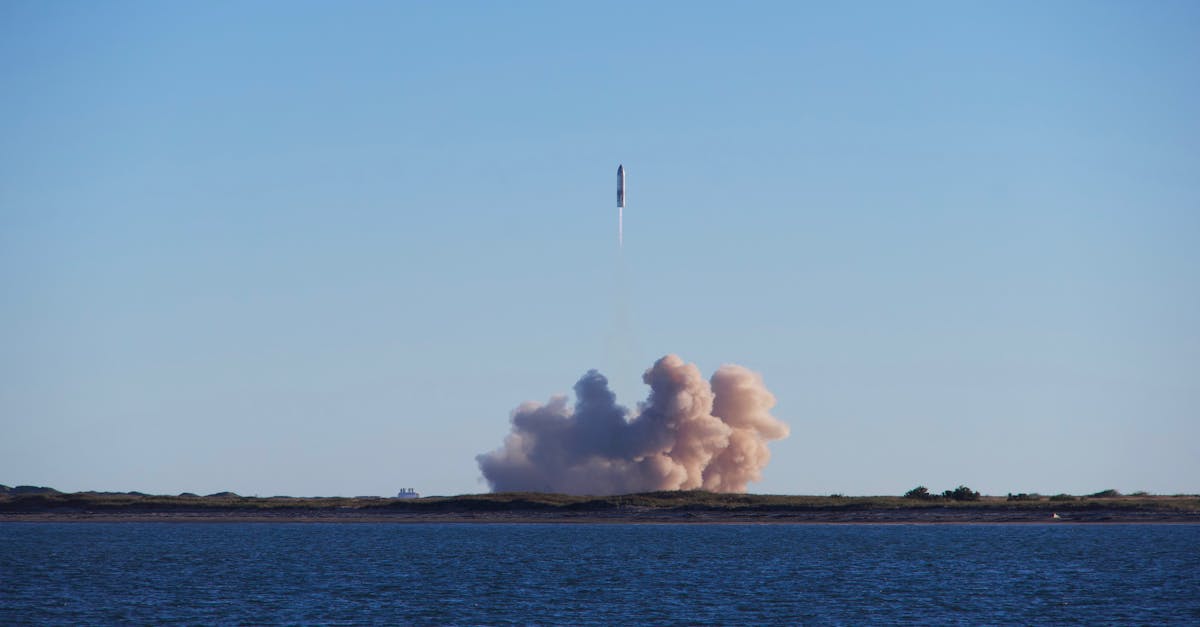
At 10:12 pm local time on Saturday, September 5, with the last daylight fading over the Norwegian Sea, a 28-meter rocket climbed away from a launch pad above the Arctic Circle. Seven minutes later, it was in orbit. The vehicle, called Spectrum, was built by Isar Aerospace, a Munich-area startup founded in 2018 by three students from the Technical University of Munich, and its flight made it the first privately developed European rocket to deliver payloads to orbit (Ars Technica, DLR).
"Today, Isar Aerospace opened space from continental Europe," co-founder and chief executive Daniel Metzler said in a statement. "Europe now has sovereign access to space" (Ars Technica).
That second sentence deserves scrutiny. The flight was real, hard-won, and genuinely historic. But sovereignty, in space, is a practical property: it is the ability to put the satellites a state depends on into orbit, replace them when they fail, and do both quickly, without asking anyone's permission or anyone's rocket. The record of this launch, and of the system around it, shows Europe gaining one meaningful rung of that ladder. It also shows how much of the ladder is still missing.
What did the second Spectrum flight actually prove?
Start with what is documented. Spectrum lifted off from Andøya Spaceport in northern Norway at 20:12 UTC on September 5 on a mission Isar called "Onward and Upward." According to the company, the two-stage vehicle completed stage separation and upper-stage ignition, reached orbital velocity, fired its second-stage engine again to adjust the orbit, and then separated its payloads (New Space Economy).
Those payloads were modest but real: five small satellites and one experiment, from Germany, Norway, Austria, Slovenia, and Bulgaria, carrying technology demonstrations for future satellite systems. Germany's space agency at DLR, which procured a Spectrum launch service on behalf of the federal government, confirmed deployment into the target orbits (DLR). Isar itself said it was still working with customers to confirm satellite health, a distinction worth keeping: separation from the rocket is not the same thing as a working spacecraft (New Space Economy).
Precision matters in the other direction, too. This was not Europe's first orbital launch, full stop. Europe has launched orbitally for decades from French Guiana, a French territory in South America. Nor was it Spectrum's first flight. What September 5 delivered was a new capability on a new axis: private, commercial, and from European soil (New Space Economy).
The road to that capability ran through the sea. Spectrum's first flight, on March 30, 2025, ended 30 seconds after liftoff, when the rocket lost attitude control during its roll maneuver, was terminated, and fell into the sea. Isar's investigation pointed to an unintended vent-valve opening and a controllability problem (NASASpaceflight.com, New Space Economy).
Then came the long middle. Integrated static engine tests of both stages in December 2025 cleared the way for flight attempts, but 2026 turned into a season of scrubs: an abort in March for an unauthorized boat in the maritime danger area, an April cancellation over a pressure-vessel leak, a June cancellation over abnormal behavior in fluid systems (New Space Economy). Seventeen months after the first attempt ended in the water, the second ended in orbit.
That is a genuine engineering achievement. It is also a sample size of one. A single success establishes that the rocket can work. It says little yet about how often it will work, on what schedule, at what price, or for which customers, and those are the questions on which sovereignty actually turns (New Space Economy).
Why had Europe been renting rockets from America?
The celebration in Munich makes sense only against the backdrop of how Europe got here. In the span of a few years, the continent lost nearly every reliable ride it had. Ariane 5, the workhorse of European spaceflight, retired in 2023. Its successor, Ariane 6, arrived years late, flying for the first time in 2024. The smaller Vega-C was grounded for two years after a 2022 failure. And when Russia invaded Ukraine in February 2022, Europe also lost access to the Soyuz rockets that had long filled the middle of its manifest.
The consequences were concrete and embarrassing. The European Space Agency's Euclid telescope flew on a SpaceX Falcon 9 in 2023. Its EarthCARE climate satellite did the same in 2024. More painful still, the European Union watched two batches of its own Galileo navigation satellites, the crown jewels of its strategic infrastructure, launch from Florida on SpaceX rockets in April and September 2024 because no European alternative was available on schedule.
The structural reason sits in procurement, not physics. Europe's launch market ran for decades on a model known as geographical return, in which governments funded rocket development and expected industrial work to flow back to their national industries. The result was capable rockets produced through a top-down consortium system that left little room for competitors. Arianespace and Avio, the incumbent operators of Ariane 6 and Vega-C, remain reliable but dependent on government support, and even with subsidies their prices struggle to compete (Ars Technica).
European governments therefore face an awkward arithmetic. Flying a satellite on a European rocket costs a premium. Flying it on SpaceX is cheaper, but it means entrusting sovereign hardware to an American monopolist, at a moment when relations with Washington are strained and "strategic autonomy" has become the Brussels phrase of the decade. Metzler put the stakes plainly after the launch: not depending on a monopoly "is extremely important for our own security, for our own economy, for strategic autonomy" (Ars Technica).
Which payloads can Spectrum actually launch?
Here the physics of the vehicle draw the boundary of the claim. Spectrum stands 28 meters tall and two meters in diameter. Nine Aquila engines burning propane and liquid oxygen power the first stage; a single restartable vacuum-optimized Aquila powers the second. In regular operation, it is designed to carry up to 1,000 kilograms to low Earth orbit, or roughly 700 kilograms to a sun-synchronous orbit from Norway. It is expendable: nothing comes back (DLR, NASASpaceflight.com).
Andøya itself imposes limits. The site sits at 69 degrees north and can serve orbital inclinations of roughly 90 to 110.6 degrees: polar and sun-synchronous lanes, the natural home of Earth observation and reconnaissance satellites, and nothing else. The launch complex is planned to support up to 30 orbital launches a year (NASASpaceflight.com).
Lay that against the satellites Europe actually calls critical:
| Payload class | Example | Can Spectrum carry it? |
|---|---|---|
| Technology smallsats, tens to hundreds of kilograms | The five satellites flown September 5 | Yes, this is its market |
| Earth-observation constellations, up to ~700 kg, polar orbits | Commercial imaging fleets, Norway's Arctic surveillance satellites | Yes, in principle |
| Navigation satellites, ~700 kg each to orbits above 20,000 km | Galileo | No, the orbit class is out of reach |
| Flagship science and observation platforms, well over a ton apiece | Copernicus Sentinel-class satellites | No, the mass exceeds capacity |
| Secure communications in geostationary orbit, several tons | National military satcom systems | No, on both mass and orbital geography |
| EU secure-connectivity constellation, roughly 290 satellites in low and medium Earth orbit | IRIS² | No for the medium-orbit layer; theoretically possible for low-orbit replenishment |
The mass figures above are approximate, but the conclusion does not depend on precision. Galileo spacecraft are modest in weight yet must be delivered to medium Earth orbit, an altitude class more than 20,000 kilometers above the low orbits Spectrum serves. Geostationary relay satellites sit on the equatorial belt, a destination outside both Spectrum's lift and the inclination envelope Andøya is built to serve. Europe's heaviest strategic payloads will fly on Ariane 6 or on Falcon 9, because nothing else exists.
The honest claim, then, is this: Europe now has a privately built, commercially offered option for the smallest tier of its orbital needs, flying from its own mainland. That tier covers technology demonstrators, commercial constellations, and some surveillance smallsat programs. It is real and growing. It is not where the flagship infrastructure lives.
Where this story sits
5 related pieces
Read it →
Hover a story · click to read
 No. 34 · Sep 5, 2026Can a Satellite Network Be Sovereign if SpaceX Owns It? Hungary's 4iG Deal Will Test the Answer
 No. 44 · Sep 11, 2026How LEO Mega-Constellations Reset the Calculus of Space Warfare
 No. 26 · Sep 2, 2026Orbital Grappling: Inside the Quiet U.S.–China Race to Build Maneuverable Spacecraft
 No. 69 · Oct 14, 2026Could AI Power the Next Major Bank Cyberattack? Lessons From South Korea
 No. 68 · Oct 14, 2026Where Will North Asia Find Enough Electricity to Power Its AI Boom, and Who Will Pay the Price?
Who decides what flies, and on whose rocket?

A rocket is only half of a launch service. The other half is permission: procurement rules, security accreditation, insurance, and institutional patience. This is where the gap between a successful startup and a trusted sovereign provider runs longest.
There are genuinely new signs on this front. The German Space Agency at DLR did not merely applaud the flight; it bought in, procuring a Spectrum launch service on behalf of the federal government. "The Spectrum rocket was not developed under a government contract; it was developed to serve a global market," said Walther Pelzer, the DLR executive board member who directs the German Space Agency. "This trust is crucial for attracting vital capital from private investors" (DLR).
Norway had already moved in the same direction: its space agency signed with Isar to launch the satellites of its Arctic Ocean Surveillance program, and the Norwegian civil aviation authority became the first in Europe to license a commercial orbital test flight from the continent (Isar Aerospace).
At the European level, the machinery of change now has a name. At the ESA Ministerial Council in November 2025, member states established the European Launcher Challenge, explicitly designed to create multiple launch providers so that no single failure strands the continent again. ESA will co-finance up to 60 percent of new vehicle development and will systematically consider new entrants when procuring launch services, while leaving technical design to the companies (DLR).
Notice what these mechanisms assume. They exist precisely because the incumbent system, left alone, would not buy from a startup. Anchor-tenant contracts for small technology missions are the first step of a ladder: they build flight history, which builds insurance acceptance, which builds eligibility for more sensitive payloads. What they are not is a handover of the classified core. Publicly, at least, no European government has committed classified reconnaissance or encrypted-communications payloads to a vehicle with a single orbital flight behind it, and the programs that operate those payloads plan in decades, not news cycles. Germany's own SARah radar reconnaissance constellation, to take the obvious example, flew on Falcon 9 in 2022 and 2023. The flagship EU programs of this decade were contracted the same way: the IRIS² secure-connectivity constellation, awarded to the SpaceRISE industrial consortium in late 2024 with several hundred satellites planned and service targeted around 2030, will be launched by providers chosen through that prime-contractor structure, and its medium-orbit layer sits beyond Spectrum's reach in any case.
None of this is an argument against Isar. It is a description of sequence. Launch trust is accumulated flight by flight, and September 5 was flight one.
Can a startup outlast the economics it is up against?
Isar is, by European standards, unusually well armed for the long game. The company has raised roughly $1 billion across several private financing rounds and employs nearly 500 people, making it the best-capitalized private launch company on the continent (Ars Technica). Its eight-year road to orbit matches the typical timetable of successful Western launch startups (Ars Technica). Metzler recalls the early skepticism: "People will continue to always say this will not work, and that will not work, until we just prove them wrong" (Ars Technica).
The production side of the bet is aggressive. Isar's automated factory near Munich is designed to build up to 40 Spectrum rockets a year at full capacity, and vehicles two and three were already in production at the time of the first flight (Isar Aerospace). Metzler said after the launch that the company will now concentrate on "rapidly scaling launch vehicle production" to serve its order pipeline (Ars Technica).
The revenue side is less forgiving. Trade coverage has put Isar's target price at roughly €10,000 per kilogram, a figure that needs context to be understood (BigGo Finance). SpaceX's advertised rideshare prices to sun-synchronous orbit have run well under that in recent years, on the order of $5,500 to $6,500 per kilogram, and the economics of a partially reusable workhorse like Falcon 9 spread costs in a way no expendable small rocket can match. Spectrum's commercial case therefore cannot be price. It is schedule control, dedicated orbits, and the premium European institutions already accept for sovereign flights (Ars Technica).
That case also faces a crowded European field snapping at the same customers. Trade coverage of the launch has pointed to Rocket Factory Augsburg and PLD Space as the closest competitors inside the European Launcher Challenge framework, with several more ventures behind them and ArianeGroup's MaiaSpace working toward reusability (BigGo Finance, Ars Technica, NASASpaceflight.com). Capital raised is not capital kept: private investors, unlike geo-return ministries, expect a cadence, a margin, and a market, and Pelzer's comment about trust attracting capital cuts both ways (DLR).
What history says about Europe's startup rockets
Europe has been here before, and the memory is not encouraging. In the 1970s and 1980s, a private German venture called OTRAG promised cheap orbital access, tested crude rockets in Zaire and Libya, and collapsed under political pressure without ever reaching orbit. In January 2023, Virgin Orbit made the first orbital launch attempt from the British Isles out of Cornwall, failed, and ceased operations soon after (NASASpaceflight.com). The wider small-launch shakeout has already claimed companies with working rockets and real contracts.
The precedent that cuts in Isar's favor is the attrition curve itself. Bulent Altan, Isar's chairman and a former SpaceX executive, framed it after the 2025 failure: "It normally can take a few attempts to reach orbit" (Isar Aerospace). Spectrum joined a familiar club by reaching orbit on flight two. But the same history supplies the corrective: getting to orbit once is the entry ticket, not the business. The companies that died after Virgin Orbit's fashion did not fail to prove a rocket could work. They failed to prove it could work often enough, cheaply enough, for long enough.
What would real launch sovereignty take?
The evidence from this launch and the system around it suggests a workable definition. Sovereign launch capacity, in a form that could actually back military and civilian infrastructure, would require at least five things.
First, demonstrated cadence. Not one flight but a string of them, with published reliability, a manifest that survives contact with weather and boats in the danger area, and insurance markets willing to underwrite sovereign payloads at rational premiums (New Space Economy).
Second, coverage of the full payload stack. Spectrum now credibly addresses the small end. The medium and heavy tiers, where navigation, flagship observation, and secure communications live, remain the terrain of Ariane 6 and Falcon 9. That is not an argument against the small rocket; it is why the European Launcher Challenge is explicitly a multi-provider design, funding diversity so that no single gap strands the continent again (DLR).
Third, institutional demand that follows through. The DLR and Norwegian contracts show the anchor-tenant model working. The test is whether the approach scales to the large EU programs, whose launch procurement runs through prime contractors with incumbents' hardware already in the plan, and to national defense ministries whose classified payloads carry accreditation and handling requirements that a young commercial pad has not yet demonstrated (Isar Aerospace, DLR).
Fourth, attention to everything that is not the rocket. A sovereign constellation is satellites, ground stations, encrypted links, and spare hardware in storage, not just a launcher. Europe's dependence on Falcon 9 in 2023 and 2024 proved the launch bottleneck existed, but it also exposed how many other pieces, from satellite production schedules to export approvals for flying European hardware from American soil, sit upstream and downstream of the pad. Metzler's claim that launch is "the largest bottleneck for the global space industry" is a chief executive's claim, and even taken at full strength it describes the bottleneck his product attacks, not the whole system (Ars Technica).
Fifth, time. The European Launcher Challenge was conceived for the medium term, and the constellations that would use new European rockets, IRIS² among them, have service horizons near the end of the decade. If Spectrum accumulates flights at anything close to its industrial design rate, the window and the clock actually align (DLR).
What the next eighteen months will show
So can Isar Aerospace's success transform Europe into a genuinely sovereign space power? On the evidence available the morning after, the honest answer is a layered one. For the small-satellite market to polar and sun-synchronous orbits, Europe gained its first private commercial launch option, flown from the continent's own soil, at 20:12 UTC on September 5, pending the boring proof of repetition. For the heavy, high-altitude, classified, and flagship-class payloads on which military command and navigation infrastructure actually rests, nothing changed, because Spectrum structurally cannot touch them and no private European vehicle yet exists that can.
The metric to watch is not the next press release. It is flight three, and five, and twelve: whether the scrubs of 2026 were a qualification campaign or a preview of operations; whether the 40-rockets-a-year factory meets a manifest that justifies it; whether the European Launcher Challenge's money and procurement weight push institutional payloads onto new vehicles; whether Isar's rivals reach orbit and turn Europe's first into Europe's normal (New Space Economy, Ars Technica).
Speaking to reporters the day after the launch, Metzler reached for the sentence that has powered every entrant in this business: "I think that it is important to realize that Europe can also move fast and deliver" (Ars Technica). He has earned the claim about speed. The 524 days between a wreck in the Norwegian Sea and a clean orbit delivery prove it (BigGo Finance). Delivering, in the sovereignty sense, is a longer verb. It conjugates across cadence, class, and procurement, and the first conjugation is now on the board.
Sources
- Stephen Clark, "German company becomes first in Europe to launch fully commercial orbital rocket," Ars Technica, September 6, 2026. https://arstechnica.com/space/2026/09/german-company-becomes-first-in-europe-to-launch-fully-commercial-orbital-rocket/
- "First orbital flight of the SPECTRUM commercial launch vehicle from Germany," German Aerospace Center (DLR), September 6, 2026. https://www.dlr.de/en/latest/news/2026/first-orbital-flight-of-the-spectrum-commercial-launch-vehicle-from-germany
- "What Does Isar Aerospace's Spectrum Launch Change for Europe's Access to Space?" New Space Economy, September 5, 2026. https://newspaceeconomy.ca/2026/09/05/what-does-isar-aerospaces-spectrum-launch-change-for-europes-access-to-space/
- "Isar Aerospace launches Spectrum, fails early in first stage flight," NASASpaceflight.com, March 30, 2025 (archived). https://web.archive.org/web/20250412055151/https:/www.nasaspaceflight.com/2025/03/isar-first-launch/
- "Isar Aerospace lifts off successfully during first test flight of orbital launch vehicle" (press release), Isar Aerospace, March 30, 2025. https://isaraerospace.com/images/Press-Release_Isar-Aerospace-lifts-off-successfully-during-first-test-flight-of-orbital-launch-vehicle.pdf
- "Isar Aerospace's Spectrum Rocket Reaches Orbit in Historic First for Europe," BigGo Finance, September 6, 2026. https://finance.biggo.com/news/b52ebde6-94de-49d5-8453-fda697cf06b4
Comments (4)
Continue exploring
Orbital Grappling: Inside the Quiet U.S.–China Race to Build Maneuverable Spacecraft
A Chinese tug towed a dead satellite out of geostationary orbit in 2022. Both Washington and Beijing are now building spacecraft…
Could AI Power the Next Major Bank Cyberattack? Lessons From South Korea
When South Korean police announced the arrest of five members of a hacking group last month, the case came with an unusual label…
Where Will North Asia Find Enough Electricity to Power Its AI Boom, and Who Will Pay the Price?
Japan, Korea and Taiwan all want to host the next wave of AI data centers, but only the grids that can move cheap, reliable power…
Really hope you dig into the payload health confirmation question next - the article makes the careful point that separation from Spectrum isn't the same thing as working satellites, and with five different operators across five countries waiting on telemetry, that seems like its own story. It would also be interesting to hear whether Isar has disclosed anything about how many of those tech-demo satellites successfully powered up in orbit. And on the broader cadence question, are they publicly committing to a 2027 launch manifest yet, or is that still TBD while they analyze data from this flight?
One point I'd like to understand better is the launch price. The article argues that sovereignty turns on schedule, cadence, and price, and it gives a clear picture of the first two once Isar publishes more data, but per-kilogram cost to orbit for Spectrum is conspicuously absent. If Spectrum is targeting a price band meaningfully below Falcon 9, that has very different strategic implications for ESA and the EU than if it is roughly at parity. Could you follow up on whether Isar has disclosed anything concrete on list pricing, and how that compares with what Arianespace is now offering on Ariane 6?
The 'Why had Europe been renting rockets from America?' section was the most useful part for me, because it laid out the actual sequence of capability losses - Ariane 5 retiring in 2023, Ariane 6 arriving years late, Vega-C grounded for two years after 2022, Soyuz gone after February 2022 - that put Europe in the position of sending Euclid and EarthCARE to Florida on Falcon 9s. Without that context, the September 5 flight looks like a one-off triumph rather than the answer to a real dependency problem.
I was at Andoya in August for a sounding-rocket campaign and could already see the Spectrum hardware being integrated in the background. The article's framing of the 30-second first flight and the long scrub-heavy year between attempts really matches the mood on the island, where nobody was taking success for granted. Watching a 28-meter vehicle climb through that Arctic light on the 5th felt like watching our campaign get a much bigger sibling, and I'll be following the next flight window closely.