
On September 3, 2026, the Hungarian telecommunications and defence group 4iG and SpaceX announced agreements to do three things: launch Starlink Mobile, SpaceX's satellite-to-phone service run with terrestrial operators, in Hungary and Albania; expand the 5G non-terrestrial network across additional Western Balkan markets at a later stage; and jointly develop secure satellite communications under the name Sovereign Solutions, scheduled to launch in 2027 and intended to provide secure network infrastructure and broadband connectivity. 4iG describes the arrangement as Europe's first agreement of its kind, and Satellite Today's report relays the same launch details.
The word "sovereign" is doing heavy lifting in that announcement. More than four years after Starlink's wartime role in Ukraine turned dependence on a privately owned American network into an open security question for defence ministries across Europe, an EU and NATO member state is preparing to buy sovereignty from that same company. Meanwhile the European Union's own answer, the IRIS² constellation, will not launch its first satellites before 2029, according to the European Space Agency. Into that gap, a contract has stepped.
What neither announcement discloses is what makes the sovereign part sovereign. Nothing published so far specifies the satellite architecture, who can refuse service and under whose law, who holds the encryption keys, where the gateways stand, whose spectrum authorizations govern the service, or what guarantees that it keeps running in a crisis. Those six elements are precisely where a sovereignty claim is either proven or quietly abandoned, and two bodies of evidence show what each requires: the Starshield network SpaceX already operates for the United States government, and the governance design the EU has built for IRIS².
What the 4iG and SpaceX agreement actually commits to

The announced scope has three layers. The commercial layer is Starlink Mobile in Hungary and Albania, with a later expansion of 5G non-terrestrial coverage across more of the Western Balkans. The strategic layer is Sovereign Solutions, an offering positioned for secure government and defence connectivity. The timing layer puts the sovereign product in service next year. All of this comes from the 4iG announcement and Satellite Today's report of the launch; the documents made public do not go further.
That restraint matters, because almost everything that would decide the sovereignty question sits in the undisclosed material. Contract value, dedicated satellite capacity or hosted payloads, cryptographic accreditation, gateway locations, priority rules for government users, and behaviour in an emergency are all absent from the public record. A deal of this shape places a national operator in the middle for a structural reason: direct-to-device satellite service is built around the terrestrial partner's licensed mobile spectrum. That gives Budapest and Tirana a genuine permission lever, one of the few that exists by design rather than negotiation. Whether it is used, and what else was secured around it, is currently unknown.
Why Europe's own sovereign constellation leaves a gap to fill
IRIS² exists because the EU decided that relying on non-European systems for secure government communications was itself a risk. ESA describes it as the Union's next flagship space programme after Galileo and Copernicus: a multi-orbital constellation of 348 satellites, 330 in low Earth orbit and 18 in medium Earth orbit, with first launches envisaged for 2029, initial services from 2030, and full capability by 2032. A governance analysis of the programme describes a constellation of around 290 satellites and an EU budget contribution of €2.4 billion for 2023 to 2027; the lower satellite count suggests how much the architecture has shifted during design. Interim governmental services flow through GOVSATCOM, which pools existing member-state satellite capacity rather than waiting for new hardware.

The programme is also under documented strain. An independent analysis at spacepolicies.org estimates that projected cost roughly doubled from about €6 billion to €10.6 billion during its ideation phase, that only €2.4 billion of a roughly €6.5 billion public envelope is firmly committed, and that in-service timing has slipped from 2024 toward 2030 and possibly 2031. The same analysis puts the scale asymmetry plainly: Starlink has roughly 7,000 to 9,000 satellites deployed toward a target of 42,000 while IRIS² counts its fleet in the hundreds. The demand that has actually materialized in the European market is institutional, not consumer: the analysis notes Eutelsat's OneWeb revenue rising 84 percent to €187 million alongside a ten-year French military contract worth €1 billion.
The war that clarifies all of this is Ukraine's. As a New Space Economy analysis of sovereign satellite networks puts it, a market for sovereign satellite networks "has appeared because trust broke before capacity did." Starlink became essential to Ukraine's military and civil communications at a speed no procurement system could match, and questions about who controls access, who can switch service off, and whose law governs the operator stopped being theoretical. A telling detail comes from a portfolio assessment by ISC Defence Intelligence: the United States moved Ukrainian forces' Starlink use from donation to formal US-funded procurement in 2023. Even Washington, in effect, concluded that informal dependence on a vendor's goodwill was not an acceptable basis for an ally's wartime network.
Where this story sits
5 related pieces
Read it →
Hover a story · click to read
 No. 39 · Sep 6, 2026Isar's Spectrum Reached Orbit. The Test of European Space Sovereignty Starts Now.
 No. 28 · Sep 3, 2026Norway and Iceland Join GOVSATCOM and IRIS²: Europe Extends Its Secure Satellite Architecture Into the Arctic and North Atlantic
 No. 2 · Aug 25, 2026NGINX and the Architecture of the Modern Web
 No. 14 · Aug 26, 2026The Quiet Relay: How China-Linked Hackers Turned IoT Devices Into Espionage Highways
 No. 18 · Aug 28, 2026How drones, Starlink and covert flights through Chad and Libya are redrawing Sudan's war
Building on SpaceX already has a template, and it has cracks
Hungary is not the founding customer for sovereignty-as-a-service from SpaceX. The United States has been buying it for years, and the public record of that effort shows both what the company can deliver and where the independence claim frays.

At the dedicated end sits Starshield. ISC Defence Intelligence's April 2026 assessment maps a classified National Reconnaissance Office contract valued around $1.8 billion, with at least 183 Starshield satellites already on orbit at roughly 310 kilometres altitude and a 70-degree inclination, markedly below the commercial Starlink shell. These are heavy satellites of 1,000 to 1,500 kilograms per bus, built around a hosted-payload architecture; Northrop Grumman is the disclosed payload integrator on the NRO tranche, and optical inter-satellite links tie the constellation together. A roughly 480-satellite Space Force constellation called MILNET, publicly acknowledged in June 2025 and flown under Starshield licensing, extends the pattern. The low altitude is deliberate but expensive: satellites at 310 kilometres without active station-keeping re-enter within months to a couple of years, so the constellation is attritable by design and remains dependent on continuous replenishment launches, by SpaceX.
At the shared end, the picture is less reassuring. FedScoop's investigation of the Starlink-Starshield relationship found the two services fundamentally connected. A Space Systems Command spokesperson confirmed that its commercial satcom office procures Starshield access "over the Starlink Satellites/network." When a Starlink outage struck in July 2025, attributed by SpaceX to a "failure of key internal software services that operate the core network," Starshield users were knocked offline alongside backyard customers. The US Air Force, in comments to the California Coastal Commission, stated the relationship bluntly: "For many U.S. Government users, Starlink and Starshield are indistinguishable."
SpaceX's own description of the cryptographic distinction is narrow. Starshield builds on Starlink's "end-to-end user data encryption" by adding "additional high-assurance cryptographic capability to host classified payloads and process data securely," according to the FedScoop report. Penn State researcher Sascha Meinrath, whose analysis of the network's capacity is now being studied by military officials, warned that undisclosed "potential dependencies" between the services have left government users facing "unknown downside risks." That is the American experience: layers of contract and encryption over an architecture whose shared components retain shared failure modes. Nothing in the Budapest announcements says where on this spectrum, between dedicated constellation and hardened managed service, Sovereign Solutions will sit.
The six tests a sovereignty claim has to pass
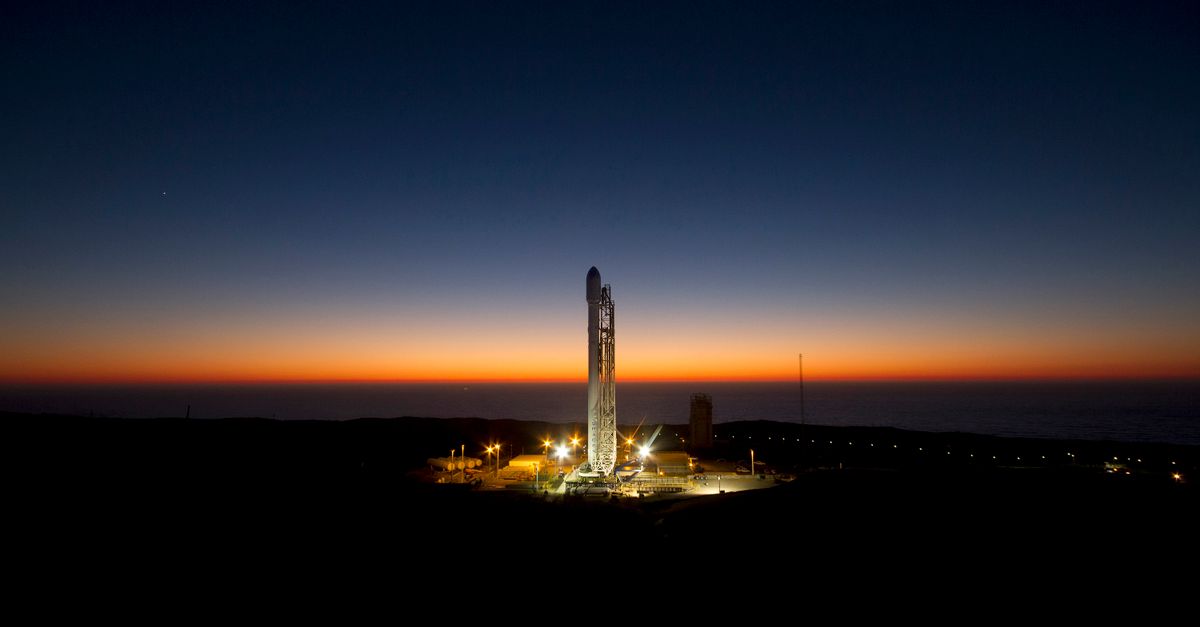
Measured against the Starshield precedent and the EU's own design work, meaningful sovereignty over a network built on SpaceX infrastructure comes down to six questions. None of them can be answered with branding.
Architecture: does the state control anything in orbit?
The first honest distinction is between owning capacity and reserving it. The NRO pattern shows what the dedicated version costs: custom satellites, low attritable orbits, hosted national payloads, permanent replenishment. The IRIS² design shows the European institutional version, tiering what ESA calls "Hard Gov" services, restricted to government-authorised users, away from "Light Gov" services delivered over the commercial part of the same system. Between those poles sits the cheapest option, a capacity carve-out on the commercial Starlink mesh, where government and consumer traffic share satellites, links and software.
A sovereignty claim on a carve-out needs evidence of physical separation: dedicated beam plans or network partitions, isolated routing over the laser mesh, hardened government terminals akin to the Starshield units SpaceX fields for the US Army. Without that, government users inherit the commercial network's failure modes, as the July 2025 outage demonstrated in the United States. The 4iG announcements describe the offering's name and purpose, not its architecture.
Governance: who can say no, and under whose law?
The governance question is who holds authority when interests diverge. The EU's answer for IRIS², described in The New Global Order's governance analysis, is a twelve-year concession awarded in late 2024 to the SpaceRISE consortium of SES, Eutelsat and Hispasat, with the Union acting as anchor customer rather than owning the satellites outright. Control is meant to be embedded as contractual levers. The analysis lists the instruments available in principle to hard-code sovereignty into the service model: minimum service levels, security accreditation requirements, audit rights, and clear change-control rules for software, encryption and ground-segment updates. Its own caveat is the important part: those levers matter only if they remain effective when commercial incentives and public imperatives diverge, which is exactly when strategic systems get stress-tested.
A bilateral national contract with SpaceX would need equivalent levers, negotiated from a weaker position than the Commission's. The minimum set: contractual priority and preemption rights for government users, audit and accreditation rights the state can actually exercise, change control that prevents unilateral software or crypto updates from silently altering a service a ministry depends on, a defined governing law and dispute forum, and step-in rights if the vendor defaults. The Ukraine record, which shifted from informal donation to formal US-funded procurement in 2023, is the standing warning about leaving those clauses to goodwill.
Encryption: who generates, holds and rotates the keys?
Encryption is where sovereignty most often proves to be an illusion. Transport encryption run by the vendor, however strong, protects the data in transit while leaving key custody, algorithm choice and update authority with the operator. SpaceX's description of Starshield's "additional high-assurance cryptographic capability" is thin on detail, which is normal for classified systems, but the ISC assessment records the hardened features the United States layers on top, such as HAIPE compliance and NSA Type-1 encryption on fielded terminals: the things that keep American government traffic American regardless of whose satellites carry it.
A meaningful European equivalent requires keys generated under national authority, algorithms and equipment accredited nationally or at EU level, the ability to rotate and revoke keys without vendor participation, terminals keyed inside national security channels, and contractual control over cryptographic updates. The EU already treats this as the sovereignty kernel: in GOVSATCOM, the EU Agency for the Space Programme manages key secure ground-segment elements in cooperation with member states. If the keys for Sovereign Solutions are generated and administered from SpaceX facilities under US law, then what Hungary obtains is secure transport on someone else's terms, not sovereign communications.
Ground segment: whose soil do the gateways stand on?
Satellite networks are controlled, routed and intercepted at ground level. Sovereignty over the ground segment means gateways, points of presence and network operations nodes on national territory, licensed nationally, staffed by nationally cleared personnel, with government traffic routed and logged domestically and a demonstrated ability to isolate the national segment.

SpaceX's architecture complicates this in both directions. The Starshield architecture assessment notes that the optical inter-satellite mesh removes the need for continuous over-the-horizon ground-station coverage. That is a resilience property, because traffic survives gateway loss. It is also a control problem, because the same mesh can route a government's traffic through foreign ground stations as a matter of network optimization, potentially without local visibility. A sovereignty claim needs to specify which fraction of national government traffic may ever leave national infrastructure, and the monitoring to prove the answer. Nothing public yet specifies this for the Hungarian service.
Spectrum: whose licence, whose coordination, whose fallback?
Spectrum is the one dimension where the 4iG structure gives the state authentic leverage by design. Direct-to-device satellite service transmits in the terrestrial mobile operator's licensed frequencies, which is why the product exists only in partnership with carriers such as 4iG. Downlink landing rights and earth-station licences are issued by national regulators. Hungary and Albania therefore hold real permission power over Starlink Mobile on their territory, and emergency provisions in national telecom law sit behind it.
But leverage held is not leverage exercised. A sovereign service also needs its spectrum arrangements hardened for conflict: registered protection against interference, priority in congestion, licence conditions that write emergency government use into the authorization rather than leaving it to be improvised, and coordination terms that cannot be unilaterally renegotiated by the vendor with another regulator. The announcement establishes the partnership structure; whether these conditions exist anywhere in the filings is not yet public.
Continuity: what is guaranteed on the worst day, not the average one?
Continuity is the dimension where the SpaceX track record supplies actual data. The July 2025 outage took Starshield down with Starlink because the government service ran over the same core network software. The attritable 310-kilometre constellation design makes continuity depend on uninterrupted access to the vendor's rockets. And the Ukraine experience shows that coverage decisions on a donated or commercially procured network ultimately rested with the vendor until governments formalized control.
Guaranteeing continuity against that record requires more than a service-level percentage. It requires preemption rights giving government traffic priority over commercial load, a fallback path independent of SpaceX, escrowed operational configurations, terminals able to fail over to other networks, defined behaviour under sanctions or conflicts of law, and rehearsed failure procedures. Europe has already built part of the answer: GOVSATCOM's pooled member-state capacity exists precisely as a bridging layer while IRIS² is constructed, per ESA's programme description. A Hungarian sovereign service that treats GOVSATCOM or national capacity as backup would be materially more sovereign than one that treats SpaceX as the whole system.
So how much sovereignty can a contract actually buy?

The strongest position in this debate is neither that commercial sovereignty is fraudulent nor that it is complete. The New Space Economy analysis argues that sovereignty has grades, and that assured access, domestic gateways, national encryption layers, protected government terminals and priority service contracts can deliver genuine operational control without full ownership. The article points to the United Kingdom's SKYNET 6, whose service model under Team Aurora includes Babcock, Intelsat, GovSat and SES, as proof that a narrower version of sovereignty can work. The same analysis describes the United States as pursuing sovereignty through commercial dependence, which the ISC portfolio figures support.
Read against the six tests, national sovereign offerings on commercial constellations sort into rough grades. At the bottom is a marketing layer, standard consumer service with a government sales channel. Above it is a managed service with hardened terminals and priority tiers. Above that is a national partition with key custody, domestic ground infrastructure and exercised continuity planning. At the top is a dedicated national constellation, which is approximately what the NRO bought and what IRIS² is trying to become. The public record on Sovereign Solutions today demonstrates the first grade and suggests the second. Nothing published documents the third or fourth.
There are genuine upsides to the middle grades. Running on SpaceX rails would align Hungarian government connectivity with the same Starshield and MILNET pattern the Pentagon is standardizing around, which could ease coalition interoperability by construction rather than by adapter. The costs are equally real. The FedScoop reporting records humanitarian organizations' concern about the blurring of civilian and military infrastructure when one mesh carries both, and it shows that the boundary between Starlink and Starshield is blurred even for the US government itself. A European state signing up for the blur inherits those questions with less leverage than the customer that owns the vendor's home market.
There is also a European institutional tension. Hungary is an EU member state whose governments will be beneficiaries of IRIS² and GOVSATCOM, now buying a national sovereign layer from the American company those programmes were designed to reduce dependence on. Layered approaches are not inherently incoherent, since redundancy is the point of resilient architecture. But layering only delivers resilience if the layers fail independently, and the July 2025 outage showed that shared infrastructure can fail together.
The verdict on Sovereign Solutions will be written in documents that have not been published. When the service launches in 2027, the telling details will be: whether any dedicated satellites or hosted payloads exist; who generates and holds the encryption keys; where the gateways and network operations stand and under whose licences; what priority and preemption classes are contracted; what spectrum conditions the Hungarian and Albanian regulators impose; and what fallback runs when SpaceX's software fails on a quiet Tuesday or changes hands on a loud one.
Soon, phones outside coverage in the Balkans will find a signal from an American constellation, sold through a Hungarian carrier. Whether the governments sharing that infrastructure can keep the signal in a crisis, decide who encrypts it, and prove where it touches the ground will be decided in annexes and service schedules, not in announcements. In this market, sovereignty is whatever survives the fine print.
Sources and references
- 4iG Group. "4iG Group and SpaceX establish Europe's first agreement to launch Starlink Mobile and sovereign solutions." Press release, 2026. https://www.4ig.hu/4ig-group-spacex-starlink-mobile-sovereign-solutions-agreement
- "Hungary's 4iG Group to Launch Starlink Mobile." Via Satellite / Satellite Today, September 3, 2026. https://www.satellitetoday.com/connectivity/2026/09/03/hungarys-4ig-group-to-launch-starlink-mobile/
- European Space Agency, Connectivity and Secure Communications. "ESA Programme Related to EU Secure Connectivity: IRIS²." Accessed September 2026. https://resilience.esa.int/esa-programme-related-to-eu-secure-connectivity-and-iris%C2%B2
- Schlenker, Maximilian. "Sovereignty as a Service: IRIS² and the EU's New Connectivity Model." The New Global Order, March 16, 2026. https://thenewglobalorder.com/world-news/eu-iris%C2%B2-satellite-governance/
- Heilweil, Rebecca. "SpaceX differentiates between Starlink and Starshield, but the services are intertwined." FedScoop, August 13, 2025. https://fedscoop.com/spacex-starlink-starshield-government-military-satellite-internet/
- ISC Defence Intelligence. "SpaceX as the Pentagon's Satcom Prime: Portfolio, Architecture and the ASAT Question." April 23, 2026. https://integratedsynergyconsulting.com/2026-04-23-spacex-military-space-comms-portfolio-assessment
- "The Third Way Under Stress: Can IRIS² Be a Sovereign Utility Instead of a Starlink Rival?" SpacePolicies.org. https://spacepolicies.org/article/iris2-starlink-europe-sovereign-connectivity/
- NSE Staff. "Sovereign Satellite Networks: Strategic Necessity or Costly Political Redundancy?" New Space Economy, April 9, 2026. https://newspaceeconomy.ca/2026/04/09/sovereign-satellite-networks-strategic-necessity-or-costly-political-redundancy/
Comments (2)
Continue exploring
NGINX and the Architecture of the Modern Web
The problem hiding behind a successful page load A browser requests a page. Before the application can answer, something must…
The Quiet Relay: How China-Linked Hackers Turned IoT Devices Into Espionage Highways
The QScan and QTRouter takedown reveals how ordinary routers, cameras, and other connected devices can become hidden relay points…
How drones, Starlink and covert flights through Chad and Libya are redrawing Sudan's war
What began as a power struggle in Khartoum is now a drone war supplied through Chad and Libya, connected by smuggled satellite…
Framing the pre-2029 window as a gap this contract fills is reasonable, but IRIS²'s first services are now targeted at 2030, so any arrangement signed today locks Hungary into years of operating on infrastructure that, on the article's own terms, sits under U.S. jurisdiction. Hardening reliance on a SpaceX-owned constellation during that interval arguably deepens the dependency IRIS² was built to escape rather than bridging it. A bridge that runs in the opposite direction from where the destination is being built is an unusual definition of sovereign.
For a smaller Western Balkan market lacking a domestic player of 4iG's scale, would the same direct-to-device permission lever the article identifies actually exist, or does the sovereignty case here only hold when a sizeable national operator is sitting in the middle?