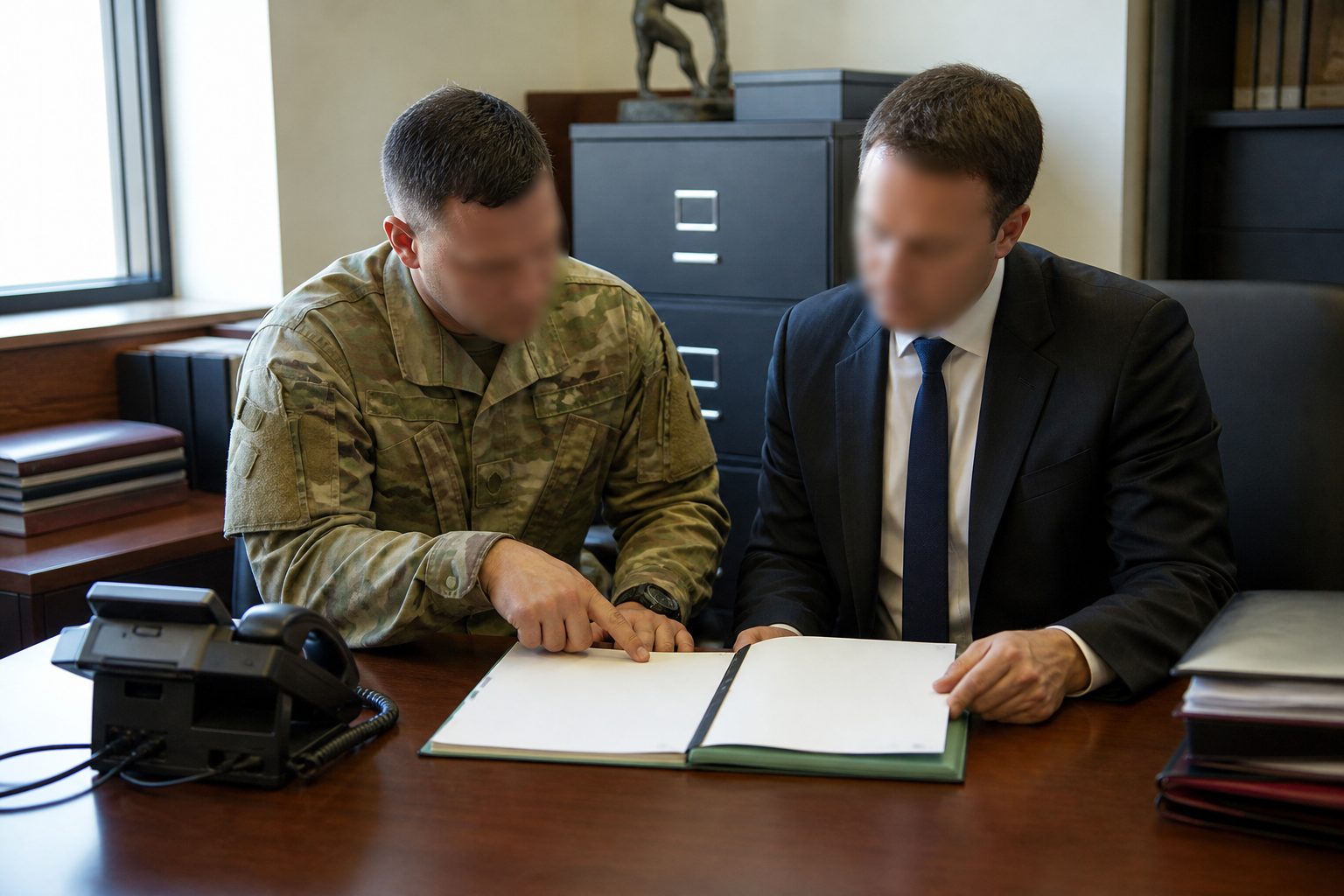
On October 26, Israeli media reported an unusual confrontation between Prime Minister Benjamin Netanyahu and IDF Chief of Staff Eyal Zamir over possible military action linked to Iran. The reports said Zamir resisted an unspecified operation, sought fuller discussion, and requested written documentation of the legal authorization.
The account remains unverified. No public order, recording, cabinet minutes, or named firsthand witness has established exactly what Netanyahu allegedly ordered. Israel’s Defense Ministry denied that it intended to launch an Iranian attack before the country’s election, and officials disputed parts of the reported confrontation. (Times of Israel; Associated Press; RTÉ)
But the question raised by the reports is real: if a prime minister wants military action that could trigger a wider war, what prevents the order from becoming an attack within minutes?
The available legal and institutional framework does not rely on a single safety switch. Israel’s system contains several overlapping barriers: political authorization, legal review, military judgment, intelligence assessments, operational readiness, command communications, and the duty to reject orders that are clearly unlawful. Those safeguards can delay or reshape an operation. They do not give the chief of staff a general veto over a lawful decision by the political leadership.
What is actually known about the reported confrontation?
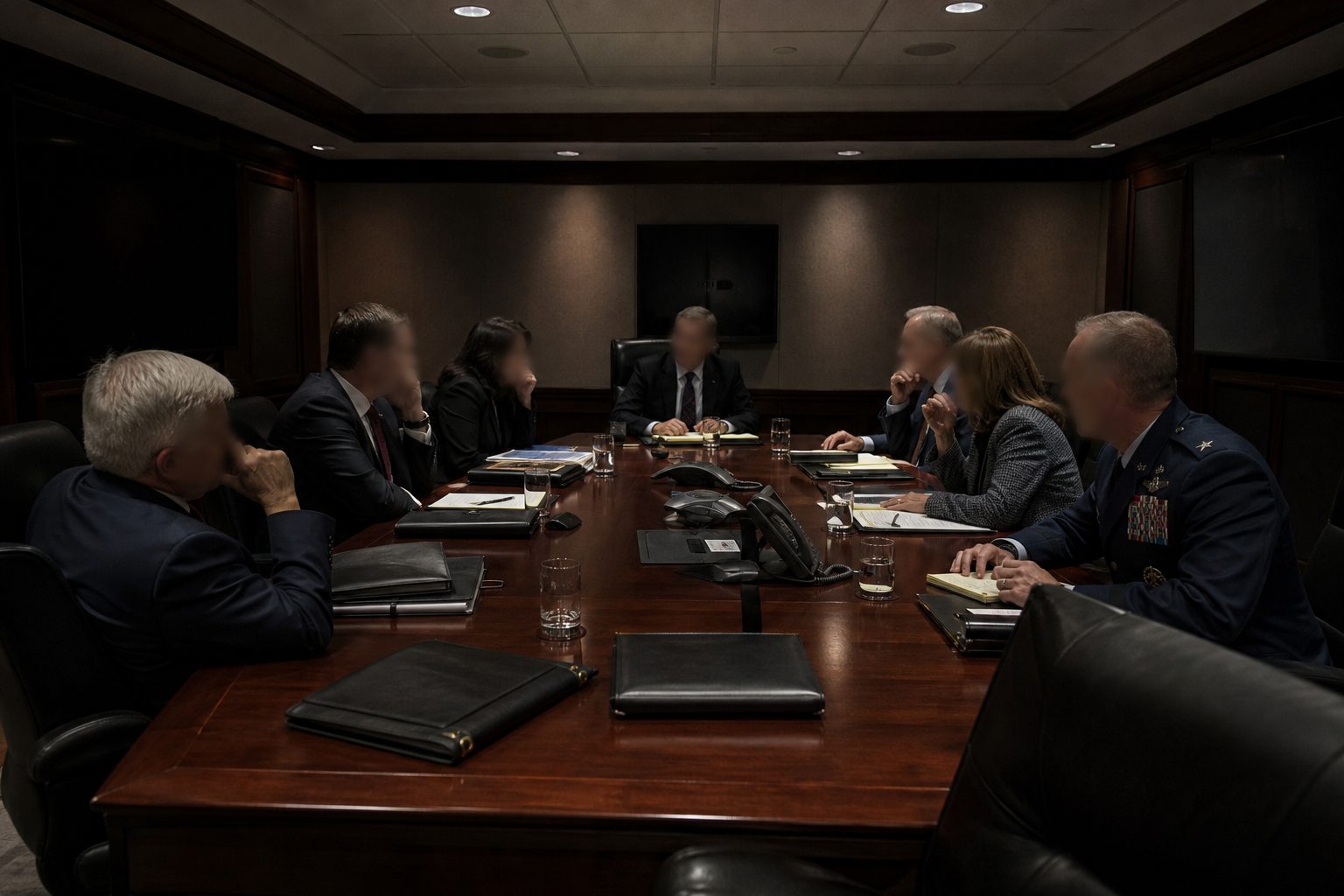
The public record supports only a limited conclusion. Israeli media reported that Zamir resisted an Iran-related operation reportedly sought by Netanyahu and wanted a fuller discussion and signed authorization before proceeding. Some reports described his concern as the danger that an Israeli move could provoke Iranian retaliation during an election period. (Jerusalem Post; Israel.com)
Other accounts said Zamir would support military action if Iran were preparing an attack or if the United States resumed fighting with full backing for Israel. Those details came through news reports and unnamed officials, not a published government document. (Oman Observer)
That distinction matters. The evidence indicates a reported dispute over authorization, escalation risk, and military judgment. It does not establish that Netanyahu issued a final attack order, that Zamir flatly refused a lawful order, or that an attack was prevented.
The strongest evidence that could resolve those questions would include cabinet or Security Cabinet minutes, a formal government decision, written operational orders, legal advice, authenticated communications, official statements by the participants, or records released through a later investigation. The cited reporting has not publicly produced those materials.
Who has the legal authority to start a war?
Israel’s constitutional structure places the military under civilian government authority. The Basic Law: The Military states that the IDF is subject to the Government, with the defense minister responsible for the army on the Government’s behalf. The chief of staff commands the military, but does not independently determine national policy. (Knesset, Basic Law: The Military)
The Basic Law: The Government requires a Government decision to begin a war or undertake significant military action likely to lead to war. It also permits authority to be delegated to the Ministerial Committee for National Security Affairs, commonly known as the Security Cabinet. The law contains narrow provisions for urgent circumstances in which the full Cabinet cannot be assembled. (Knesset, Basic Law: The Government; Knesset legislative database)

The practical result is a division of authority:
- The Government or properly authorized Security Cabinet makes the political decision.
- The prime minister and defense minister manage the political and ministerial process.
- The chief of staff advises on feasibility, risk, intelligence, and military consequences.
- The IDF chain of command plans and executes the operation.
- Legal advisers assess whether the proposed action complies with domestic and international law.
The Institute for National Security Studies and the Israel Democracy Institute have described the principle in similar terms: a prime minister ordinarily cannot turn a strategic preference into a unilateral war decision without the required government authorization. (Israel Democracy Institute, “The War on Hamas: The Decision to Go to War”; Israel Democracy Institute, “Launching a Military Operation in Gaza without Approval by the Security Cabinet Is Playing with Fire”)
That means a chief of staff can challenge the process, demand clarification, advise against the operation, or refuse an unlawful order. He cannot permanently block a military action merely because he disagrees with the government’s strategy.
What can a commander delay?
A commander can raise several different objections, and they do not all carry the same legal weight.
The first is authorization. If the proposed action appears likely to start a war, a commander can insist that the required government or cabinet decision exists before the IDF moves from planning to execution. A reported account of Netanyahu’s earlier Iran preparations in 2011 said military leaders sought a formal cabinet decision, written orders, clear objectives, and documented legal responsibility before an attack could proceed. That account came from former Mossad chief Meir Dagan and remains a historical report, not a published operational file. (Times of Israel)
The second is operational risk. A chief of staff may tell the political leadership that the military lacks sufficient intelligence, air-defense coverage, aircraft availability, refueling capacity, rescue plans, or ammunition. Those concerns may force a delay or a change in the plan. They do not necessarily invalidate the political decision.
The third is legality. Israeli law and military doctrine recognize a duty to reject a “manifestly illegal” order, often described through the Supreme Court’s “black flag” standard. The rule applies when the illegality is clear and unmistakable, not whenever an officer has ordinary doubts about policy or proportionality. (International Committee of the Red Cross casebook, Winograd Commission; Human Rights Watch, Israeli military investigations)
This creates an important boundary. A commander who believes an attack is strategically reckless cannot automatically treat it as illegal. A commander who receives an order to target civilians deliberately, or to carry out conduct plainly prohibited by law, has a stronger basis for refusal.
Where this story sits
5 related pieces

Hover a story · click to read
 No. 36 · Sep 5, 2026The Army Is Turning Military Land Into an AI Compute Platform
 No. 44 · Sep 11, 2026How LEO Mega-Constellations Reset the Calculus of Space Warfare
 No. 15 · Aug 27, 2026Russia's Dawei Bet: A Megaport on the Front Line of Myanmar's Civil War
 No. 21 · Aug 30, 2026The air base decides: Niger's 24-hour mutiny and the technology of regime survival in the Sahel
 No. 63 · Oct 7, 2026After the Indictment: Three Years of Named Cyber Attributions, Measured
Why written authorization matters
Written authorization does more than create paperwork. It can identify who made the decision, what was approved, the intended objective, and which legal and political authorities accepted responsibility.

It can also prevent a dangerous ambiguity in the chain of command. A general who receives an informal instruction to prepare for action may not know whether the instruction means contingency planning, covert preparation, or an imminent attack. Requiring a formal decision can force the political leadership to specify what it wants and give military lawyers and commanders a document to review.
That does not mean every battlefield instruction must be signed by the prime minister. Public sources do not establish a universal technical rule requiring a handwritten signature, a cryptographic code, or a particular authentication device for every Israeli military order. The details of classified command systems are not publicly available. (Israel Ministry of Defense archives)
What is publicly visible is the importance of records. In past investigations, the IDF has examined radio traffic, video, intelligence material, operational logs, photographs, and other communications evidence to reconstruct what commanders knew and which orders they gave. (IDF Military Advocate General’s Corps)
A future inquiry into the reported Iran dispute would therefore look for more than a single written order. It would examine meeting records, legal opinions, intelligence assessments, call logs, radio traffic, targeting files, operational plans, and the timing of any delay.
How intelligence and targeting technology affect the decision
Modern strikes depend on a chain of judgments rather than a single button. Intelligence services identify possible targets. Analysts compare sources. Planners assess the target’s military value, expected civilian harm, timing, and likelihood of retaliation. Commanders then decide whether the information is reliable enough and whether the operation is feasible.
Recent analysis of Israel’s campaign against Iran describes the use of human intelligence, signals intelligence, cyber access, satellite imagery, unmanned systems, and rapid targeting cycles. Associated Press reporting has also described the alleged exploitation of Iranian surveillance-camera networks to help locate senior officials and confirm targets. These accounts concern reported operational activity, not proof that any particular system was used in the reported Zamir dispute. (CSIS; Associated Press)
Artificial-intelligence tools may help fuse intelligence, identify patterns, navigate, and assess battle damage. Public evidence does not establish that AI independently selected targets or made the final decision to attack. The technology therefore does not, on the available evidence, displace the responsibility of human commanders and political authorities. (Observer Research Foundation)
Technology can strengthen a decision without replacing responsibility. Better surveillance may reveal that a target is real. It may also reveal uncertainty, civilian presence, or a greater risk of escalation. A faster targeting system can shorten the time available for human review, which makes command discipline and legal oversight more important, not less.
Could military readiness or American support stop an authorized attack?

Political authorization does not guarantee immediate execution. A strike may still be delayed if aircraft, tankers, rescue forces, electronic-warfare assets, or air defenses are not ready. Intelligence may change. Weather may interfere. A target may move. Planners may conclude that the expected retaliation exceeds the available protection.
American involvement can also affect the operational calculation. Reporting on the 2026 Iran campaign described intelligence sharing, refueling, electronic attack, long-range strike assets, and regional force protection as important forms of support. Other reporting said the original strike was delayed while officials weighed operational and intelligence concerns and President Donald Trump considered diplomatic options. (International Institute for Strategic Studies; Axios)
These factors can make an operation impractical or politically unattractive. The cited sources do not establish that American support was a legal precondition for an Israeli attack. The distinction is between a barrier and a veto. Operational weakness can postpone an attack. It does not, by itself, decide who has constitutional authority to order one.
Conventional, cyber, and nuclear operations are not governed identically
A conventional airstrike, a cyber operation, and a nuclear decision may pass through related civilian and military structures, but the risks and safeguards differ.
For conventional operations, the central questions include the target’s military character, distinction between civilians and combatants, proportionality, military necessity, and feasible precautions. Israel’s own legal materials describe military and government lawyers as advising on targeting, weapons, cabinet decisions, and international-law compliance. (Israel Ministry of Foreign Affairs)
Cyber operations can create additional uncertainty because effects may spread through networks, disguise the attacker’s identity, or damage civilian infrastructure without an immediate physical explosion. Their authorization should still follow political and military chains of command, with legality assessed according to the target, expected effects, and applicable domestic directives. (Institute for National Security Studies)

Nuclear command procedures are far less transparent. Israel maintains a policy of nuclear ambiguity and neither confirms nor denies possessing nuclear weapons. Public sources do not establish the precise authentication procedures or command chain for nuclear use. Open-source assessments generally place ultimate authority with civilian political leadership, but the exact arrangements remain unknown. (UK House of Commons Library; CNA; U.S. Government Publishing Office)
Claims about nuclear safeguards therefore require more caution than claims about conventional legal review. Public evidence is too limited to describe a detailed Israeli nuclear release procedure as established fact.
What historical cases reveal
Israel’s history shows that military operations can be delayed, modified, or constrained by political and legal considerations. It does not provide clear public evidence that a chief of staff has a general power to cancel a lawful attack ordered by the government.
The Winograd Commission’s examination of the 2006 Lebanon War criticized both political and military leaders for failing to connect operational plans with diplomatic objectives and the timetable for a ceasefire. Its findings showed how political constraints could limit a military campaign after it began. (Winograd Commission report)
During Operation Protective Edge, Israel’s State Comptroller reported that cabinet records showed continuing legal advice and discussion of international-law issues during operational decision-making. Israel’s Foreign Ministry has also described repeated delays in intensifying operations in northern Gaza to facilitate civilian evacuation. (Israel State Comptroller; Israel Ministry of Foreign Affairs)
These examples demonstrate friction inside the system. They do not prove that legal advisers or commanders can routinely overrule the political leadership.
Who investigates if the safeguards fail?

If an operation proceeds without proper authorization or violates the law, several accountability mechanisms may become relevant.
The IDF’s General Staff Fact-Finding and Assessment Mechanism examines exceptional incidents, informs disciplinary decisions, and provides material to prosecutors when a criminal investigation may be warranted. The Military Advocate General can review incidents and recommend criminal proceedings. The State Comptroller and commissions of inquiry have also examined government and military decision-making in past conflicts. (IDF Military Advocate General’s Corps; Israel State Comptroller)
The records that matter would include the authorization decision, legal advice, intelligence warnings, target files, communications logs, operational orders, video, satellite imagery, and after-action reports. The question would not be only whether the attack caused harm. Investigators would ask who knew what, when they knew it, what alternatives were considered, and whether the order was authorized and lawful.
The final constitutional answer is straightforward even when the practical process is not. Ordinarily, the Government, or the Security Cabinet acting within delegated authority, decides whether Israel undertakes military action that could lead to war. The prime minister and defense minister exercise political authority within that framework. The chief of staff can advise, challenge, delay, seek written authorization, and refuse a manifestly illegal order. He does not possess an independent political veto over a lawful government decision.
The reported Zamir-Netanyahu confrontation, if accurately described, would therefore show the safeguards doing what they are designed to do: forcing a dangerous decision into a more formal, documented, and contestable process. It would not show that the military had replaced the government as the final decision-maker.
Sources / References
- Knesset of Israel, “Basic Law: The Military.” https://main.knesset.gov.il/EN/activity/documents/BasicLawsPDF/BasicLawTheMilitary.pdf
- Knesset of Israel, “Basic Law: The Government.” https://main.knesset.gov.il/EN/activity/Documents/BasicLawsPDF/BasicLawTheGovernment.pdf
- Knesset National Legislation Database, amendment concerning the Ministerial Committee for National Security Affairs. https://m.knesset.gov.il/activity/legislation/laws/pages/LawBill.aspx?lawitemid=2025749&t=LawReshumot
- Times of Israel, “In ‘unprecedented confrontation,’ IDF chief said resisting military action tied to Iran ordered by PM.” https://www.timesofisrael.com/in-unprecedented-confrontation-idf-chief-said-resisting-military-action-tied-to-iran-ordered-by-pm/
- Associated Press, “Opponents accuse Netanyahu of stoking tensions with Iran before Israel’s election.” https://apnews.com/article/13be720412a77fd3a3aa3a310ed1619d
- RTÉ, “Report of rift between Netanyahu and army chief denied.” https://www.rte.ie/news/2026/1026/1596840-israel-election/
- Jerusalem Post, “Report: Benjamin Netanyahu, Eyal Zamir clash over Iran military ‘action’ before elections.” https://www.jpost.com/israel-news/defense-news/article-912842
- Israel Democracy Institute, “The War on Hamas: The Decision to Go to War, in Theory and Practice in Israel.” https://en.idi.org.il/articles/51077
- Israel Democracy Institute, “Launching a Military Operation in Gaza without Approval by the Security Cabinet Is Playing with Fire.” https://en.idi.org.il/articles/49503
- International Committee of the Red Cross, “Israel, Report of the Winograd Commission: How does law protect in war?” https://casebook.icrc.org/case-study/israel-report-winograd-commission
- Israel Defense Forces, “Decisions of the IDF Military Advocate General Regarding Exceptional Incidents.” https://www.idf.il/en/mini-sites/military-advocate-generals-corps/decisions-of-the-idf-military-advocate-general-regarding-exceptional-incidents-that-allegedly-occurred-during-operation-protective-edge-update-no-6/
- Israel Defense Forces, “Criminal Investigation Decisions Regarding 5 Incidents Examined by the General Staff Fact-Finding and Assessment Mechanism.” https://m.www.idf.il/en/mini-sites/military-advocate-generals-corps/criminal-investigation-decisions-regarding-5-incidents-examined-by-the-general-staff-fact-finding-and-assessment-mechanism-ffam/
- Times of Israel, “Ex-Mossad chief: In 2011 Netanyahu ordered military to ready Iran strike.” https://www.timesofisrael.com/ex-mossad-chief-in-2011-netanyahu-ordered-military-to-ready-iran-strike/
- Israel Ministry of Defense Archives, “Laws and Regulations.” https://archives.mod.gov.il/about/Pages/hukimtkanot.aspx
- Center for Strategic and International Studies, “Air Superiority in the Twenty-First Century: Lessons from Iran and Ukraine.” https://www.csis.org/analysis/air-superiority-twenty-first-century-lessons-iran-and-ukraine
- Associated Press, “Iran built a vast camera network to control dissent. Israel turned it into a targeting tool.” https://apnews.com/article/5f9a1fe5845d94894f3edd50af560d3a
- Observer Research Foundation, “Tracking the Intelligence Landscape in the 2026 Iran War.” https://www.orfonline.org/expert-speak/intelligence-for-hyperwar-tracking-the-intelligence-landscape-in-the-2026-iran-war
- International Institute for Strategic Studies, “The US-Israel campaign in Iran.” https://www.iiss.org/online-analysis/online-analysis/2026/02/the-us-israel-campaign-in-iran/
- Israel Ministry of Foreign Affairs, “Hamas-Israel Conflict 2023: Key Legal Aspects.” https://www.gov.il/en/pages/hamas-israel-conflict2023-key-legal-aspects
- Institute for National Security Studies, “Developing a Doctrine for Cyberwarfare.” https://www.inss.org.il/wp-content/uploads/2018/05/Developing-a-Doctrine-for-Cyberwarfare-in-the-Conventional-Campaign.pdf
- UK House of Commons Library, “Nuclear weapons profile: Israel.” https://commonslibrary.parliament.uk/research-briefings/cbp-9075/
- CNA, “The Israeli ‘Nuclear Alert’ of 1973: Deterrence and Signaling in Crisis.” https://www.cna.org/analyses/2013/israeli-nuclear-alert-of-1973
- Israel State Comptroller, “Operation Protective Edge.” https://library.mevaker.gov.il/sites/DigitalLibrary/Documents/2018-03-TsukEitan-ENG-FullReport.pdf
- Winograd Commission Final Report, Jewish Virtual Library. https://jewishvirtuallibrary.org/jsource/History/WinogradFinal.html
Continue exploring
Russia's Dawei Bet: A Megaport on the Front Line of Myanmar's Civil War
Russia is backing a deep-sea port on Myanmar's Andaman coast while the army burns villages to clear the land around it, a sign…
The air base decides: Niger's 24-hour mutiny and the technology of regime survival in the Sahel
When mutinous soldiers attacked Niamey's Air Base 101 in August 2026, Russia's Africa Corps, not Niger's own army, settled the…
After the Indictment: Three Years of Named Cyber Attributions, Measured
Named indictments from LockBit to Lumma have not delayed the next attack; the data shows faster rebuilds, leaner crews, and a…
Comments
No comments yet. Start the conversation below.