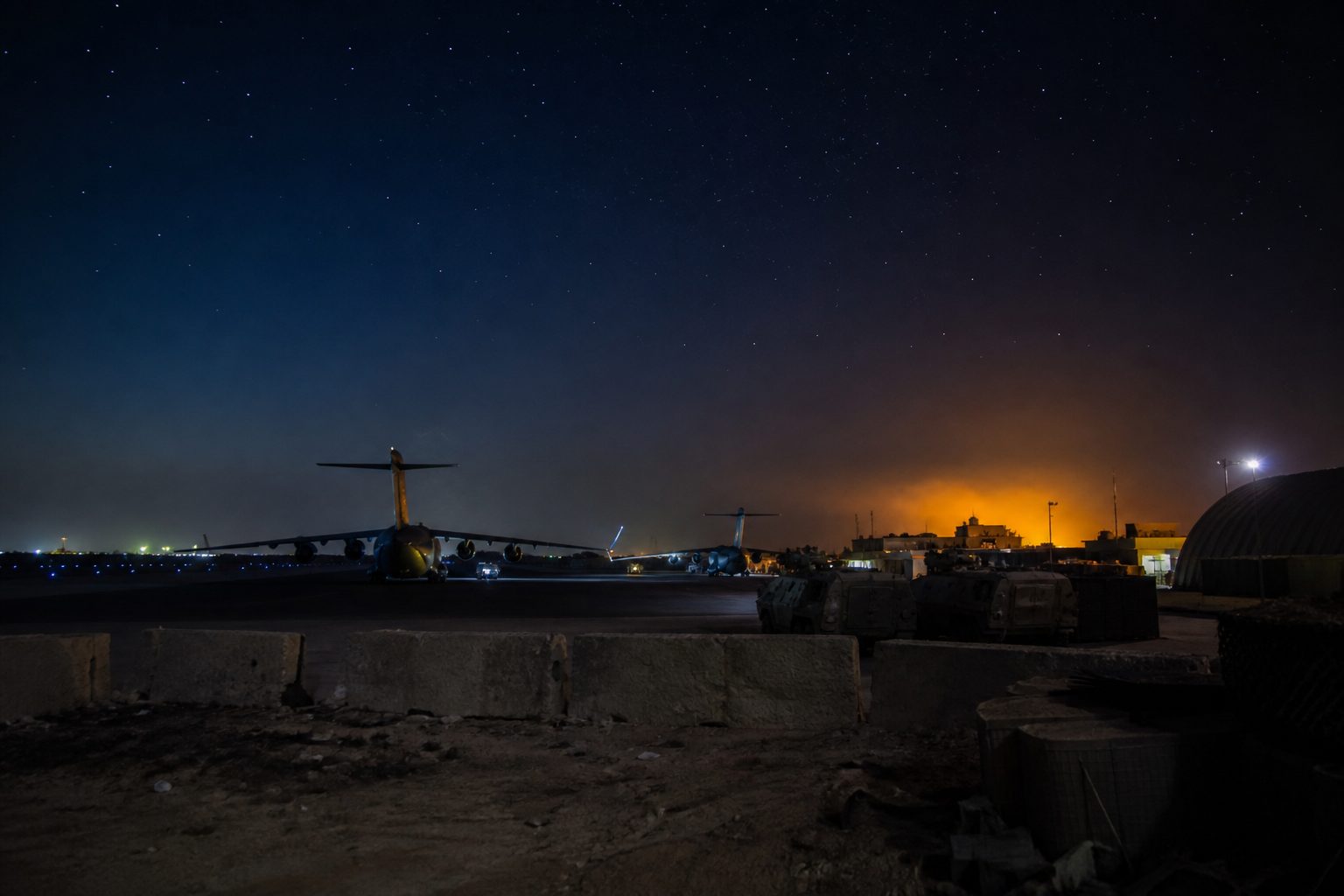
The shooting started around midnight. In the early hours of Saturday, 29 August 2026, residents of Niamey woke to bursts of gunfire and explosions concentrated at Diori Hamani International Airport, the complex that hosts Niger's main military airfield, known as Base 101. By daylight the clashes had spread to the Plateau district, where the presidential palace sits. A group of soldiers had seized hostages at the air base, fired on what the Defense Ministry called "sensitive" sites, and held out for hours against the presidential guard, according to wire reporting and diplomats who spoke to the Associated Press.
By Sunday the junta had reasserted control. Dozens of soldiers were reported arrested or killed, and some were paraded in front of cameras on state television. Authorities disclosed no charges and gave no casualty figures. General Abdourahamane Tchiani, who seized power in 2023 and was sworn in as president in 2025, had not publicly addressed the incident, the BBC reported.
What settled the outcome was not the junta's own elite forces. It was Russia's Africa Corps, whose in-country headquarters sits inside the same airport complex, and which intervened with ground and aerial support after Niamey requested help, per AP's account. That single fact turns an ugly internal army revolt into something more consequential: the clearest demonstration yet that the critical infrastructure of regime survival in the central Sahel now runs, at least in part, through Moscow.
The target was the state's nervous system
The geography of the mutiny matters more than its duration. The mutineers did not occupy a marketplace or a ministry. They went for the airport and the palace.
Base 101 is the densest concentration of coercive technology in Niger. The base hosts Nigerien military aircraft and drones, plus a counterterrorism unit of the Alliance of Sahel States (the confederation binding Niger, Mali and Burkina Faso, known as AES); Russian and Italian forces are also based there, the BBC reported, citing Reuters. The Italian contingent is the residue of the Western military footprint at the base, and its role in the mutiny, if any, is not publicly known. The airport complex also hosts the in-country headquarters of Russia's Africa Corps, per France 24's account, which mirrors AP's.
In the central Sahel, coup outcomes are decided in the capital, and they are decided by whoever holds three things: the air base, the palace and the broadcaster. The air base has become the most valuable of the three because it is where a military state keeps the machines that let a weak government act like a strong one: the drones that watch troop movements, the aircraft that can hit a column on the road, the logistics hub that moves loyal units faster than rebels can move theirs. The same airport once hosted US drone operations before American forces completed their withdrawal from Niger in 2024. Whoever flies from Base 101 owns the fastest eyes and the longest guns in the country.
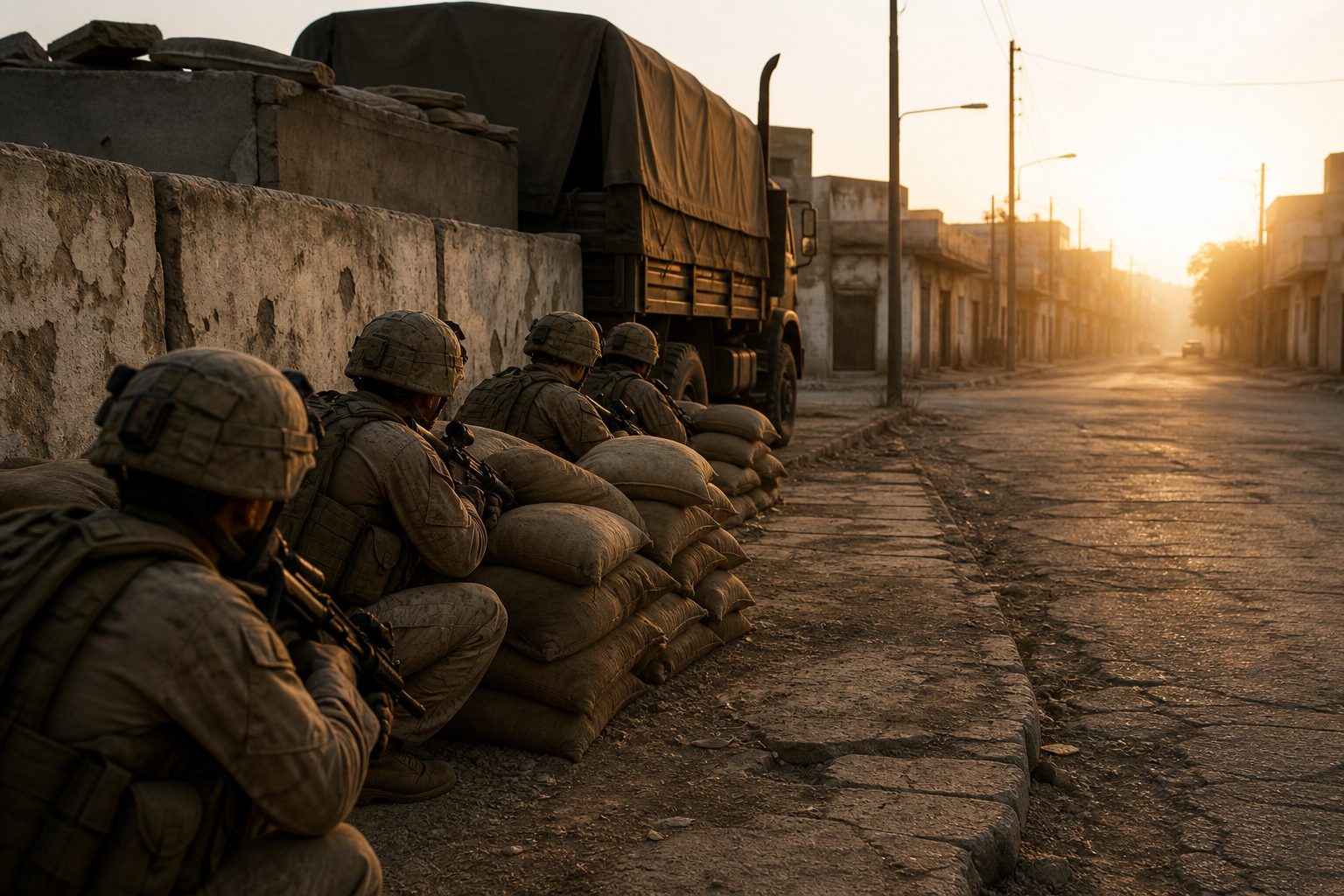
This was the airport's third violent incident this year. An Islamic State affiliate hit it earlier in 2026, and on 18 June the al-Qaeda-linked group Jama'at Nusrat al-Islam wal-Muslimin (JNIM) mounted a raid that, per BBC reporting cited by Model Diplomat, killed 11 soldiers, two civilians and 22 attackers. The mutineers were not jihadists; they were the junta's own soldiers, many drawn from units fighting in the south and west, where the insurgency is bloodiest, and they were reportedly trying to rally support from comrades stationed outside the city. But they attacked the same center of gravity the jihadists target, for essentially the same reason: the base is where the state's power is stored.
Some framing caution is warranted here. Moscow described the event as an attempted coup its forces helped repel; Niamey's authorities said a "rebellion" had been contained. AP and France 24 described it as a mutiny driven by grievances, and analysts quoted in both accounts emphasized that the soldiers were angry about the war, not necessarily organized around a political program. Neither the number of participants nor their full intent is publicly established.
The force that decided it
The documented mechanics of the intervention are specific enough to be revealing, and vague enough to demand honesty about their limits.
What is established: the mutineers held out at the air base for several hours and outnumbered the presidential guard sent to retake it, according to Wassim Nasr, a senior research fellow at the Soufan Center. Control of the base was unclear until Russian personnel intervened with ground and aerial support. Moscow's ambassador to Niger, Viktor Voropayev, said in interviews on Russian media that Niamey had requested the support and that the mutineers were "neutralized particularly thanks to the intervention" of Africa Corps. On Sunday, Russia's Foreign Ministry said Nigerien forces had repelled the attack "with the assistance of servicemen of the African Corps of the Russian Ministry of Defence," and declared the situation under the control of the "legitimate authorities" headed by Tchiani, the BBC reported.
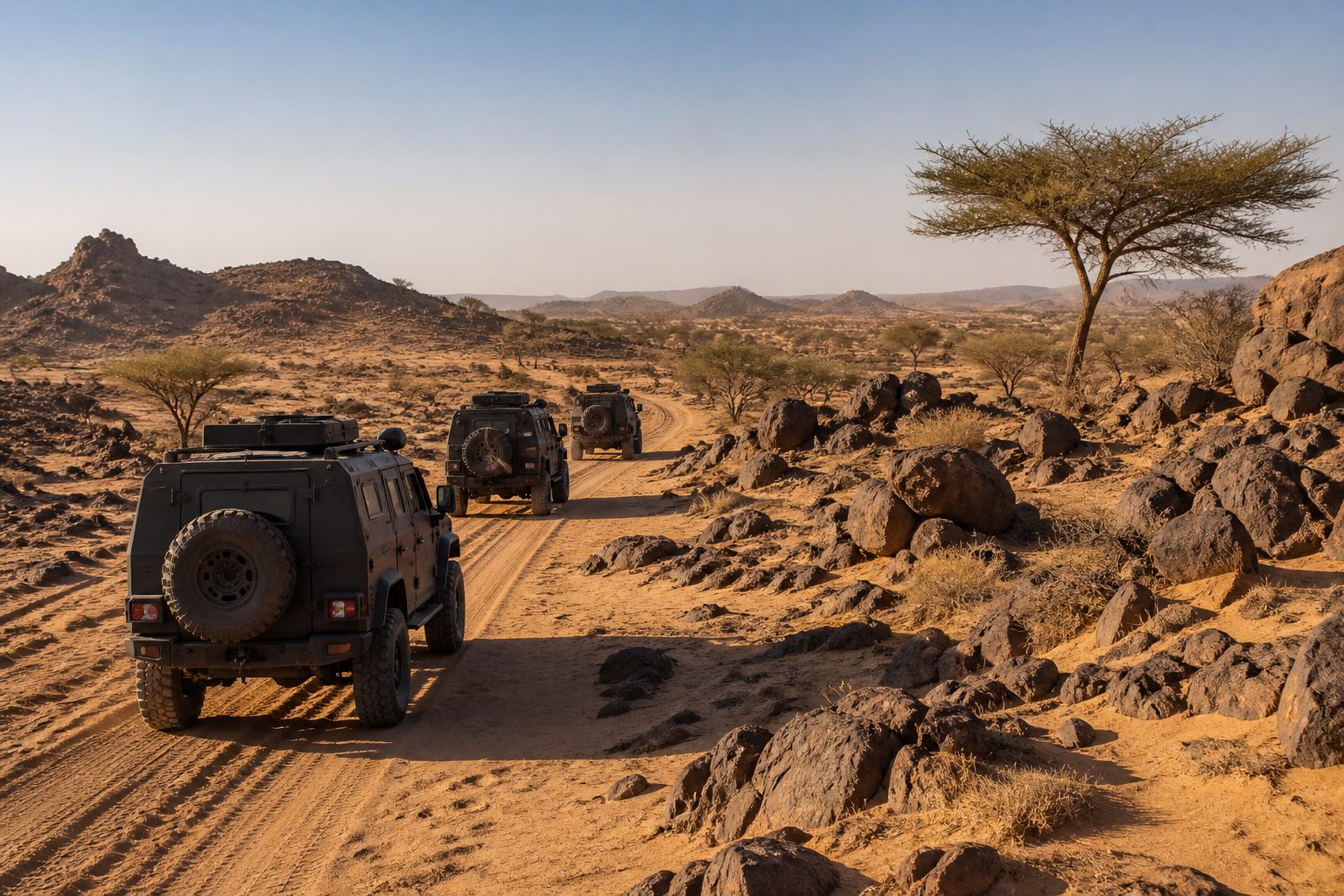
What Africa Corps actually provided is less precisely documented. "Aerial support" could mean armed helicopters, transport, surveillance or some combination; no available reporting identifies platforms or munitions, and claims beyond the wire accounts should be treated with caution. There is no public evidence that Russian personnel operate Niger's own drone systems, control its encrypted communications or run access control at the base. The same applies to the more speculative layers some coverage implies: satellite feeds, signals intelligence, biometrics, command-and-control software. None of that is documented in the record of this event.
What is documented is arguably more significant. At the decisive moment, the regime's survival depended on a foreign quick-reaction force that was physically co-located with the state's most important military technology, and that had no family ties, no tribal loyalties and no shared barracks history with the mutineers. Nasr put the political economy of that arrangement bluntly: "At the end of the day, it is easier to go full-blown on repression when it's a foreign force."
That is the coup-proofing technology that mattered in Niamey. Not biometric locks or monitoring software, but a garrison of outsiders positioned exactly where an internal revolt must win, and structurally incapable of joining it.
What Africa Corps is, and what it is not
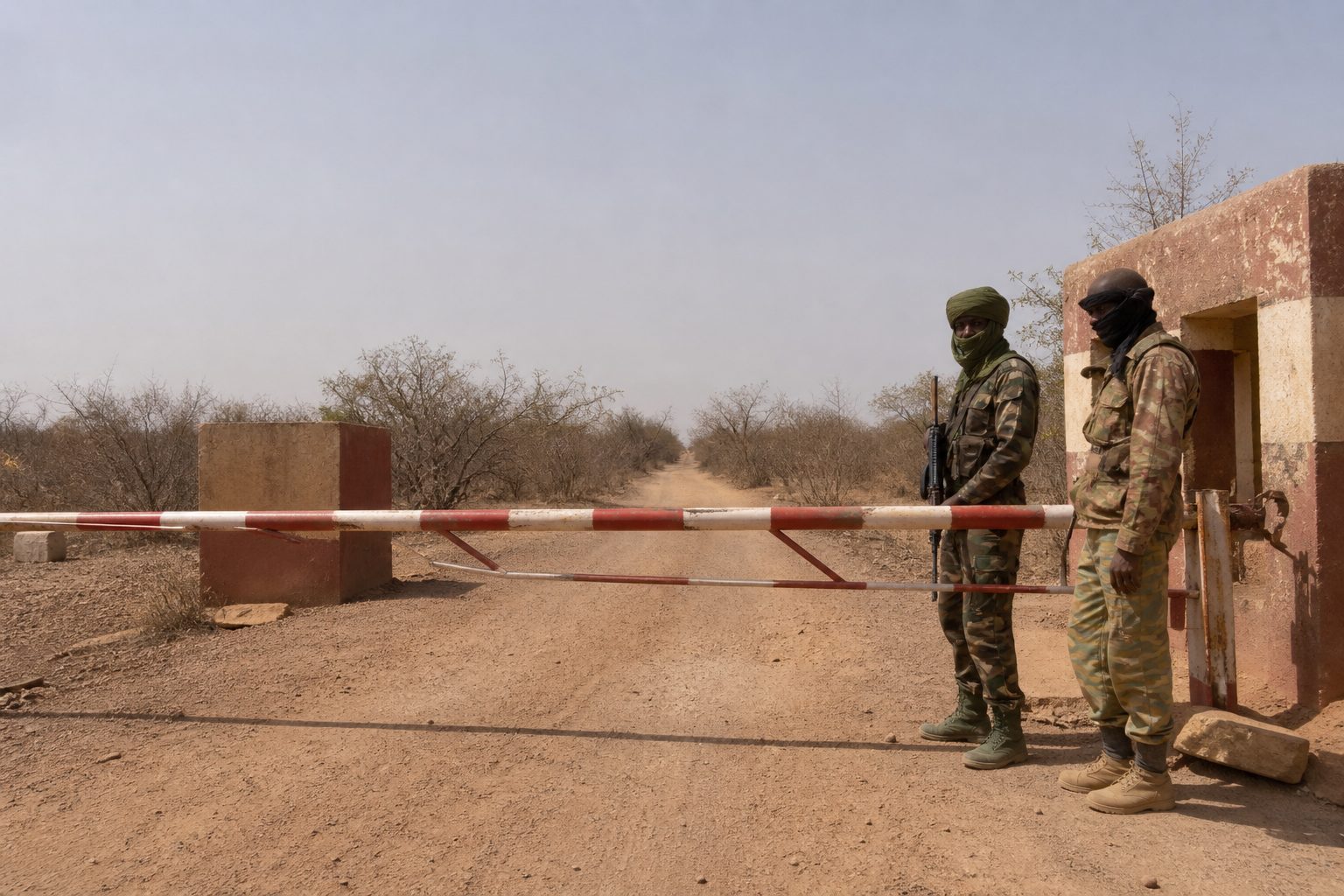
Africa Corps is the Russian Ministry of Defence formation that absorbed the Wagner Group's African footprint after Yevgeny Prigozhin's death in 2023. The International Crisis Group estimates it took on roughly 70 to 80 percent of Wagner's former personnel. It deployed to Mali at the end of 2024, and Wagner announced its formal withdrawal from Mali in June 2025, per an April 2026 investigation by The Sentry, a Washington-based organization that tracks illicit finance and armed networks.
The Sentry's report, "Doubling Down: Russia's Military Network in West Africa", is the most useful corrective to the idea that Africa Corps is simply Wagner with new insignia. The troop numbers are similar and many fighters are the same men. But the command structure reports directly into the Russian state, and the operational posture has changed. Through the first five months of 2025, three large convoys carrying Russian-made trucks, tanks, armored cars and boats reached Bamako from the Autonomous Port of Conakry in Guinea, a terminal operated by Russian-Guinean companies ACG-Fria and CBK, subsidiaries of the aluminum producer UC Rusal that The Sentry describes as facilitators of Africa Corps operations; the report calls the port Russia's "gateway to the Sahel." The composition of those deliveries, the report argues, reflects a risk-averse force prioritizing the protection of its own personnel over Wagner's historically aggressive, forward-leaning style.
The payment model changed too. For most of Wagner's Mali deployment, The Sentry found, the fighters appear to have been paid directly by Moscow, and the group failed to gain access to the country's gold sector. Under Africa Corps, the arrangement looks more like an institutionalized service contract: a Polish Institute of International Affairs report, cited in a 2026 synthesis by the analysis site Model Diplomat, describes Russia providing "military services to local regimes" in exchange for "natural resources located there (including gold, diamonds, oil, timber, uranium, and rare earth metals)." The Spanish think tank Elcano, per the same synthesis, argues Africa Corps is "institutionalising Russia's regime-protection model" in the central Sahel. Alex Vines of Chatham House told the BBC that its operators are reportedly paid in gold or mining concessions.
The receipts are public. In June 2026, Mali's Assimi Goïta laid the first stone of a gold refinery at Senou, linked to the Russian Yadran Group, with a stated 200-tonne annual capacity; weeks earlier, Bamako had placed Canadian miner Barrick's giant Loulo-Gounkoto complex under state administration. Niger has nationalized the Somaïr uranium venture with France's Orano, revoked GoviEx's Madaouela permit and, per the Valdai Club's Alexandra Zubenko, invited Russia in September 2025 to develop replacement deposits, while ignoring a September 2025 ICSID arbitration ruling barring uranium transfers. Burkina Faso has created a state mining company taking 15 percent stakes in foreign operators and is building its first refinery. This is reported in Model Diplomat's synthesis of BBC, TASS, Valdai and think tank material.
The cost side of the ledger is also documented. Recent reports confirm increasing incidents of rape, torture, beheadings, mutilation and summary executions by Africa Corps personnel, particularly across northern Mali and the Mauritanian border, according to The Sentry. Wagner's own record in Mali included atrocities against civilians alongside, per The Sentry, an absence of significant battlefield success.
Where this story sits
5 related pieces
Hover a story · click to read
 No. 52 · Sep 21, 2026The Sahel Juntas' Post-Wagner Arsenal: Drones, Air Defenses and What They Changed
 No. 36 · Sep 5, 2026The Army Is Turning Military Land Into an AI Compute Platform
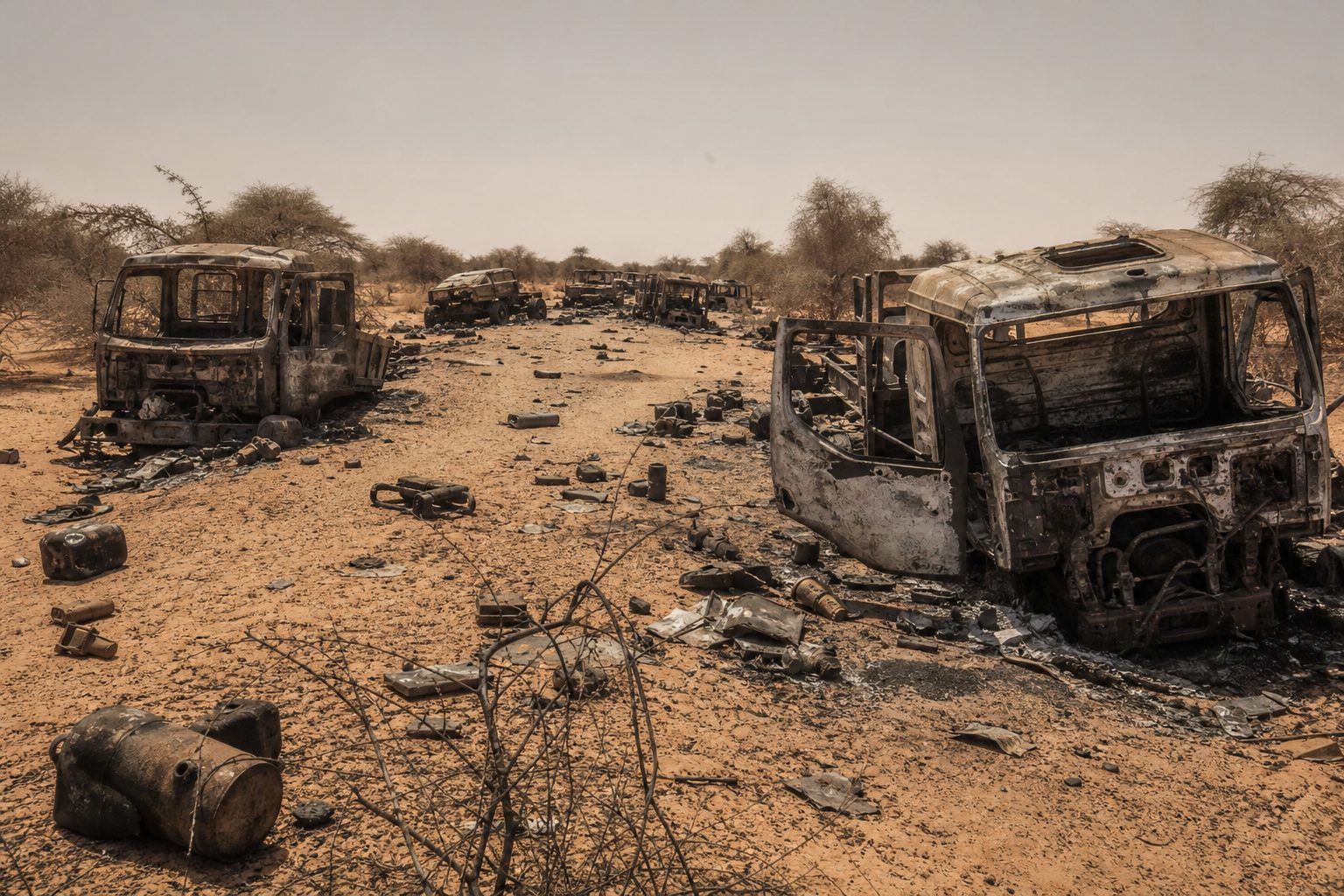 No. 65 · Oct 11, 2026Wagner's Sahel Drone War: What Three Years of Evidence Actually Show
 No. 20 · Aug 30, 2026Can the DSRB Get Startup Tech to the Battlefield Faster Than the MoD?
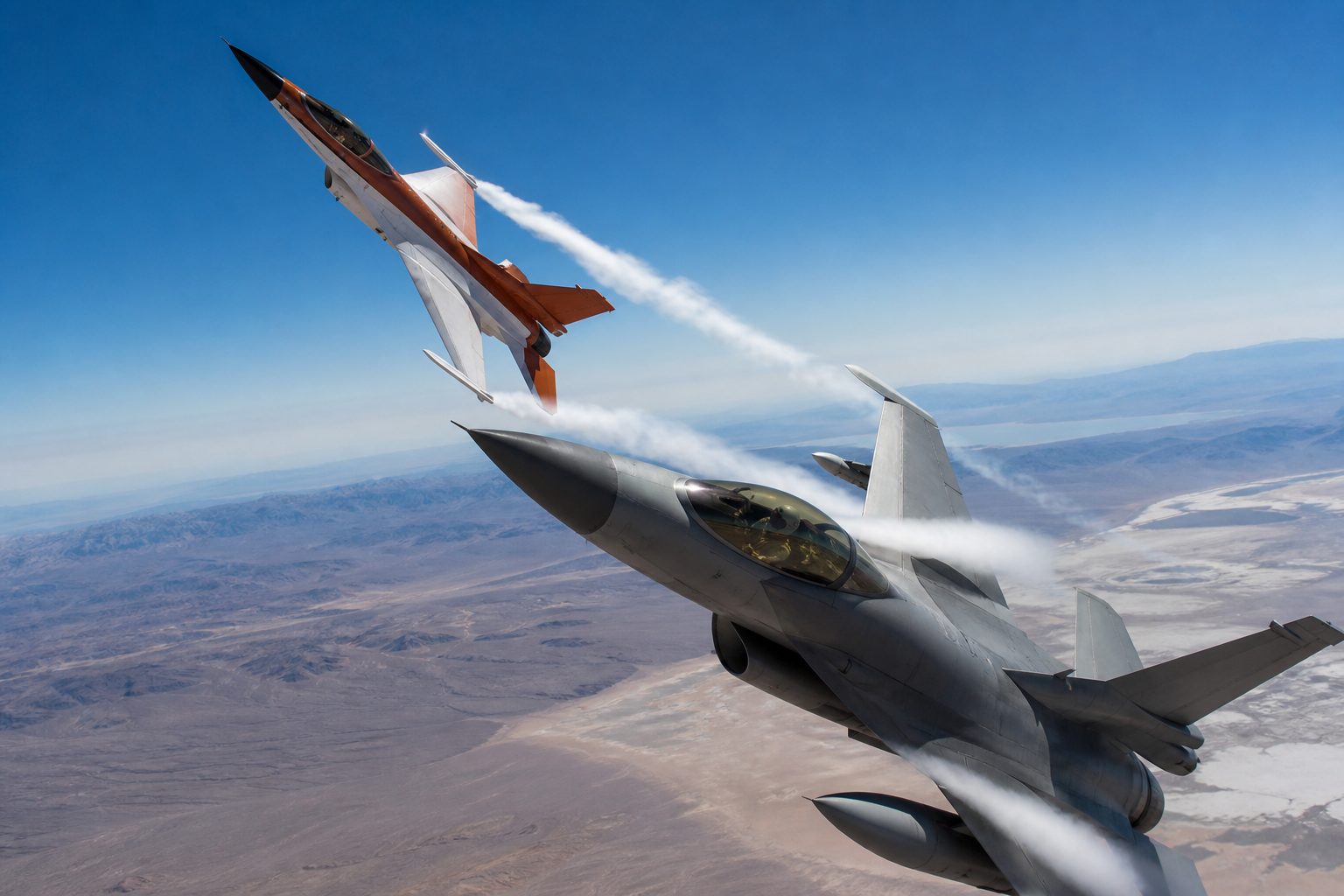 No. 50 · Sep 19, 2026AI Wingmen at the Merge: How Autonomous Drones Are Reshaping Airpower
What the mutiny proves, and what it does not
Read narrowly, the Niamey episode validates the working version of the "security stack" thesis: layered co-location of foreign muscle with the state's drones, aircraft and air logistics, plus a request mechanism, an ambassador, a ministry statement, that converts the muscle into a legitimized intervention within hours. The junta's own guard was outmatched. The foreign layer was not.
But competing explanations survive scrutiny. The mutineers were described as young soldiers, aggrieved and improvised, trying to gather reinforcements who never arrived; a presidential guard backed even by modest foreign airpower and armor would likely beat such a force at a fortified airfield. The AES issued a statement of "full support," Algeria was first to voice solidarity, and Turkey, a drone supplier to the region, urged restraint while backing Niamey: the regime also held because its neighbors and patrons publicly lined up behind it, per AP. Diplomatic encirclement of a mutiny is not Russian technology, even if Russia is the centerpiece of it.
There is also a harder counterpoint embedded in the event itself. The stack protected the palace. It has not protected the army. In the week before the mutiny, at least 18 soldiers were reportedly killed in a jihadi attack in the southern Dosso region. Attacks on military positions have multiplied across Niger, and Héni Nsaibia, senior West Africa analyst at the conflict monitor ACLED, told AP the latest events show the same insecurity that drove the 2020-2023 coups is "now fueling unrest within the militaries that seized power." The grievance that produced Saturday's mutiny is the stack's own blind spot: a regime-survival system that guards the capital's airfield while frontline units bleed is, by design, protecting the regime from its army rather than the army from its enemies.
The same air base at the center of this story has been penetrated twice by jihadists this year. Russia's footprint is also thin for the mission it advertises: Al Jazeera, cited in Model Diplomat's account, puts Africa Corps strength at roughly 1,000 in Mali, 100 to 300 in Burkina Faso and about 100 in Niger (AP's estimate for Niger is 200 to 300). In April 2026 the Russians withdrew from Kidal after a coordinated offensive by the Azawad Liberation Front and JNIM, a retreat Africa Corps itself acknowledged on Telegram, and JNIM has since applied pressure around Bamako's outskirts, per the same account. "Russia will struggle to attract new clients for the Africa Corps because they just didn't do their job: it's reputational damage," Ulf Laessing of the Konrad Adenauer Stiftung told Al Jazeera, cited in the same report.
The juntas are already hedging
The strongest challenge to the "dependency" reading comes not from Western capitals but from an unexpected quarter: the argument that the juntas understand the trap they are in, and are engineering their way out of it.
Sergey Eledinov, writing in June 2026 for the Atlas Institute for International Affairs, calls it "the stabilizer's trap": "the more effectively an external guarantor secures a regime's survival, the more breathing room that regime gains to reduce its dependence on that guarantor". His account holds that by March 2026 the AES had made a 6,000-strong unified force operational, headquartered in Niamey and funded by a 0.5 percent import levy, a deliberate instrument of financial autonomy whose political signal matters more, for now, than its limited combat effectiveness. Weapons and drones arrive from Turkey, Iran and China alongside Russia. In February 2026, per the Atlas analysis, Burkina Faso formalized defense cooperation with Tehran, trading gold and strategic minerals for drones, missiles and technical expertise. The lesson the juntas drew from expelling France and the United States, in this reading, was simple: never let one external actor become structurally necessary.
Eledinov's sharper point concerns the layer of power Russia never built. Durable leverage in resource states, he argues, sits in controlling who sees real production figures, who manages logistics corridors, who administers revenue flows. Africa Corps guards mines and escorts convoys; it does not monitor extraction data or integrate fiscal administration. He cites a 2025 Extractive Industries Transparency Initiative audit documenting $16.8 billion in underreported mining revenue in the Democratic Republic of Congo over five years, a figure from the DRC, not the Sahel, used to size the informational asymmetry available to whoever builds the tools to exploit it. Hybrid models combining surveillance, anti-smuggling operations and customs administration are already operating in the DRC and Haiti, his analysis notes, and he judges China the most advanced candidate for that role in the Sahel, because its mining concessions in Mali and Niger embed logistics and commercial infrastructure that creates exactly that visibility.
If that analysis holds, then the Niamey mutiny showed both halves of the story at once. Russia was indispensable for twenty-four hours, at the moment of maximum danger. The rest of the year, the juntas are deliberately making it dispensable.
The diplomacy of regime protection
Moscow is not waiting to find out which half wins. On 8 July 2026, Foreign Minister Sergei Lavrov landed in Niamey, his first visit to Niger, for the second Russia-AES ministerial and delivered personal invitations from Vladimir Putin to Goïta, Traoré and Tchiani for the third Russia-Africa summit in Moscow this October, according to Model Diplomat's account, which cites TASS and Il Sole 24 Ore. Russia is treating the AES confederation as a peer regional organization: a deputy director of the Russian foreign ministry's Africa department told a June 2026 Valdai Club briefing that Moscow wants the confederation "in constructive synergy with other regional organisations," language that reads as parity with the African Union and ECOWAS.
The African Union, whose constitutive act commits it to rejecting unconstitutional changes of government, has not pushed back in any material way: the Moroccan Policy Center describes "institutional pragmatism," and the AU Commission chair publicly thanked Niger's forces after the June airport attack, a marker that the juntas are being treated as legitimate counterterrorism partners. ECOWAS has effectively lost the bloc, and per the same synthesis, Washington is quietly recalibrating toward engagement. The mutiny drew the same ritual: the AES condemned the soldiers' "betrayal," Algeria offered "full solidarity and firm support," and Turkey called for restraint, per AP and France 24.
Institutionalizing the relationship matters because the August mutiny revealed exactly what the relationship is for. Lavrov landed nineteen days after the second jihadist attack in six months on the base where Africa Corps sleeps. Seven weeks after he left, that base became the scene of a mutiny the Associated Press described as a major threat to the junta that has ruled since 2023, and the protection was used. A security order is not a declaration at a ministerial. It is a force that shows up in the middle of the night and shoots, and then a foreign ministry that calls the result legitimate by Sunday morning.
What dependency means now
The honest verdict on the "coup-proof tech stack" is narrower than the phrase suggests, and in some ways more unsettling. There is no public evidence that Russia operates Niger's drone feeds, its encrypted communications or surveillance architectures, and no documented biometric or access-control layer. What Russia has built is a service relationship concentrated at the exact node where internal seizure of power must happen: the airfield that holds the drones, the aircraft, the alliance's counterterrorism machinery and the foreigners who will use theirs without hesitation. Call it regime survival as a managed service, priced in gold, uranium and diplomatic recognition, invoiced in the hours when the palace guard is outnumbered.
The dependency that creates is episodic but existential. A junta may diversify suppliers, tax imports to fund its own unified force and bargain Russia against Turkey, Iran and China, and still discover, as Tchiani did on Saturday, that the only layer of the stack that matters is the one that works at midnight. Whether Africa Corps evolves into the deeper infrastructure of surveillance, customs data and revenue administration, the layer where durable leverage lives, or whether that layer goes to Chinese concessionaires and Iranian drone salesmen, is the contest now underway. Whether even the best version of that stack can survive the force it is guarding against, an army losing a war in the countryside and mutinying in the capital, is the question no amount of aerial support at Base 101 can answer.
Sources / References
- Associated Press. "Inside the 24-hour mutiny that threatened Niger's ruling junta and how Russian forces intervened." 30 August 2026. https://apnews.com/article/niger-russia-niamey-mutiny-tchiani-africa-corps-f0b808785a177e51ecee71c786624558
- BBC News. "Russia says it helped to repel Niger attempted coup." 30 August 2026. https://www.bbc.com/news/articles/c5ye8egg596o
- France 24. "Russian paramilitary forces help Niger's junta regain control after mutiny." 30 August 2026. https://www.france24.com/en/africa/20260830-niger-junta-aided-by-russian-paramilitary-forces-regains-control-after-mutiny
- The Sentry. "Doubling Down: Russia's Military Network in West Africa." April 2026. https://thesentry.org/wp-content/uploads/2026/04/DoublingDown-TheSentry-April2026.pdf
- Model Diplomat. "Russia's Sahel Strategy: A Coup Alliance." 2026. https://modeldiplomat.com/story/russias-sahel-strategy-a-coup-alliance
- Eledinov, Sergey. "The Stabilizer's Trap: How Russia Built Its Own Obsolescence in the Sahel." Atlas Institute for International Affairs, 18 June 2026. https://atlasinstitute.org/the-stabilizers-trap-how-russia-built-its-own-obsolescence-in-the-sahel/
Comments (3)
Continue exploring
Wagner's Sahel Drone War: What Three Years of Evidence Actually Show
Russian jets, Turkish drones and untested air defenses have reshaped the war in Mali, Burkina Faso and Niger since 2022, but the…
Can the DSRB Get Startup Tech to the Battlefield Faster Than the MoD?
Nineteen governments have chartered a defence bank to finance rearmament, but the evidence says its power to rush startup weapons…
AI Wingmen at the Merge: How Autonomous Drones Are Reshaping Airpower
The U.S. Air Force's AI wingmen have flown. The harder question now is who owns the software at the controls, and what that…
I was posted near a similar airbase in the region a couple of years ago and your description of the drones, logistics hub and rapid-response role matches almost exactly what we treated as the single most protected patch of real estate in the country.
I'd love a follow-up that actually tries to pin down what Africa Corps' 'aerial support' meant in practice — armed helicopters, ISR, transport? Untangling that would tell us a lot about how much direct combat weight Moscow is willing to put on the line beyond the symbolic shield for the junta.
Do you think the air base, palace, broadcaster model holds as cleanly for a smaller junta without an Africa Corps embedded in the same complex — say, in a Sahelian state where there is no Russian headquarters sitting literally next door?