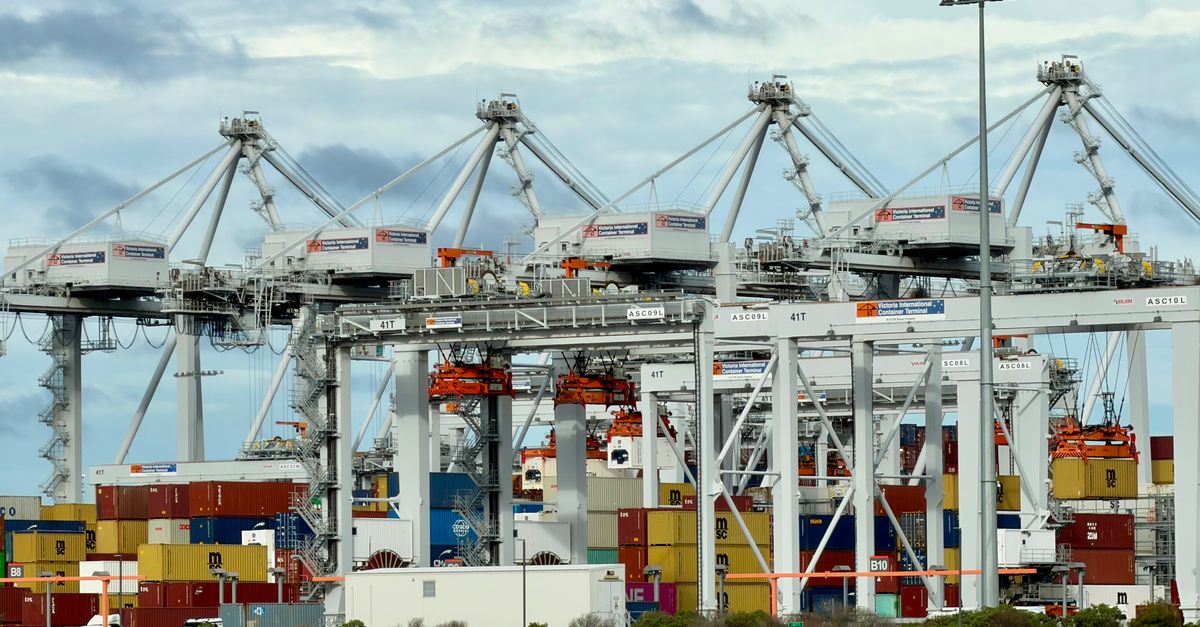
At a business forum in Moscow on August 19, 2026, Tanintharyi Region Chief Minister Zaw Naing Oo made a pitch that would have sounded routine in any capital: a deep-sea port on Myanmar's Andaman coast, he said, could move cargo four to six days faster than the route through the Strait of Malacca, and sits only about 45 kilometers from the country's major offshore gas fields (DVB; The Straits Times).
Roughly six weeks earlier, the argument for the same project was being made by different means. On July 9, columns of Myanmar soldiers advanced into nearly ten villages surrounding the proposed Dawei Special Economic Zone, and by the account of a resistance representative, houses in at least two of them were set on fire (Independent Mon News Agency). Also on July 9, local civil society group MAGGA Initiative said in a statement that three aid workers supporting displaced communities were detained and killed after encountering an advancing military column in Yebyu Township. Reuters could not independently verify those accounts; the Myanmar government and Russia's embassy did not respond to requests for comment (DVB).
The conference hall and the battlefield describe the same piece of land. Taken together, they illustrate a shift in how Myanmar's civil war, now in its sixth year, is being fought: an increasing contest not only over towns and bases, but over the fixed assets a state or a faction needs in order to transact with the outside world. Ports, border crossings, pipelines, and trade corridors have become objectives in themselves, and the contest over the Dawei zone is the clearest current example.
A megaproject that has been starting over for eighteen years
Dawei is not a new idea. The project was launched in 2008 as a joint venture between Myanmar's previous junta and Thailand, with the Thai contractor Italian-Thai Development granted a 75-year concession to build what was envisioned as Southeast Asia's largest industrial and trade zone: a 196-square-kilometer site in Yebyu Township containing a deep-sea port, an oil refinery, a steel mill, fertilizer and petrochemical plants, and a superhighway connecting it to Thailand's Kanchanaburi (The Irrawaddy).
It has never come close to completion. Work stalled in 2013 under the weight of local opposition and funding shortages, according to Reuters reporting (DVB). Japan joined as an investor in 2015, but by January 2021, weeks before the coup, the committee overseeing the zone said it had moved to terminate the 2015–2016 agreements covering nine initial-phase projects. "We will now focus our efforts on finding new partners to unlock the potential of the Dawei Special Economic Zone," the committee's chairman said at the time (DVB; The Irrawaddy).
The new partner, it turned out, would be Russia. In early 2025, Russian Economic Development Minister Maxim Reshetnikov signed a memorandum on investment cooperation to restart the project, a deal that had grown to include a coal-fired power plant and an oil refinery. Deputy junta chief Soe Win called for winding up the Thai- and Japanese-backed special purpose vehicle that had administered the zone, and urged that SEZ projects be considered not only economically but "from the political and geopolitical angle" (The Irrawaddy).
Since then the paperwork has accumulated quickly. On June 4, 2026, Myanmar's planning and commerce ministries signed a memorandum of understanding on economic and investment cooperation with Russia's RC-Investments fund. The next day, at the St. Petersburg International Economic Forum, Russia's Inter RAO and Myanmar's Launglon Economic Development Company signed an MoU for a power plant at the Dawei Deep Sea Port, witnessed by Myanmar's Vice President U Nyo Saw and a Russian government minister (The Nation, Thailand). And in August 2026, Myanmar Now reported, citing a Russian minister, that Russian companies have requested majority shares during the capital payback period for Myanmar projects including the Dawei SEZ (Myanmar Now).
What makes all of this more than investor relations is where the signatures are landing. The land in question is territory the Myanmar military does not fully control.
Clearing the ground around the pin
The military's push around Dawei began taking shape in late June, when deputy armed forces chief Kyaw Swar Lin visited southern Myanmar and said strategic projects such as the Dawei deep-sea port would be secured and that resistance forces along Union Highway No. 8, the Ye–Dawei–Myeik–Bokpyin–Kawthaung corridor, would be "effectively cleared" (Independent Mon News Agency; DVB).
What followed, according to resistance sources and conflict monitoring, was one of the larger operations in a region that had seen comparatively little of the war's heaviest fighting. On July 9, three columns totaling more than 600 troops advanced into nearly ten villages around the economic zone, including Khamone Chaung, Wet Chaung, Aekani, Wazun Taw, Ya Nye, and Kone Thar Yar Ain, according to a representative of the Dawei People's Liberation Force. Earlier, on June 25, the entry of military columns into Mu Du village had reportedly displaced more than 2,000 residents. Troops stationed in the villages have "reportedly broken into homes, looted property, and set houses on fire," the representative said, with houses burned in Wazun Taw and Aekani (Independent Mon News Agency). IMNA noted that reports of more than 30 local men detained were still being verified.
The conflict monitor ACLED, in an August report cited by Reuters, described a column of approximately 700 soldiers advancing into the surrounding areas, "raiding villages and killing civilians," since Kyaw Swar Lin's late-June visit. Resistance fighters who spoke to Reuters said some villages and homes had been burned, and one fighter from a Dawei District battalion under the parallel National Unity Government put the purpose plainly: "They want to run this Dawei SEZ, so they want to clear the area here" (DVB).
Two cautions belong next to those accounts. First, Reuters could not independently verify them, and the regime has not commented. Second, the causal chain between the investment deals and the offensive, while suggested by the junta's own public statements about securing "strategic projects," is drawn mainly from resistance sources and an ACLED summary. What the record supports is a tight sequence: a public pledge to secure the project area in June, a large-scale clearance operation beginning within weeks, and a simultaneous diplomatic and commercial campaign in Moscow. "Clearest sign yet," as Reuters put it, that the military-backed government is willing to use force to revive the project (DVB).
It is worth noting what the operation has not achieved. Resistance forces withdrew ahead of the columns rather than fighting at a disadvantage, and as of mid-July were still operating around the zone, monitoring and responding "as conditions allow" (Independent Mon News Agency). Skirmishes near the project area are described as frequent, with offensives reinforced by air and naval attacks (DVB). The TPLF representative cited by IMNA said resistance forces understood the military planned to begin implementing the deep-sea port project in January 2027, a claim that has not been independently confirmed.
Why this particular coastline matters
The strategic logic of Dawei rests on geography that has drawn investors for two decades. A large share of the shipping between the Indian Ocean and East Asia funnels through the Strait of Malacca, the narrow corridor between Malaysia, Singapore, and Indonesia that shippers and navies have long treated as the region's principal chokepoint. A port on Myanmar's Andaman coast, connected by road to Thailand, would let cargo from South Asia, the Middle East, and Europe bypass part of that route. That is the pitch regime officials made in Moscow, complete with the four-to-six-day savings claim, and Min Aung Hlaing offered his own version during a landmark visit to Thailand in August 2026, presenting Dawei as a gateway to South and West Asia (DVB; The Straits Times).
The coast also carries energy value. Regime media, cited by Reuters, touted the port's proximity to Myanmar's major offshore gas fields in the Andaman Sea, a legacy asset that has long anchored the country's export earnings (DVB). The expanded Russian deal now contemplates an LNG terminal near the port, pipelines, and an oil refinery alongside it (The Irrawaddy).

Dawei also sits in competition, or at least in conversation, with China's version of the same idea. Beijing's flagship corridor runs to the Kyaukphyu deep-sea port in Rakhine State on the Bay of Bengal, giving Chinese cargo and pipelines an Indian Ocean outlet that shortens the route around Malacca. Junta officials and China's CITIC were still discussing progress on that project as of early 2025, even as fighting consumed much of Rakhine State around it (The Irrawaddy). For Russia, a foothold at Dawei would offer something it has nowhere else in the region: a port presence on the Indian Ocean and greater market access into Southeast Asia, as a source familiar with Moscow's thinking told Reuters, while cautioning that "Russian investments will have to be linked to connectivity with Thailand for the project to make sense" (DVB).
Where this story sits
5 related pieces
Read it →
Hover a story · click to read
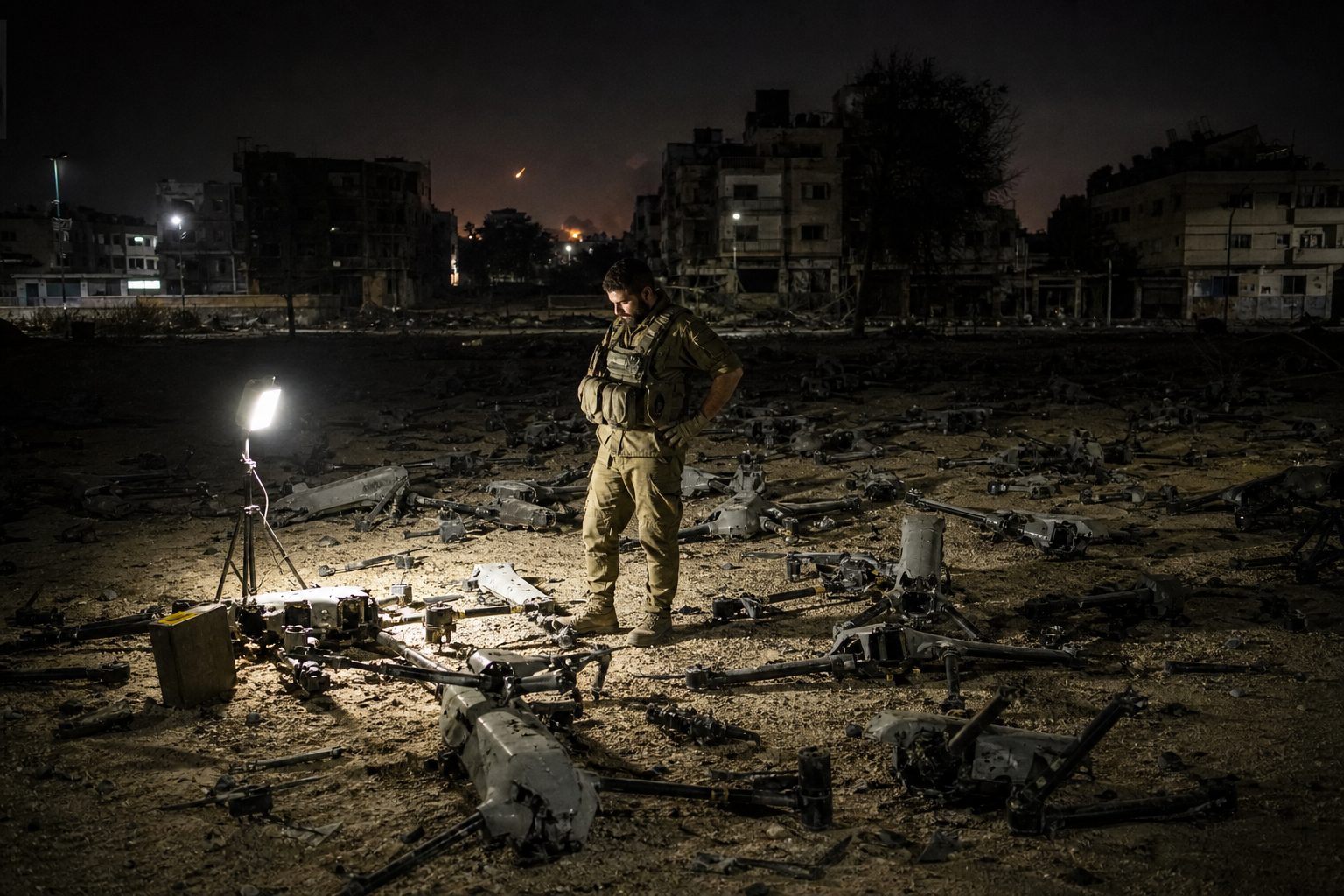 No. 18 · Aug 28, 2026How drones, Starlink and covert flights through Chad and Libya are redrawing Sudan's war
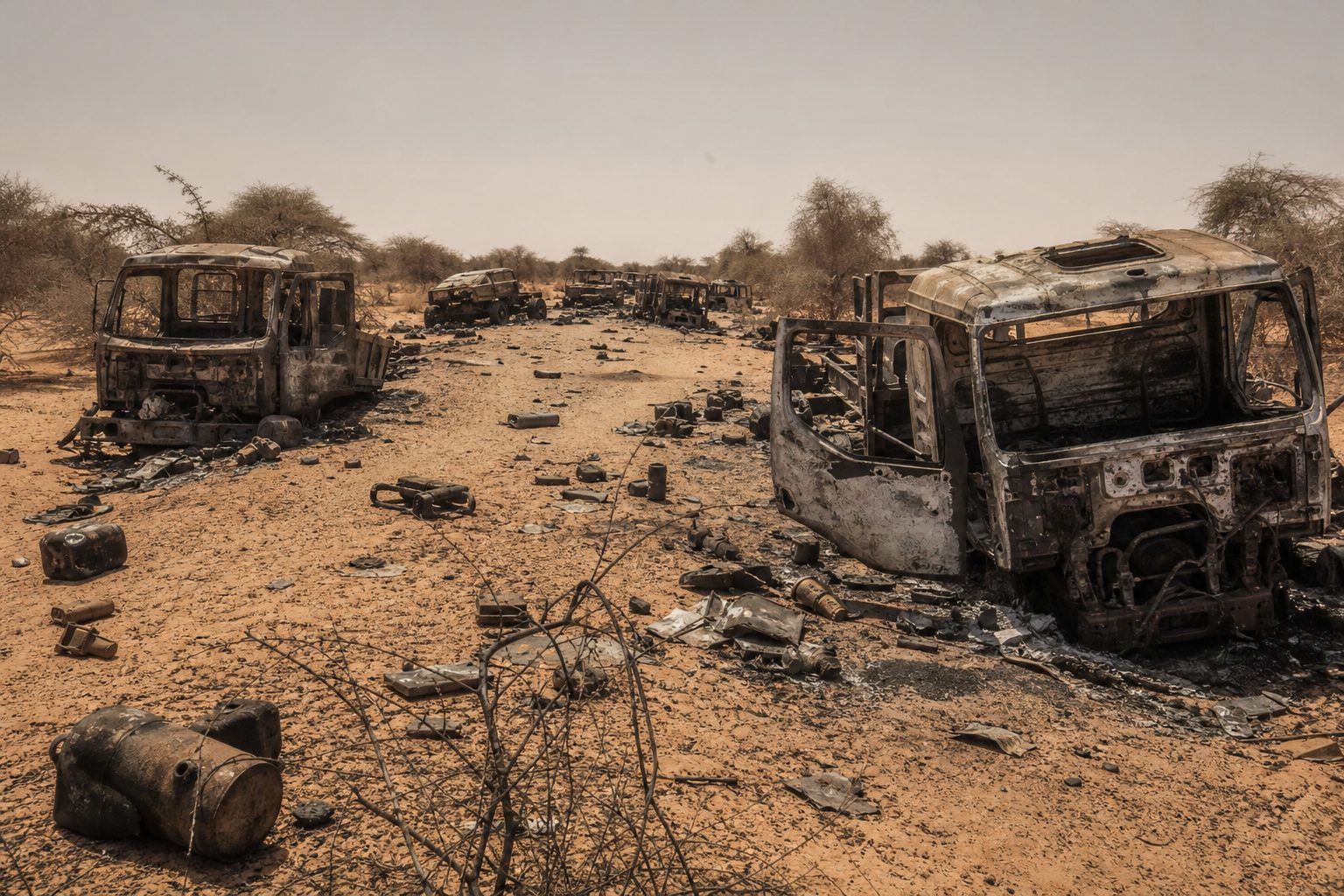 No. 65 · Oct 11, 2026Wagner's Sahel Drone War: What Three Years of Evidence Actually Show
 No. 40 · Sep 7, 2026The Army's launched-effects bet: a faster upgrade cycle for autonomous strike systems
 No. 20 · Aug 30, 2026Can the DSRB Get Startup Tech to the Battlefield Faster Than the MoD?
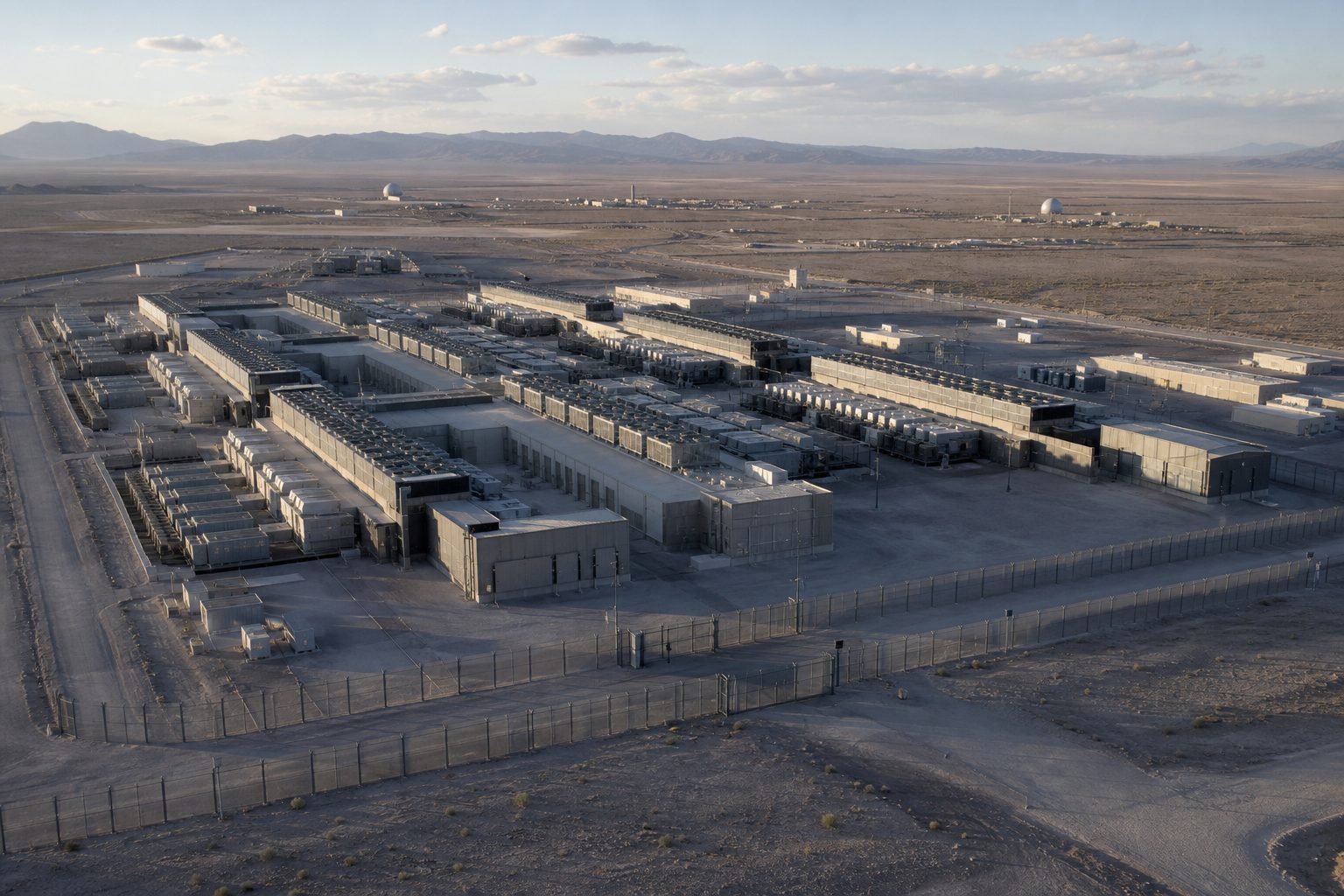 No. 36 · Sep 5, 2026The Army Is Turning Military Land Into an AI Compute Platform
The arms deal behind the port deal
Russia's interest in Myanmar did not begin with ports, and the commercial relationship rests on a military one. Moscow has emerged as the regime's most important defense partner, according to Ian Storey of Singapore's ISEAS-Yusof Ishak Institute. It has supplied Sukhoi Su-30 fighter jets, munitions, and drone systems, and Myanmar's military became the first foreign buyer of Russia's new Mi-38T assault-transport helicopters. Myanmar, in turn, has reportedly supplied Russia with mortar shells and tank targeting systems, and Russian tank manufacturer Uralvagonzavod reportedly imported optical targeting systems from Myanmar for tanks refurbished and sent to the front line in Ukraine (Al Jazeera).
The battlefield results are documented at scale. ACLED recorded 5,912 airstrikes between February 1, 2021 and March 13, 2026, with at least 4,865 reported deaths, plus 931 drone attacks causing at least 366 reported deaths. The United Nations says air attacks are the leading cause of civilian casualties in Myanmar, with deaths from aerial raids rising 52 percent in 2025 over the previous year (Al Jazeera). The offensive around Dawei has been reinforced by air and naval attacks, according to the resistance sources cited by Reuters (DVB).
The pattern gives the port negotiations a harder edge. Russian aircraft and Russian tactics, including what Storey describes as infantry "meat assaults" enabled by conscription that has reportedly added nearly 100,000 soldiers, are what make a village-clearing operation around a SEZ site militarily feasible for a stretched army (Al Jazeera). Arms, in effect, are being exchanged for a stake in the territory the arms help secure.
What each side is playing for
For the military leadership, the calculus is layered. The February 2021 coup triggered a civil war that has killed some 100,000 people and displaced more than 3.5 million, and the military has since lost substantial territory and border zones to opposition groups (DVB). A widely criticized election held in December and January, with no substantial opposition permitted to run, cleared the way for Min Aung Hlaing to become president on April 10, 2026 (DVB; The Straits Times). An internationalized Dawei project would offer the new government something it badly lacks: foreign validation, hard currency potential, and a demonstration that the state can still deliver large infrastructure. Russia, as one Myanmar economist told The Irrawaddy, matters to the regime precisely because "China's support alone is not enough" politically and economically (The Irrawaddy).
For Russia, the project offers a strategic footprint on the Indian Ocean at a moment when both countries are sanctioned and isolated from Western markets, and Russian Prime Minister Mikhail Mishustin said during the Moscow meetings in August 2026 that Russian companies intend to work with the Dawei SEZ to expand trade and create new jobs (DVB).
For the people who live on the land, the stakes are simpler and starker. Eleven civil society organizations in Tanintharyi warned in a joint statement that the project, if implemented amid political instability, "will only worsen evictions and human rights violations and affect the environment and livelihoods of locals." The National Unity Government's foreign minister, Zin Mar Aung, warned that there was no guarantee for any agreements made with the regime and that such investment deals would be considered invalid (The Irrawaddy). Dawei's land-appropriation history predates the war: accusations of serious human rights violations in appropriating land accompanied the project's earlier collapse.
The skeptical case
The evidence for an infrastructure war at Dawei is strong. The evidence that the port itself will be built is not.
The project's eighteen-year record is a graveyard of announcements. Its original concessionaire was dismissed; its funding never materialized; its Thai and Japanese investors were being pushed out of the vehicle that managed it as recently as 2025 (The Irrawaddy). The Russian source who spoke to Reuters was blunt: "The risk in Myanmar is still very high," and the project makes sense only if connected to Thailand (DVB). Russia's demand for majority shares during the payback period, as reported by Myanmar Now, is itself a signal of how risky investors consider the proposition (Myanmar Now). And the regime's push to dissolve the Thai- and Japanese-backed SPV that administered the zone does not obviously improve Bangkok's or Tokyo's appetite for re-engagement (The Irrawaddy).
Most fundamentally, the junta cannot yet guarantee the security of the asset it is selling. Resistance forces have been pushed back but not defeated, the zone's surrounding villages remain contested, and the project's January 2027 start date exists, so far, only as a resistance representative's report of junta intentions.
Is "infrastructure war" the right frame?
The Dawei offensive fits a wider pattern in which the geography of Myanmar's war has converged on the geography of its trade. The corridors that matter most to the regime's survival, the border-trade routes into China and Thailand, and the port zones that offer outside powers an Indian Ocean outlet, are precisely where the war's most consequential operations have concentrated. In Rakhine State, the Arakan Army's seizure of most of the state's townships since late 2023 has brought a major armed group to the edges of China's Kyaukphyu port investment, and as of early 2025 the regime and China's CITIC were still discussing the project's progress (The Irrawaddy).
That convergence is what elevates Dawei from a local story. The war's actors have learned that controlling a trade asset is worth more than holding a nameless ridge, and foreign patrons are willing to pay, in arms, in financing, in diplomatic cover, for access to assets whose value depends on the regime's ability to hold the ground beneath them. The signing ceremonies and the burning villages are not contradictory. In an infrastructure war, they are the same event, recorded by different observers.
What remains unresolved is the central commercial question: whether any financing architecture, Russian majority stakes, Thai transit deals, gas-linked revenue, can make a megaport bankable on a stretch of coast where the government building it does not fully control the land.
What to watch
Three developments will test the thesis over the coming year. The first is whether the January 2027 implementation start, as reported by the TPLF, is confirmed in official regime or Russian disclosures, or slips again. The second is whether Russian majority-share demands are accepted, which would signal how desperate the regime is for financing, or resisted, which would signal the deal remains more posture than substance. The third is whether the military's columns around Yebyu hold the cleared ground through the coming dry season, or whether the resistance returns, as it has across Myanmar, once the concentrated force moves on.
Sources / References
- DVB (reporting sourced to Reuters), "Myanmar military offensive targets land for Russia-backed port project," August 21, 2026. https://english.dvb.no/myanmar-military-offensive-targets-land-for-russia-backed-port-project/
- The Straits Times (Reuters wire), "Myanmar military using force to clear land for Russia-backed port project: Resistance groups," August 21, 2026. https://www.straitstimes.com/asia/se-asia/myanmar-military-offensive-targets-land-for-russia-backed-port-project
- Independent Mon News Agency (IMNA), "Military Troops Remain Stationed in Villages Near Dawei Special Economic Zone," July 22, 2026. https://monnews.org/2026/07/22/military-troops-remain-stationed-in-villages-near-dawei-special-economic-zone/
- Myanmar Now, "Russian companies want majority shares in Myanmar projects," August 21, 2026. https://myanmar-now.org/en/news/russian-companies-want-majority-shares-in-myanmar-projects/
- The Irrawaddy, "Myanmar Inches Closer to Reviving Dawei Mega-Project with Russian Money," March 13, 2025. https://www.irrawaddy.com/business/myanmar-inches-closer-to-reviving-dawei-mega-project-with-russian-money.html
- The Nation (Thailand), "Russia and Myanmar move Dawei power plant plan forward with MoU," June 8, 2026. https://www.nationthailand.com/news/world/40067178
- Al Jazeera, "Russian weapons, tactics seen in Ukraine are shaping Myanmar's civil war," March 24, 2026. https://www.aljazeera.com/news/2026/3/24/russian-weapons-tactics-seen-in-ukraine-are-shaping-myanmars-civil-war
Comments (8)
Continue exploring
The Army's launched-effects bet: a faster upgrade cycle for autonomous strike systems
The Army's 2026 plan to field long-range launched effects from AEVEX, Griffon and Dragoon is a test of whether modular, competing…
Can the DSRB Get Startup Tech to the Battlefield Faster Than the MoD?
Nineteen governments have chartered a defence bank to finance rearmament, but the evidence says its power to rush startup weapons…
The Army Is Turning Military Land Into an AI Compute Platform
Carlyle and CyrusOne won exclusive negotiations to build commercial hyperscale data centers on roughly 2,600 acres of Army land…
I'd push back on the characterization of Russia as uniquely positioned here, since Thai, Japanese, and Chinese capital have all cycled through Dawei without producing a functioning port.
The core argument is that Myanmar's civil war has shifted from fighting over towns and bases to fighting over ports, pipelines, and trade corridors, because those are the assets a side needs to transact with the outside world. Dawei is the textbook case: an 18-year-old stalled project that suddenly became worth killing for once Russia put its name on it. Practically, this means sanctions policy and infrastructure financing have to start accounting for the fact that whoever holds the concrete controls the revenue stream. Investors looking at frontier-market SEZs should be asking who governs the ground their cargo will move across, not just who signs the MoU.
How does the Dawei playbook translate to a smaller SEZ project with one or two foreign investors rather than a state-to-state megadeal? A mid-sized logistics firm weighing a coastal terminal in, say, the Bay of Bengal would not have a deputy chief of staff visiting the site or a chief minister pitching it in Moscow. Without that level of state backing, the security-first model here looks impossible to replicate, though the lesson about tying infrastructure to territorial control still applies. Curious whether a version of this strategy can work below the great-power tier.
The claim that Dawei would shave four to six days off shipping versus the Strait of Malacca sounds plausible on a map, but I want to see the underlying logistics math. The proposed overland corridor ends at Kanchanaburi, which then requires transshipment across Thailand's existing rail and road network with its own bottlenecks. What port comparison or routing study is that figure drawn from?
The piece glosses over the fact that Italian-Thai Development still holds a 75-year concession from 2008, and it is not at all obvious how a Russian-backed deal can legally supersede that.
Could you do a follow-up on the offshore gas angle? The article mentions Dawei sits about 45 kilometers from major gas deposits but does not dig into who is currently extracting from them or how the port would fit into any pipeline plan, and that thread feels worth pulling on given how much of the project's justification seems to hinge on energy exports rather than container traffic.
I was in the Yebyu area in late May and resistance forces still controlled stretches of Union Highway No. 8, which sits awkwardly with the military's promise to have the corridor "effectively cleared." Villagers I spoke with described the recent army push as retaliation for communities that had been supplying the KNU, not a tidy land-grab for a port. The framing of a clean clearance operation doesn't square with what I saw on the ground.
Starting over for eighteen years" is a wild line, and hard to believe anyone signs another MoU on a project with that track record without a much harder look at what actually broke last time.