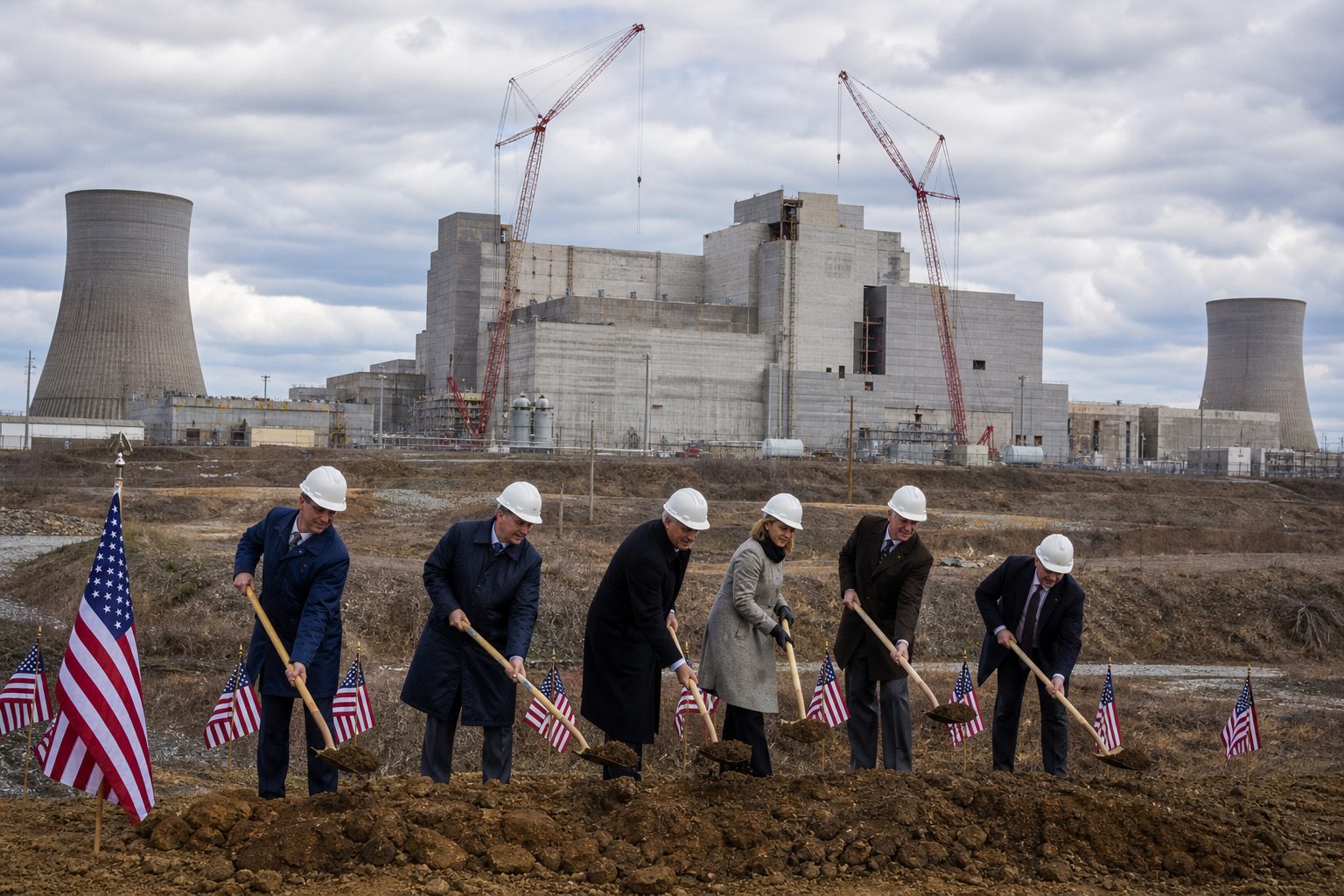
On March 20, 2026, the U.S. Secretary of Energy and the U.S. Secretary of Commerce stood on the grounds of a decommissioned Cold War uranium enrichment plant in Pike County, Ohio, and broke ground on what the Energy Department described as the largest artificial intelligence data center in the world. The former Portsmouth Gaseous Diffusion Plant, which enriched uranium for decades, is being rebranded as the PORTS Technology Campus. SB Energy, the SoftBank Group development company, plans to build a 10-gigawatt AI campus there, paired with roughly 10 gigawatts of new power generation, 9.2 gigawatts of it fired by natural gas, plus $4.2 billion in transmission built with AEP Ohio, according to the Energy Department.
In August, the project's remaining big pieces became public. OpenAI will lease about 8 gigawatts of computing capacity under a 20-year agreement, and NVIDIA will be the exclusive AI compute infrastructure provider while backing part of the underlying land, power, and shell infrastructure with payment obligations capped at $105 billion, Data Center Frontier reported.
The Energy Department says all of this will happen "at no cost to American families," and presents the project as compliant with President Trump's Ratepayer Protection Pledge, which shields ratepayers from paying for energy infrastructure improvements needed to power the national data center boom. Whether that promise survives contact with engineering, fuel markets, transmission construction, and financial reality is not a matter of opinion. It depends on a chain of conditions, most of them checkable in permits, contracts, tariff filings, and pipeline certificates before the first server ever draws a watt.
The scale explains why the question matters. AEP Ohio says peak demand across all of its Ohio customers has run between 8,000 and 10,500 megawatts in recent years, according to the Ohio Capital Journal. A fully built Portsmouth campus approaches the peak appetite of an entire utility territory on one fenced site. The largest existing single-site data center campuses run closer to 2 to 3 gigawatts, according to the Cliff Center's tracking. At 10 gigawatts, a planning error stops being a local nuisance and becomes a regional one.
What is actually planned for the Portsmouth site?
The site itself is a large, fully graded industrial brownfield on federal land near Piketon, left over from the uranium enrichment complex. It was one of 16 federal sites the Energy Department identified in 2025 as candidates for this kind of development, per the Associated Press. The division of labor that emerged by August 2026 is unusually clear for a project this size, per Data Center Frontier's account of the announcement and accompanying SEC filing:
- SB Energy builds, owns, and operates the data center infrastructure.
- OpenAI occupies approximately 8 gigawatts of IT capacity under a 20-year lease.
- NVIDIA supplies the exclusive computing platform and puts its balance sheet behind part of the land, power, and shell.
- The Department of Energy provides the federal real estate and redevelopment framework.
- AEP Ohio develops the major transmission expansion.
The generation plan is the aggressive part. The Energy Department's March announcement describes SB Energy planning 10 gigawatts of new generation, 9.2 gigawatts of it natural gas, connecting to the local grid to serve the campus. DOE's fact sheet describes new 765-kilovolt transmission lines, four substations, interstate gas pipeline development, and long-lead high-voltage electrical equipment already secured, according to Data Center Frontier's reporting. Early filings put the first phase at 800 megawatts of computing, submitted for interconnection with an operational target of 2028, on an initial 189 acres, per DOE and Data Center Frontier.
Around the March groundbreaking, the Energy Department projected 10,000 construction jobs and more than 2,000 permanent positions for the region. By August, with OpenAI and NVIDIA inside the structure, Data Center Frontier described commitments of up to 35,000 construction jobs and 2,500 permanent positions. The two sets of figures describe different stages of an expanding project, and the gap between them is itself a useful reminder that headline numbers at announcement time are targets, not payrolls.
Do the power plants arrive before the servers do?
The entire ratepayer-protection logic of the project rests on sequencing. The plan is not for the campus to plug into the shared PJM grid and have utilities scramble to serve it. The plan is for purpose-built generation to connect to the grid alongside the campus, with SB Energy committing to make excess transmission and generation capacity available to the wider system, per the Energy Department.
That sequence has to hold at every phase, not just at full buildout. The first 800 megawatts of computing is targeted for 2028. If servers show up before their matched generation and network upgrades do, the campus draws from the same pool of power that serves every home, school, and factory in the region during a July heat wave or a January cold snap. Long-lead electrical equipment is already secured, which suggests the developers understand the supply-chain problem. What cannot be accelerated so easily is the gas fleet itself. SoftBank describes the 9.2 gigawatts as the largest natural gas generation project in the world announced by the U.S. government, tied to a February 17 federal announcement, in its consortium launch statement. Building nearly ten gigawatts of new gas capacity is a multiyear industrial program measured in turbine deliveries, not press releases.
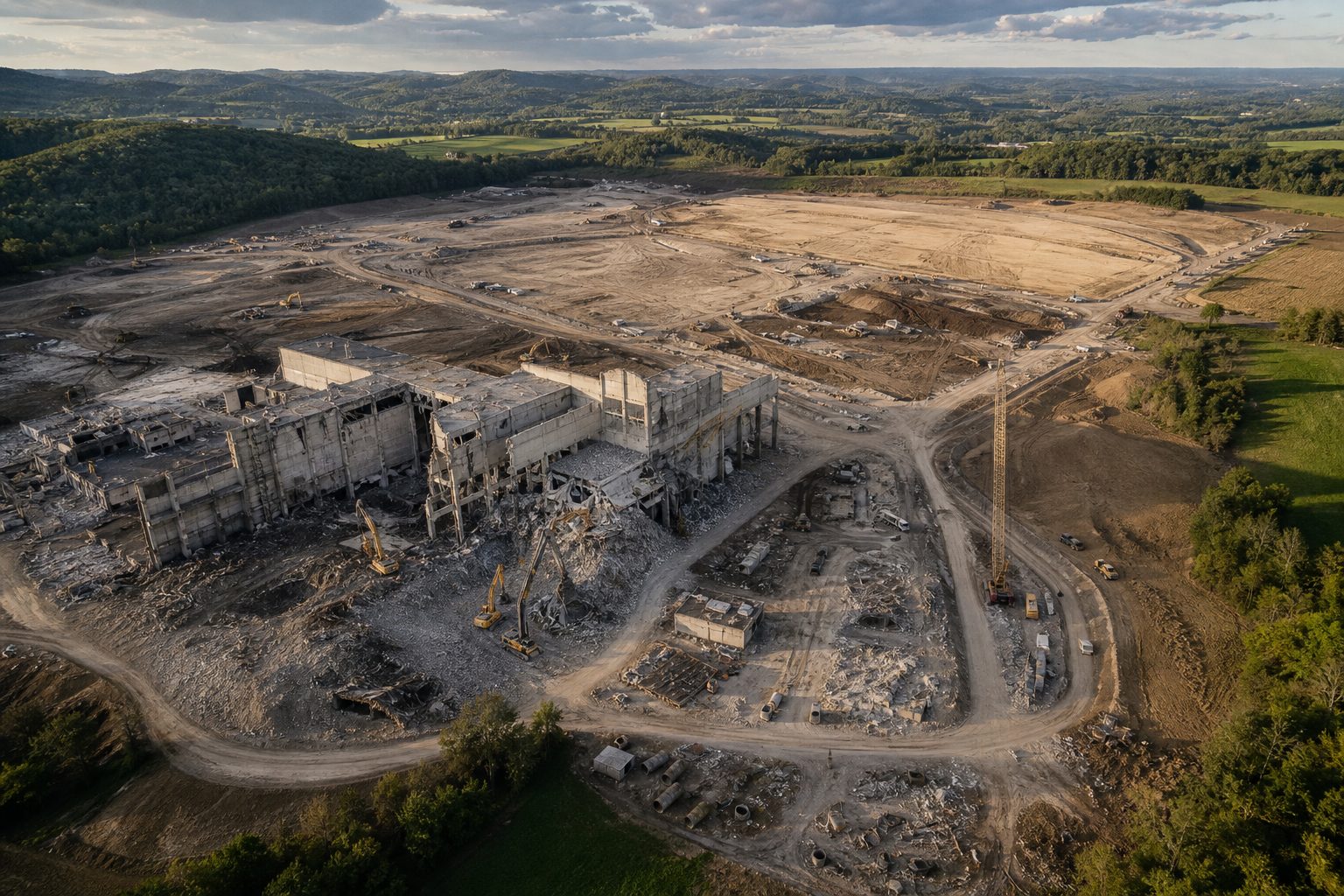
The second condition is flexibility. A 10-gigawatt load that cannot reduce demand during a grid emergency is a load the grid must carry under the worst possible conditions. Federal regulators are now pushing exactly this point. On June 18, 2026, FERC issued show-cause orders to six grid operators, including PJM, demanding reforms across categories that include cost-shift prevention, colocation and behind-the-meter generation rules, and flexible-load transmission services, per the Cliff Center's summary of the orders and legal analyses of them. AI training clusters are among the few industrial loads that can, in principle, pause or ramp without damaging a product line. Whether the Portsmouth campus is contractually obligated to curtail when PJM is short, rather than merely able to, is one of the cleanest tests of whether the project strengthens the grid or merely claims to.
Where the fuel comes from
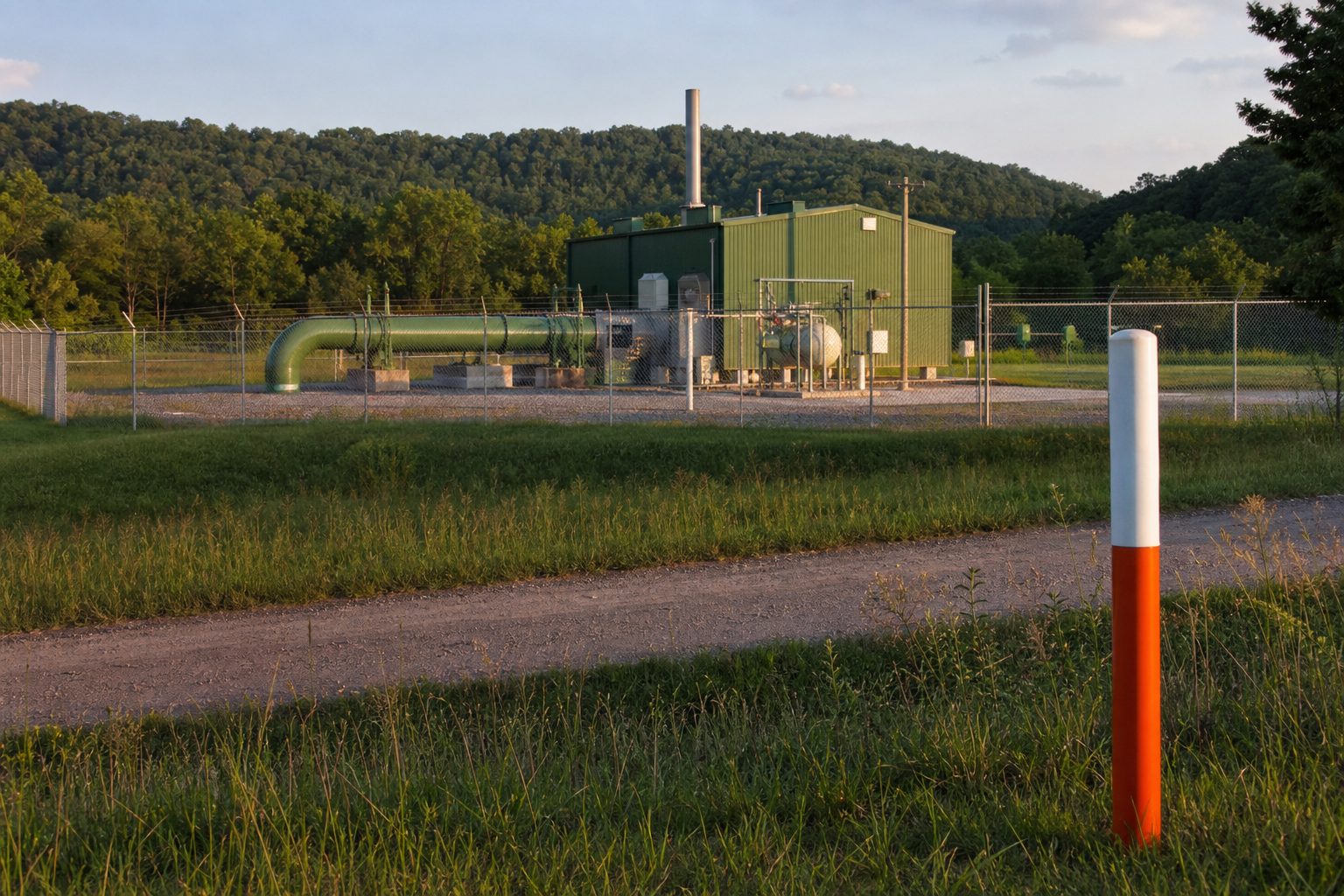
Gas turbines only produce firm power if the gas shows up. This is the fuel-supply condition, and its arithmetic is simple and unforgiving. At typical combined-cycle efficiencies, 9.2 gigawatts of gas generation running at full output would consume on the order of 1.5 billion cubic feet of gas per day. That figure is a rough engineering estimate, not a project disclosure, but it conveys the actual dependency: a continuous river of methane roughly comparable to what a midsize state burns.
Three things follow. First, new interstate pipeline capacity must be financed, certificated, and built. DOE's fact sheet says pipeline development is part of the plan, and Kinder Morgan is among the 21 companies that expressed intent to join the Portsmouth Consortium, per SoftBank's release. Intent to participate is not a signed pipeline contract. The certificates will be visible in federal dockets when they are real.
Second, the supply must be firm in winter, not just on average. Eastern systems have learned repeatedly, in Texas in February 2021 and across the eastern interconnection during the December 2022 cold snap, that gas production, pipelines, and power plants can fail together precisely when demand for both heating and electricity peaks. Firm transportation contracts, storage access, and compressor redundancy are the unglamorous details that determine whether Portsmouth's gas fleet is firm in the sense a grid operator can bank on.
Third, the campus must not end up bidding against local utilities for the same molecules during a freeze. Southern Ohio sits within reach of the Appalachian basin, among the most productive gas regions in the country, which is a genuine geographic advantage. Geography alone does not deliver priority at the pipeline gate in January. Contract structure does.
Where this story sits
5 related pieces
Read it →
Hover a story · click to read
 No. 53 · Sep 23, 2026Aurora's 96-MW Proof: Inside the Certification Bet on Software-Defined Grid Capacity
 No. 5 · Aug 25, 2026Global Compute Token Ledger: Architecture for Enforcing Prepaid Compute Everywhere
 No. 27 · Sep 2, 2026Three Mile Island Can Restart in 2027. The Grid May Not Take Its Power Until 2031.
 No. 55 · Sep 24, 202610 Gigawatts Overhead: The Orbital Data Centers the FCC Reviews One Filing at a Time
 No. 37 · Sep 5, 2026U.S. Grid Cyber Rules Are Finally Catching Up With Virtualized Operations
Who pays for the wires?
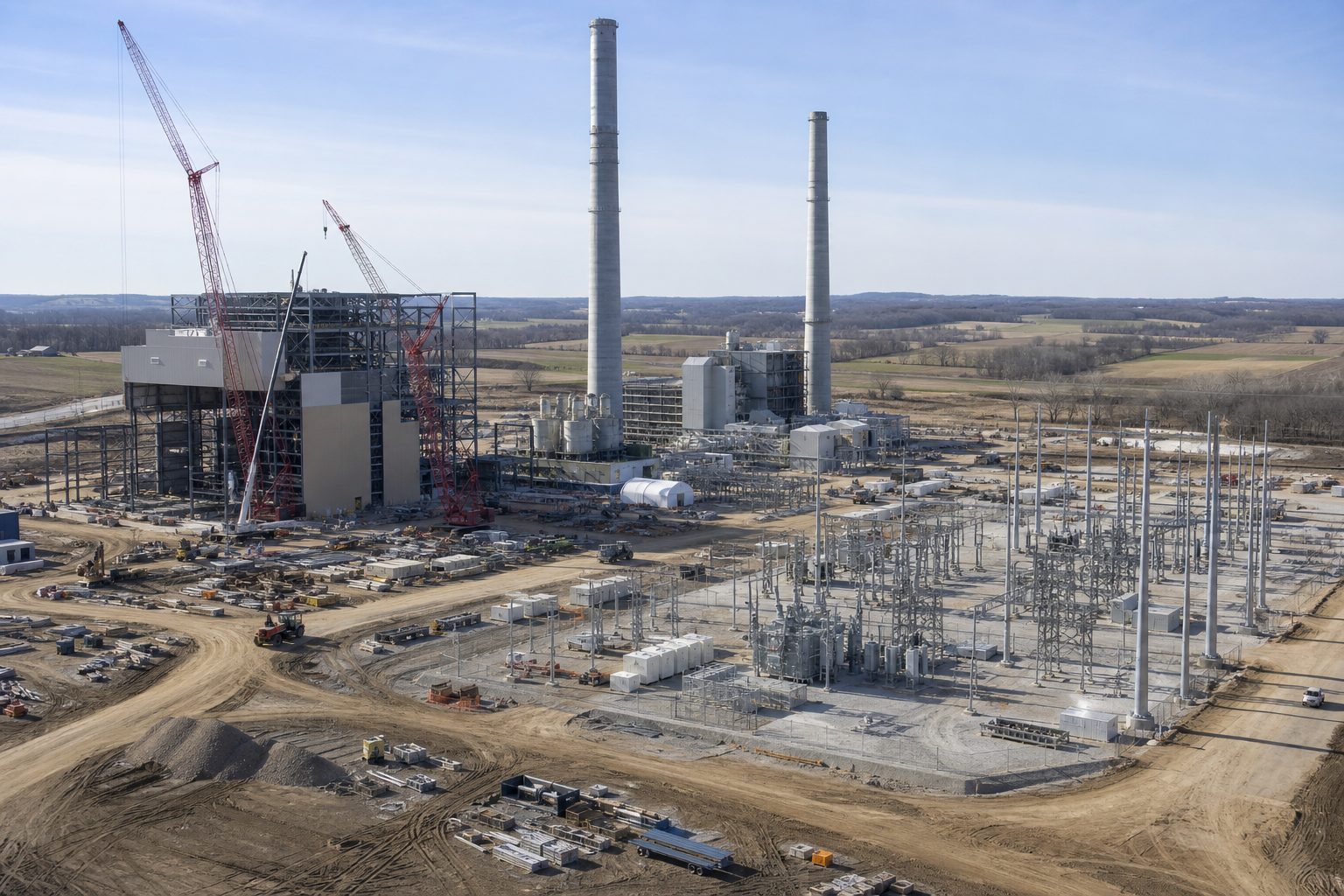
Transmission is where grid costs most often migrate onto the public, because poles and wires are exactly the infrastructure a regulated utility normally builds and then recovers from every ratepayer on its system. The Portsmouth structure tries to break that pattern in two ways. SB Energy is investing $4.2 billion with AEP Ohio for transmission upgrades and new lines, which the Energy Department frames as grid investment "at no cost to the public." And Data Center Frontier reports that for the marquee piece, a roughly 50-mile, 765-kilovolt line between the Baku and Gavin substations now moving through route selection and regulatory review, the project customer is responsible for the transmission costs.
Those are strong commitments if they survive process. Cost allocation is decided in filings and orders, not announcements. AEP's chief executive, Bill Fehrman, promised the partnership delivers "billions of dollars of electric transmission infrastructure, all without increasing customer rates," per DOE's release. The verification path runs straight through the route-selection and regulatory review now underway for the 765-kV line and any rate cases that follow.
Ohio has a live template for what enforcement looks like. AEP Ohio's new data center tariff, approved by state regulators, requires developers to make financial commitments up front, accept monthly billing minimums, and pay exit fees if they leave early. The results were clarifying. When AEP went back to its speculative queue, projects representing about 13,000 megawatts were willing to pay for a formal engineering study, and only 5,642 megawatts signed once real obligations were on paper, down from a widely publicized pipeline claim of 30,000 megawatts, per the Ohio Capital Journal. Filtering vaporware out of interconnection queues is exactly what such tariffs are designed to do, and the tariff structure is precisely the kind of machinery that would keep Portsmouth's promises honest if applied consistently.
The skeptical reading deserves equal weight. The Ohio Manufacturers' Association has taken the tariff fight to the Ohio Supreme Court, arguing that AEP's 30,000-megawatt projection was never a vetted planning forecast. "Mere speculation and conjecture is not evidence," the association's complaint states. Its deeper point is structural: PJM's capacity market charges consumers today based on forecasts of tomorrow's demand, so inflated projections extract real money for imaginary load. That mechanism does not disappear because one project arrives with blue-chip tenants. It argues for independent verification of every load forecast the campus generates, whoever signs the lease.
Context matters too. The ordinary pattern in utility finance is that ratepayers wind up footing the bill for the poles and wires needed to connect new customers, the same dynamic Ohio's data center tariff was designed to police across the rest of the state. A $4.2 billion private transmission commitment attached to a single campus inverts that pattern. When private wiring commitments genuinely carry the cost, the burden-of-proof question shifts from whether ratepayers are subsidizing the project to whether the commitments are durable.
Who carries the risk if AI demand falters?
A 20-year lease from OpenAI is the load-bearing document in the whole structure, and the August arrangement added an unusual second layer. NVIDIA is investing an additional $1.5 billion in SB Energy and providing credit support for the land, power, and shell infrastructure behind the initial 4.25 gigawatts of IT load, with an option covering roughly 3.75 gigawatts more. The accompanying SEC filing put a number on the exposure: aggregate payment obligations capped at $105 billion for the initial commitment.
What that instrument actually is matters more than its size. Per Data Center Frontier's reading of the filing, it is not a promise to spend $105 billion building the campus, and not a simple backstop of OpenAI's rent. It is a contingent residual-value guarantee: NVIDIA pays if specified OpenAI payment or insolvency events occur, protecting the infrastructure owners against being left with stranded shells and power assets. Caps and contingencies are the entire ballgame for surrounding communities, because they define where losses land in the downside case. The structure visible so far covers the initial 4.25 gigawatts firmly, points toward 8 gigawatts in total with the option, and leaves the tail of a 10-gigawatt ambition, and the separate financing of a 9.2-gigawatt gas fleet, riding on other balance sheets.
The largest of those is explicitly geopolitical. The generation plan carries $33.3 billion in Japanese funding under the U.S.-Japan Strategic Trade and Investment Agreement, part of what Commerce Secretary Howard Lutnick described as a $550 billion Japanese investment commitment across America, per the DOE release. The Portsmouth Consortium lines up Japanese industrial suppliers and utilities of capital, including Hitachi, Toshiba, Mitsubishi Electric, Mizuho, MUFG, and Sumitomo Mitsui Banking Corporation, alongside American firms such as Bechtel, GE Vernova, Kiewit, Carrier, Citi, Goldman Sachs, J.P. Morgan, and Morgan Stanley. All 21 have expressed intent to participate. Signed financing, closing documents, and disbursement schedules remain the checkpoints that convert a consortium roster into risk-bearing capital.
There is also a structural inversion here that deserves clear-eyed treatment. The Cliff Center calls it what it is: a chip vendor underwriting the data center economics of its own customer, the reverse of how hyperscale infrastructure was financed for a generation. If AI demand disappoints, the losses concentrate inside a small circle of companies, OpenAI's counterparty risk and NVIDIA's revenue prospects being correlated by construction. The flip side is the pledge's core intent made flesh: when the guarantee holders are NVIDIA and the funding sources are Japanese banks rather than Ohio households, the downside stays inside the deal circle. That is what risk not shifting onto surrounding communities actually looks like on a balance sheet. The condition is that the guarantee's triggers, caps, and disclosure obligations hold up under stress, which is why the SEC filing matters more than the announcement.
Whose rules apply on federal land?
Siting this campus on DOE property is not just a real estate convenience. It is a jurisdictional rerouting. Because SB Energy leases federal land, the strongest state and local levers over a project this size, county zoning, local moratoria, and in large part state siting-board jurisdiction, have weaker purchase than they would on private farmland outside town, as the Cliff Center's permitting analysis lays out. Development can be fast-tracked, which DOE's Office of Environmental Management says plainly. The company has also committed to help fund accelerated environmental cleanup at the site, per the DOE blog, which ties the project's community legitimacy to remediation of the enrichment era's residue.
The federal frame does not erase state authority; it redistributes it. The Cliff Center's decomposition is the useful one: siting, zoning, and much of the transmission path run through federal channels, but the air permits for 9.2 gigawatts of gas turbines are still issued by the state agency under delegated Clean Air Act authority, and water-quality discharge and hazardous waste authorities remain state functions as well. Ohio's environmental agency, in other words, is the community's strongest remaining regulator on this site, and the permits themselves become the measurable condition.
Two federal accelerants shape the calendar. The project has entered the FAST-41 permitting process, which coordinates environmental review for complex infrastructure involving wetlands, federal property, and power generation, per Data Center Frontier. Coordination shortens timelines without eliminating the underlying reviews, and the tradeoff is well known: rushed reviews invite litigation that can stall a project longer than a slow review would have. Separately, the administration's executive orders tilt the same direction. DOE's blog names the governing orders directly, including Accelerating Federal Permitting of Data Center Infrastructure; the Cliff Center's regulatory tracking records the acceleration policy as live from July 1, 2026, for data centers above 100 megawatts or $500 million.
The backdrop to all of this is a spreading local backlash against data centers elsewhere: moratorium ordinances in Midwestern and Sun Belt states, Wyoming's first Mountain West moratorium in Cheyenne, a blocked project in Pine Island, Minnesota, a tax-incentive pause in Arizona, per the Cliff Center's tracking. Portsmouth's federal siting is, in their framing, the strongest build-around-the-moratorium structure available. That solves the developer's problem while sharpening the legitimacy question: communities asked to host the nation's largest AI campus without the usual local veto points will judge the project by what the remaining regulators, and the contracts, actually deliver.
What would prove the promise holds?
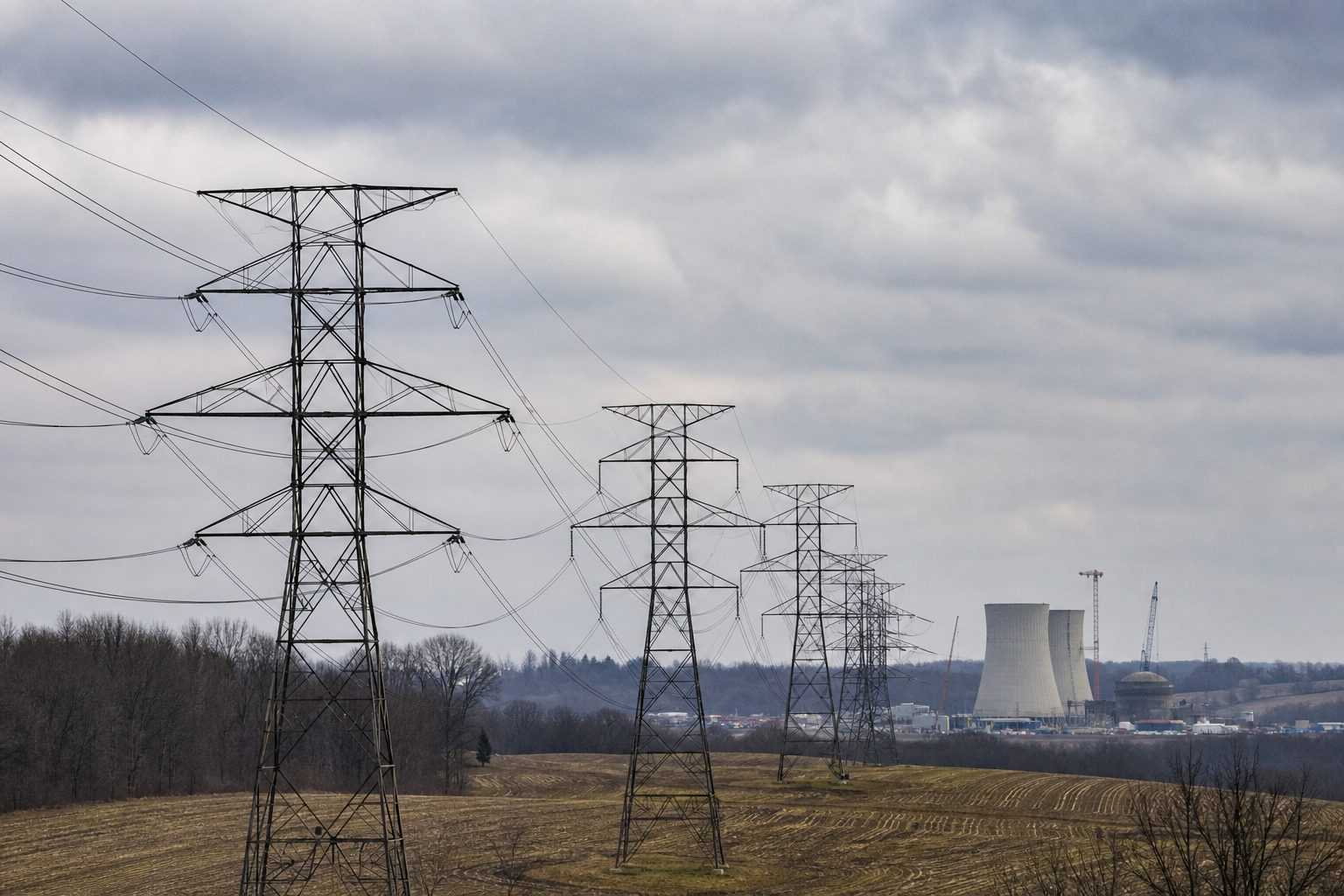
The promise is binary and checkable. Either the costs and risks stay with the project's sponsors and tenants, or they leak outward to the grid and the region. The evidence will accumulate in public records, and observers, including Pike County itself, can watch these tests in order:
- The Baku-to-Gavin 765-kV line and the $4.2 billion AEP Ohio program proceed with the project customer assigned the transmission costs, an assignment that survives regulatory review.
- Generation and grid milestones stay ahead of computing milestones: the interconnection studies, the 800-megawatt first phase in 2028, and the gas fleet arriving in step with each tranche of servers.
- Interstate pipeline capacity gets financed and certificated with firm winter deliverability, so the campus never competes with heating demand during a cold snap.
- Flexible-load and curtailment commitments appear in wholesale tariff filings, giving PJM contractual rights over campus demand during emergencies rather than relying on goodwill.
- The financial backstops behave as advertised: NVIDIA's guarantee triggers on the specified events, the lease obligations resemble the enforceable minimum-bill structure of Ohio's data center tariff, and the consortium funding, including the $33.3 billion Japanese commitment, actually closes.
- Ohio's air and water permits carry enforceable conditions, and the committed funding for accelerating the Portsmouth cleanup materializes.
- Load forecasts receive independent verification before they enter PJM's capacity planning, answering the manufacturers' association's core demand.
The Energy Department is openly positioning Portsmouth as a national model for expanding AI capacity while limiting grid-upgrade burdens on ratepayers, and the country's inventory of comparable federal sites is finite, with the Cliff Center counting roughly a dozen DOE complexes that share the same profile. Whether that model deserves cloning depends on what happens here, in a former uranium enrichment complex whose next identity was previewed by Tim Walsh, the department's assistant secretary for environmental management, at the groundbreaking: "It will soon be referred to as the AI Plant."
Announcements assign credit. Filings assign costs. The verdict on Pike County will be written in PUCO dockets, FERC tariffs, pipeline certificates, air permits, and the route of one 765-kilovolt line across southern Ohio, and the encouraging part, for the communities watching, is that almost every one of those documents will be public.
Sources and references
- U.S. Department of Energy. "Energy Department Announces Partnership to Ensure Affordable Energy and Power America's AI Future." March 20, 2026.
- U.S. Department of Energy, Office of Environmental Management. "Partnership Ensures Affordable Energy, Powers AI Future at Portsmouth Site." March 24, 2026.
- SoftBank Group Corp. "Launch of the Portsmouth Consortium under the U.S.-Japan Strategic Trade and Investment Agreement." March 21, 2026.
- Associated Press. "DOE unveils 10-gigawatt Ohio data center, gas-powered energy plan." March 2026.
- Data Center Frontier. "SoftBank's 10 GW Ohio Campus Marks a Turning Point for AI Infrastructure." March 2026.
- Data Center Frontier. "PORTS-Pike Takes Shape as an 8-GW AI Infrastructure Model." August 2026.
- Cliff Center. "OpenAI Portsmouth / 10 GW / DOE federal land / SB Energy / NVIDIA credit / state-moratorium bypass." June 14, 2026.
- Ohio Capital Journal. "AEP Ohio says new data center tariff is working, critics aren't buying it." February 20, 2026.
Comments (2)
Continue exploring
Three Mile Island Can Restart in 2027. The Grid May Not Take Its Power Until 2031.
Constellation plans to restart Three Mile Island in 2027 to power Microsoft data centers. PJM says the grid may not take its full…
10 Gigawatts Overhead: The Orbital Data Centers the FCC Reviews One Filing at a Time
SpaceX and Orbital Compute want to put AI data centers in orbit, filings that test whether the FCC can review a strategic system…
U.S. Grid Cyber Rules Are Finally Catching Up With Virtualized Operations
FERC now lets U.S. grid operators virtualize critical control systems; whether resilience outpaces the new risks depends on…
I run a small shop in Pike County and our AEP Ohio rates have already crept up since the spring announcement, well before any of the 800 first megawatts get built.
The sequencing section is the most useful because the whole ratepayer protection claim falls apart if those 800 first megawatts come online before the gas generation does.