
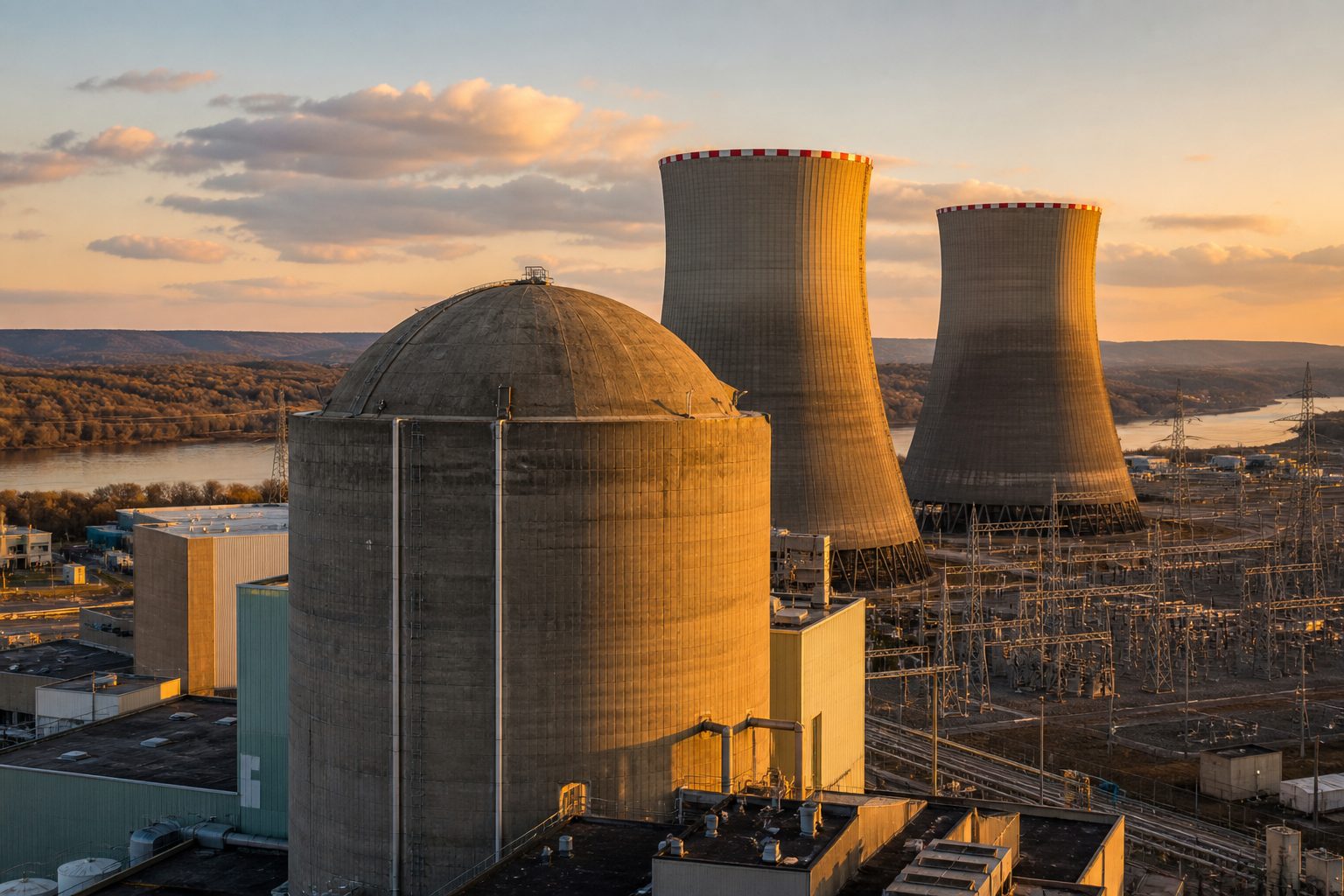
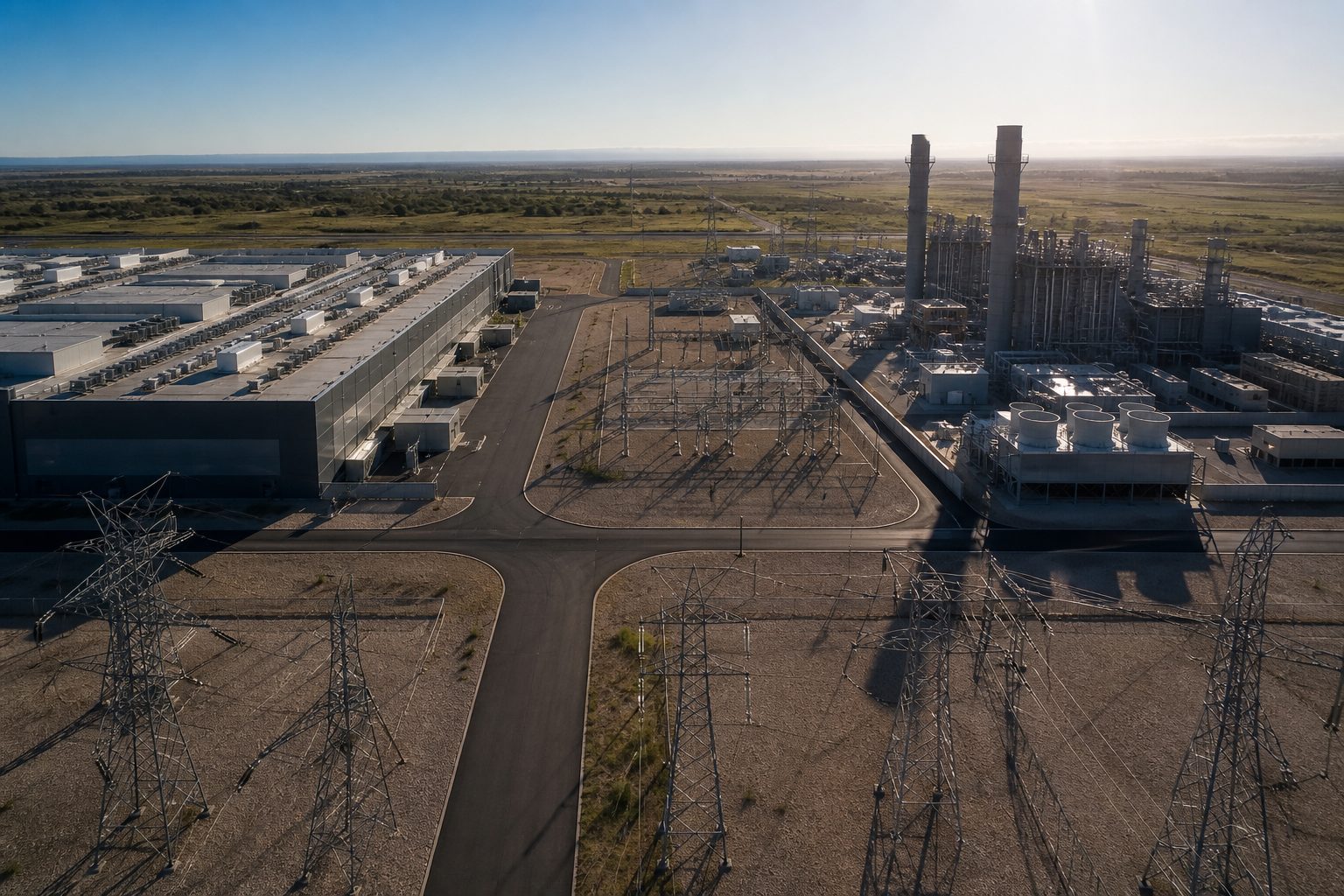
For two years, the restart of Three Mile Island's Unit 1 reactor has served as the proof case for a simple bargain: Big Tech would pay premium prices for round-the-clock nuclear power, and an idled reactor would come back to life to feed artificial intelligence. In March 2026, that bargain ran into the grid. Speaking at the CERAWeek energy conference, a Constellation Energy executive said PJM Interconnection had informed the company that the plant, renamed the Crane Clean Energy Center, likely could not connect to the grid until 2031, four years after the 2027 restart date that anchors Constellation's 20-year contract to sell all 835 megawatts of the unit's output to Microsoft (Reuters).
Days later, in a March 31 filing with the Federal Energy Regulatory Commission (Docket No. ER26-2028), Constellation put the problem on the record. The restart "would require significant transmission-related work" before the facility could become fully deliverable within PJM, the company said, warning that the plant might not reach full deliverability on the schedule the market had been promised (Data Center Knowledge).
That gap between reactor calendar and transmission calendar is now the defining constraint on the AI power race. The Crane project had every advantage a generating project in America can have: a proven reactor with decades of operating history; an existing switchyard; a creditworthy buyer; a governor lobbying for speed; a grid operator that had agreed to fast-track it. If even this project cannot deliver firm power until the following decade, the bottleneck is not any single company or technology. It is a system of interconnection rules, transmission upgrades, transformer lead times and load forecasts that no power purchase agreement can shorten. The people affected run from hyperscalers planning billion-dollar AI campuses to the roughly 67 million customers across PJM's territory spanning 13 states and the District of Columbia, who pay the cost of scarcity every time the region's capacity market clears (Reuters, via TradingView).
What PJM actually told Constellation, and when
The 2031 warning landed late in a long chronology of acceleration. Constellation announced the restart on September 20, 2024, targeting a 2028 return, with Microsoft buying the plant's energy, capacity and clean-energy attributes in what Constellation called the largest power purchase agreement it had ever signed (CNBC). The same day, Pennsylvania Governor Josh Shapiro pressed PJM to adopt expedited studies for shovel-ready generation, arguing it was "imperative that shovel-ready resources like the Crane Clean Energy Center be allowed to come online as quickly as possible rather than waiting in the [interconnection] queue as if they were an entirely new development" (Utility Dive).
PJM did develop a fast track for select projects, and by 2025 Constellation had moved its target forward to 2027, a year ahead of schedule. "We're on track to make history ahead of schedule, helping America achieve energy independence, supercharge economic growth, and win the global AI race," chief executive Joe Dominguez said at the time (Reuters, via TradingView).
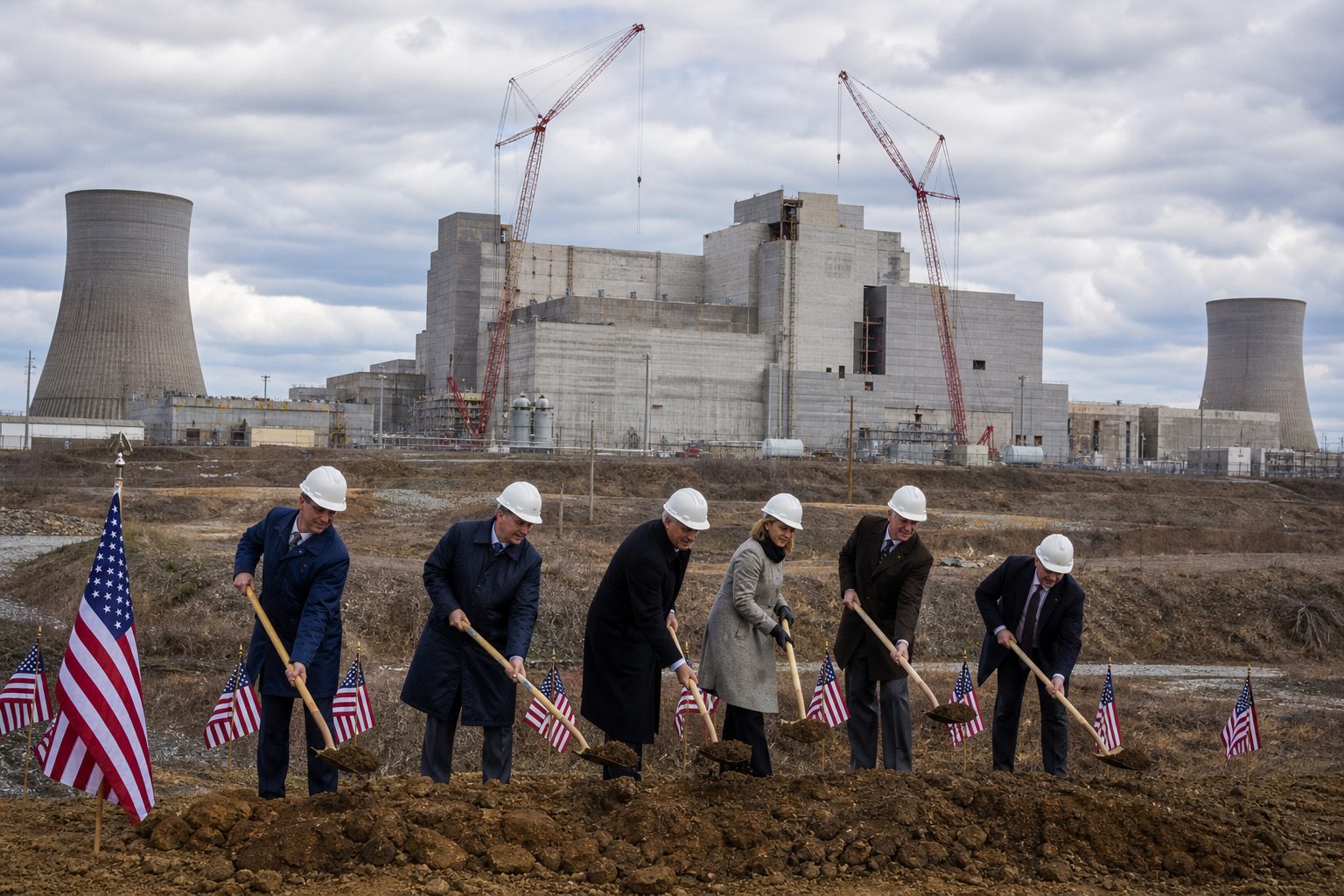
Then came March 2026: the 2031 guidance relayed at CERAWeek, followed by the FERC filing describing the transmission work still ahead. The plant itself has kept moving toward restart. In June, the Nuclear Regulatory Commission published a draft environmental assessment and a draft finding of no significant impact for reauthorizing power operations at the 835-megawatt unit. On June 2, FERC granted Constellation a waiver allowing it to transfer 760 megawatts of capacity interconnection rights from the Eddystone natural gas plant near Philadelphia to Crane, a move FERC said could reduce or eliminate some of the contingent transmission facilities associated with Crane and potentially improve the plant's interim deliverability. Constellation said the decision put the project back on a path toward its targeted 2027 restart (Data Center Frontier).

Read together, the three events trace the real timeline. The reactor can plausibly generate in 2027. Whether the grid can take all of its power, on a firm basis, depends on wires and substations that follow a different calendar. Whether the Eddystone transfer and any further fixes fully close the four-year gap is not yet resolved in the public record.
Why a returning reactor has to ask permission again
The confusion in most coverage of the Crane restart comes from treating "restarting the plant" and "connecting the plant" as the same event. They are not, and the difference is where the four years live.
Restarting is a licensing and construction exercise: refueling the reactor, restoring systems, completing NRC reviews, testing. Connecting is a property of the transmission system. Before PJM can treat a generator as deliverable, meaning its output can reach load at peak demand without overloading lines or substations, engineers must model the system and, in most cases, build network upgrades to make the answer come out yes. Those deliverability rights, formally capacity interconnection rights, determine whether a plant's output counts as guaranteed capacity in PJM's markets. A plant can potentially inject energy under interim or limited arrangements before that status arrives; it cannot be relied on at peak until the transmission work exists. FERC's December 2025 order on co-located loads, which ordered the creation of an "interim, non-firm transmission service" precisely for large customers waiting on network upgrades, is built on exactly this distinction between limited early access and full firm service (Mintz).
When Unit 1 shut down in 2019, priced out by cheap natural gas and renewables, its place in that modeling era ended (CNBC). The system it would return to has changed since: plants have retired, and data-center load has arrived in blocks large enough that PJM's 2025 load forecast had to be manually adjusted for data-center growth across ten zones, including Dominion's Virginia territory and ComEd's Chicago footprint (PJM 2025 Long-Term Load Forecast). So a reactor that ran for four decades has to be re-proven against a system it no longer recognizes.
Constellation's own original schedule conceded the point. Before the fast track existed, the company planned to file its interconnection request in early 2025, expected PJM's study to finish in early 2028, and aimed to have FERC approve the interconnection service agreement by spring 2028 (Utility Dive). The fast track compressed the paperwork. What it could not compress, and what the March filing finally spelled out, is the steel.
The economics explain why everyone wanted the paperwork faster. Morgan Stanley analysts estimated Constellation will sell Crane's power to Microsoft at roughly $98 per megawatt-hour, against market prices near $50, and Constellation expects the unit's output to receive a clean-energy tax credit of roughly $30 per megawatt-hour on top (Utility Dive). A premium of that size justifies the $1.6 billion restart program. It cannot, however, buy a transformer any faster, or make a transmission upgrade finish in 2027 that takes until 2031 to build.
The queue is no longer the real delay

To see why the constraint moved downstream, it helps to see what PJM already fixed. The interconnection queue, the first-come, first-served study process where projects once languished, has been rebuilt into cluster-based review cycles. New projects entering the reformed process are expected to receive interconnection agreements within one to two years, and PJM says it has processed more than 170,000 megawatts of generation requests since 2023, with about 30 gigawatts left to work through from its transition cycles (Data Center Knowledge).
Yet the projects are not arriving faster. AI infrastructure projects that entered service in 2025 took an average of more than seven years to reach operation: over three years to reach an interconnection service agreement, then another four years waiting to come online after approval. "That confirms what we have been trying to emphasize, the issues outside of the queue are the biggest obstacle we face to bringing projects online," Jeff Shields, PJM's senior manager of external communications, told Data Center Knowledge. In his words, "a project is finished with the PJM process and requires nothing further from PJM once it signs an Interconnection Service Agreement."
That statement, meant as a defense of the grid operator, is a precise description of Constellation's problem. The 2031 estimate is not a queue problem. It is what happens after the paperwork: transmission facilities that someone has to permit, finance and construct, and a deliverability status that waits on them. PJM's own delay data, presented in January 2026, shows permitting accounting for 29 percent of milestone change requests for projects under construction or development, "other" causes, including engineering-procurement-construction delays, equipment availability and land issues, at 28 percent, and supply chains at 23 percent (Data Center Knowledge).
Where this story sits
5 related pieces
Read it →
Hover a story · click to read
 No. 30 · Sep 3, 2026The Portsmouth experiment: can 10 gigawatts of AI compute avoid shifting grid costs onto its neighbors?
 No. 68 · Oct 14, 2026Where Will North Asia Find Enough Electricity to Power Its AI Boom, and Who Will Pay the Price?
 No. 53 · Sep 23, 2026Aurora's 96-MW Proof: Inside the Certification Bet on Software-Defined Grid Capacity
 No. 10 · Aug 26, 2026The AI Energy Gridlock
 No. 25 · Sep 2, 2026China's Solar Capacity Crown Is Real. The Grid Beneath It Isn't.
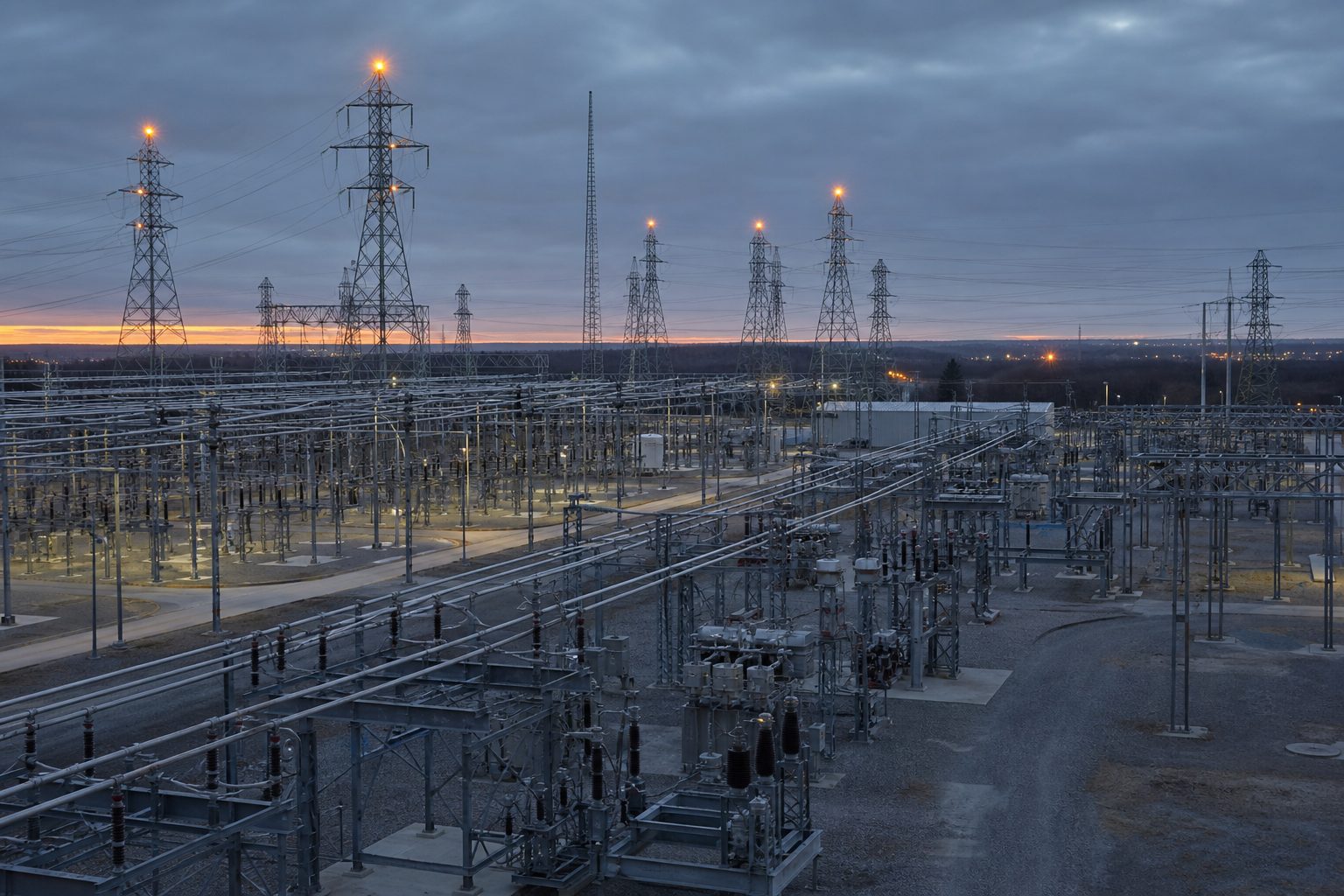
Transformers now set the schedule
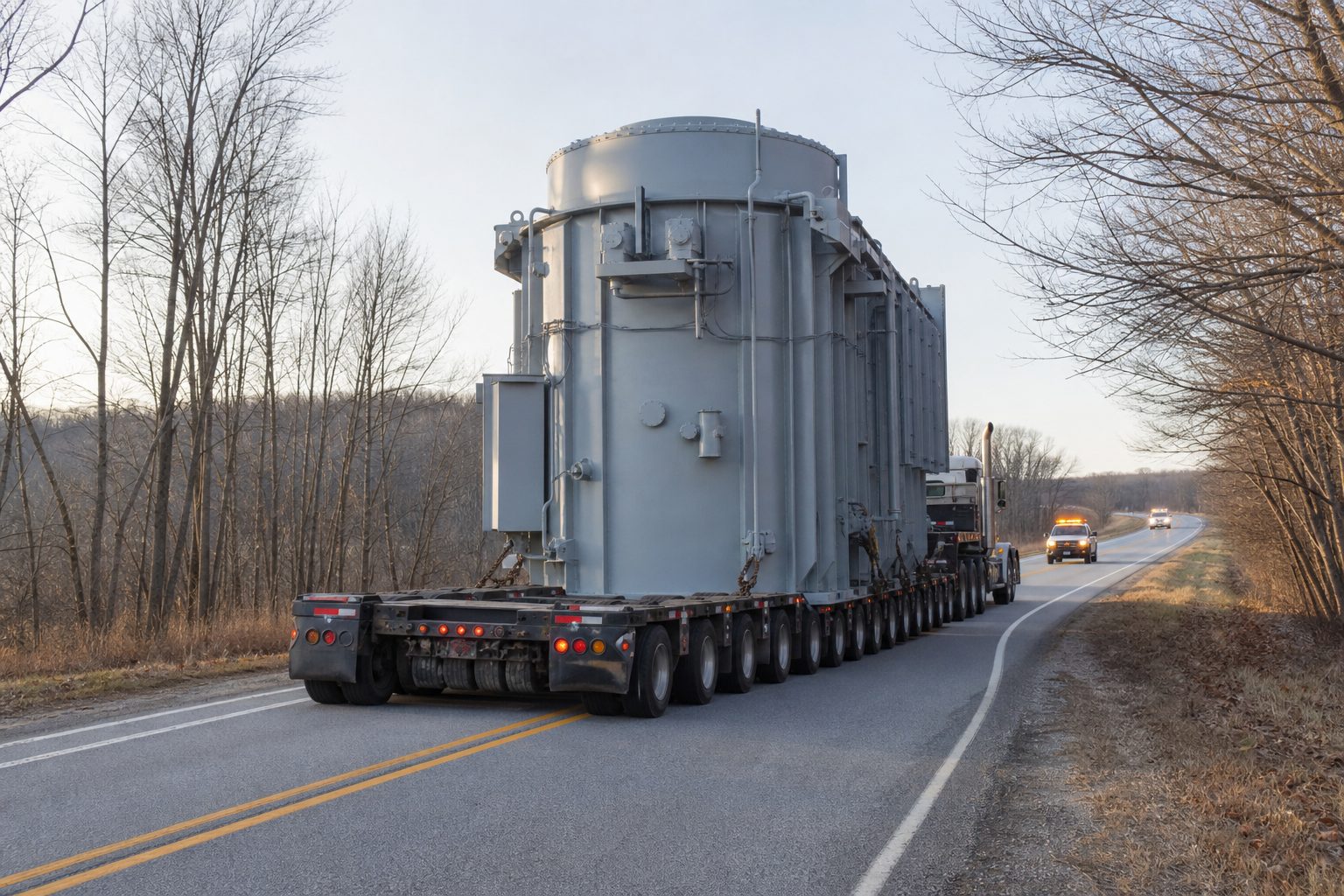
The most physical of the bottlenecks is measured in weeks, and the number keeps growing. Research from Wood Mackenzie found average lead times for large power transformers rose from about 50 weeks in 2021 to roughly 120 weeks in 2024. For the large substation transformers that transmission upgrades depend on, lead times averaged roughly 140 weeks in 2023, about 150 weeks in 2025, and now exceed 160 weeks in 2026 on the firm's latest data. That is more than three years from purchase order to delivery for the equipment at the center of any grid upgrade.
Developers are now bidding against utilities for the same manufacturing capacity. "Time to market is one of the most important aspects for developers, and if equipment lead times continue to rise, project delays will become more frequent," said Ben Boucher, a principal analyst at Wood Mackenzie, which projects the US data-center electrical equipment market will grow from roughly $20 billion to $65 billion by 2030 (Data Center Knowledge).
The backlog of work awaiting that equipment is not hypothetical. As of January 2026, PJM reported more than 21 gigawatts of projects in engineering and procurement status and another 8.2 gigawatts under construction. A restart like Crane's competes for the same crews, substations and transformer slots as all of it. When the March filing warned of "significant transmission-related work," this is the machine queue it was describing.
Demand keeps arriving faster than the wires
Every layer of this problem is being enlarged by the forecast itself. PJM's 2026 load forecast projects summer peak demand rising from roughly 154 gigawatts in 2025 to nearly 210 gigawatts by 2036, driven primarily by data-center expansion and electrification. Through November 2025, the grid operator had already received 95 large-load adjustment requests totaling around 54 gigawatts, requests that land on the system in blocks of hundreds of megawatts and, increasingly, gigawatt-scale campuses. Applications for PJM's next interconnection cycle represent roughly 220 gigawatts of proposed projects, a figure the operator stresses is still preliminary (Data Center Knowledge).
Scarcity on that trajectory is already being priced. PJM's capacity auction for the 2025/2026 delivery year cleared at $269.92 per megawatt-day, more than nine times the $28.92 clearing price for 2024/2025, and the auction after that cleared higher still (PJM capacity auction results). Customers across the region pay those prices. Goldman Sachs has forecast that data centers will grow from roughly 3 percent of US electricity consumption to 8 percent by 2030, and the collision between that demand curve and a slow-moving supply system is what Reuters has described as the AI boom's electric shock (CNBC; Reuters).
This is the supply-demand arithmetic that made a retired reactor worth $1.6 billion in restart spending. It is also the arithmetic that makes its deliverability rights worth fighting over at FERC.
The workarounds: rights transfers, co-location and federal money
The industry's response is taking three forms, and Crane has now used one of them. The first is the rights transfer: rather than wait for new deliverability studies and network upgrades to establish capacity interconnection rights from scratch, Constellation secured FERC approval to move 760 megawatts of existing rights from the retiring Eddystone plant. It is essentially a swap of grandfathered transmission position, and FERC's approval indicates it may reduce or eliminate some of the transmission facilities Crane would otherwise have waited on (Data Center Frontier).
The second is co-location, sidestepping the transmission system by putting the data center behind the generator's meter. Amazon Web Services bought a Talen Energy data center campus powered by the Susquehanna nuclear plant, also in Pennsylvania, in a first-of-its-kind 2024 deal (CNBC). Disputes over such arrangements pushed FERC through a November 2024 technical conference, a February 2025 show-cause order, and finally a December 18, 2025 order declaring PJM's tariff "unjust and unreasonable" for lacking clear rules for co-located large loads. The order directs PJM to create three new transmission services, including interim non-firm service for loads waiting on network upgrades, with compliance filings due February 16, 2026 (Mintz). Then-Chairman Mark Christie had warned after the 2024 conference that "FERC needs to act and act soon to address these issues." The Crane-Microsoft deal is not itself a co-location arrangement; the power is meant to match Microsoft's consumption across PJM's Mid-Atlantic and Midwest footprint, which is precisely why deliverability through the transmission system matters to it.
The third response is federal money and regulatory speed aimed at the longer pipeline. The Department of Energy has offered $17.5 billion in conditional financing intended to accelerate ten large Westinghouse AP1000 reactors, and federal agencies have proposed extensive revisions to reactor licensing and environmental review rules (Data Center Frontier).
None of these fixes is fast. The AP1000 program, even if financed, builds reactors a decade out. The advanced-reactor projects that tech companies have underwritten are further still: Kairos Power's Hermes 2 demonstration plant, part of the pipeline Google is backing, is targeted to begin supplying the TVA grid in 2030. The past two months of industry news illustrate the gap between announcement and megawatt with unusual clarity: four microreactor developers achieved zero-power criticality in little more than a month, tests that produced no useful electricity; a developer proposed a 1-gigawatt data center at the Savannah River Site; a microreactor partnership set its sights on more than 3 gigawatts; Walmart signed a nuclear power agreement. Some of those are binding contracts. Others are loan offers, demonstrations or proposals that may never operate (Data Center Frontier).
Restarts were supposed to be the exception, the rare nuclear megawatts that could still arrive on a 2020s timeline. The precedent is thinner than the marketing suggests. As recently as 2025, no fully shut US nuclear plant had ever been restarted; the only project ahead of Crane, the Palisades plant in Michigan, was still working through the process, and nuclear construction of every kind has historically run far over budget and behind schedule (Reuters, via TradingView). Crane is now demonstrating that even a restart carries two projects inside it: the reactor work, and the transmission work that determines when anyone can actually buy the power.
What the 2031 warning settles, and what it doesn't
Constellation still says Crane will restart in 2027, and the June FERC waiver gave that claim structural support it did not have in March. The 2031 estimate is best understood not as a new restart date but as the moment when the grid could absorb the plant's full output on firm terms without the stopgaps, and the company is now lobbying, filing and trading rights to pull that date back toward the reactor's schedule.
That distinction should now be applied to every nuclear-AI announcement. A 20-year power purchase agreement sets the commercial terms between a generator and a buyer. It does not set the energization date, which belongs to an interconnection agreement and a queue of transmission upgrades. It does not set the equipment date, which belongs to a transformer factory running lead times past 160 weeks. And it does not set the capacity date, which belongs to a deliverability study measuring whether the power can physically reach load at peak. Microsoft's contract made the reactor economics work. The four years between 2027 and 2031 are where the grid's costs come due.
The same test is coming for everything behind Crane. PJM is preparing to process roughly 220 gigawatts of new applications while absorbing 54 gigawatts of large-load requests and building toward a forecast summer peak near 210 gigawatts by 2036. FERC has now written co-location rules that other regions may copy. How much of that demand actually materializes, and how much of the announced nuclear supply becomes deliverable rather than contracted, are the two questions that will decide whether the AI buildout is constrained by chips, capital or copper.
When Constellation announced the deal in 2024, Dominguez called it "the most powerful symbol of the rebirth of nuclear power as a clean and reliable energy resource" (CNBC). Three Mile Island did become a symbol twice over: first for the accident at its neighboring Unit 2 in 1979, then for a retirement in 2019 that proved a working reactor could still lose to cheap gas. Its third act was meant to prove the grid rewards firm clean power. Instead, at least so far, it is proving something more useful to anyone planning around AI's energy appetite. The scarcest input is not the reactor. It is time, measured in transformer lead times, transmission construction schedules and a queue of projects all trying to connect to the same wires. The reactor can be ready in 2027. The grid will decide the rest.
Sources
- Reuters. "Constellation exec says grid operator told company Three Mile Island can't connect until 2031." March 2026. https://www.reuters.com/business/energy/ceraweek-constellation-exec-says-grid-operator-told-company-thre
- Reuters. "US AI boom faces electric shock." February 25, 2026. https://www.reuters.com/markets/commodities/us-ai-boom-faces-electric-shock-2026-02-25/
- Data Center Frontier. "Nuclear Momentum Meets the Megawatt Test." 2026. https://www.datacenterfrontier.com/energy/article/55394098/nuclear-momentum-meets-the-megawatt-test
- Data Center Knowledge. "Why AI Data Center Projects Face Years of Delays After Approval." May 12, 2026. https://www.datacenterknowledge.com/energy-power-supply/why-ai-data-center-projects-face-years-of-delays-after-approval
- Mintz. "FERC Directs PJM to Issue New Rules for Co-Location of Power Plants and Data Centers." February 2, 2026. https://www.mintz.com/insights-center/viewpoints/2151/2026-02-02-ferc-directs-pjm-issue-new-rules-co-location-power
- CNBC. "Constellation Energy to restart Three Mile Island and sell the power to Microsoft." September 20, 2024. https://www.cnbc.com/2024/09/20/constellation-energy-to-restart-three-mile-island-and-sell-the-power-to-microsoft.html
- Utility Dive. "A fast-track PJM interconnection review could speed Three Mile Island restart: Constellation CFO." September 2024. https://www.utilitydive.com/news/fast-track-pjm-interconnection-review-three-mile-island-constellation-microsoft-ppa/727736/
- Reuters, via TradingView. "Shut Three Mile Island nuclear plant may restart in 2027, owner says." 2025. https://www.tradingview.com/news/reuters.com,2025:newsml_L1N3SQ11I:0-shut-three-mile-island-nuclear-plant-may-restart-in-2027-owner-says/
- PJM Interconnection. "2025 PJM Long-Term Load Forecast Report." January 2025. https://www.pjm.com/-/media/DotCom/library/reports-notices/load-forecast/2025-load-report.pdf
- PJM Interconnection. Reliability Pricing Model (RPM) capacity auction results, 2024/2025-2026/2027 delivery years. https://www.pjm.com/markets-and-operations/rpm
Comments (9)
Continue exploring
Aurora's 96-MW Proof: Inside the Certification Bet on Software-Defined Grid Capacity
Aurora's 96-MW AI factory is the first designed to a power-flexibility certification standard; scaling the model hinges on…
The AI Energy Gridlock
The artificial intelligence race is colliding with an older, slower machine: the electric grid. A frontier AI campus can require…
China's Solar Capacity Crown Is Real. The Grid Beneath It Isn't.
China's installed solar capacity has passed coal, but the grid cannot store, transmit or dispatch sunlight on demand, so coal…
Could the 760 MW transferred from Eddystone actually be enough to make Crane deliverable in the interim, or does the remaining roughly 75 MW gap effectively still require its own network upgrade?
The section mapping out the actual timeline of acceleration and delay was the most useful part for me. It made concrete that the 2027 restart target and the 2031 deliverability date are not contradictory so much as two different clocks, one for the reactor and one for the transmission work PJM has to complete. I had not fully appreciated that interconnection rights have to be re-established even for a returning unit, and that detail reframed the whole story for me. My only hesitation is that the section ends without resolving whether the Eddystone transfer fully closes the gap, which leaves the timeline feeling slightly open-ended.
The claim that the bottleneck is not any single company or technology but a system of rules, upgrade studies, and lead times matches what we have seen on our own interconnection projects. Transformer procurement alone has added 12 to 18 months to schedules we thought were already locked.
If the FERC waiver on Eddystone was supposed to put Crane back on a 2027 track, how is 2031 still the official guidance?
I'd be curious to see a follow-up that traces what specific transmission upgrades are actually pending - which substations, which lines - since the article gestures at them but doesn't name them. Without that, it is hard to judge whether four years is realistic or pessimistic.
One nuance the article glosses over is that capacity payments in PJM are settled years ahead of delivery, so the market may already be crediting Crane's 2027 restart in ways that will not match its actual deliverability. That mismatch seems worth flagging.
Our utility actually did manage to interconnect a returning unit within roughly two years of restart, though it was a much smaller facility than Crane and sat on a less constrained part of the system.
I work in transmission planning and the part about deliverability modeling taking years checks out. Even with an existing switchyard and a fast-tracked study, the network upgrade studies alone can run 18 to 24 months before anyone breaks ground, and transformer lead times of 18 months on top of that are normal rather than exceptional.
The core takeaway seems to be that interconnection queues and transmission build-out, not reactor licensing, are now the binding constraint on adding firm clean power to the grid, even for a reactor that has been sitting there for decades. If that is right, the implication for every other AI-anchored PPA is pretty stark: signing the contract is the easy part, and the years-long permitting-plus-construction pipeline for wires is what actually determines when electrons flow. I would tell anyone planning a data center campus that their critical path now runs through their utility's transmission planning group, not their power supplier. The roughly 67 million ratepayers in PJM foot the capacity-market bill in the meantime, which is a political problem waiting to happen.