The artificial-intelligence race is colliding with an older, slower machine: the electric grid.
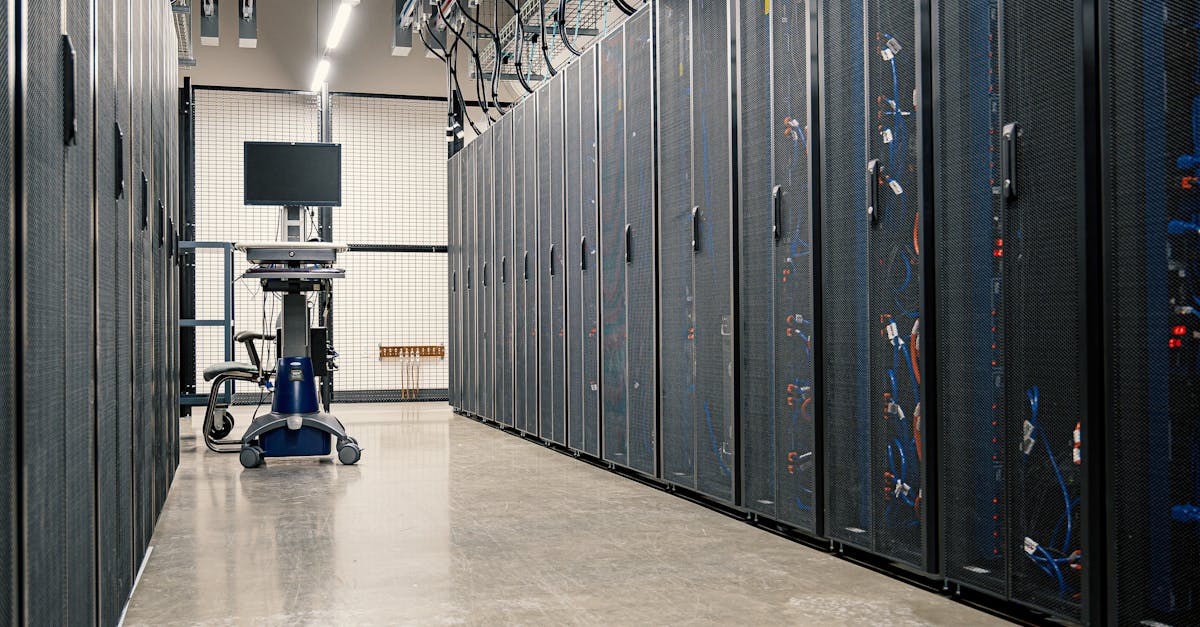
A frontier AI campus can require as much electricity as a small city. Stargate, an AI computing campus under construction in Abilene, Texas, is expected to draw 1.2 gigawatts at peak load, equivalent to the consumption of roughly 313,000 median American homes. The project is one site in a much larger construction boom driven by the expectation that increasingly capable AI systems will generate enormous economic returns. (Works in Progress, June 25, 2026)
The immediate constraint is not simply whether the United States can generate enough electricity. It is whether new power plants, data centers, substations, and transmission lines can be connected quickly enough to the places where demand is arriving. The sources cited here describe a large volume of proposed generation and storage capacity, but also a slow and heavily backlogged interconnection process. That distinction matters. The country may have substantial generating capacity in development yet still lack the wires, transformers, permits, and grid studies required to deliver power on the timetable demanded by the AI industry.
The result is a widening mismatch between two clocks. AI companies measure progress in months. Electric infrastructure often moves in years.
A demand shock concentrated in a few places
The sources cited here describe U.S. electricity demand as having remained broadly flat for much of the period before the recent increase, but they do not independently establish the precise period from the late 1990s through the early 2020s. Gridlas reports that the Energy Information Administration has characterized the current period as the strongest four-year stretch of electricity-demand growth since 2000, with data centers among the principal drivers. (Gridlas, July 2026)
The demand is geographically concentrated. The sources cited here identify Virginia and Texas as important locations in the current buildout, and they describe existing data-center clusters as receiving a large share of new development. They do not independently verify every reason that developers choose particular states, including land availability, tax incentives, network connections, or electricity prices. When many facilities locate in the same region, national averages can conceal local strain. A grid may appear adequate across the country while a particular transmission zone faces a shortage of capacity during the next summer peak.
The figures circulating in industry discussions illustrate the scale of the expected increase. One widely circulated set of projections estimates that U.S. data-center power demand could rise from approximately 31 gigawatts in 2025 to 66 gigawatts by 2027. Another estimate projects that data centers could account for 8.5% of total U.S. peak-summer power by 2027. The sources cited here do not independently verify either figure, its methodology, or its underlying dataset.
Those numbers should therefore be treated as unverified forecasts, not settled facts. Forecasts differ because analysts define “data-center demand” differently, use different assumptions about utilization, count projects at different stages of development, and make different judgments about how quickly planned facilities will receive power. A 2026 Gridlas review of public estimates found that projected U.S. data-center electricity use in 2030 ranged from roughly 200 terawatt-hours to more than 1,050 terawatt-hours per year, a spread of about five to one. (Gridlas, July 2026)
The disagreement does not erase the underlying trend. The sources cited here report rising electricity demand and identify data centers as a major driver. The uncertainty concerns how high demand will go, how quickly projects will be completed, and how much of the planned capacity will ultimately be built.
Why AI racks are different
Traditional enterprise data centers already consume substantial electricity, but the sources cited here do not establish a verified universal range for conventional server-rack loads or a national specification for AI racks.
The figures of approximately 5 to 15 kilowatts for a conventional rack and 100 kilowatts or more for an AI rack should therefore be treated as unverified industry estimates. They are not supported by the sources cited here as general specifications. Actual values would vary according to accelerator hardware, rack design, networking equipment, cooling systems, workload, and whether the facility is designed for training or inference.
The broader engineering point is supported by the sources: AI campuses can require very large amounts of electricity concentrated at individual sites. Stargate, for example, is expected to draw 1.2 gigawatts at peak load. (Works in Progress, June 25, 2026)
That scale can require more than simply installing additional servers in an existing hall. The sources cited here discuss the need for grid connections, transmission upgrades, substations, equipment, and cooling, but they do not provide a facility-by-facility account of which AI campuses require liquid cooling, redesigned floor layouts, or particular power-distribution systems. Those details depend on the design of each project.
The increase also affects the grid beyond the building's walls. Large AI campuses can add hundreds of megawatts of demand at a single location. Their load can arrive faster than utilities traditionally plan for, and it can grow in stages as new clusters of accelerators come online. The precise growth schedule for any individual campus remains project-specific.
The largest AI facilities are therefore closer to industrial plants in their electrical requirements than ordinary office buildings. The relevant question is no longer only how many servers a site can contain. It is how many megawatts the site can receive continuously, how quickly that capacity can be secured, and who will pay for the network upgrades required to deliver it.
Where this story sits
5 related pieces

Hover a story · click to read
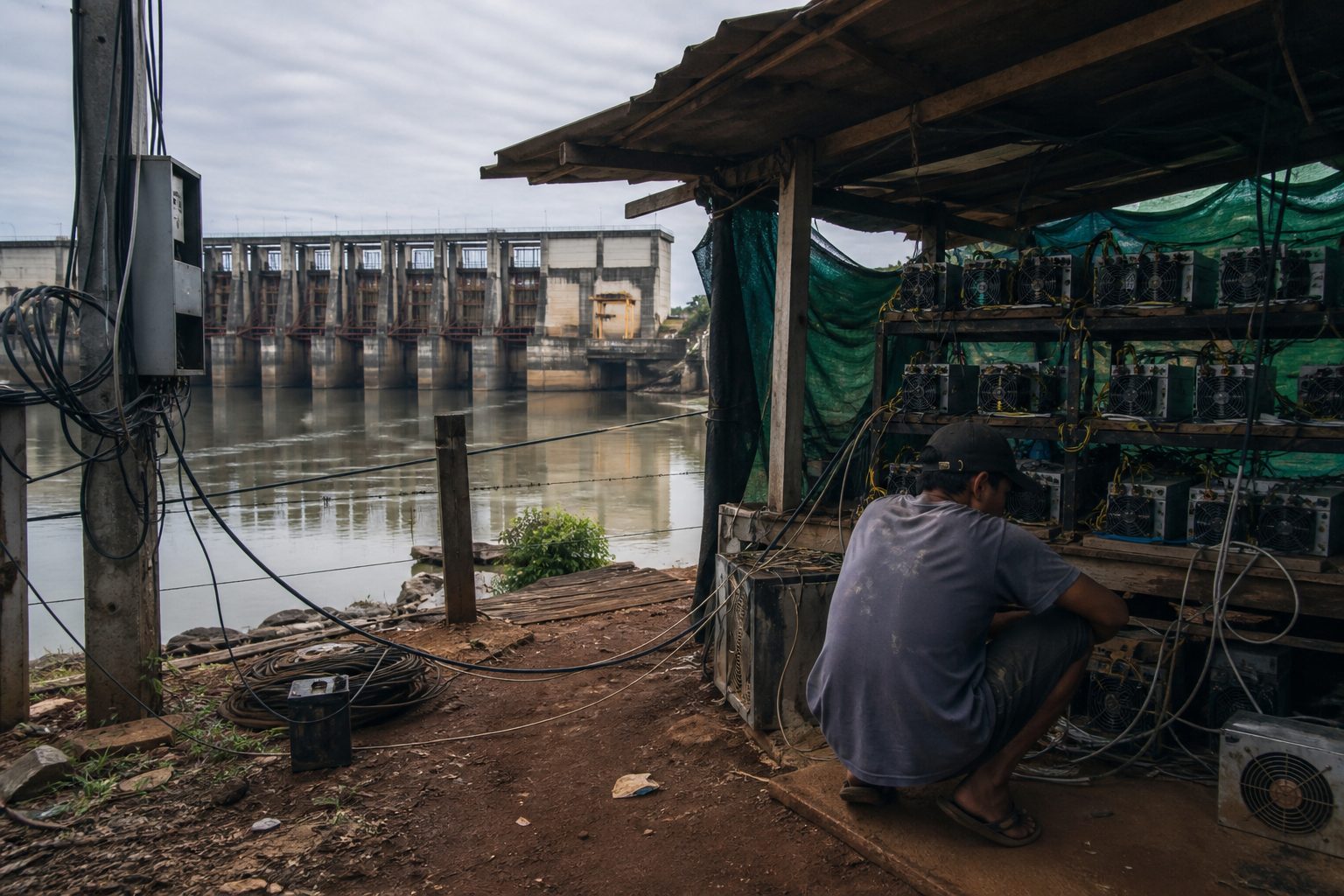 No. 22 · Sep 1, 2026Paraguay's Megawatt Thieves: Inside the Illegal Bitcoin Mining Boom Bleeding Its Hydro Grid
 No. 27 · Sep 2, 2026Three Mile Island Can Restart in 2027. The Grid May Not Take Its Power Until 2031.
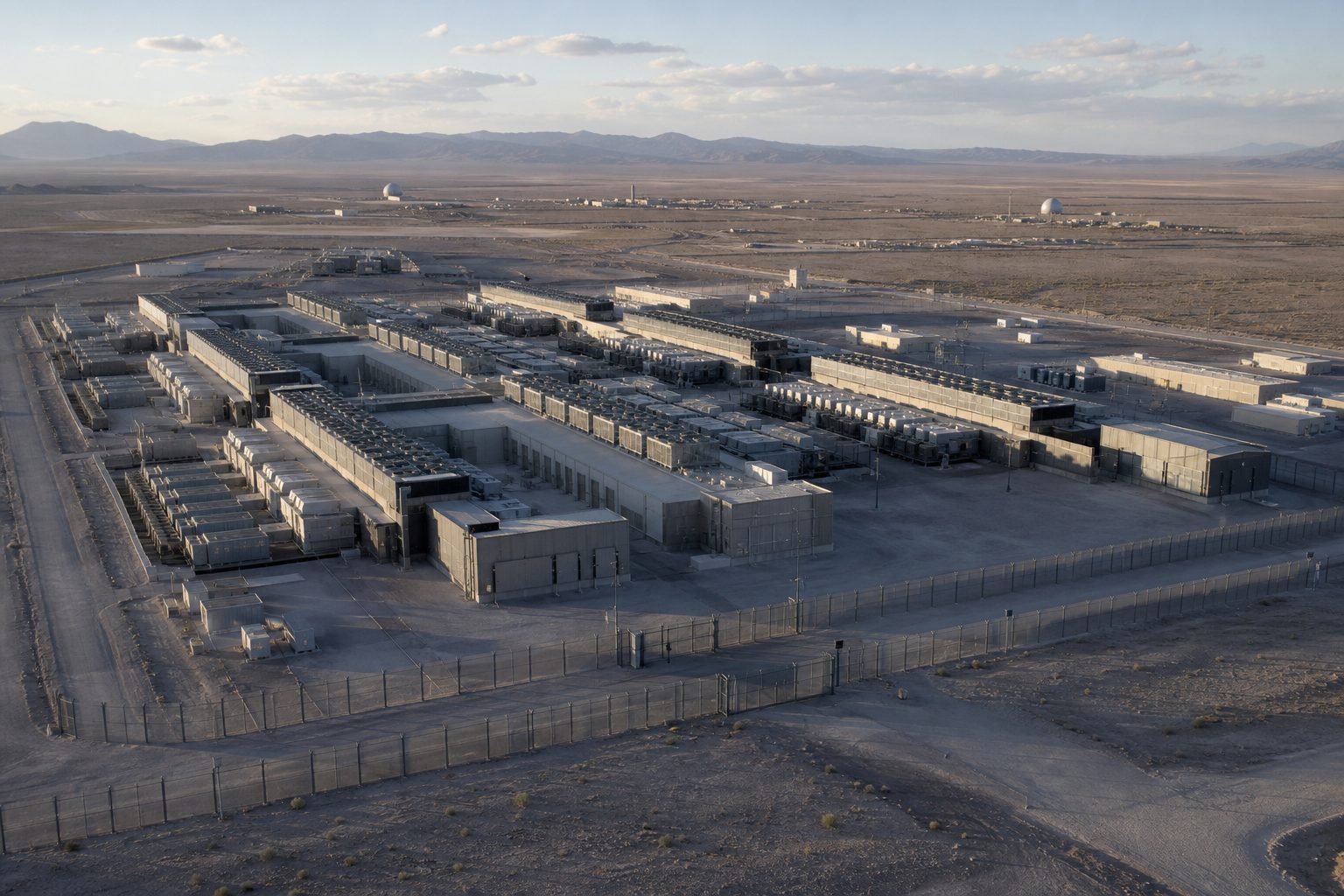 No. 36 · Sep 5, 2026The Army Is Turning Military Land Into an AI Compute Platform
 No. 53 · Sep 23, 2026Aurora's 96-MW Proof: Inside the Certification Bet on Software-Defined Grid Capacity
 No. 24 · Sep 2, 2026Whole Servers, Hidden Compute: Taiwan and the New AI Export Problem
The queue is the bottleneck
The U.S. grid has queues for new generating projects and storage facilities seeking interconnection. Before a project can connect, grid operators study how it will affect power flows and whether new substations, transmission lines, or other upgrades are necessary.
That process was designed for a less volatile development environment. The sources cited here report queues containing proposed solar plants, wind farms, batteries, gas plants, and other generation and storage projects. They do not establish the full composition of all proposed industrial and data-center loads in those queues.
According to a 2026 Gridlas analysis based on public data, approximately 2,290 gigawatts of generation and storage capacity, representing about 10,300 projects, was seeking interconnection at the end of 2024. The amount in the queue greatly exceeded the capacity needed to satisfy the demand scenarios discussed in that analysis. Yet much of the queued capacity will never be built. Among projects that requested interconnection between 2000 and 2019, only about 13% had reached commercial operation by the end of 2024, while approximately 77% had withdrawn. (Gridlas, July 2026)
The queue is therefore not a construction pipeline. It is an attrition filter containing projects at different stages of seriousness and readiness. The sources cited here support the withdrawal rate, but they do not independently establish the more specific description of the queue as a mixture of speculative proposals, duplicate applications, and projects unable to survive delay or rising costs.
The time required for projects that do succeed has also lengthened. Gridlas, drawing on Berkeley Lab's interconnection research, reports that the median period from an interconnection request to commercial operation rose from less than two years for projects built between 2000 and 2007 to roughly five years for projects built in 2023. Works in Progress reports that the median wait for a power plant had reached 55 months by 2023, compared with less than 20 months in 2005. (Gridlas, July 2026; Works in Progress, June 25, 2026)
These figures describe generation interconnection, not necessarily the approval time for every new data center. Brownstone Research reports that a developer seeking to connect a large-load facility in PJM may wait as long as eight years for approval, but this is an account from an investment-research publication rather than a national measure. (Brownstone Research, August 19, 2026) Some U.S. markets may report data-center connection timelines of five to eight years, but the sources cited here do not establish a single national average.
The core problem remains the same: computing capacity can be ordered and installed faster than the grid can study, permit, finance, and build the infrastructure needed to supply it.
A system designed for a different era
Several features of the interconnection process make the problem worse.
Many systems historically used a first-come, first-served queue. Gridlas describes that approach as inflexible and says it can leave more valuable projects behind less viable ones. A project that entered the queue early could occupy a position even if it had little chance of being built. Projects behind it might then wait for studies and upgrades associated with developments that eventually withdraw. (Gridlas, July 2026)
The sources cited here also describe a need for reforms that study projects in groups, screen out less-ready proposals, and give greater weight to projects prepared to manage their own power needs during short periods. They do not independently verify the specific provisions of the Federal Energy Regulatory Commission's Order No. 2023, so that order is not cited here.
Those reforms address a genuine source of delay, but they cannot by themselves create transmission capacity. Even after a project receives approval, a new high-voltage line may take four to eight years to build, according to the Gridlas review. Large transformers and cables have also become difficult to obtain. The analysis reports that equipment wait times for major transformers and cables have doubled in three years. (Gridlas, July 2026)
The bottleneck is thus layered:
- A project must secure land and financing.
- The utility or grid operator must assess the connection.
- Required upgrades must be designed and assigned to parties.
- Regulators and local authorities must approve construction.
- Equipment must be ordered.
- Transmission and substations must be built.
- The facility must pass testing and receive permission to operate.
The sources cited here support the general existence of these stages, but they do not document the precise sequence for every project or jurisdiction. A delay at any stage can strand the others. A finished data center without power is an expensive shell. A completed power plant without a transmission connection is an underused asset.
The regional warning signs
The strain is already visible in several major U.S. power markets.
ERCOT, which serves approximately 90% of Texas's electricity, forecasts that it may not have enough power to meet demand during the summer of 2028 under its current planning assumptions. PJM, described by Works in Progress as the largest U.S. grid by the amount of electricity provided and population in its coverage area, was unable in 2025 to buy enough future generating capacity to meet projected demand. MISO, which operates across a broad area between Louisiana and Minnesota, warned in one study that resource-adequacy risks could grow without additional capacity. (Works in Progress, June 25, 2026)
These warnings do not prove that AI alone caused the problem. The sources cited here also describe broader electrification and industrial demand, but they do not provide a complete causal breakdown of rising U.S. electricity use. Data centers are an unusually fast-growing source of large, concentrated demand according to the sources reviewed here.
Congestion adds another cost. In 2023, grid inefficiencies associated with transmission constraints imposed approximately $11.5 billion in additional costs in the United States, according to the Works in Progress analysis. Congestion forces grid operators to dispatch more expensive local generators when cheaper electricity cannot reach the area that needs it. (Works in Progress, June 25, 2026)
The same constraint that delays AI campuses can also raise electricity costs for households and other industries. Whether those costs are passed through to customers depends on utility regulation, market design, contracts, and the allocation of grid-upgrade expenses. The sources cited here do not quantify the portion attributable specifically to AI projects.
The disputed cancellation figure
A frequently repeated claim holds that 40% to 50% of scheduled data-center capacity for 2026 and 2027 will be delayed or canceled because of power and supply-chain shortages.
The sources cited here do not establish that figure through a primary dataset or an independently verified national survey. They do support a narrower conclusion: a meaningful share of announced data-center capacity may fail to arrive on schedule because interconnection delays, equipment shortages, construction constraints, and uncertain project economics can force developers to revise plans.
This distinction matters. Announced capacity is not the same as financed capacity, permitted capacity, or capacity under construction. A project can be delayed without being canceled. A company can move a facility to another region, redesign it at a smaller scale, or temporarily operate below its planned capacity. Counting all such outcomes together can produce a dramatic percentage that obscures important differences.
The most defensible statement is therefore that delays and cancellations are material risks, not that a national 40% to 50% outcome has been conclusively verified.
The turn toward private power
When the grid cannot deliver quickly enough, technology companies and data-center operators have an incentive to bypass part of the interconnection process.
Possible strategies include:
- leasing existing facilities with power already secured;
- building natural-gas generation behind the meter;
- purchasing electricity from dedicated plants;
- restarting or contracting with nuclear facilities;
- using batteries and flexible load to reduce peak demand;
- locating data centers near existing generation;
- installing modular or temporary generation while waiting for permanent connections.
The sources cited here describe the AI boom's electricity problem as a conflict between rapidly rising demand and infrastructure that cannot expand at the same speed. (Reuters, February 25, 2026)
A Forbes contributor reported that companies are considering behind-the-meter generation and modular data centers as ways to avoid lengthy utility delays. That account is useful as evidence of a reported business response, but it is commentary rather than an official industry-wide measurement. (Forbes, August 21, 2026)
Private generation may accelerate construction, but it shifts rather than eliminates the underlying problems. Gas turbines produce carbon dioxide and local air pollutants and require fuel infrastructure and permits. The sources cited here do not provide a project-by-project comparison of the permitting timelines or emissions consequences of these arrangements. Nuclear projects generally involve licensing, construction, and cost risks, although the sources do not establish a universal timeline for restarts or new reactors. Batteries can manage short peaks, but the sources cited here do not establish that they can replace firm generation for sustained, around-the-clock workloads without additional energy supply.
Behind-the-meter arrangements also raise questions about who pays for reliability, emissions controls, fuel security, and backup capacity. If large customers leave the regulated grid for some of their energy needs while retaining access to it during emergencies, regulators will need to determine how costs are allocated among data centers, utilities, and other customers. The sources cited here identify the strategy and the bottleneck, but do not document how regulators have resolved these questions nationally.
Efficiency changes the forecast
The growth of AI electricity demand is not fixed. It depends on how much computation is required for each useful result.
A November 2025 study by Stanford University and Together AI examined more than one million queries across compact models and eight types of hardware, according to The National Interest. The study reported that local models achieved 88.7% accuracy on the tested single-turn chat and reasoning queries, while “intelligence per watt” improved by 5.3 times between 2023 and 2025. The study was summarized by The National Interest, which is a secondary account rather than the original research publication. (The National Interest, August 25, 2026)
These findings should not be generalized to every AI task. Frontier training, complex reasoning, multimodal workloads, and high-volume inference can still require large centralized clusters. Accuracy on a defined benchmark is also not the same as overall usefulness in production. The sources cited here do not independently verify the study's full methodology or the extent to which its results apply outside the tested queries. But the reported findings point to a possible role for software optimization, model compression, specialized chips, better scheduling, and local inference in reducing the electricity required for some tasks.
The economics of AI have already shown a similar pattern. The National Interest reported a sharp decline in the cost of running OpenAI models between the launch of GPT-4 and later, more efficient systems. The precise comparisons depend on model capability, token pricing, and task performance, so they do not provide a complete measure of energy efficiency. They nevertheless illustrate why demand forecasts can move in two directions at once: more users and more applications can increase total consumption, while better models and hardware can reduce the energy cost of individual queries.
Efficiency may slow the growth of electricity demand. It does not guarantee that total demand will fall. Lower operating costs can encourage wider use, a rebound effect that offsets some of the savings. The sources cited here do not quantify the size of that effect for AI.
The strategic consequence
The gridlock changes the meaning of technological competition.
For years, the AI race was described mainly in terms of advanced chips, model architecture, access to capital, and engineering talent. Those remain decisive. But a company cannot turn processors into useful computation without land, cooling, network connectivity, and electricity.
This has already altered corporate strategy. Companies with early access to suitable sites and grid-connected power possess an advantage that cannot be reproduced quickly with money alone. The sources cited here support the scarcity of grid-connected power and the value of existing sites, but they do not establish that every company with early access has gained a durable competitive advantage. A competitor may be able to buy the same accelerators but not necessarily the same substation capacity or transmission position.
The constraint also complicates U.S. industrial and national-security policy. Export controls seek to limit access to advanced AI chips, especially for China. Yet if a growing share of practical AI use can run on efficient, widely available hardware, the strategic contest may shift toward energy efficiency, manufacturing capacity, and deployment at scale. The National Interest argues that “intelligence per watt” could become a more consequential measure of competitiveness than raw model size, although that remains an interpretation rather than an established policy conclusion. (The National Interest, August 25, 2026)
The United States also faces a coordination problem. Utilities, state regulators, regional grid operators, federal agencies, equipment manufacturers, data-center developers, and local communities operate on different schedules and under different incentives. The sources cited here support the mismatch between data-center timelines and infrastructure timelines, but do not document the position of every group listed here. A data-center company may want power within two years. A utility must plan for reliability over decades. A state may welcome investment but resist new transmission lines. A local community may support jobs while opposing turbines, substations, or higher electricity rates.
No single reform resolves those conflicts.
What can reduce the gridlock
The fastest solutions are likely to combine new construction with better use of existing infrastructure.
Grid-enhancing technologies can improve the capacity of lines already in service by monitoring real-time conditions and managing flows more efficiently. Advanced conductors and reconductoring can increase the carrying capacity of some existing corridors without building entirely new rights of way. Flexible data-center loads could also reduce peak pressure if operators agree to curtail or shift some computing during periods of grid stress. These measures are identified in the Gridlas analysis, which attributes the underlying proposals to the U.S. Department of Energy and GridLab. (Gridlas, July 2026)
Interconnection reform can remove speculative projects from the queue and prioritize developments that are financially and technically ready. Better regional planning can identify transmission upgrades before individual projects apply. Clearer rules for cost allocation can reduce disputes over which customers should pay for shared infrastructure. The sources cited here support these reforms as proposed responses, but do not establish that they have already produced measurable national improvements.
Generation will still need to grow if demand rises as forecast. Gridlas reports that the International Energy Agency expects renewables to supply roughly half of the electricity needed for global data-center demand growth through 2035, with natural gas and nuclear also contributing significant amounts. Gridlas also reports an IEA estimate that around 20% of planned data-center projects could face delays related to grid constraints. (Gridlas, July 2026)
The supply mix will determine the environmental and economic consequences. Rapid gas construction may provide firm power sooner but increase emissions and fuel dependence. Renewable generation can be built relatively quickly in some regions but may require transmission, storage, or other sources of flexibility. Nuclear power offers firm generation, but the sources cited here do not establish a universal timeline for new plants. There is no single technology in the available evidence that removes the need for planning and construction.
The physical limit beneath the digital race
The AI buildout is often described as a software revolution. Its physical foundation is less abstract.
It rests on copper conductors, steel towers, transformers, cooling systems, substations, gas pipelines, reactors, batteries, permits, and operating rules. Those assets cannot be scaled at the speed of a model release.
The United States therefore faces a choice between treating electricity as a supporting detail and treating it as a central part of AI policy. If companies continue to announce data centers faster than utilities can connect them, the result could include stranded capital, higher costs, delayed products, and greater pressure to build private generation outside the traditional grid. The sources cited here support these outcomes as risks, not as inevitable results.
The strongest evidence does not show that the AI economy is certain to stall. It shows that the industry's most aggressive growth forecasts depend on infrastructure that is already slow, regionally constrained, and difficult to coordinate. The energy bottleneck may ease through efficiency, flexible loads, improved interconnection rules, and new generation. It may also intensify if demand grows faster than those measures can take effect.
The decisive question is not whether artificial intelligence can become more powerful. It is whether the power system can become more responsive before the AI industry's construction schedule outruns it.
Sources/References
- Reuters. “US AI boom faces electric shock.” February 25, 2026.
https://www.reuters.com/markets/commodities/us-ai-boom-faces-electric-shock-2026-02-25/
- Works in Progress and Chris Gillett. “What’s really slowing down the AI buildout.” June 25, 2026.
https://www.worksinprogress.news/p/ai-is-bottlenecked-by-the-grid
- Gridlas. “The grid bottleneck: Can the U.S. power the AI data-center buildout through 2030?” Updated July 2026.
https://gridlas.com/grid-bottleneck/
- Fernandez, Ray. “How Businesses Navigate AI Energy Bottlenecks Bypassing Costly Delays.” Forbes, August 21, 2026, updated August 24, 2026.
https://www.forbes.com/sites/ray-fernandez/2026/08/21/how-businesses-navigate-ai-energy-bottlenecks-bypassing-costly-delays/
- The National Interest. “The Grid Doesn’t Care How Smart Your Model Is.” August 25, 2026.
https://nationalinterest.org/blog/energy-world/the-grid-doesnt-care-how-smart-your-model-is
- Brownstone Research. “The AI Bottleneck Isn’t Silicon.” August 19, 2026.
https://www.brownstoneresearch.com/first-signal/the-ai-bottleneck-isnt-silicon/
Comments (4)
Continue exploring
The Army Is Turning Military Land Into an AI Compute Platform
Carlyle and CyrusOne won exclusive negotiations to build commercial hyperscale data centers on roughly 2,600 acres of Army land…
Aurora's 96-MW Proof: Inside the Certification Bet on Software-Defined Grid Capacity
Aurora's 96-MW AI factory is the first designed to a power-flexibility certification standard; scaling the model hinges on…
Whole Servers, Hidden Compute: Taiwan and the New AI Export Problem
A single Nvidia server can hide eight restricted GPUs inside a box the size of a refrigerator. The server, not the chip, has…
My experience at a Texas utility was somewhat different from the geographic concentration picture the article paints. We did see heavy demand from new data-center proposals, but several projects were quietly abandoned after developers realized the interconnection timeline would push completion past their commercial windows, and others downsized their initial phases significantly. I am not sure the article fully captures how much speculative demand evaporates once real grid constraints enter the picture, which could soften the projected jump from 31 gigawatts to 66 gigawatts by 2027. That said, I would not want to overstate this — the projects that do survive the queue are enormous.
Working at a substation planning group in Virginia, I watched our queue for new generator connections balloon from roughly 18 months to over four years in just a few years. The article's point about the two clocks is not theoretical — we were sitting on signed interconnection agreements that were years away from actually being energized. Planners are not the bottleneck so much as the permitting and study chain above us.
The section on forecast uncertainty was the most useful part of the article for me. The five-to-one spread between projected 2030 data-center electricity use, from roughly 200 terawatt-hours to more than 1,050, makes clear why headline numbers in this space should be treated skeptically. The piece correctly identifies that different definitions of data-center demand and different utilization assumptions drive most of this divergence, rather than any consensus disagreement about the underlying trend. Anyone citing a single projection to argue for or against AI-driven grid strain is missing how much hinges on methodology. It also explains why regulators and utilities have been reluctant to commit to long lead-time buildouts.
Two clocks" is a striking phrase, though I am not sure framing it as a simple mismatch captures the fact that utility planning is deliberately slow to protect reliability rather than just slow out of inertia.