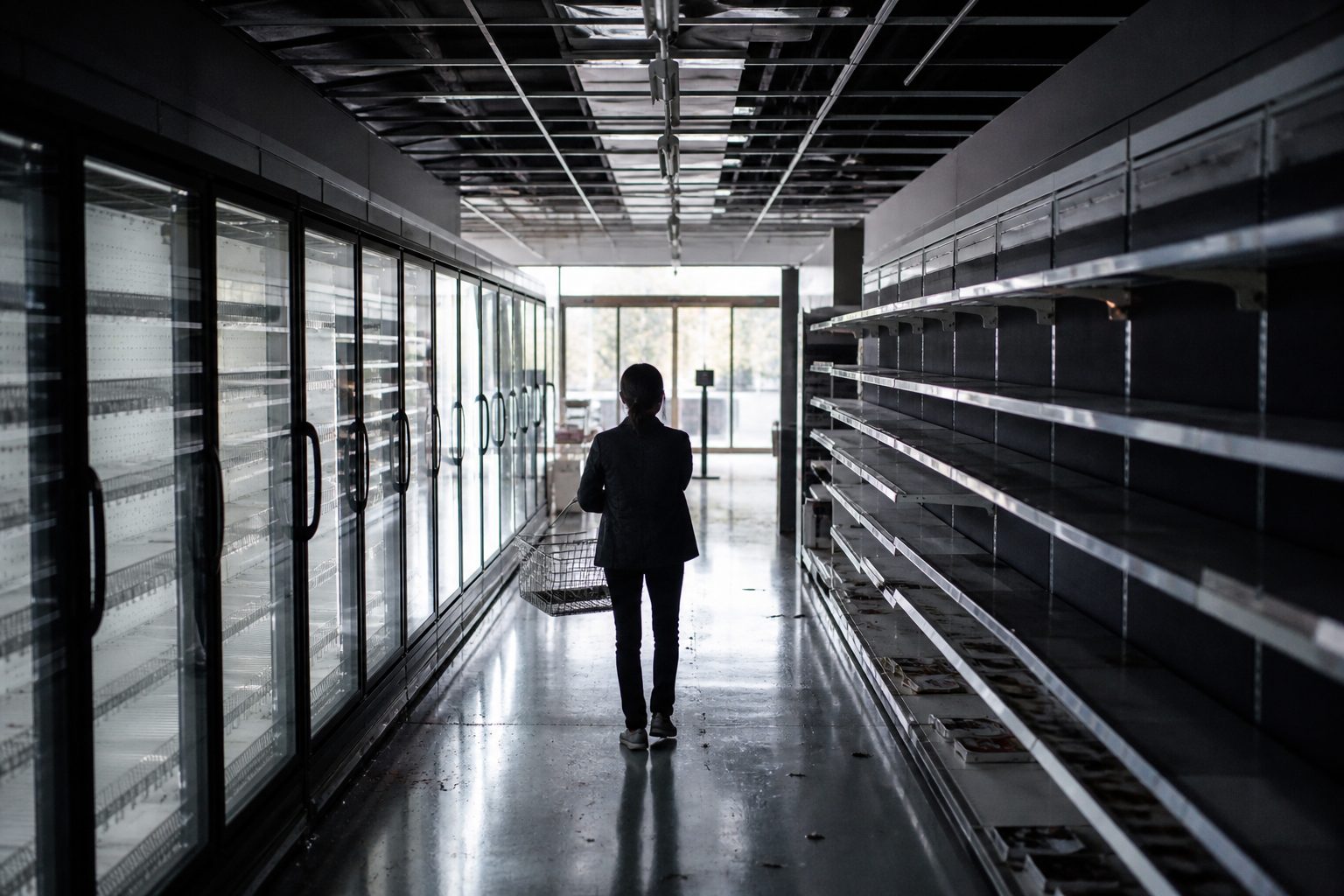
When the Iran war opened in late February 2026, Iran's Islamic Revolutionary Guard Corps closed the Strait of Hormuz to all but a few transits, and Qatar's Ras Laffan complex, the source of roughly a third of global helium supply, declared force majeure after missile and drone strikes wiped out an estimated 17 percent of its liquefied natural gas export capability, according to an assessment by the Soufan Center. Helium rarely makes headlines, but chip fabs run on it. It cools wafers during processing, purges and leak-checks equipment, and flows through lithography lines. Taiwan's chipmakers were more exposed to Qatar than any other major buyer: nearly 88 percent of their rare-gas imports in 2025 came from the Gulf state, DIGITIMES reported, up from about 46 percent four years earlier.
Seven months later, two more threads are tightening around the same island. Beijing's October 2025 expansion of rare-earth export controls, which put products containing more than 0.1 percent Chinese-origin rare earths under license requirements, is suspended only until November 10 of this year. Washington has paused a proposed $14 billion arms package for Taiwan, which acting Navy Secretary Hung Cao told Congress was linked to munitions demands from the Iran conflict, though another U.S. source subsequently said the pause was unrelated to Iran, as documented by Rare Earth Exchanges. In June, President Trump invoked the Defense Production Act to break bottlenecks in weapons supply chains, after a war that left documented shortages of rocket motors, igniters, guidance systems, and air defense interceptors, The Diplomat reported.
Everyone downstream of a leading-edge fab or a missile production line has a stake in what happens next. Yet U.S. policy mostly handles these exposures separately: minerals go to stockpile analysts, helium goes to gas traders, and Taiwan goes to war planners. The 2026 record suggests that split is the vulnerability. This article maps what actually breaks in the U.S. industrial base if the three inputs fail together, at 72 hours, 30 days, and 90 days, and what the evidence says about how bad it really gets.
One calibration up front: the "three-day shutdown" is not a countdown to blackout. Nothing physical stops on day three. What begins inside 72 hours of a Taiwan Strait closure are countdowns, in fuel storage, process gases, and maritime insurance, that existing stocks can only postpone. The honest question is where those countdowns run out.
The stress test is already running
The combined-disruption scenario is no longer hypothetical in every leg. The helium leg broke first, and it broke for reasons that had nothing to do with semiconductors. Hostilities that began with Operation Epic Fury in late February 2026 left sulfur prices nearly doubled; about a quarter of world sulfur supply is derived from Middle East crude refining, and roughly half of the world's seaborne sulfur trade passes through the now-blocked strait, the Soufan Center reported. That matters beyond fertilizer: burned into sulfuric acid, sulfur is the reagent used to leach copper, cobalt, and a string of non-substitutable minerals out of ore. The same event that cut the gas coolant for fabs also raised the cost and risk of the chemistry used, among other things, to extract the metals that go into artillery shells, jet engines, and radar components.

The rare-earth leg is bent rather than broken. China's April 2025 licensing regime on seven heavy rare earths and magnets had already idled U.S. production lines. Ford acknowledged shutting some plants for weeks that summer over magnet scarcity, its chief executive said publicly that June. The October 2025 measures then extended licensing to five more elements, dozens of processing technologies, and any export with more than 0.1 percent Chinese content, per Rare Earth Exchanges' reading of MOFCOM Decision No. 61. Under the truce reached at the late-2025 Trump-Xi meeting, those expanded controls were suspended for one year, through November 10, 2026. Even suspended, the regime is biting: Rare Earth Exchanges reported this month that some Chinese suppliers have halted shipments to U.S. customers and that licenses for materials including yttrium remain constrained.
The Taiwan leg remains the latent risk, but it is being priced. A $14 billion arms package sits paused amid contradictory official explanations, Taiwan faces an estimated $29.7 billion backlog of previously ordered U.S. weapons, and President Xi and President Trump are expected to meet on September 24, days from now, Rare Earth Exchanges notes. No blockade exists. But the island's fabs are already running on constrained helium, and its toolmakers' supply chains are already threaded through Chinese licenses.
Why these three chokepoints behave as one system
Three couplings turn separate chokepoints into a single failure mode.
The first is physical. Leading-edge fabs are where all three flows terminate. A fab on Taiwan consumes helium as a process gas, rare-earth-derived materials inside its tools and consumables (cerium-oxide polishing slurry, yttria chamber coatings, magnet-driven motors, pumps, and robots), and produces the chips that nearly every advanced weapons system and commercial device requires. Industry estimates have long held that Taiwan fabricates roughly nine in ten of the world's most advanced chips, a figure originating in the 2021 BCG/SIA supply-chain study that remains broadly valid. Lose one leg and output degrades. Lose two and the line cannot run for long.
The second coupling is the trigger. A Taiwan blockade does not contain helium wells or rare-earth refineries, but it arrives inside a U.S.-China confrontation where export embargoes are Beijing's documented playbook. When Washington raised tariffs in April 2025, China answered with rare-earth licensing within days. When Washington tightened technology rules in late 2025, Beijing extended licensing again. A Taiwan crisis would almost certainly collapse both suspended regimes at once, hitting chip supply and material supply in the same news cycle rather than "within hours" in the literal, physical sense. The hours-level effects are real but narrower: maritime insurance repricing, halted charter bookings, and spot-market gas spikes, all demonstrated when Hormuz closed.
The third coupling is that the workarounds are cross-linked. Rerouting helium requires LNG-linked infrastructure already strained by the Gulf war. Rebuilding rare-earth processing requires sulfuric acid, power, and equipment whose motors contain Chinese magnets. Surging munitions production requires gallium for GaN radar arrays, germanium for infrared optics, and magnets for fin actuators, all China-dominated nodes. Even building replacement fabs is throttled: advanced lithography and fab tools contain rare-earth magnets and Chinese-content components, and reports already suggest export-licensing friction in toolmaker supply chains, according to Rare Earth Exchanges. The cure depends on the controlled input.
The Defense Department got a preview of how fast this compounds. In 2022, the Pentagon briefly paused F-35 deliveries after discovering a Chinese-sourced alloy in a single samarium-cobalt magnet inside a propulsion pump, before granting a waiver. One magnet stopped a fighter line. A year's worth of CSIS wargaming found that in a Taiwan war, the United States would exhaust its existing inventory of long-range anti-ship missiles in roughly a week and several other critical munitions within three to four weeks, per the 2023 CSIS report. Depletion is measured in days. Rebuilding is measured in years.
What a leading-edge fab actually consumes
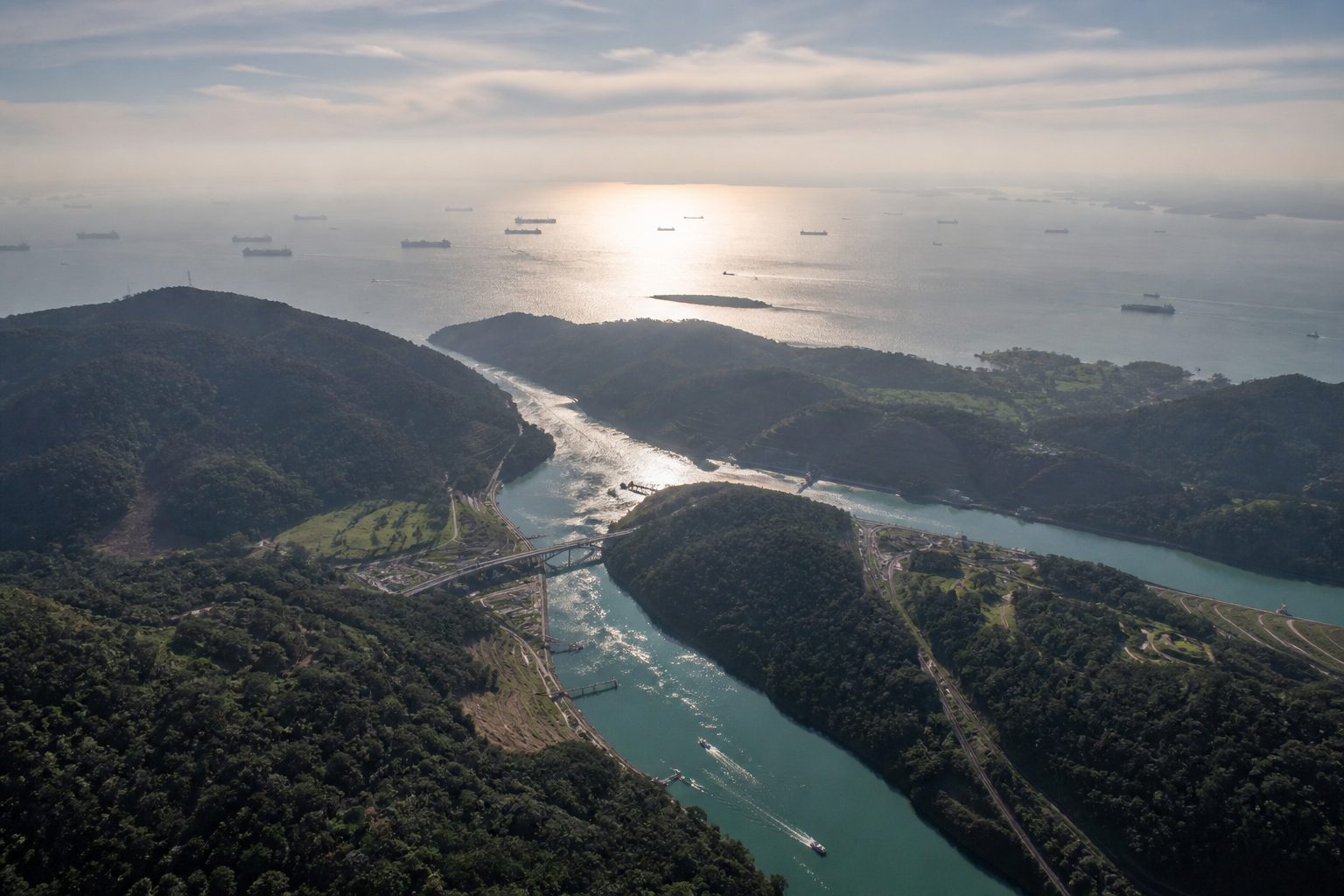
The overlap between Taiwanese fabs and Chinese processing is not abstract. It sits in identifiable materials with identifiable control points:
| Input | Dominant source nodes | Where it shows up |
|---|---|---|
| Helium | Roughly a third from Qatar; U.S. and Algeria fill much of the rest | Wafer cooling, purging, leak-checking, lithography gas |
| Neon and krypton | Ukraine supplied about half of semiconductor-grade neon before 2022; the industry has since diversified into China and elsewhere | Excimer lasers in lithography |
| CMP polishing slurry (ceria) | Cerium processing historically dominated by China | Wafer planarization, a step repeated dozens of times per chip |
| Yttria chamber coatings | Yttrium, a heavy rare earth; Chinese processing dominant | Etch and deposition chamber linings; currently constrained |
| Rare-earth magnets (NdFeB, SmCo) | Around 90 percent of magnet production in China | Tool motors, vacuum pumps, wafer-handling robots |
| Gallium | Around 97-98 percent of primary production in China | GaN radar and defense RF chips, not logic fabs directly |
| Germanium | Around 60 percent of supply from China | Infrared optics, fiber, satellite cells |
| Tungsten | Roughly 80-85 percent of mined supply from China | Chip deposition processes, drills, penetrators |
| High-purity quartz | One district, Spruce Pine, North Carolina | Crucibles for growing silicon ingots |
| Photoresists | Japan supplies the overwhelming majority of advanced resists | Patterning; a chokepoint Beijing does not control |
| Silicon wafers | Five firms in Japan, Korea, Taiwan, Germany | The substrate for every chip |
Concentration figures are drawn from the U.S. Geological Survey's Mineral Commodity Summaries 2025 and the IEA's Global Critical Minerals Outlook 2025. Two observations matter. First, several chokepoints sit far from China entirely (photoresists in Japan, helium in Qatar, quartz in North Carolina). Second, the items Beijing does control are not exotic edge cases. They are the tool guts and consumables without which a fab idles and a missile line slows.
How everything could trip at once
Four scenario families can produce simultaneity, and each has its own trigger.
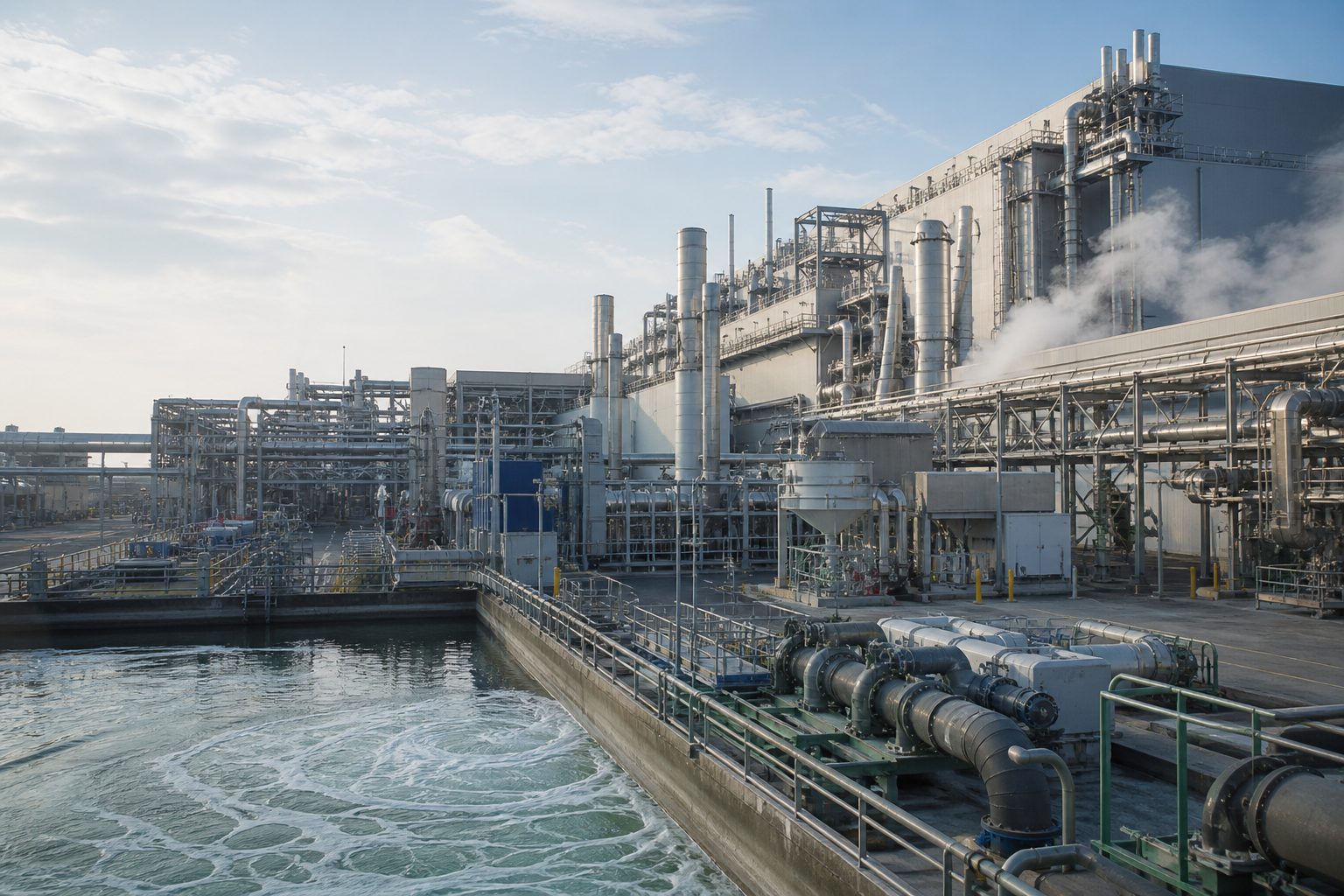
Deliberate blockade or "quarantine." China does not have to invade to strangle Taiwan; CSIS's ChinaPower analysis notes a blockade need not be hermetic, because curtailing island trade by even half would be devastating. In a 2023 CSIS expert survey, respondents rated a highly kinetic joint blockade as slightly more likely than an invasion within five years. The trigger is any sharp cross-strait rupture. In a kinetic blockade scenario, CSIS expects Chinese strikes on Taiwan's stockpiles themselves, shortening every countdown below.
Sanctions escalation. The trigger here is not a ship but a signature: resuming the paused $14 billion arms package, a failed September summit, or new U.S. technology controls. Beijing's response pattern is established, and November 10 gives it a legal switch it need only decline to renew.
Accident and weather. Taiwan fabs restart fast from earthquakes, as the April 2024 Hualien quake showed, with most tools back within days and only some in-process wafers scrapped, as Reuters reported at the time. Hurricane Helene knocked the Spruce Pine quartz mines offline for weeks in 2024 and the world absorbed it because crucible inventories held, per Sibelco's updates and Associated Press coverage. Each shock alone is survivable. The same accidents landing on an industry whose gas and magnet buffers are already drained would not be.
The Gulf leg re-breaks. Ras Laffan's damage is being repaired on an unknown timeline, and the public record does not establish whether Qatari helium flows have fully normalized. If they have not, the system is already running one leg down.
What stops in the first 72 hours
Hours 0-72 of a Taiwan Strait closure are about logistics, not factory floors. War-risk insurance reprices overnight and commercial transits stop, which is what happened at Hormuz, where the strait remains blocked with few exceptions. LNG cargoes bound for Taiwan's two import terminals halt. High-value outbound chips, which travel by air freight, face an exclusion environment that grounded or heavily restricted flight schedules would sever within days. Spot gas and chip markets reprice before any physical shortage exists, because traders price the countdown, not the inventory.

Taiwan's own buffers are measured in days and months, not years. The island imports about 97 percent of its energy and roughly 70 percent of its food, with reported reserves of less than two months of coal and natural gas for power generation and about six months of crude oil and food, per CSIS. Fabs hold process-gas inventory measured in weeks (operators disclose little, but that is the industry's working norm) and helium recycling stretches it further.
Three things do not stop. U.S.-based fabs (Intel, TSMC's Arizona operation, GlobalFoundries, Samsung's older Texas lines) keep running on a largely North American helium supply base, though global repricing hits their next tenders. Legacy chips keep shipping worldwide. And the average American notices nothing that week. The first 72 hours are silent by design, which is exactly how the system loses track of its own deadlines.
What breaks at 30, 60, and 90 days
A wafer takes weeks to a few months to cross a leading-edge fab, so an interruption propagates forward with a lag: fabs stop early, customers feel it later, and defense lines feel it last but recover slowest.
By day 30: helium becomes binding at Taiwan fabs absent resupply, even with recycling, on the stated assumption that buffers run in weeks. Wafer starts collapse toward zero at TSMC and at Micron's Taichung complex, the anchor of the company's DRAM manufacturing. Because memory and leading-edge logic are concentrated there, price signals arrive within days of visible interruption. U.S. fabless firms (Apple, Nvidia, Qualcomm, AMD) move to allocation. Automakers, whose post-2021 "just-in-case" inventories typically run eight to sixteen weeks, begin idling lines within a month on the longest poles; AlixPartners estimated the 2021 shock cost the industry $210 billion, and inventories then were at record lows. Taiwan itself is deeper into energy rationing than any scenario short of sustained bombardment.
By day 60: finished leading-edge chips are a spot-market commodity. The multi-week manufacturing pipeline means the first clean wave of "missing" production reaches datacenters and device launches now, hitting AI infrastructure buildouts directly. Global fab tooling starts degrading as yttria recoats, slurry, filters, and magnet-bearing spares wait on Chinese licenses. This is also when the second-order failure becomes measurable: ASML and other toolmakers have said they hold materials inventory (and the evidence suggests delays rather than stoppages), but every slipped tool delivery pushes back the CHIPS-era fab ramps that are supposed to reduce the Taiwan dependency. The rebuild path slows precisely when its output is most needed.
By day 90: the U.S. failure is concentrated and specific rather than general. Munitions regeneration, already short on rocket motors, guidance systems, and interceptors from the Iran war, slows further as magnet actuators, GaN radar components, and germanium optics join the constraint list. (One Foreign Policy estimate cited by the Soufan Center put replacement of the Raytheon radar destroyed in Qatar at up to eight years and $1.1 billion. That is an estimate, not a contract, but it captures replacement-time asymmetry.) Requalifying a new supplier for semiconductor materials typically takes six months or more, so decisions taken on day one only begin paying out after day 90. The strategic picture, as The Diplomat framed it, becomes military strength versus the ability to materially sustain it.
How much cover do stockpiles and buffers really give?

| Layer | Coverage | Honest limit |
|---|---|---|
| National Defense Stockpile | Germanium around 14,000 kg, roughly half a year of U.S. consumption; no gallium reserve as of DoD's own 2023 statement | Statutorily cannot serve private industry outside armed conflict; cannot be expanded during an export ban without worsening the shortage |
| Strategic helium reserve | None. The federal system was privatized under the 2013 Helium Stewardship Act and sold in the mid-2020s | Helium barely stockpiles; molecules escape tanks, so long-duration storage requires underground reservoirs |
| Fab gas and consumable buffers | Weeks, extended by recycling | Never disclosed, and they share one assumption: someone eventually refills them |
| OEM chip inventories | Roughly two to four months post-2021 | Concentrated in mature nodes; leading-edge is largely build-to-order |
| Allied reserves (Japan, Korea) | Expanded rare-metal stockpiles since 2020, with targets measured in tens to low hundreds of days for select materials | Both allies import the same helium and magnets; allied fabs compete for the same rerouted gas |
| Alternative supply (MP Materials, Lynas) | DoD took an equity stake and set a price floor for MP in 2025, with magnet capacity "10X" committed; Apple signed a supply deal with MP | Magnet and heavy-rare-earth capacity scales over years, not quarters |
The pattern across the table: every buffer assumes the disruption is singular and temporary. The Breakthrough Institute's stockpile analysis states the deeper problem plainly. Raw-material stockpiles have limited use without domestic separation, refining, metals, alloys, and magnets infrastructure. A day before the Iran war began, the Pentagon asked the Defense Industrial Base Consortium for project proposals on 13 minerals sourced almost entirely from China, and the Soufan Center noted the U.S. has real deposits in California, Wyoming, and Alaska. What it lacks is the processing chain in the middle.
Where the alarm outruns the evidence
Several considerations argue the combined failure would be severe for targeted sectors, not civilization-wide.

Taiwan's Ministry of Economic Affairs said in October 2025 that the newly restricted elements "differ from those used in Taiwan's semiconductor processes" and that no significant impact on chip manufacturing was expected "at this time" (a narrow claim, accurate within it). Rare Earth Exchanges itself cautions there is no public evidence of any rare-earth-for-Taiwan bargain and notes China must mind its own overcapacity and need for markets; economic self-harm is a real restraint on Beijing. The industry has also proven it can absorb single shocks: the 2022 neon panic, which removed roughly half the world's semiconductor-grade neon supply in weeks, was digested within months through buffers and new-source qualification, a chronology Reuters documented. TSMC's first Arizona fab is in high-volume production on 4nm, Intel's 18A process is ramping, and Korea's memory makers provide some Taiwan-independent DRAM, though South Korean and Taiwanese fabs share the same Qatari helium exposure. Arizona output still leans on Taiwan for advanced packaging, which limits the hedge, but the direction of travel is real.
The defensible conclusion is narrower than catastrophe: what breaks together is not "the economy" but four specific things. Leading-edge chip supply, memory pricing, munitions regeneration speed, and the fab-building schedule itself. Each is nationally significant. None is a lights-out event.
What would actually break the coupling
The evidence points to the same fix from three directions. Build the middle of the supply chain, not the ends. DoD's MP Materials investment and price floor, Lynas's U.S. heavy-rare-earth separation project, and emergency production investments like the reported $1 billion rocket-motor expansion address processing and manufacturing rather than ore. Proposals examined by Breakthrough, including the SECURE Minerals Act and Critical Materials Future Act, would use a reserve to steady markets rather than pile up rocks. On helium, the non-Qatar volumes are finite but real: U.S. fields, Algeria, and delayed Russian Amur output, plus aggressive fab-side recycling, which is the only lever fully within the industry's control. On Taiwan's grid, more LNG receiving capacity and statutory storage raise the fuse from days toward weeks. Little of this completes before 2028, which is precisely the planning gap.
The two dates on the calendar
Watch September 24 first: rare-earth licenses, trade, and Taiwan will share the table at the Xi-Trump summit whether or not anyone calls them linked. Then November 10, when Beijing's suspension of its October 2025 controls lapses, followed by January 1, 2027, when expanded U.S. defense-acquisition rules further restrict Chinese-content magnets, closing from the other direction. Washington, in Rare Earth Exchanges' phrase, is legislating toward independence faster than American industry can physically build it.
Hormuz was the warning the system chose to read as an oil story. It was actually a helium, sulfur, and minerals-processing story that happened to involve tankers. The industrial base has absorbed each of these shocks one at a time and called the result resilience. It has never been asked to absorb all three at once, and its planning apparatus largely assumes it never will have to. The evidence gathered over the past seven months suggests that assumption is the most exposed component in the whole supply chain.
Sources
- The Soufan Center, "The Iran War: A Crisis for the Defense Industrial Base Now Too," March 25, 2026. https://thesoufancenter.org/intelbrief-2026-march-25/
- Abed el Razek, "A Taiwan Crisis and America's Industrial Base," The Diplomat, June 25, 2026. https://thediplomat.com/2026/06/a-taiwan-crisis-and-americas-industrial-base/
- Rare Earth Exchanges, "Could Taiwan Become a Casualty of the Rare-Earth Trade War?" September 7, 2026. https://rareearthexchanges.com/news/taiwan-china-rare-earth-arms-leverage/
- Rare Earth Exchanges, "China's October 2025 Rare Earth Export Controls: What Taiwan and TSMC Should Really Fear," October 12, 2025. https://rareearthexchanges.com/news/chinas-october-2025-rare-earth-export-controls-what-taiwan-and-tsmc-should-really-fear/
- Jingyue Hsiao, "Analysis: Taiwan's semiconductor sector enters 2026 helium crunch, with nearly 90% dependent on Qatar," DIGITIMES, July 6, 2026. https://www.digitimes.com/news/a20260703VL202/helium-exports-qatar-taiwan-chipmakers-2026.html
- Bonny Lin, Brian Hart, Matthew P. Funaiole, Samantha Lu, and Truly Tinsley, "How China Could Blockade Taiwan," CSIS China Power Project, August 22, 2024. https://features.csis.org/chinapower/china-blockade-taiwan/
- The Breakthrough Institute, "Taking Inventory of Critical Mineral Stockpiling," July 21, 2025. https://thebreakthrough.org/issues/energy/taking-inventory-of-critical-mineral-stockpiling
- Reuters, "Pentagon has strategic germanium stockpile but no gallium reserves," July 6, 2023. https://www.reuters.com/markets/commodities/pentagon-has-strategic-germanium-stockpile-no-gallium-reserves-2023-07-06/
- Mark Cancian, Matthew Cancian, and Eric Heginbotham, "The First Battle of the Next War: Wargaming a Chinese Invasion of Taiwan," CSIS, January 2023. https://www.csis.org/analysis/first-battle-next-war-wargaming-chinese-invasion-taiwan
- U.S. Geological Survey, Mineral Commodity Summaries 2025. https://pubs.usgs.gov/periodicals/mcs2025/mcs2025.pdf
- International Energy Agency, "Global Critical Minerals Outlook 2025." https://www.iea.org/reports/global-critical-minerals-outlook-2025
- Boston Consulting Group and the Semiconductor Industry Association, "Strengthening the Global Semiconductor Supply Chain in an Uncertain Era," April 2021.
- U.S. Department of Defense and MP Materials announcements on the DoD equity investment, price floor, and 10X magnet facility, July 2025; Apple-MP Materials supply agreement announcement, July 2025.
- Helium Stewardship Act of 2013 (Pub. L. 113-40); subsequent federal helium system auction and sale.
- U.S. Department of Defense statements regarding the F-35 Chinese-alloy magnet delivery pause and waiver, September-October 2022.
- Reuters reporting on Ford plant idles tied to China's rare-earth magnet licensing regime, June 2025.
- Reuters reporting on the Ukraine neon supply disruption and semiconductor industry response, 2022-2023.
- Sibelco operational updates and Associated Press reporting on the Spruce Pine, North Carolina quartz-mine recovery after Hurricane Helene, October 2024.
- Reuters reporting on TSMC's recovery from the April 2024 Hualien earthquake.
- AlixPartners, 2021 estimate of automotive industry revenue losses from the semiconductor shortage.
Comments (8)
Continue exploring
Whole Servers, Hidden Compute: Taiwan and the New AI Export Problem
A single Nvidia server can hide eight restricted GPUs inside a box the size of a refrigerator. The server, not the chip, has…

The Army's launched-effects bet: a faster upgrade cycle for autonomous strike systems
The Army's 2026 plan to field long-range launched effects from AEVEX, Griffon and Dragoon is a test of whether modular, competing…
China's quiet rare-earth chokepoint on U.S. defense and chip supply chains
Chinese rare-earth exporters are reportedly refusing U.S. orders even where licenses exist. Inside the licensing, sanctions, and…
The 'stress test is already running' section is the most useful part of the article because it lays out the helium, sulfur, and rare-earth legs already buckling in real time, from Ras Laffan's 17 percent LNG hit to Ford's weeks-long plant shutdowns over magnet scarcity in mid-2025. Tracing the timeline from Operation Epic Fury in February through the October 2025 MOFCOM controls to the still-pending November 10 truce gives the rest of the piece real teeth.
The phrase 'the split is the vulnerability' really nails it - the fact that minerals go to stockpile analysts, helium to gas traders, and Taiwan to war planners means nobody owns the joint scenario, and that is exactly where the surprise will come from. Reading through the sulfur, magnet, and Ras Laffan examples side by side makes it obvious that any one of those desks would have flagged their own leg without ever seeing the others. The article's strongest move is forcing the reader to hold all three pictures in mind at once.
The article's claim that Taiwan's rare-gas imports from Qatar rose from about 46 percent to 88 percent over four years matches what we see in our supplier diversification reviews, where Qatari offtake contracts routinely crowd out alternatives on price and purity. In our last audit cycle, two Tier-2 tool vendors had no documented second source for ultra-high-purity helium at all.
Our procurement team got a 14-day helium allocation notice last month with no explanation, which tracks directly with what the article describes about fabs running on constrained supply without warning.
While the article's framing of three couplings is sharp, I think the 'three-day shutdown' headline undersells what stockpile operators can actually absorb in 72 hours - the U.S. federal helium reserve, Air Liquide's existing inventories, and several Tier-2 fabs in the U.S. and Japan have meaningful on-site storage that the piece barely weighs. The article is right that the countdowns matter, but the public conversation about Taiwan exposure would be more accurate if it distinguished between fabs that are hours from stop and those that are weeks from stop. I'd rather see that nuance elevated than buried in the calibration paragraph.
For a smaller mature-node fab in the U.S. or Europe that is not running leading-edge lithography, does the helium exposure analysis still apply at the same intensity, or do the 0.1 percent Chinese-content thresholds in the October 2025 rules hit those operators in materially different ways than TSMC?
Recommending that stockpile analysts, gas traders, and war planners actually coordinate assumes those three communities share data, and in practice the helium desk at Commerce and the rare-earth working group have not run a joint table-top in years. Until someone assigns a single accountable office for combined-disruption scenarios, the cross-coupling argument stays academic.
The article's core takeaway is that helium, rare earths, and Taiwan exposure are not three separate vulnerabilities but one coupled system that breaks together. The practical implication for any downstream buyer - whether you are sourcing rockets, MRI machines, or AI accelerators - is that single-input contingency planning is now obsolete. A serious resilience review in 2026 has to model the joint failure, not the individual ones, or it will miss the actual blast radius.