
For decades, homebuyers have been taught to judge affordability by three numbers: the purchase price, the mortgage rate, and the monthly principal-and-interest payment. That calculation is becoming less reliable.
A house can appear affordable in a listing and still become financially unmanageable after insurance, property taxes, utilities, deductibles, and maintenance are added. A fixed-rate mortgage may keep principal and interest stable, but it does not fix the cost of insuring the structure. In areas exposed to hurricanes, wildfire, flooding, hail, tornadoes, or severe storms, insurance can be repriced at renewal, narrowed through exclusions, or withdrawn altogether. (American Affairs Journal, 2026; U.S. Department of the Treasury, 2025)
The result is a new housing problem: a home may be legally buildable, physically habitable, and financially attractive on paper, yet difficult to insure and therefore difficult to mortgage.
That change moves climate risk from the horizon into the household budget.
The cost that mortgage calculators miss
The financial burden begins with a simple fact: homeowners do not buy a mortgage payment. They buy a continuing obligation that includes principal, interest, property taxes, insurance, utilities, maintenance, and repairs.
Insurance has historically appeared as a relatively small escrow expense. That assumption is weakening. The Urban Institute reports that the average annual insurance premium recorded at mortgage origination increased from $1,270 in 2018 to $1,856 in 2024, a 46 percent increase. Over the same period, general inflation rose by about 25 percent. Insurance premiums also increased from 1.87 percent of borrower income to 2.27 percent. The share of new mortgages for which insurance exceeded 3 percent of household income rose from 10.5 percent to 16.2 percent. (Urban Institute, 2026)
Those figures measure insurance at the time a mortgage begins. They do not capture every later increase, nor do they include the full cost of owning a home. But they show why a buyer who qualifies under a traditional debt-to-income calculation may still face financial strain after closing.
The burden is uneven. The Urban Institute finds that insurance costs fall hardest on lower-income borrowers and households in high-hazard areas. In 2024, more than 40 percent of borrowers earning below 50 percent of area median income met the report's definition of insurance cost burdened, including nearly 14 percent who were severely burdened. Borrowers in high-risk census tracts faced insurance burdens nearly one percentage point higher than borrowers in low-risk tracts. (Urban Institute, 2026)
Low-income households therefore face a double exposure. They often have less income available to absorb higher premiums, and they may pay more insurance per dollar of home value. The Urban Institute reports that borrowers earning more than 120 percent of area median income paid approximately $2.10 less per $1,000 of home value than borrowers earning below 50 percent of area median income. (Urban Institute, 2026)
The pattern challenges a common assumption about insurance markets: that risk alone determines the price. Risk matters, but so do income, credit, debt, property characteristics, local insurance markets, and the ability of insurers to spread losses across a region. The Urban Institute describes insurance burden as the result of an interaction among borrower finances, property and neighborhood characteristics, and geographic market conditions. (Urban Institute, 2026)
A household can live in a moderately risky area and still face an unaffordable premium because it has little financial room to absorb the cost.
A national problem with local extremes
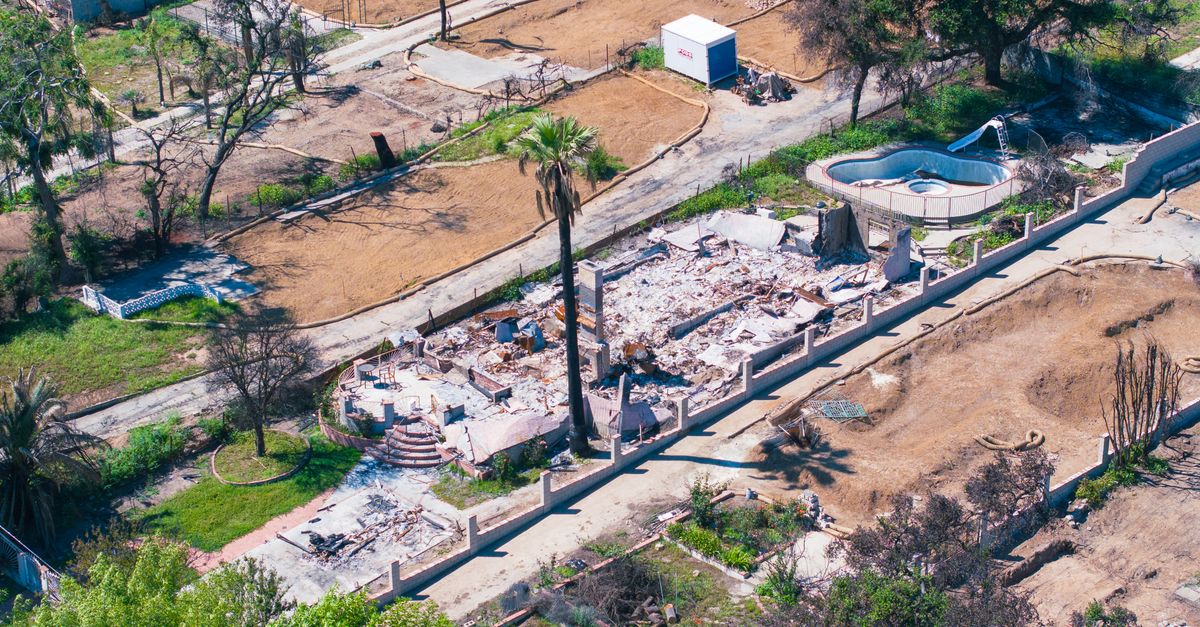
The crisis is often described through familiar examples such as Florida's hurricanes or California's wildfires. Those cases are real, but the pressure has spread beyond the most visible disaster zones.
The U.S. Department of the Treasury's Federal Insurance Office analyzed more than 246 million homeowners insurance policies from more than 330 insurers, aggregated at the ZIP Code level from 2018 through 2022. It found that average premiums rose 8.7 percent faster than inflation during that period. Homeowners in the 20 percent of ZIP Codes with the highest expected losses from climate-related perils paid average premiums of $2,321, or 82 percent more than homeowners in the 20 percent of ZIP Codes with the lowest expected losses. (U.S. Department of the Treasury, 2025)
The Treasury analysis also found that policy nonrenewal rates were about 80 percent higher in the highest-risk ZIP Codes than in the lowest-risk ZIP Codes. Nonrenewal is different from a price increase. A homeowner who receives a higher bill can decide whether to pay it. A homeowner whose policy is not renewed must search for replacement coverage, accept narrower protection, enter a residual market, or go without insurance. (U.S. Department of the Treasury, 2025)
The causes vary by region. Coastal states face hurricanes and wind damage. California faces wildfire risk. The Great Plains and parts of the Midwest face hail, tornadoes, straight-line winds, and heavy rainfall. RiskWire reports that severe convective storms have become an increasingly important source of insurance losses and that premium increases have spread into states not traditionally identified with a homeowners insurance crisis. (RiskWire, 2026)
The underlying exposure is not limited to changing weather patterns. Insurers also face higher rebuilding costs, expensive reinsurance, more development in exposed areas, and the accumulation of valuable structures in places where one event can generate many simultaneous claims. A damaged roof, for example, can become more expensive to repair because labor and materials cost more. When many roofs are damaged at once, insurers face a concentrated loss rather than a series of unrelated claims. (RiskWire, 2026; American Affairs Journal, 2026)
The Treasury report found that average claim severity in the highest-risk areas was about $24,000, compared with approximately $19,000 in the lowest-risk areas. Higher losses create pressure on premiums, underwriting, capital, and the willingness of insurers to continue writing policies. (U.S. Department of the Treasury, 2025)
Where this story sits
5 related pieces
Hover a story · click to read
 No. 67 · Oct 13, 2026Your Policy, Their Price: How Ransomware Gangs Weaponize Cyber Insurance
 No. 45 · Sep 12, 2026China's Supply Chain Chokepoints: What De-Risking Costs, and Whether It Works
 No. 30 · Sep 3, 2026The Portsmouth experiment: can 10 gigawatts of AI compute avoid shifting grid costs onto its neighbors?
 No. 37 · Sep 5, 2026U.S. Grid Cyber Rules Are Finally Catching Up With Virtualized Operations
 No. 68 · Oct 14, 2026Where Will North Asia Find Enough Electricity to Power Its AI Boom, and Who Will Pay the Price?
The mortgage connection
Insurance becomes a housing-market problem because most homebuyers borrow money.
Mortgage lenders generally require homeowners insurance to protect the property that serves as collateral. The requirement is rational from the lender's perspective. If a home burns, floods, or suffers severe storm damage, an uninsured borrower may lack the money to rebuild. The lender could be left with a damaged asset securing an outstanding loan. The role of insurance in mortgage finance is also reflected in recent reporting on the connection between nonrenewals and mortgage risk. (Risk Market News, 2026)
That condition gives insurance a special role in housing finance. It is not simply another household purchase. For a mortgaged homeowner, coverage is part of the terms under which credit remains available.
The chain is straightforward:
- Climate or disaster risk raises expected losses.
- Insurers increase premiums, deductibles, exclusions, or nonrenewals.
- The buyer's total monthly housing cost rises.
- The borrower qualifies for a smaller loan or cannot close.
- Demand weakens for homes that are expensive or difficult to insure.
- Sellers face a narrower pool of eligible buyers.
- Property values and local transaction volumes come under pressure.
The American Affairs Journal describes this as a conflict among households seeking affordable coverage, insurers seeking prices that reflect expected losses, lenders protecting collateral, builders seeking predictable costs, and governments seeking stable development and tax bases. Its central point is economic rather than rhetorical: the cost of risk does not disappear when a premium is suppressed. It moves into deductibles, public subsidies, lower property values, assessments, reduced coverage, or uninsured losses. (Jianren Xu, American Affairs Journal, 2026)
A lower insurance premium produced by regulation may help a homeowner in the short term. But if the regulated price does not cover the insurer's expected costs, the result may be reduced capacity, tighter underwriting, narrower coverage, or insurer withdrawal. The cost then reappears through scarcity or public support. (American Affairs Journal, 2026)
Conversely, rates that fully reflect risk may protect the insurance system while making homeownership unaffordable for existing residents.
That is the policy dilemma. The question is not only whether insurance costs are high. It is also who pays when the cost of physical risk exceeds what households can afford.
When coverage disappears
Price increases are damaging, but availability can be more disruptive.
The Treasury's data show that nonrenewal rates are higher in places with greater expected climate losses. A nonrenewal forces a homeowner to act on a deadline. The available replacement policy may be more expensive, carry a larger deductible, cover fewer perils, or come from a residual market rather than a standard private insurer. A homeowner may also miss payments and lose coverage. (U.S. Department of the Treasury, 2025; The New York Times, 2025)
The New York Times, using federal and insurance-regulator data, reported that homeowners in areas exposed to climate disasters were increasingly losing coverage after failing to keep up with premiums. The newspaper described the development as a direct household financial effect of climate risk, because the insurance bill arrives even before a disaster occurs. (The New York Times, 2025)
A household that goes uninsured takes on a risk that can overwhelm years of savings. A fire or hurricane can destroy the home, but the mortgage does not disappear with the structure. The borrower may owe the remaining loan balance while also facing the cost of temporary housing and reconstruction.
For a cash buyer, going without insurance is a dangerous financial choice. For a mortgaged homeowner, it may also violate the loan agreement. If the borrower fails to maintain coverage, the lender may purchase force-placed insurance. Such coverage generally protects the lender's interest rather than providing the same protection as a conventional homeowners policy.
The most severe outcome occurs when replacement coverage is unavailable at a price the household can pay. In that situation, the property may remain legally owned but become financially immobilized. The owner cannot safely absorb a major loss, and a prospective buyer may not be able to obtain a mortgage.
This is the point at which an insurance problem becomes a market problem.
The special role of surplus and residual markets
Homeowners who cannot obtain a standard policy may turn to state-backed plans, specialty insurers, or the excess and surplus market. These arrangements can keep a property technically covered, but they do not necessarily recreate the protection offered by a standard policy.
RiskWire reports that homeowners in high-risk areas are increasingly relying on last-resort state-backed plans, which can be more expensive and less comprehensive. (RiskWire, 2026)
Excess and surplus lines insurers can write policies for risks that standard insurers will not accept. Their flexibility can provide an outlet when the admitted market contracts. But surplus-lines coverage operates under a different regulatory structure, and policy terms can vary considerably. Consumers must examine exclusions, deductibles, limits, roof provisions, water damage coverage, ordinance-and-law coverage, and the financial strength of the insurer.
The existence of a policy therefore does not prove that a home is adequately protected. A property can be insured in a narrow technical sense while remaining exposed to large losses through exclusions or deductibles.
The available sources do not establish the specific claim that deductibles rose 22 percent on average in 2025, nor do they verify that a particular share of homeowners has been pushed into excess and surplus coverage. Those figures may describe particular states, insurers, policy types, or data sets, but they should not be treated as national facts without an underlying report. The documented evidence does establish a broader pattern: premiums and nonrenewals have risen in higher-risk places, and some homeowners are turning to less conventional forms of coverage. (U.S. Department of the Treasury, 2025; RiskWire, 2026)
The wealth effect

The danger extends beyond monthly cash flow.
For many households, home equity is the largest source of wealth. Owners build equity through loan repayment and, when markets rise, appreciation. They may later use that equity to finance education, retirement, business investment, or assistance to children.
Insurance stress can weaken that wealth in several ways.
First, higher premiums reduce the amount a buyer can afford to pay. Second, buyers may demand a discount for properties with high insurance costs or uncertain coverage. Third, a property that cannot be insured may become inaccessible to mortgage-dependent buyers. Fourth, an owner facing a large deductible may suffer a substantial loss after a disaster even when coverage technically exists.
The Urban Institute warns that insurance affordability affects not only individual households but also communities, mortgage lenders, servicers, and federally backed housing agencies. If coverage becomes more expensive or less reliable, the risk can spread through the mortgage-finance system. (Urban Institute, 2026)
Recent research summarized by Risk Market News adds a more direct claim. The publication reports that researchers from New York University's Stern School of Business and the University of British Columbia examined county-level data from 23 major insurers, representing approximately 65 percent of the U.S. homeowners insurance market, from 2018 through 2023. According to that report, insurer-initiated nonrenewals were associated with higher foreclosure rates, falling home values, weaker retail spending, and declining homeownership. (Risk Market News, 2026)
That finding describes an association, not proof that nonrenewals alone caused every foreclosure or decline in local spending. Economic downturns, high interest rates, job losses, disaster damage, and housing-market conditions can affect both insurance availability and household finances. Still, the reported association is consistent with the mortgage link: when homeowners lose coverage, they may face higher costs, forced sales, loan distress, or reduced access to credit.
The consequences can also accumulate locally. Falling property values can weaken municipal tax bases. Lower transaction volumes can reduce construction and real-estate activity. Homeowners may postpone repairs because they cannot afford both maintenance and insurance. Deferred maintenance can make properties more vulnerable to future losses, increasing the risk that insurers impose further restrictions. These latter effects are plausible mechanisms, but the sources cited here do not establish their national scale. (U.S. Department of the Treasury, 2025; American Affairs Journal, 2026)
The numbers that should not be accepted without evidence
Several recent statistics have circulated in coverage of this problem: a 30 percent increase in non-mortgage ownership costs in 2025, an 8.5 percent increase in home insurance premiums in 2025 following an 18 percent increase in 2024, deductibles rising 22 percent in 2025, and insurance reaching roughly 9 percent of a typical homeowner's mortgage payment.
The sources cited here do not establish those figures as national measures.
The Urban Institute documents a 46 percent increase in average annual premiums between 2018 and 2024 and a rise in insurance burden relative to income. Treasury documents premium increases above inflation between 2018 and 2022, substantial geographic differences, and higher nonrenewal rates in high-risk ZIP Codes. RiskWire reports forecasts and survey findings attributed to Insurify, but it does not provide a primary national dataset that verifies all of the figures listed above. (Urban Institute, 2026; U.S. Department of the Treasury, 2025; RiskWire, 2026)
That distinction matters because insurance statistics vary according to the measure used. A premium may refer to a new quote, an existing policy, a state average, a national average, or a policy linked to a particular level of dwelling coverage. A mortgage-payment share may use principal and interest only, the full payment including taxes and insurance, or a sample of newly originated loans. Deductibles can be measured in dollars, as a percentage of dwelling coverage, or by policy renewal.
A dramatic number without a defined denominator can mislead. The evidence supports the direction of the argument, but not every specific statistic used to frame it.
Why suppressing prices cannot solve the whole problem
Homeowners understandably want regulators to limit premium increases. Insurance is difficult to shop for, and households often cannot evaluate catastrophe models, reinsurance costs, policy exclusions, or insurer balance sheets. Public regulation has a legitimate role in preventing unfair practices and protecting consumers.
But premium suppression cannot eliminate physical losses. If prices are held below expected costs for too long, insurers may seek fewer approvals, reduce new business, narrow coverage, stop renewing policies, or leave a market. The cost then reappears through scarcity. (American Affairs Journal, 2026)
That does not mean every rate increase is justified. Insurers may make errors in underwriting, rely on opaque models, pursue excessive profits, or shift costs in ways regulators should challenge. The proper response requires scrutiny of rate filings, claims practices, solvency, catastrophe models, reinsurance, and market concentration.
The policy choices are therefore broader than “raise premiums” or “cap premiums.” They include:
- reducing exposure through stronger building codes and land-use decisions;
- funding mitigation such as hardened roofs, defensible space, flood protection, and drainage improvements;
- improving public access to property-level risk information;
- creating targeted assistance for low-income households;
- maintaining financially sound residual markets for properties that cannot obtain conventional coverage;
- requiring clear disclosure of deductibles and exclusions;
- improving coordination among insurance regulators, mortgage agencies, lenders, and local governments;
- examining whether public subsidies encourage construction in locations where long-term insurance costs are unsustainable.
Each measure carries tradeoffs. Building standards can increase construction costs even as they reduce future losses. Relocation or retreat can protect households but threaten communities and local tax bases. Subsidies can preserve affordability but may transfer risk to taxpayers. Strict underwriting can improve insurer solvency while excluding households that have few alternatives.
The central question is distributional: should the cost of rising risk fall on individual homeowners, insurers, taxpayers, builders, lenders, or future buyers?
A housing market that can be built but not financed
The old affordability model assumed that the main obstacle was the price of construction relative to household income. That problem remains. The United States still needs more housing in many regions, and restrictive zoning, high land costs, labor shortages, and expensive materials continue to limit supply.
Insurance adds another constraint. A home must be permitted, built, purchased, financed, and maintained. If it cannot be insured at a price the buyer can afford, the supply of physical houses does not translate into a supply of financeable homes. (American Affairs Journal, 2026)
This distinction is especially important in fast-growing regions where development has expanded into areas exposed to severe weather. New construction may increase the number of homes while also increasing the total value at risk. If public infrastructure and private insurance capacity do not keep pace, the market can produce homes that are available in the short run but costly to own over time.
The phrase “uninsurable housing trap” describes this feedback loop:
- Risk makes coverage more expensive.
- Higher coverage costs make ownership less affordable.
- Reduced affordability weakens demand and values.
- Lower values may make lenders and investors more cautious.
- Market weakness can discourage repairs and resilience investment.
- Poorer conditions may increase future losses.
- Higher losses produce still higher premiums or less availability.
The loop is not inevitable. Better construction, mitigation, transparent pricing, and targeted public policy can reduce losses. But the housing market cannot solve the problem through mortgage policy alone.
What remains uncertain
The available evidence shows a clear national trend toward higher insurance costs and weaker availability in high-risk areas. It also shows that the burden is concentrated among lower-income borrowers and households in exposed communities. (Urban Institute, 2026; U.S. Department of the Treasury, 2025)
Several questions require more data.
The first is how much of the problem comes from climate-related losses, how much comes from rebuilding inflation and reinsurance, and how much reflects insurer strategy or regulatory conditions. These forces interact, and national averages can conceal major differences among states.
The second is how much insurance stress is being capitalized into home prices. A high premium may reduce the purchase price, but the lower price may not help buyers if lenders still require expensive coverage. The result could be a property that appears cheaper but remains unaffordable to finance.
The third is the scale of underinsurance. A policy with a high deductible or broad exclusions may keep a mortgage technically compliant while leaving the household unable to recover after a major loss. The sources cited here establish that coverage can become more expensive, less available, or less comprehensive, but they do not establish a national measure of underinsurance. (RiskWire, 2026; American Affairs Journal, 2026)
The fourth is the effect on renters. When insurance, repairs, taxes, and financing become more expensive for landlords, some of those costs may enter rents. The sources cited here do not quantify that effect. A housing-affordability analysis that examines only homeowners could miss this possible spillover.
The fifth is whether current mortgage underwriting adequately accounts for recurring insurance repricing. A borrower may qualify at origination, then face a materially higher escrow payment at renewal. The loan remains fixed, but the total housing cost does not.
Conclusion
The most important change in American housing finance may not be a single interest-rate decision. It may be the growing recognition that a home is only affordable if the household can keep it insured.
Federal and Urban Institute research already documents the essential facts: premiums have risen faster than inflation in recent years, high-risk communities pay substantially more, nonrenewals are more common in those communities, and lower-income borrowers bear a disproportionate burden. The consequences reach beyond individual budgets into mortgage credit, home values, local government finances, and household wealth. (Urban Institute, 2026; U.S. Department of the Treasury, 2025)
The evidence does not support every recent statistic often repeated in discussions of the crisis. Claims about a national 30 percent increase in non-mortgage costs, a universal 22 percent rise in deductibles, or insurance consuming 9 percent of a typical mortgage payment require clearer definitions and primary data. Precision matters because policy depends on knowing which households, regions, and forms of coverage are under the greatest strain.
The larger danger, however, does not depend on one disputed number. When a property becomes too expensive to insure, it becomes harder to finance. When it becomes harder to finance, it becomes harder to sell. When enough properties face that condition, insurance stops being a private household expense and becomes a constraint on the housing market itself.
America can build homes that people need. The harder question is whether those homes will remain insurable, financeable, and affordable after the next renewal notice arrives.
Sources/References
- Urban Institute. “Property Insurance Affordability: How Rising Costs Burden Mortgage Borrowers.” May 2026. Authors: Jun Zhu, Janneke Ratcliffe, John Walsh, and Bryson Berry.
https://www.urban.org/sites/default/files/2026-05/Final_Property_Insurance_Affordability.pdf
- Urban Institute. “How Rising Insurance Premiums Are Reshaping US Housing Affordability.” 2026.
https://www.urban.org/urban-wire/how-rising-insurance-premiums-are-reshaping-us-housing-affordability
- U.S. Department of the Treasury, Federal Insurance Office. “Homeowners Insurance Costs Rising, Availability Declining as Climate-Related Events Take Their Toll.” January 16, 2025.
https://home.treasury.gov/news/press-releases/jy2791
- The New York Times. “More Americans Are Missing Payments and Losing Home Insurance.” January 16, 2025.
https://www.nytimes.com/interactive/2025/01/16/climate/home-insurance-cancellations.html
- Agrawal, Reena. “The Insurance Crisis No One Is Pricing into Housing.” RiskWire, April 8, 2026.
https://www.riskwire.com/the-insurance-crisis-no-one-is-pricing-into-housing/
- Xu, Jianren. “Can America Build What It Cannot Insure?: Texas and California as Case Studies.” American Affairs Journal, August 20, 2026.
https://americanaffairsjournal.org/2026/08/can-america-build-what-it-cannot-insure-as-case-studies/
- “Climate Risk Is Jumping From an Insurance Crisis Into a Homeowner Crisis.” Risk Market News, August 19, 2026.
https://www.riskmarketnews.com/climate-risk-is-jumping-from-an-insurance-crisis-into-a-homeowner-crisis/
Comments (6)
Continue exploring
The Portsmouth experiment: can 10 gigawatts of AI compute avoid shifting grid costs onto its neighbors?
SoftBank, OpenAI, and NVIDIA are assembling 10 gigawatts of privately powered AI compute at a former uranium plant in Ohio…
U.S. Grid Cyber Rules Are Finally Catching Up With Virtualized Operations
FERC now lets U.S. grid operators virtualize critical control systems; whether resilience outpaces the new risks depends on…
Where Will North Asia Find Enough Electricity to Power Its AI Boom, and Who Will Pay the Price?
Japan, Korea and Taiwan all want to host the next wave of AI data centers, but only the grids that can move cheap, reliable power…
Would you consider a follow-up piece on what happens to property values and local tax bases when a ZIP Code experiences sustained nonrenewal, even absent a single catastrophic event?
I'm curious how this analysis applies to small multifamily owners - say a landlord with a duplex or a four-unit building. The Urban Institute data seems centered on single-family owner-occupied mortgages, but a landlord's insurance math looks very different because rental income changes the affordability calculation and master policies on small buildings often get re-rated after even a single claim. Could the same insurance-cost-burdened framework be adapted for that segment, or is the underlying data just not there yet?
I think the piece understates how uneven mitigation credits are across carriers - I've seen two homeowners in the same ZIP code get radically different premium reductions for the same roof replacement, which makes it hard to treat insurance purely as a climate-priced input.
The framing of insurance burden as an interaction of borrower finances, property characteristics, and market conditions feels right based on what we have seen underwriting in the Mountain West, though I think it understates just how much credit score alone can swing the premium on an otherwise comparable property.
Pretty much the opposite happened to me. I bought in central Texas two years ago in a county that gets hammered by hail and tornadoes, and my renewal premium actually went down about 6% this year after I replaced the roof and added impact-resistant shingles. The article makes it sound like everyone in a high-risk zone is on a one-way escalator, but my insurer gave me meaningful credits that brought me below what I was paying at closing. My neighbor down the street did the exact same upgrades and saw nothing, so maybe it depends on which carrier you landed with.
The FAIR Plan situation in California tracks closely with what the article describes. Carrier withdrawals there have pushed a growing share of policies into the state-backed pool, and recent reporting suggests the plan's reserves are stretched thin enough that a single major wildfire season could trigger an assessment against every property insurer writing in the state. That is a feedback loop the piece hints at - nonrenewal in private markets feeds residual markets that eventually lean on the broader industry - but it would be worth showing explicitly how that mechanism is shaping up elsewhere.