FCC Revocations Left Chinese Carriers Connected to U.S. Infrastructure | The Calibre Brief Ep. 94
About this episode
The FCC revoked China Telecom Americas' and China Unicom Americas' authorizations and denied China Mobile USA's application between 2019 and 2022. But those actions governed the sale of regulated carrier services—not equipment, data-center space, private links, or other physical connections. A bipartisan House report found the carriers still embedded in U.S. interconnection facilities in 2026.
The report documented China Mobile International appearing in routes toward address groups linked by CISA to Salt Typhoon servers, along with a $480,000 CloudRadium contract and relationships involving firms U.S. authorities have tied to state-backed hacking. That evidence establishes proximity, not proof that China Mobile USA staff knew of or participated in espionage. There is also no public evidence that a series of November outages was a coordinated Chinese attack.
H.R. 11100, introduced on November 19, 2026, would impose daily fines and target the carriers' physical and commercial presence, but it is not law. Its definitions and enforcement procedures remain unresolved, leaving open whether Congress or the FCC will close the gap—and who should bear the cost of disconnection based on position alone.
0:00 America banned three Chinese phone carriers years 0:34 The gap sits in the fine print 0:52 Salt Typhoon was a Chinese hacking campaign 1:15 It would bar covered Chinese firms from U.S 1:43 That's today's Calibre Brief from Calibre Code USA
Stock footage: elchao via Pixabay (https://pixabay.com/videos/id-736/)
Key topics
Key moments
Transcript
Show transcript
Welcome to The Calibre Brief, a Calibre Code USA production.
America banned three Chinese phone carriers years ago. So why, in 2026, did House investigators find them still plugged in?
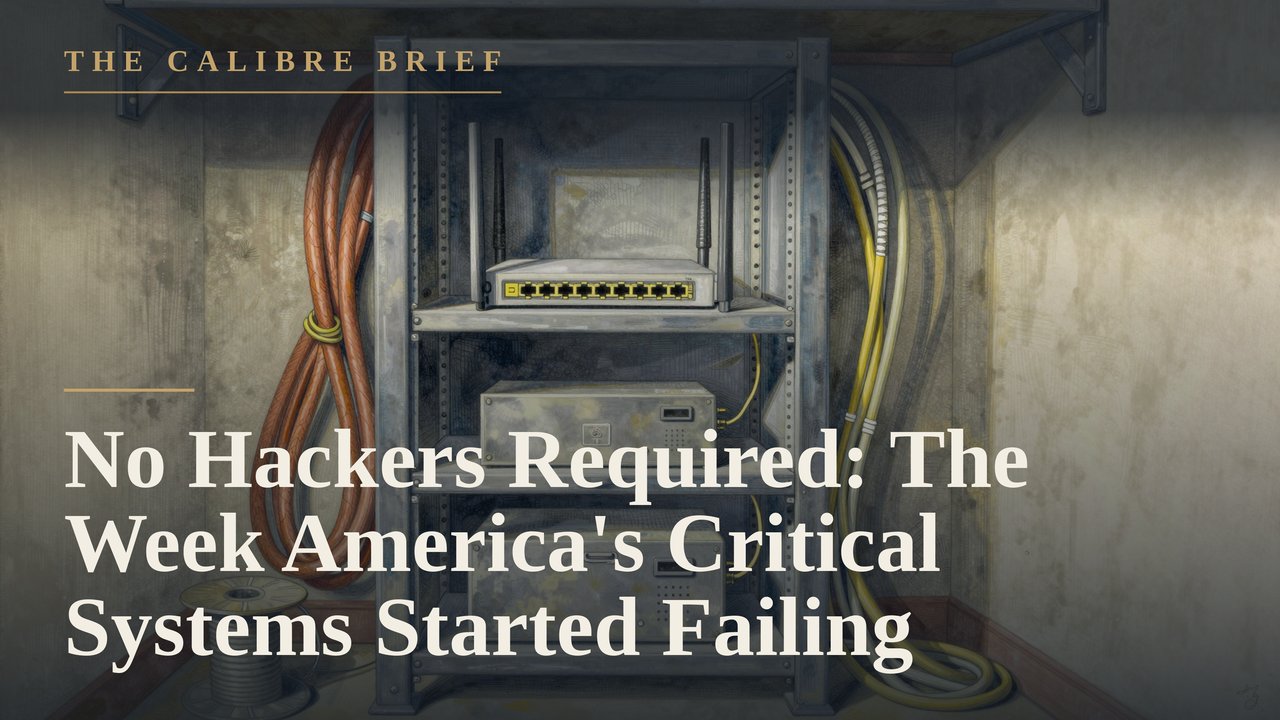
Picture a server rack in an American data center. The routers on it belong to Chinese carriers the FCC cut off between 2019 and 2022. Some of that gear is Huawei made. Yet in August 2026, a House report called Stranger Pings found China Mobile still inside, connected to backbones, exchanges, and private networks.
The gap sits in the fine print. A Section 214 license covers only the right to sell carrier service. It says nothing about owning routers or leasing space. So the FCC ended licenses but lacked clear power to force removal. The report found these U.S. arms answer to state owned parents in China.
Then investigators found China Mobile appearing in routes to Salt Typhoon servers at least 192 times over four days in 2024. Salt Typhoon was a Chinese hacking campaign. The committee drew a sharp line: position is proven, but taking part is not. Nothing showed U.S. staff knew or joined in. And the 2026 outage panic blamed on China had zero evidence behind it, officials said.
A new bill filed in November 2026 goes after the gap itself. It would bar covered Chinese firms from U.S. data centers and cloud services. Fines would run a million dollars a day and reach U.S. business partners. But it's only a bill, its key terms unwritten, and action may slip to next year.
In American telecom law, banned meant losing the right to sell, not the right to stay. Until that changes, being near spy traffic and spying remain two different things.
That's today's Calibre Brief from Calibre Code USA. Should the law force disconnection based on position alone, even without proof of spying? Comment below, like and subscribe on YouTube, and follow the podcast.