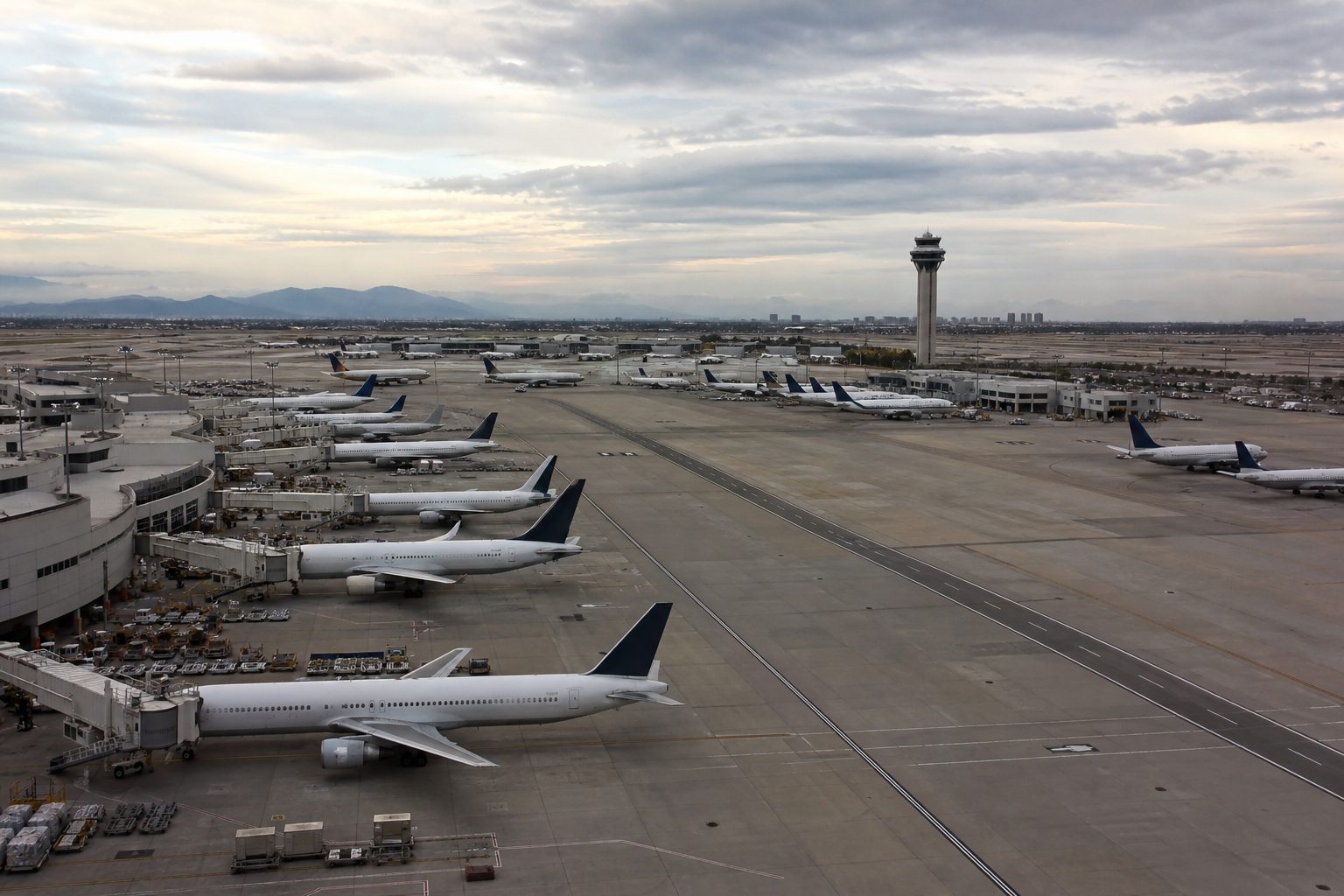
On Friday, November 13, 2026, the Federal Aviation Administration ordered departing aircraft across the United States to stay on the ground. The trigger was not weather, not a security threat at a single airport, but communications failures across multiple Air Route Traffic Control Centers, the facilities that manage aircraft flying between airports at high altitude (AP).
A nationwide ground stop is among the rarest actions in American aviation. According to the Associated Press, this was the first since January 11, 2023, when a failure of the FAA's pilot-alert system halted departures for roughly 90 minutes (AP). That earlier event was supposed to be a wake-up call. Congress held hearings. Government auditors catalogued dozens of aging, failure-prone systems. The FAA launched a sweeping modernization effort. Yet less than four years later, the national airspace system again lost enough confidence in its own plumbing that the safest available option was to stop.
As of this writing, the FAA has not publicly identified a root cause. What follows is what officials have confirmed, what unofficial reports suggest, what remains unknown, and why years of government warnings make this failure less surprising than it should be.
What the FAA has confirmed so far
The confirmed picture is narrow but consequential. The FAA imposed a nationwide ground stop after communications failures affected multiple Air Route Traffic Control Centers, known as ARTCCs (AP). Transportation Secretary Sean Duffy described the disruption as a communications problem involving regional control centers nationwide, rather than an outage at any particular airport, and said FAA technicians were investigating (AP).
The order required departing aircraft across the country to remain on the ground until controllers could verify that communications and safety functions were reliable (Daily Beast). The FAA has not publicly identified a single root cause, and available reporting does not establish that the incident was a cyberattack (Axios). Officials and major news reports have not named a specific telecommunications carrier, equipment manufacturer, software vendor, or single point of failure (AP).
Beyond those confirmed facts, early operational chatter adds texture that should be treated cautiously. Unofficial reports from pilots and aviation observers initially placed communications problems around Kansas City Center, then described frequency or equipment issues at additional centers, including facilities serving Chicago and other regions (r/aviation). Some user-posted advisories carried operational windows extending into November 14, but those end times were planning horizons, not confirmed recovery times (r/unitedairlines). None of these center-level details come from a published FAA incident report, and they may be revised or contradicted as the official investigation proceeds.
What a nationwide ground stop actually means
A ground stop at a single airport is routine. Thunderstorms, congestion, or local equipment trouble regularly keep departures bound for one airport on the ground for a while. A national order is categorically different: it reflects a loss of confidence in the system's ability to coordinate traffic safely across multiple sectors (FAA NAS Status User Guide).
The decision is not casual. FAA procedures require the Air Traffic Control System Command Center, the facility in Warrenton, Virginia that manages traffic flow across the whole country, to evaluate less restrictive measures first, coordinate with affected facilities, issue an advisory, and continually reassess whether the stop remains necessary (FAA Order 7210.3EE). That the Command Center worked through those steps and still grounded departures nationwide indicates the problem could not be contained with the normal toolkit of reroutes, spacing restrictions, and regional stops.
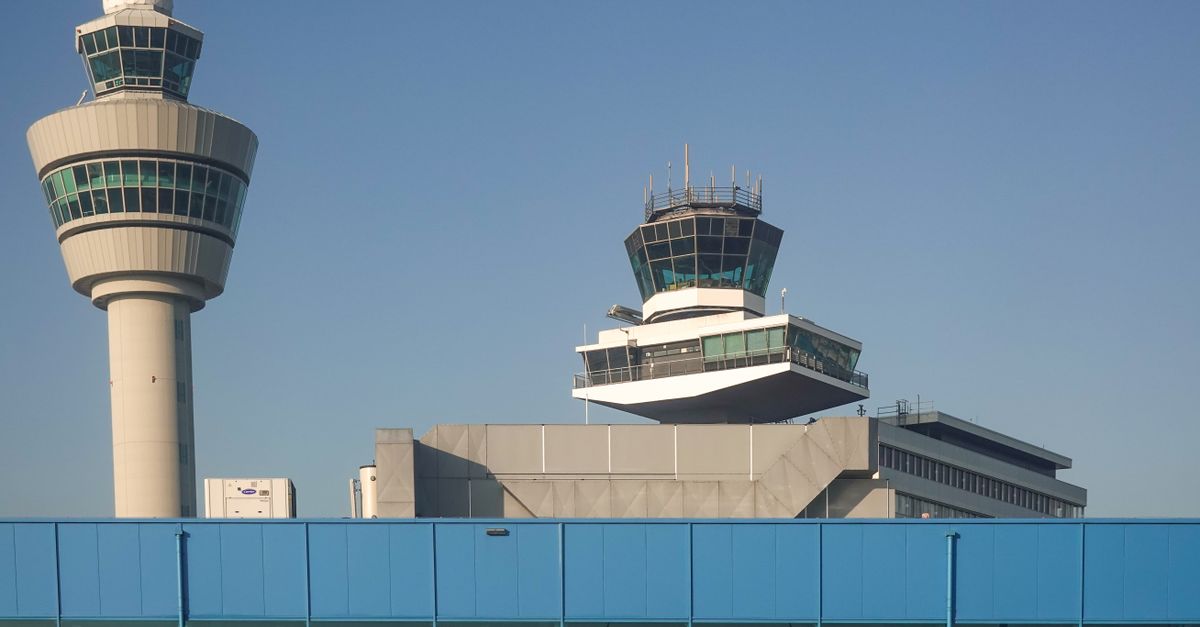
Aircraft already airborne are generally handled differently from departures. In the comparable January 2023 event, planes in the air largely continued operating while departures were held, which still produced a nationwide backlog that persisted for much of the day (Atlanta Journal-Constitution).
Where this story sits
5 related pieces
Read it →
Hover a story · click to read
 No. 93 · Nov 6, 2026The Learjet Had an Earlier Turbulence Struggle. Was Something Missed?
 No. 103 · Nov 16, 2026No Hackers Required: The Week America's Critical Systems Started Failing
 No. 107 · Nov 16, 2026What November's Bank Outages Reveal About America's Digital Financial Plumbing
 No. 59 · Oct 3, 2026How One IP Address Change Cost HSI Months of Wiretap Downtime
 No. 13 · Aug 26, 2026America's Invisible Clock: What Happens If GPS Timing Fails?
Why trouble at a few centers can stall the whole country

The United States divides its high-altitude airspace among roughly two dozen Air Route Traffic Control Centers. Each center hands aircraft to its neighbors as flights cross invisible boundaries. A flight from Los Angeles to New York may pass through half a dozen centers, each of which must talk to pilots by radio and to adjacent facilities by ground links.
Those conversations ride on a lattice of infrastructure. Air route centers depend on interconnected radar, voice, data, landline, microwave, and remote-radio links (FAA Aeronautical Information Publication). The radio transmitters that let a controller speak to a jet hundreds of miles away often sit at remote sites far from the center itself, connected through leased telecommunications circuits. If those links degrade, controllers can lose the ability to reach aircraft in parts of their airspace even though their radar screens still work.
This architecture explains how communications problems at several centers can cascade into a national decision. Centers cannot simply absorb a neighbor's traffic if their own communications are suspect, and the system is built on an assumption that every sector can reliably reach every aircraft inside it. Once that assumption fails in multiple regions at once, launching more aircraft into the system adds risk rather than capacity. Stopping departures is the conservative response: it caps the number of planes that controllers with impaired communications must manage.
Did the backup systems fail?
Whether backups failed on November 13 is not yet established, and it would be wrong to assert it. But the government's own audit record explains why redundancy, on paper, has not guaranteed resilience in practice.
The Department of Transportation's Inspector General examined earlier outages of ERAM, the core computer system that processes flight data at the en route centers, and found a sobering pattern. Past disruptions involved software failures, hardware problems, data-entry mistakes, testing limitations, and weak change-control practices. One documented 2014 outage at Los Angeles Center followed an employee's data-entry error, showing how a routine administrative action could disrupt safety-critical processing. The audit also found that the FAA's backup architecture is not uniformly resilient: primary and secondary systems may both exist, but synchronization defects, incomplete testing, or shared dependencies can allow one faulty change to take down both. The Inspector General recommended functioning backup systems, annual testing, improved contingency plans, and clearer emergency procedures (DOT OIG).

More recent oversight reaches a similar conclusion about a newer safeguard. The Government Accountability Office reported that a backup system introduced in 2024 mitigated some disruptions, yet outages still produced delays and cancellations, which means redundancy reduces but does not eliminate operational consequences (GAO-26-107992). The National Transportation Safety Board has long pressed a complementary human point: controllers need genuine proficiency with backup equipment and access to emergency communications at every position, because a backup nobody can operate smoothly under pressure is not a backup (NTSB SIR-96-01).
The pattern across these findings is that American air traffic control redundancy tends to fail not for lack of backup hardware, but through common dependencies: a shared telecommunications circuit, a software change pushed to both systems, a procedure never exercised. Whether any of those mechanisms applies to November 13 awaits the FAA's findings.
What caused it: the honest answer is nobody knows yet
The possibilities span equipment failure, software faults, telecommunications outages, human error, and malicious interference. The discipline of the moment is to resist filling the gap.
The strongest available statement on the question of an attack is negative: nothing in the public reporting establishes a cyberattack, and the FAA has not identified a root cause (Axios). History counsels patience here. In January 2023, early public questions also turned to whether an attack was involved; the eventual explanation was mundane, with the FAA tracing the outage to a database file damaged during routine maintenance of the Notice to Air Missions system. The audit record shows that ordinary failure modes, including a single mistyped entry, have shut down center operations before (DOT OIG).
One structural fact distinguishes this event from a purely internal FAA software failure: officials described it as a communications problem across regional centers (AP), and center communications depend heavily on links that run over leased lines, microwave paths, and remote radio sites (FAA AIP). That architecture makes external telecommunications providers part of the system's attack surface and failure surface alike. But whether a carrier outage, an FAA system, or something else failed first is exactly what the investigation must determine, and no provider has been publicly implicated (AP).
How this compares with January 2023

The January 11, 2023 event remains the best benchmark. That morning, the NOTAM system failed. NOTAMs are the notices that tell pilots about closed runways, equipment outages, and airspace restrictions, so the 2023 outage was a safety-information failure rather than a breakdown in the machinery that separates aircraft (Congressional Research Service). The ground stop itself lasted roughly 90 minutes to two hours, lifting shortly after 9 a.m. Eastern, while residual delays and cancellations rippled through the rest of the day (Washington Post; Washington Post).
The November 2026 event differs in a way that matters. A NOTAM outage degrades pilots' preflight information. A communications failure at en route centers degrades controllers' ability to talk to aircraft in flight. The second category cuts closer to the core safety function of air traffic control, which is consistent with the FAA's decision to stop departures until communications reliability could be verified (Daily Beast).
One practical lesson carries over. Because the 2023 disruption stemmed from an FAA failure outside airline control, passenger compensation obligations were generally limited, though carriers offered waivers and rebooking (Washington Post). Travelers caught in the current disruption should expect a similar posture unless regulators direct otherwise.
The warnings were on the record for years
If investigators ultimately trace this failure to aging infrastructure, no one in Washington can claim surprise. After the 2023 event, GAO found that the FAA had classified 51 of its 138 air traffic control systems as unsustainable and another 54 as potentially unsustainable. For some, modernization was not scheduled to finish for at least a decade, and three systems at least 30 years old had no modernization plan at all (GAO-25-107917). A follow-on 2025 review urged accelerated modernization of systems the agency itself deemed at risk (GAO-25-108162).

The modernization track record gives little comfort. The Transportation Department's inspector general, surveying more than two decades of the NextGen modernization program, repeatedly identified cost growth, schedule slippage, and weak management as persistent problems (DOT OIG Capstone Memorandum). GAO's 2026 assessment of the FAA's newest, more ambitious modernization push warned that it still lacked the cost and schedule planning needed to succeed (GAO-26-107992). Emblematic of the starting point: parts of the air traffic system are only now phasing out floppy disks, with that work expected to run until 2028 (TechRadar).
In other words, the United States is attempting to modernize a safety-critical national system while flying on it every day, and the auditors who watch that effort have warned, in report after report, that the gap between the system's fragility and the pace of its replacement is where exactly this kind of day comes from.
Counting the damage, carefully
Measuring the disruption precisely will take time, and early numbers deserve scrutiny. FlightAware's systemwide tally for the day recorded 6,490 delays and 447 cancellations, but those are national totals across all causes and do not establish how many flights were disrupted by the FAA outage rather than weather, airline operations, or ordinary congestion (FlightAware). GAO has made the same methodological point about federal aviation statistics generally: the government's standard data are not designed to isolate the effects of individual IT or air traffic control incidents (GAO-19-514).
The 2023 precedent suggests the shape of what comes next even after the stop lifts: aircraft and crews end the day out of position, and the backlog unwinds over hours or into the following day (AJC). As of this writing, the FAA has not published a confirmed recovery timeline, and unofficial advisories extending into November 14 reflect planning windows rather than announced restoration times (r/unitedairlines).
What would actually prevent the next one
The remedies are not mysterious; most are already written down in audit findings that predate this event.
The Inspector General's ERAM recommendations map directly onto the vulnerability a communications failure exposes: backup systems that demonstrably work, annual testing of those backups, realistic contingency plans, and clear emergency procedures at every facility (DOT OIG). NTSB's long-standing emphasis adds the human layer: controllers trained and current on backup equipment, with emergency communications available at every position (NTSB SIR-96-01). And GAO's prescription addresses the root condition: replace the systems the FAA itself has labeled unsustainable, on a schedule with real cost and timeline discipline rather than open-ended ambition (GAO-25-108162; GAO-26-107992).
The harder question is whether a second nationwide shutdown in under four years changes the politics of paying for all of that. The 2023 event produced hearings and plans; the audit trail since then documents how far those plans still are from completion. November 13, 2026 is now evidence in that argument.
What we still don't know

The central questions remain open. What specific equipment, circuits, or software failed, and in what order. Whether the failure originated inside FAA systems, within commercial telecommunications infrastructure the FAA leases, or somewhere in between. Whether backup paths existed at the affected centers and, if so, why they did not keep the system operating normally. Whether human action played any role. And whether anything malicious occurred, a possibility the public evidence currently neither supports nor conclusively excludes (Axios).
What is already established is enough to matter. A communications failure spread across multiple regional control centers, and the agency responsible for the world's busiest airspace concluded it could not safely keep launching aircraft into it (AP). The system did what it is designed to do when confidence runs out: it stopped. The question the investigation must answer, and that Congress and the FAA have been circling since at least 2023, is why a network this important keeps arriving at that point.
Sources / References
- Associated Press, "Flights are halted at US airports due to air traffic control communications problems," November 13, 2026. https://apnews.com/article/flights-halted-airports-faa-f81b0904331dafad6133f291e5f531a8
- Axios, "FAA issues nationwide ground stop due to 'extraordinary circumstances,'" November 13, 2026. https://www.axios.com/2026/11/13/faa-nationwide-ground-stop
- The Daily Beast, "FAA Abruptly Grounds All Flights," November 13, 2026. https://www.thedailybeast.com/faa-abruptly-grounds-all-flights-for-first-time-since-911
- FAA, National Airspace System Status User Guide. https://nasstatus.faa.gov/static/media/NASStatusUserGuide.cccc6d48.pdf
- FAA, Order 7210.3EE, Facility Operation and Administration, with Changes 1 and 2, January 22, 2026. https://www.faa.gov/documentLibrary/media/Order/7210.3EE_Bsc_w_Chg_1_and_2_dtd_1-22-26_Final.pdf
- FAA, Aeronautical Information Publication, Basic, January 22, 2026. https://www.faa.gov/air_traffic/publications/media/AIP_Basic_dtd_1-22-26_FINAL%201.pdf
- DOT Office of Inspector General, "FAA Has Taken Steps To Address ERAM Outages, but Some Vulnerabilities Remain." https://www.oig.dot.gov/sites/default/files/library-items/11_FAA%20Actions%20to%20Address%20ERAM%20Outages%20Final%20Report_R.pdf
- DOT Office of Inspector General, "Capstone Memorandum: Observations and Lessons Learned From OIG Reviews of the Next Generation Air Transportation System," September 29, 2025. https://www.oig.dot.gov/sites/default/files/library-items/NextGen%20Capstone%20Memo_9-29-25.pdf
- GAO, "Air Traffic Control: Urgent FAA Actions Are Needed to Modernize Aging Systems" (GAO-25-107917). https://www.gao.gov/products/gao-25-107917
- GAO, "Air Traffic Control: FAA Actions Urgently Needed to Modernize Systems" (GAO-25-108162). https://files.gao.gov/reports/GAO-25-108162/index.html
- GAO, "Air Traffic Control Systems: Ambitious New Modernization Effort Needs Cost and Schedule Planning" (GAO-26-107992), 2026. https://files.gao.gov/reports/GAO-26-107992/index.html
- GAO, "Commercial Aviation: Information on Airline IT Outages" (GAO-19-514). https://www.gao.gov/products/gao-19-514
- NTSB, "Air Traffic Control Equipment Outages" (SIR-96-01). https://www.ntsb.gov/safety/safety-studies/Pages/SIR9601.aspx
- Congressional Research Service, "Federal Aviation Administration's (FAA's) Troubled NOTAM System Has Been on Congress's Radar for Years." https://www.everycrsreport.com/reports/IN12078.html
- The Washington Post, "Flights resume after FAA outage causes mass delays," January 11, 2023. https://www.washingtonpost.com/nation/2023/01/11/faa-notam-outage-flights-us/
- The Washington Post, "As FAA system failure probe continues, airlines recover after delays," January 12, 2023. https://www.washingtonpost.com/transportation/2023/01/12/faa-delays-airlines/
- The Atlanta Journal-Constitution, "FAA outage causes delays nationwide, spurs calls to upgrade technology." https://www.ajc.com/news/crime/breaking-nationwide-faa-systems-failure-affecting-some-flights/GNUHYF4BCNH75K6PQETXRI3TFY/
- FlightAware, "Live Airline Flight Cancellations Info & Statistics," accessed November 13, 2026. https://www.flightaware.com/live/cancelled/today/
- TechRadar, "US air traffic control systems will finally start dropping floppy disks, but it'll take until 2028 to finish." https://www.techradar.com/pro/us-air-traffic-control-systems-will-finally-start-dropping-floppy-disks-but-itll-take-until-2028-to-finish
- Reddit, r/aviation, "Nationwide Ground Stop" (unofficial operational reports, cited as preliminary and unverified). https://www.reddit.com/r/aviation/comments/1xvjlj3/nationwide_ground_stop/
- Reddit, r/unitedairlines, "FAA issues nationwide ground stop for all flights" (unofficial advisories, cited as preliminary and unverified). https://www.reddit.com/r/unitedairlines/comments/1xvjl55/faa_issues_nationwide_ground_stop_for_all/
The reading behind this research
What the desk leaned on for this piece. Each link goes to the retailer, where the price is shown.

Anker Power Bank 10000mAh (PowerCore 10K)
When a ground stop leaves travelers stuck at gates for hours with no confirmed recovery time, a charged phone is how they follow rebooking updates.
View on Walmart
Uniden Bearcat BC125AT Handheld Scanner
The article says early details came from pilots and observers on ATC frequencies, not the FAA; a scanner lets you hear that radio traffic yourself.
View on Walmart
Cabeau Evolution S3® Travel Pillow, Memory Foam Airplane, Steel, Size No Size
The article notes departing aircraft were held nationwide with no confirmed recovery time, so long unplanned waits at gates and in cabins are realistic.
View on Walmart
Sony WH-1000XM5 Noise Cancelling Headphones
The article notes the ground stop had no confirmed end time, and hours stuck in a loud terminal are exactly what these are meant to quiet.
View on Walmart
Meltdown: Why Our Systems Fail and What We Can Do About It
Explains why complex, tightly coupled systems fail in surprising ways, like the FAA's repeated outages despite warnings and modernization since 2023.
View on Walmart
Cockpit Confidential by Patrick Smith
The article explains why a nationwide ground stop is so rare; this pilot's plain-language guide covers how air traffic control and airline operations actually work.
View on WalmartPaid links. Calibre Code USA may earn a commission from purchases made through these links. This does not affect what we write or what we recommend.
Comments (7)
Continue exploring
What November's Bank Outages Reveal About America's Digital Financial Plumbing
Major U.S. banks suffered simultaneous access failures on November 16, 2026; the evidence shows no cyberattack or systemic…
How One IP Address Change Cost HSI Months of Wiretap Downtime
An ICE procurement record reveals how one 2025 ISP change severed the static-IP links carrying HSI wiretaps from roughly 50…
America's Invisible Clock: What Happens If GPS Timing Fails?
The Night the Clocks Went Wrong in San Diego On a January evening in 2007, residents of San Diego, California, began noticing…
What evidence supports the conclusion that years of warnings made this particular failure unsurprising?
The basic takeaway is that a few broken links can undermine confidence in the whole air-traffic network, not just one airport. Practically, airlines need contingency plans for holding departures and reworking crews for a backlog that can last all day.
The article underplays weather and traffic interactions: a communications outage that is manageable on a clear, quiet day may become unsafe when thunderstorms are already forcing reroutes.
The 2023 alert-system failure does not by itself prove that this 2026 outage was foreseeable or preventable. Hearings and modernization plans are evidence of known risk, not evidence that the same failure mode remained unaddressed.
A recommendation to modernize the FAA network sounds sensible, but the implementation details matter. Redundant radios and data links are not truly independent if they share a carrier, power feed, facility, or software update. The agency would also need to test failover under live traffic conditions, which is difficult without creating some operational risk. I would want the investigation to identify those shared dependencies before treating added redundancy as a complete solution.
The point about interconnected centers creating a nationwide problem is exactly right. In my airline operations work, a minor loss of coordination at one center can force dispatchers to rebuild routes and fuel plans across several regions within minutes. That kind of dependency makes the ground stop understandable, even if it is operationally painful.
That description of airborne flights largely continuing was not my experience in January 2023; my flight was already in the air and still got diverted and held because the destination could not absorb the disrupted schedule.