
The Learjet 60 was cruising at roughly 35,000 feet on November 1 when its crew reported light clear icing, moderate turbulence, precipitation, and altitude deviations of about 700 feet. The pilot characterized the icing as manageable. The crew then requested a climb to find smoother air.
Less than 30 seconds after air traffic control approved the climb, the aircraft began descending rapidly. The pilots declared an emergency and reported an overspeed condition. Tracking data showed a descent of roughly 27,000 feet in about a minute before the Learjet crashed near Greenacres in Palm Beach County, Florida. All nine people aboard died. One person on the ground was injured, and residents of a nearby mobile-home community were evacuated or displaced during the response. (NTSB; WFLX; Associated Press)
The disturbing question is not simply why the jet encountered bad weather. The question is how a flight that appeared to be under control moved so quickly from a manageable weather report to a high-speed descent that the crew could not arrest.
The answer remains unknown. The National Transportation Safety Board has not determined probable cause. Investigators are examining weather, ice protection, flight controls, aircraft structure, maintenance, and the possibility that the Learjet began breaking apart before it reached the ground. (NTSB)
The final minutes were compressed into seconds
The aircraft, operated by Aurora Aviation under the name Upper Jet, was flying from Austin-Bergstrom International Airport to North Eleuthera in the Bahamas. It carried two crew members and seven passengers. According to preliminary accounts, the jet was near 35,000 feet at about 12:47 p.m. Eastern time when the crew reported light clear icing and moderate turbulence. The outside temperature was approximately minus 53 degrees Fahrenheit. (WFLX)
The crew also reported precipitation and requested a climb to 37,000 feet. Air traffic control approved the climb. Within approximately half a minute, the crew instead reported a rapid descent and declared a mayday. They later reported an overspeed condition, meaning the aircraft was moving faster than its approved operating speed. (WFLX; Aviation International News)
The reported descent rates vary because investigators and journalists have been working from different data sources. One account described an initial descent of about 10,000 feet per minute, followed by a reported rate of 20,000 feet per minute. Other analyses of tracking data indicated rates exceeding 32,000 feet per minute. ADS-B data showed the aircraft losing approximately 27,000 feet in about one minute, entering a steep descent before the track ended. (Aviation International News; NBC 6 South Florida; KVIA)
That distinction matters. A flight-tracking display is not the same as a complete flight-data recording. Publicly available tracking ended well above ground level and does not reconstruct every movement during the final seconds. (Miami Finder)

Still, the broad sequence is consistent across the early accounts: the Learjet was operating at high altitude, the crew reported icing and turbulence, the aircraft began a sudden descent, and the descent accelerated dramatically.
What does “manageable icing” actually mean?
Ice accumulation on an aircraft is not a single condition. Its danger depends on where ice forms, how quickly it accumulates, the aircraft's speed and configuration, and whether the aircraft's protection systems can prevent or remove it.
Bombardier documentation for the Learjet 60 describes engine bleed air for wing anti-ice and dedicated protection for the engine nacelles and, where installed, the radome, the nose section that houses weather radar and related equipment. (Bombardier, Cold Weather Operations)
Those systems are designed to protect specified surfaces. They do not prove that every aerodynamic surface remained free of ice, nor do they establish how the accident aircraft's systems were functioning during the flight. A working anti-ice system can reduce risk without making flight through freezing precipitation harmless.
The Learjet's horizontal stabilizer is one component that outside specialists have identified as an area requiring scrutiny, but that suggestion remains an interpretation, not an NTSB finding. The available evidence does not establish that the stabilizer iced, that ice caused a stall, or that ice disabled the aircraft's controls. (EMS World)
The available reports also do not establish that the reported weather alone caused the loss of control. The crew reported light clear icing, not an explicit loss of control caused by icing. Investigators must determine whether the conditions intensified, whether the aircraft entered a stronger storm cell, and whether precipitation or turbulence changed the aerodynamic environment faster than the crew or systems could respond. (Associated Press)
The aircraft's protections may have narrowed the possibilities

A rapid descent accompanied by overspeed can result from several different failures. Ice is one possibility, but it is not the only one.
A loss of thrust would be serious, especially at high altitude, but a simple engine failure does not by itself explain every feature of the reported flight path. The aircraft's unusually steep and accelerating descent has led some aviation specialists to focus more closely on flight-control or aerodynamic problems, while acknowledging that the public evidence is incomplete. (EMS World)
Investigators are also examining the autopilot and flight-control systems. One possibility raised by aviation experts is that a sensor problem could have produced an erroneous input, causing nose-down trim or another unwanted command. That remains a hypothesis. No public finding has established an autopilot malfunction, a bad sensor, or a trim failure. (NBC 6 South Florida)
The crew's actions provide important evidence but not a complete explanation. They noticed conditions, reported icing and turbulence, requested a climb, declared an emergency, and communicated the overspeed condition. Those actions suggest that the crew recognized a rapidly developing problem. They do not reveal whether the aircraft remained responsive to their control inputs.
Whether the crew had a realistic opportunity to recover cannot be determined from the public timeline alone. That question will depend on cockpit recordings, flight-data evidence, wreckage examination, and performance calculations.
Where this story sits
5 related pieces

Hover a story · click to read
 No. 42 · Sep 7, 2026After the Last Dollar: What Actually Catches People at Zero
 No. 60 · Oct 4, 2026Inside the KillSec Takedown: What a Teenage-Led Ransomware Crew Reveals About RaaS Economics
 No. 59 · Oct 3, 2026How One IP Address Change Cost HSI Months of Wiretap Downtime
 No. 87 · Nov 1, 2026The Train Stopped. Then It Was Told to Go
 No. 50 · Sep 19, 2026AI Wingmen at the Merge: How Autonomous Drones Are Reshaping Airpower
The possible breakup changes the investigation
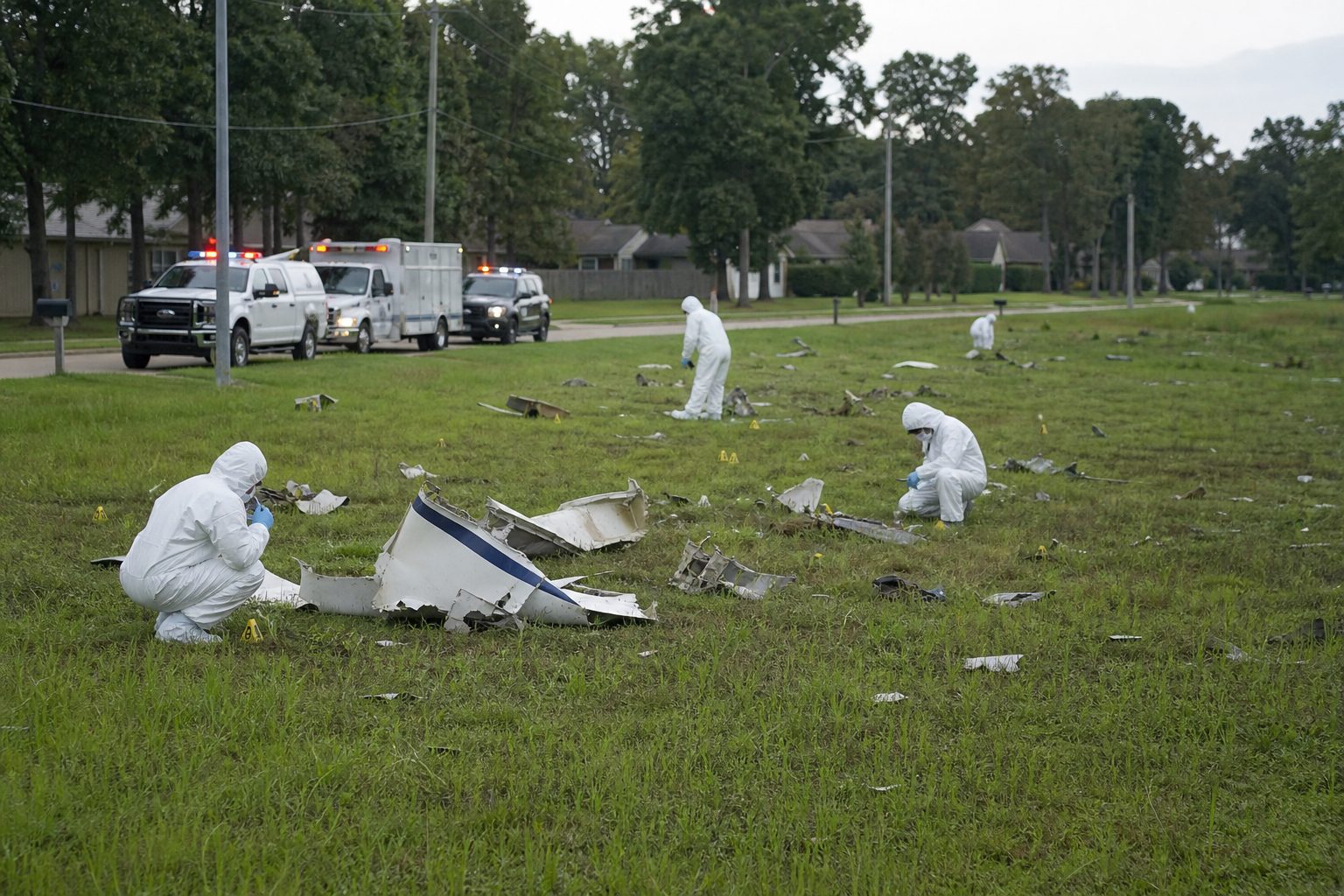
NTSB investigators have found debris away from the main impact crater that suggests some part of the aircraft may have separated before impact. Board member Tom Chapman disclosed evidence of a possible pre-impact separation but did not identify the component involved. (AeroTime; WFTV)

That finding does not yet show what happened first.
A structural failure could initiate a loss of control. A severe upset or overspeed could impose forces that damage or separate a component. A piece could also detach during the final descent without causing the original emergency. The order matters, and debris location alone cannot establish it.
The distinction is central to the case. “The aircraft broke apart before impact” is not the same conclusion as “structural failure caused the crash.” Investigators must determine which component separated, where it was found, what damage it sustained, and whether the damage patterns indicate forces acting before or after separation.
They will also compare the wreckage with the aircraft's operating history, inspection records, and airworthiness directives. Publicly available maintenance material describes Learjet inspection programs using recurring phase inspections, including A-phase inspections at 300 flight hours or 12 months and B-phase inspections at 600 hours or 24 months. Those intervals describe the inspection system generally. They do not establish whether the accident aircraft was properly maintained or whether any defect existed. (NTSB maintenance records)
Weather is a serious lead, not a verdict
Early reports identify several weather factors: icing, turbulence, precipitation, scattered thunderstorms, heavy rain, and the possibility that the jet encountered a stronger storm cell shortly before its descent. (Associated Press; Local 10)
That evidence establishes the environment the aircraft entered. It does not establish the mechanism that destroyed it.
The NTSB will need to reconstruct the weather in three dimensions and match it to the Learjet's actual path. Radar and satellite data may show the location and intensity of cells. Soundings can help establish temperature, wind, and stability at different altitudes. Lightning and precipitation data may indicate whether the aircraft entered convective weather rather than merely passing through light precipitation. Pilot reports and air-traffic-control communications can show how conditions appeared from the cockpit.
The key question is whether the Learjet encountered conditions capable of producing the reported loss of control, and whether those conditions affected the aircraft before any mechanical or structural failure. Weather may have triggered the emergency, worsened an existing malfunction, or simply surrounded an accident caused by something else.
Historical Learjet icing accidents show that contamination can contribute to stalls, but those older accidents cannot determine what happened in this distinct crash. (NTSB historical accident report)
What investigators still need to establish

Several pieces of evidence could sharply narrow the possibilities.
The first is recorder data. Investigators reportedly found maintenance evidence that a cockpit voice recorder had been installed, but they had not confirmed whether a recorder remained aboard or whether one had been recovered. The audio circulating publicly is air-traffic-control communication, not confirmed cockpit-recording material. (WFLX)
A cockpit recording could reveal warnings, pilot observations, the timing of the emergency, and whether the crew discussed autopilot, trim, ice, or control response. Any available flight-data evidence could help establish the aircraft's attitude, airspeed, vertical speed, engine parameters, trim position, autopilot status, and control inputs.
The second is the wreckage sequence. Investigators must identify the separated component and distinguish pre-impact structural damage from destruction caused by the crash and fire.
The third is the aircraft's maintenance history. Investigators will examine whether inspections were completed, whether defects were deferred, whether relevant components had previous problems, and whether the operator's procedures matched the aircraft's approved maintenance program. At this stage, publicly available reporting does not establish deficient maintenance or unsafe operator practices. (SEC News)
The fourth is the weather reconstruction. The aircraft's reported conditions must be compared with the Learjet's performance, its anti-ice system status, and the evidence recovered from the aircraft.
Until those lines of evidence converge, the most responsible conclusion is narrow: the aircraft entered a sudden and catastrophic descent after reporting icing, turbulence, and precipitation, and investigators have evidence suggesting that at least one component may have separated before impact. The evidence does not yet establish whether weather, loss of control, mechanical failure, structural failure, or a combination of factors began the sequence.
A disaster that remains unresolved
The flight did not become inexplicable because the crew encountered ice. It became difficult to explain because the transition from reported manageable conditions to an extreme descent happened so quickly.

The crew's communications show that they were aware of changing conditions and attempted to respond. The descent profile shows that the emergency developed faster than the public record can yet explain. The possible pre-impact breakup adds another layer, but it does not resolve the order of events.
For now, the evidence supports a sequence, not a cause. A Learjet 60 was cruising near 35,000 feet. The crew reported icing, turbulence, and precipitation. They requested a climb, then declared an emergency almost immediately afterward. The aircraft descended at extraordinary speed and crashed near Greenacres, killing everyone aboard.
The central question is still open: did the weather overwhelm the aircraft, did a mechanical or flight-control problem begin first, or did an aerodynamic or structural failure turn a developing emergency into an unrecoverable dive? The NTSB's recorder analysis, weather reconstruction, maintenance review, and wreckage findings will determine whether that question can be answered.
Sources / References
- National Transportation Safety Board. “ERA27MA026.” Investigation page for the Aurora Aviation Learjet 60 crash. https://www.ntsb.gov/investigations/Pages/ERA27MA026.aspx
- WFLX. “NTSB: Learjet 60 crew reported icing, turbulence shortly before deadly Palm Beach County crash.” November 2, 2026. https://www.wflx.com/2026/11/02/ntsb-learjet-60-crew-reported-icing-turbulence-shortly-before-deadly-palm-beach-county-crash/
- WFLX. “NTSB holds news conference regarding Learjet 60 crash in Palm Beach County.” November 2, 2026. https://www.wflx.com/2026/11/02/ntsb-holds-news-conference-regarding-learjet-60-crash-palm-beach-county/
- Associated Press. “Investigators say parts of plane likely broke off before it crashed in Florida.” November 2026. https://apnews.com/article/233076d167e2f48eaef7965376dd8ee0
- Associated Press. “Jet nosedives and erupts into fireball near busy roadway in South Florida. All 9 on board died.” November 1, 2026. https://apnews.com/article/ffdee609e7916ff7fcd178d2b8e69b39
- Aviation International News. “Florida Learjet Crash Claims Nine Lives.” November 1, 2026. https://www.ainonline.com/aviation-news/business-aviation/2026-11-01/florida-learjet-crash-claims-nine
- NBC 6 South Florida. “Aviation expert points to de-icing, autopilot systems as investigators probe deadly Learjet crash.” November 2026. https://www.nbcmiami.com/news/local/aviation-expert-points-to-de-icing-autopilot-systems-as-investigators-probe-deadly-learjet-crash/3882125/
- KVIA. “Learjet crashes and erupts into flames in Florida, killing all 9 on board.” November 1, 2026. https://kvia.com/cnn-national/2026/11/01/authorities-investigating-after-plane-crashes-in-palm-beach-county-florida/
- AeroTime. “NTSB finds evidence of in-flight breakup before Florida Learjet crash.” November 2026. https://www.aerotime.aero/articles/florida-learjet-crash-ntsb-in-flight-breakup/amp
- WFTV. “Learjet broke apart before Florida crash, NTSB says.” November 2026. https://cmg-cmg-tv-10070-prod.cdn.arcpublishing.com/news/local/learjet-60-broke-apart-before-crashing-palm-beach-county-ntsb-says/CEBMS4ZUBFHKJKT2DNS24AGIVI/
- Local 10. “NTSB: Ice, turbulence among factors under investigation in jet crash that killed 9 in Palm Beach County.” November 2, 2026. https://www.local10.com/news/local/2026/11/02/ntsb-ice-turbulence-among-factors-under-investigation-in-jet-crash-that-killed-9-in-palm-beach-county/
- Bombardier. “Cold Weather Operations,” Learjet 60 technical documentation, 2025–2026 revision. https://smartpubs.aero.bombardier.com/viewer/api/resources/sfp-page/CH350MM/SFP/CH350/fileadmin/ch350/pdf/2025-2026_Cold_weather_operations_Rev_--_.pdf
- National Transportation Safety Board. “Maintenance Records,” investigation docket document. https://data.ntsb.gov/Docket/Document/docBLOB?FileExtension=.PDF&FileName=Maintenance+Records-Master.PDF&ID=40459824
- EMS World. “Palm Beach plane had ‘incredibly fast’ descent before fiery crash. What happened?” November 2026. https://www.hmpgloballearningnetwork.com/site/emsworld/news/palm-beach-plane-had-incredibly-fast-descent-fiery-crash-what-happened
- Miami Finder. “Palm Beach Learjet crash: ATC audio, transcript and final flight data.” November 2026. https://www.miamifinder.com/articles/palm-beach-learjet-crash-atc-audio-transcript
- National Transportation Safety Board. “Aircraft Accident Report AAR80-04.” Historical Learjet icing accident report. https://libraryonline.erau.edu/online-full-text/ntsb/aircraft-accident-reports/AAR80-04.pdf
Comments (6)
Continue exploring
How One IP Address Change Cost HSI Months of Wiretap Downtime
An ICE procurement record reveals how one 2025 ISP change severed the static-IP links carrying HSI wiretaps from roughly 50…
The Train Stopped. Then It Was Told to Go
A preliminary reconstruction of the 17 minutes before Spain’s Urda collision, when a stopped train was reportedly allowed to…
AI Wingmen at the Merge: How Autonomous Drones Are Reshaping Airpower
The U.S. Air Force's AI wingmen have flown. The harder question now is who owns the software at the controls, and what that…
Could you follow up on the horizontal stabilizer question with a clearer explanation of what investigators would look for in the wreckage and maintenance records? It would be fascinating to see how they distinguish pre-impact icing or control failure from damage caused during the breakup and ground impact.
The distinction between ADS-B tracking and a complete flight-data recording is exactly right. In my flight-operations work, tracking can show a dramatic descent while missing brief pitch, roll, speed, or autopilot changes that would completely alter the reconstruction, so I’d be cautious about drawing conclusions from the reported 10,000-, 20,000-, and 32,000-foot-per-minute figures.
I’m not sure the discussion fully accounts for what the climb could have changed: at minus 53 degrees, the combination of supercooled precipitation, bleed-air demand, speed, and stabilizer loading may have mattered more than the crew’s description of the icing as “manageable.
I have flown Learjet 60s through reported light icing and moderate turbulence, including climbs to find smoother air, and the airplane did not suddenly enter an uncontrollable descent. The anti-ice system worked, the autopilot stayed engaged, and the crew had time to manage the situation. That makes me skeptical of treating the weather report or the requested climb as an adequate explanation for this crash. Something aircraft-specific, such as a control, maintenance, or structural problem, seems more likely to explain a 27,000-foot loss in about a minute.
How would this analysis apply to a smaller charter operator without a large maintenance or safety department? It would be really useful to know which anti-ice checks, weather-avoidance decisions, and data sources a two-aircraft team could realistically prioritize before a flight like this.
I’ve experienced light icing that felt routine until the workload changed during a climb. The weather itself was manageable, but monitoring speed, configuration, and the ice-protection system became overwhelming very quickly.