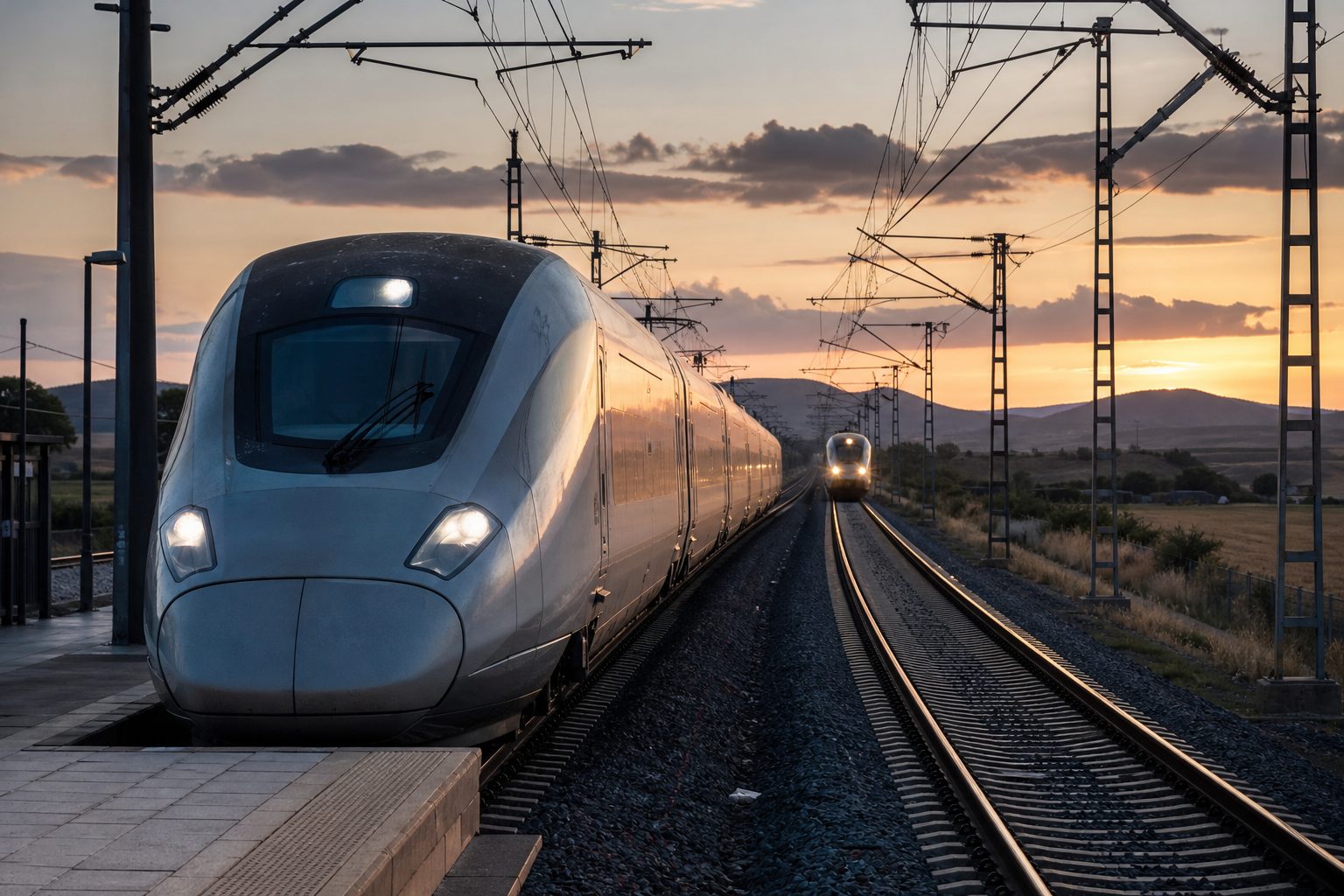
At about 8:31 a.m. on October 28, 2026, a failure in the LZB train-protection system disrupted traffic on Spain’s Madrid-Seville high-speed line. Several trains stopped automatically or were forced into degraded operation.
One of them was an Iryo service halted near Urda, in Toledo province. Its driver told the control center that the train could not restore the system and remained stopped at a red signal.
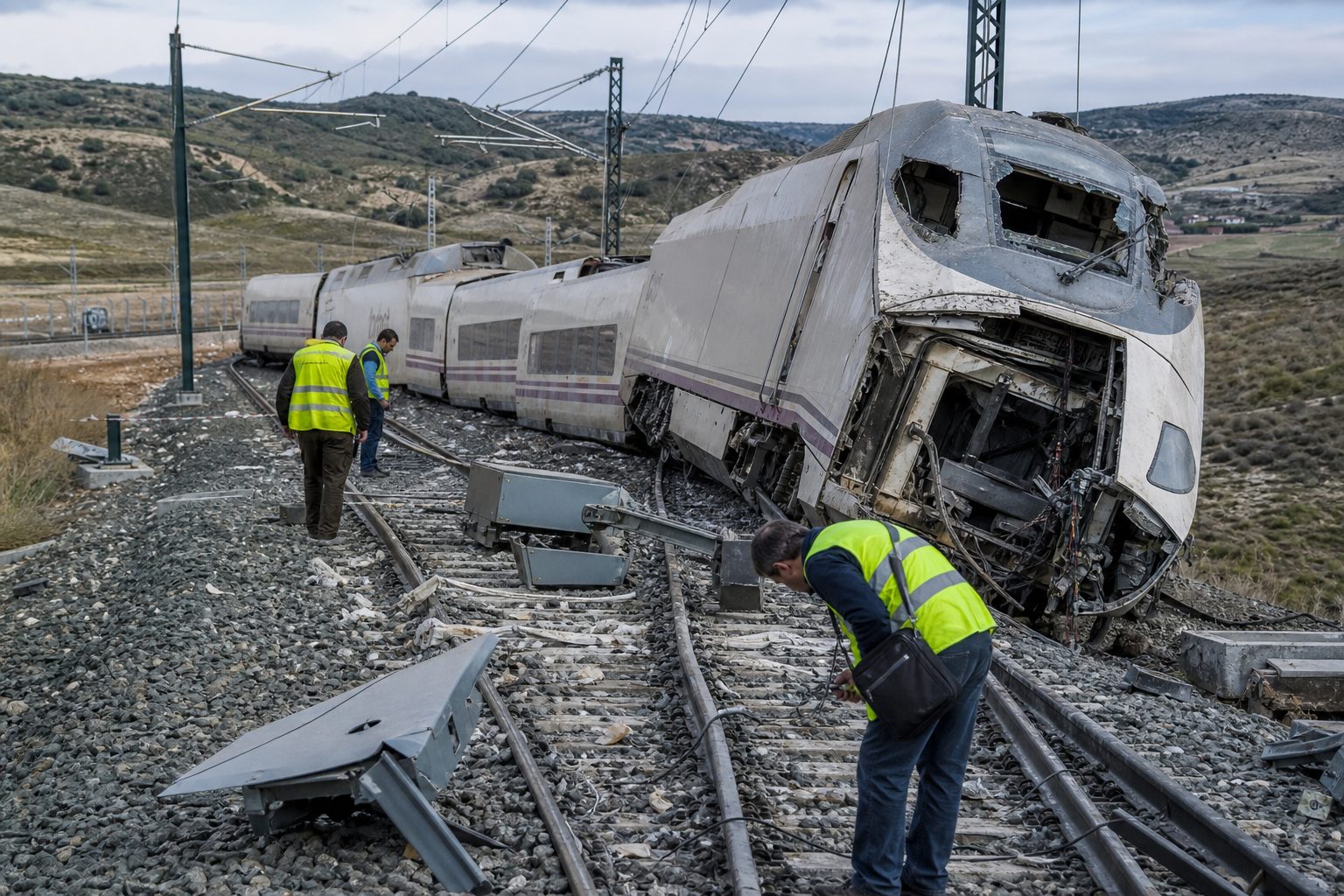
About five minutes later, controllers authorized a Renfe AVE train to resume normal running. The AVE travelled for roughly 25 kilometers over the next 17 minutes before colliding with the stationary Iryo train at an estimated 160 to 200 km/h, according to preliminary findings. At least 69 people died. The formal investigation remains open. (AITAT first-24-hours note; ABC News; Cadena SER)
That sequence has created the central question in the Urda crash: not simply why the automated safety system failed, but why a train was allowed to continue at normal speed while another train was still stopped ahead.
The evidence currently supports a preliminary reconstruction involving several failures at once: a technical breakdown, degraded operating conditions, conflicting or incomplete information, and a decision to release the AVE from its stop. It does not yet establish final responsibility.
What the railway system was supposed to do
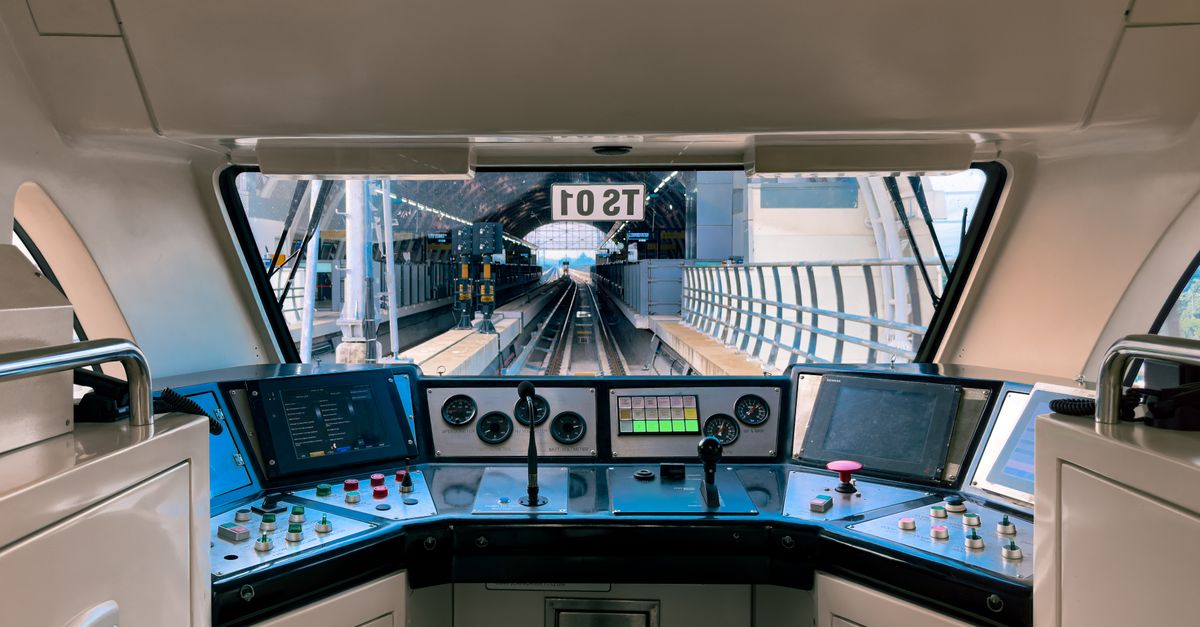
LZB is an automatic train-control and protection system used on parts of Spain’s high-speed network. It continuously monitors a train’s position and speed and can intervene by ordering the train to brake. Losing LZB therefore removes more than a display in the driver’s cab. It reduces the system’s ability to supervise train movements automatically. (AP News)
The failure near Urda appears to have begun around 8:31 a.m. Preliminary accounts describe a communication or computer fault that took LZB out of service across approximately 63 to 69 kilometers of line. The disruption automatically stopped or constrained about six trains. (El País; ABC News Australia; Sur in English)
Traffic then had to be managed under a degraded regime using conventional signalling, control-center instructions, and telephone communication between staff and train drivers. The available reporting identifies this as the BSL, or lateral signal-blocking, procedure. (RTVE; Cadena SER)
The crucial question is what that fallback meant in practice.
According to accounts from rail specialists and officials, a train operating without LZB protection should proceed “on sight” at no more than about 40 km/h, prepared to stop if it encountered an obstruction. That is a fundamentally different operating mode from normal high-speed running. (Al Jazeera)
The preliminary evidence suggests that the fallback arrangement did not provide the same continuous automatic protection as LZB. It depended more heavily on the accuracy of route information, the clarity of instructions, the status of signals, and the ability of people in the control center and the trains to maintain a shared picture of where every train was.
That distinction matters. A fallback procedure can be formally defined and still become unsafe if the information needed to operate it is incomplete or contradictory.
The 17 minutes before impact
The sequence reconstructed from preliminary reports begins with the LZB failure and the automatic disruption of traffic.

The Iryo train, service 6076, remained stopped near Urda after its driver reported losing LZB transmission and being unable to restart the system. Accounts based on recordings and control-center communications place the train at a red entry signal for Urda. (RTVE; Maldita.es)
The Renfe AVE, service 2080, was also initially stopped. At approximately 8:36 a.m., an Adif control center authorized its driver to restart. Several reports describe the instruction as allowing the AVE to proceed at “normal speed,” rather than under a restricted instruction requiring it to proceed cautiously and be ready to stop. (El País; Sur in English; AS)
The AVE then travelled approximately 25 kilometers over about 17 minutes. At 8:53 a.m., it struck the rear of the Iryo at kilometer 118+800 on track 2. The Iryo was carrying 147 passengers and five crew members. The AVE carried 379 passengers and seven crew members. The impact embedded the AVE’s leading car into the Iryo’s rear vehicle and derailed several carriages, including one that fell down an embankment. (AITAT first-24-hours note; Toledodiario)
The first preliminary note does not by itself answer every operational question. It records the collision and early findings, but warns that only the final investigation can establish the official causes. (AITAT first-24-hours note)
The available reporting nevertheless identifies a critical interruption in the chain. The control center had received a report from the Iryo driver that her train was still stopped and could not restore normal operation. Yet the AVE was later released to continue. (Euronews; AP News)
Who authorized the AVE to continue?
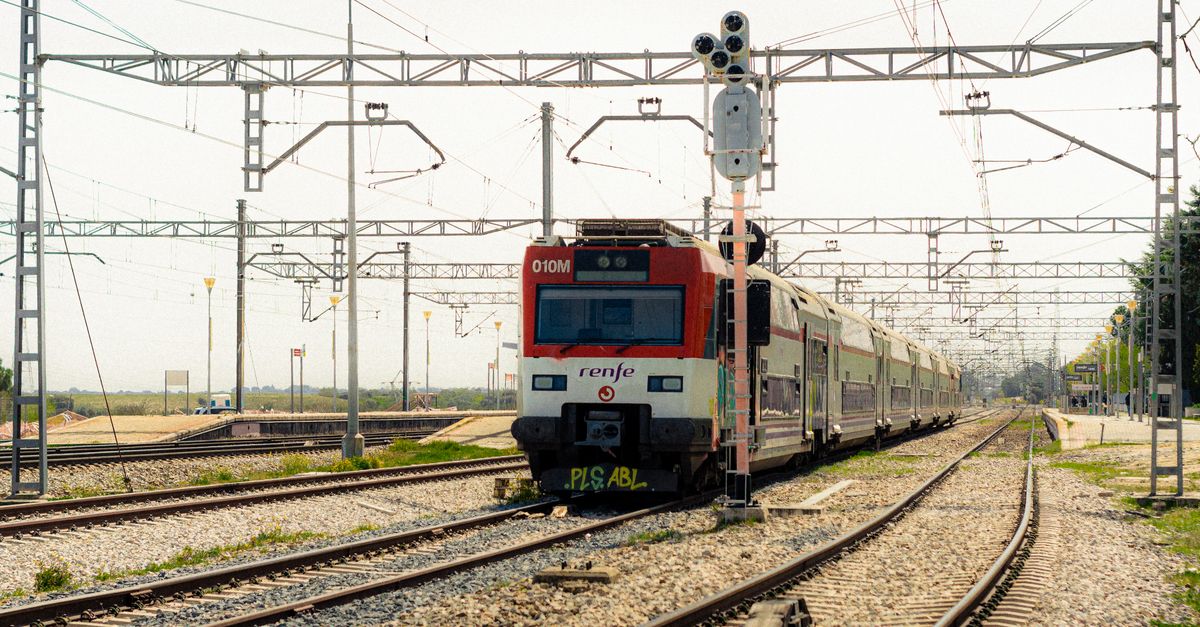
The instruction came from the Adif traffic-control operation, according to the preliminary reconstruction and reported recordings. Spain’s transport minister, Óscar Puente, described it as “inexplicable” that the AVE was allowed to resume normal movement while the Iryo remained stopped and the route still presented a red signal. He said the authorities had identified the person who made the decision. (Cadena SER; El País)
That statement is not the same as a final finding of legal responsibility.
The control center was operating during a technical disruption affecting a long section of line. The investigation must determine which staff member issued which instruction, what that person knew at the time, what the operating rules required, whether the train’s movement authorization was correctly recorded, and whether other people or systems should have challenged or stopped the decision.
The available audio reportedly does not establish that the AVE driver was warned that the Iryo remained immobilized. Investigators are examining the complete communications record, including the wording used, the sequence of calls, and whether the drivers and controllers understood the same operating restrictions. (Sur in English)
The Iryo driver also reportedly contacted the same center at around 8:41 a.m. Recordings described in Spanish media indicate that control-room personnel were confused about the train’s status and about whether the applicable instruction was normal running or the more restrictive “meta 40” procedure. The existence and interpretation of those recordings remain part of the investigation. (20minutos)
This is why the crash cannot yet be reduced safely to “the controller made a mistake” or “the driver failed to react.” The central issue is whether the railway’s safeguards allowed one mistaken or misunderstood instruction to pass through without correction.
Where this story sits
5 related pieces
Hover a story · click to read
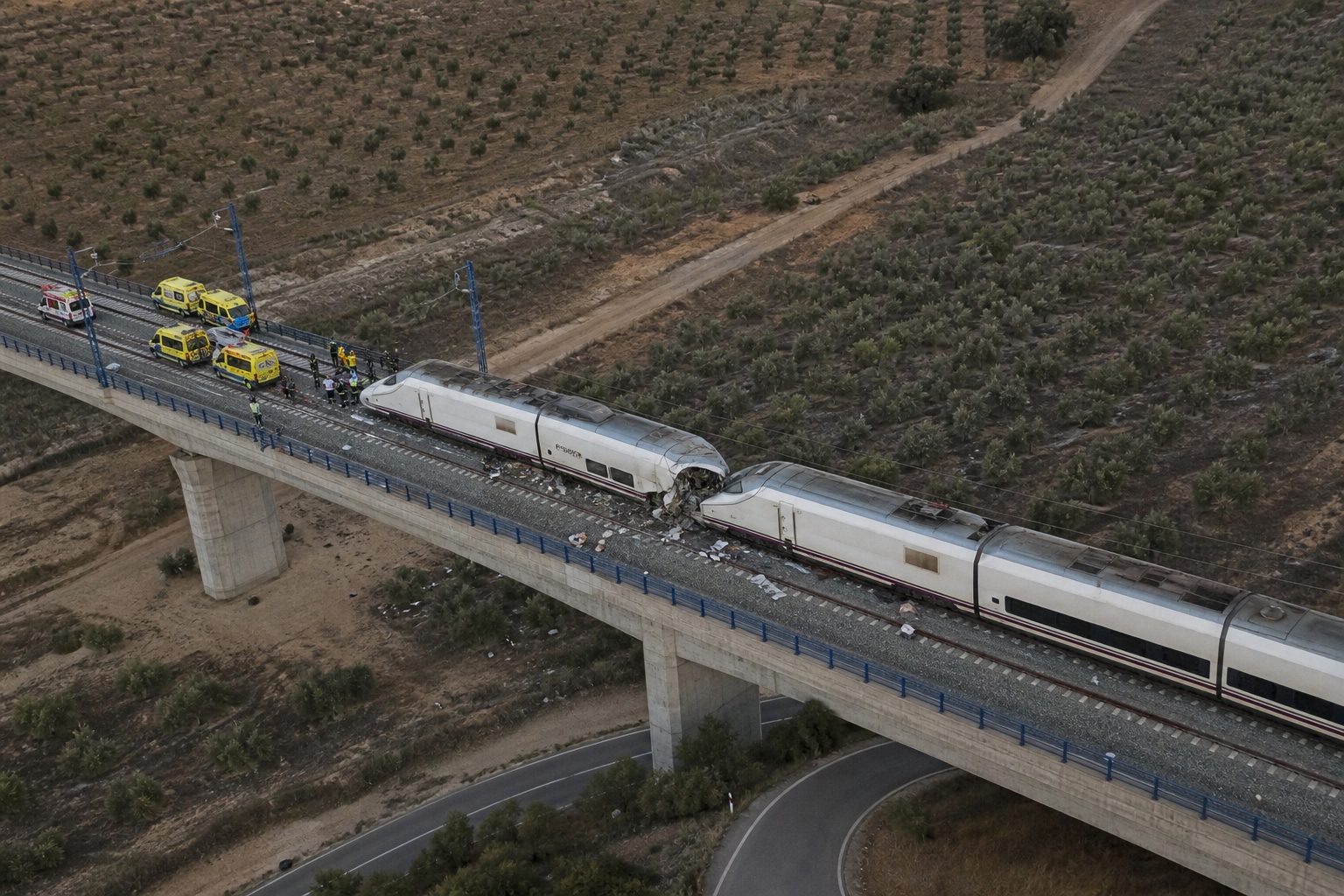 No. 84 · Oct 28, 2026Spain’s Deadly Train Collision: What Failed?
 No. 47 · Sep 14, 2026What breaks if China stops exporting rare-earth magnets tomorrow
 No. 52 · Sep 21, 2026The Sahel Juntas' Post-Wagner Arsenal: Drones, Air Defenses and What They Changed
 No. 31 · Sep 3, 2026The Case for Roe v. Wade: What Fifty Years of Evidence Says About Women's Lives
 No. 43 · Sep 8, 2026Mamdani's 9/11 Records Release: What New York Officials Knew About Ground Zero's Toxic Air
Did the backup safeguards fail?
The preliminary evidence suggests that several safeguards existed, but their interaction is now under scrutiny.
The fallback operating procedure
When LZB is unavailable, trains can be managed through a degraded procedure using conventional signals, control-center instructions, and telephone communication. Reports indicate that trains should have operated under more restrictive conditions, including a speed of about 40 km/h and the ability to stop on sight. (Al Jazeera)

If the AVE was in fact authorized to travel at normal speed, investigators will need to establish why. Possible explanations include a mistaken instruction, a misunderstanding of the applicable rule, an incorrect assumption that the route was clear, or a failure to communicate the degraded operating mode. The current evidence does not establish which explanation is correct.
The signals
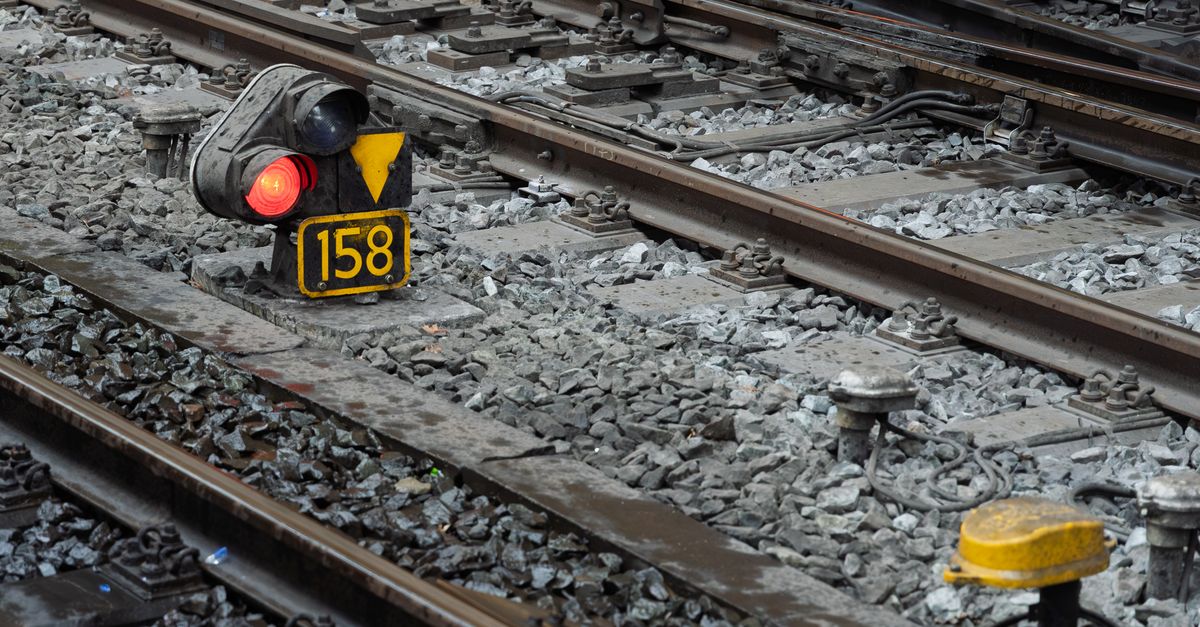
The Iryo was reportedly stopped at a red entry signal. The investigation must determine whether the AVE passed a signal showing red, whether the signal changed, whether the relevant signal applied to the AVE’s route, and what authorization accompanied the train’s movement.
Public accounts have described the route as still presenting a red signal, but the complete signalling record has not yet been published. (ABC News)
The control center
The control center received information from the Iryo driver that the train was stopped. It also managed a wider disruption affecting several trains over dozens of kilometers. That combination created a human-factors risk: the center had to coordinate degraded operations while the technical system that normally supplied a continuously updated safety picture was unavailable.
The investigation must therefore examine not only individual actions but also workload, displays, procedures, communication protocols, staffing, training, and whether the control system made the Iryo’s stationary status sufficiently visible.
The train drivers
The drivers were part of the safety chain, but the preliminary record does not show that either driver alone had enough information to prevent the crash.
The Iryo driver reportedly warned the control center that her train could not restart. The AVE driver, according to reporting, received an instruction to resume at normal speed. Whether the AVE driver had any reason to expect a stationary train ahead, saw a relevant signal, received a speed restriction, or could have stopped in time will depend on the recorder data, signalling logs, and authenticated communications.
Those details are not yet public in full.
Why did the AVE reach a stationary train?
The strongest current explanation is not a single technical failure. It is a chain in which each safeguard became less effective than intended.
First, LZB failed. That removed continuous automatic supervision across a substantial section of track.
Second, the railway entered a degraded operating regime that depended more heavily on telephone instructions and manual coordination.
Third, the Iryo remained stopped after reporting that it could not restore LZB.
Fourth, the AVE was authorized to resume, with reports indicating that it was told to proceed normally rather than under the restricted conditions associated with degraded operation.
Fifth, the information that the Iryo was still stationary apparently did not prevent the AVE from continuing toward it.
This reconstruction is supported by multiple preliminary reports, but it remains provisional. Investigators must still verify the exact timing, the wording of every instruction, the status of the signals, the speed profile of the AVE, and the information displayed to controllers and drivers. (Euronews; RTVE; Sur in English)
The key safety question is whether the system was designed to tolerate a bad decision. High-reliability railway systems assume that people can misunderstand, forget, mishear, or act on incomplete information. A safe fallback mode should provide multiple opportunities to detect a conflict before two trains occupy the same track at high speed.
The preliminary accounts identify several possible intervention points at Urda. The LZB failure stopped trains. The signals remained relevant. The Iryo driver communicated its condition. A degraded procedure was available. The control center retained authority over train movements.
The investigation is now examining why those protections did not combine into a stop command.
What the recorders and logs must show
The most important evidence will come from sources that can establish sequence rather than opinion:
- the AVE and Iryo event recorders;
- train speed and braking data;
- LZB equipment logs;
- signalling and interlocking records;
- control-center telephone and radio recordings;
- dispatch and movement-authority records;
- maintenance and fault reports for the LZB equipment;
- the control center’s operating screens and alerts;
- driver statements and training records;
- emergency-service timelines;
- and the formal investigation’s reconstruction of the line configuration.
The first preliminary report gives the collision time, location, train identities, and provisional impact speed. It does not yet provide the full evidentiary chain needed to determine why the AVE continued or whether the available systems generated warnings that were ignored, misunderstood, unavailable, or never produced.
That distinction is essential. A system may fail because a component breaks. It may fail because a procedure is ambiguous. It may fail because information reaches the wrong person too late. Or it may fail because several individually manageable weaknesses align.
Only the records can show which of those occurred at Urda.
Conflicting early accounts
The public record has already developed inconsistencies. Spanish reporting has described additional details about the sequence, including the LZB failure, the status of the two trains, the “normal speed” instruction, and the later communications with the Iryo driver. Different accounts do not always present the same timing or wording.
The first-24-hours investigation note available publicly emphasizes that its findings are provisional. That warning matters because early reports often combine official statements, leaked recordings, specialist interpretation, and preliminary documents that may later be revised.
The evidence currently available does not establish every detail of the sequence. In particular, the complete communications record, signalling data, and document history have not yet been published in full. It is therefore unsafe to treat any single early reconstruction as final.
What can be said now is narrower: multiple preliminary accounts converge on an LZB failure, a stationary Iryo train, a later authorization for the AVE to resume, and a collision approximately 17 minutes afterward. The precise responsibility for each decision remains unresolved.
What has changed since the crash?
Immediately after the collision, Adif suspended high-speed traffic between Madrid and Andalucía while retaining service on other sections and opening assistance points at major stations. Renfe and Iryo activated emergency and passenger-support measures, including alternative transport, refunds, cancellations, and family-support centers. (Adif; Renfe; Iryo)
Those are immediate operational and humanitarian responses. The available sources do not yet establish a completed permanent redesign of LZB, a new national operating rule, or a final regulatory finding by Spain’s railway-safety authorities.
The more consequential changes will depend on the investigation. They could involve equipment redundancy, clearer degraded-mode instructions, control-center interfaces, mandatory confirmation of train positions, restrictions on normal-speed running after a protection-system failure, or stronger separation between movement authorization and confirmation that the route is clear.
But those are potential lessons, not documented reforms already in force.
The question investigators now have to answer
The collision near Urda was not caused by the mere existence of a human fallback. Railways routinely operate under degraded conditions. The decisive issue is whether the fallback procedure retained enough independent protection to prevent a stopped train from being struck after another train was released.
The preliminary record points to a failure of that protection chain. LZB stopped working. The railway shifted to manual coordination. The Iryo remained stationary and reportedly communicated that fact. The AVE was authorized to continue. Seventeen minutes later, it reached the train ahead at high speed.
That sequence is disturbing because each step created a possible opportunity to intervene. It is also why the final investigation matters. The evidence must show whether the protections failed mechanically, procedurally, organizationally, or through a combination of all three.
For now, the most defensible conclusion is not that one employee caused the crash. It is that a technical failure exposed a degraded operating system in which the information needed to keep trains apart did not produce a reliable stop.
Sources / References
- AITAT, “Note on available information after the first 24 hours: Urda railway accident,” October 31, 2026. PDF
- AP News, “Spain’s latest deadly train crash puts human error and systemic failure under scrutiny,” October 2026. Link
- ABC News, “‘Inexplicable’ order probed as cause of train crash that killed at least 69,” October 2026. Link
- ABC News Australia, “Rail safety questioned in Spain as contradictory accounts emerge post-crash,” October 29, 2026. Link
- Euronews, “Spain train crash: What happened in the 17 minutes before the collision?” October 29, 2026. Link
- RTVE, “Accidente tren en Toledo: ¿Cómo pudo un AVE embestir a otro tren?” October 29, 2026. Link
- RTVE, “Análisis visual del accidente en Urda: los fallos tras el choque de trenes,” October 30, 2026. Link
- Al Jazeera, “What we know about Spain’s second high-speed rail tragedy this year,” October 29, 2026. Link
- El País, “Puente califica de ‘inexplicable’ que el centro de control permitiera al AVE reanudar la marcha,” October 28, 2026. Link
- El País, “Una cadena de fallos técnicos tumbó el sistema de seguridad ferroviaria LZB en Urda,” October 31, 2026. Link
- Sur in English, “Urda train crash report: AVE hit Iryo at up to 200km/h after chain of failures,” October 30, 2026. Link
- Sur in English, “Urda accident AVE train driver received instructions to ‘resume at normal speed’ despite stationary Iryo train,” October 29, 2026. Link
- Cadena SER, “Un primer informe señala que el choque del AVE con el Iryo fue a entre 160 y 200 km/h,” October 30, 2026. Link
- Cadena SER, “Óscar Puente ve ‘inexplicable’ que se retomara la marcha de los trenes ‘con luz roja’,” October 28, 2026. Link
- 20minutos, “Los audios del Iryo contradicen a Puente: la maquinista avisó de que no podía ‘reiniciar’ el tren,” October 2026. Link
- AS, “La cadena de hechos de ‘un accidente inverosímil’,” October 2026. Link
- Adif, “Incidencia en la línea de alta velocidad Madrid-Andalucía,” October 2026. Link
- Renfe, “Comunicado de Renfe sobre el accidente de Urda,” October 2026. Link
- Iryo, “Comunicado de prensa: accidente ferroviario en Urda,” October 2026. Link
- Maldita.es, “Preguntas y respuestas del accidente de trenes en Urda (Toledo) del 28 de octubre de 2026,” October 29, 2026. Link
- Toledodiario, “Un informe preliminar sobre el accidente ferroviario de Urda estima que la colisión se produjo a ‘entre 160 y 200 km/h’,” October 2026. Link
Comments (8)
Continue exploring
The Sahel Juntas' Post-Wagner Arsenal: Drones, Air Defenses and What They Changed
Mali, Burkina Faso and Niger expelled Western forces and built their own arsenal. The documented inventory shows what arrived…
The Case for Roe v. Wade: What Fifty Years of Evidence Says About Women's Lives
An evidence-first argument that Roe v. Wade delivered measurable health gains, told honestly: what the national data after Dobbs…
Mamdani's 9/11 Records Release: What New York Officials Knew About Ground Zero's Toxic Air
Twenty-five years after the attacks, Mayor Mamdani released 170,000 pages of NYC 9/11 records. Here is what they reveal about the…
The 17-minute timeline reminded me of recent investigations into aviation incidents where a single equipment failure was less decisive than the loss of a common operating picture. Here, the LZB outage covered roughly 63 to 69 kilometers and affected about six trains, so the control center was managing a wide disruption rather than one isolated stoppage. That makes the decision to let the AVE cover 25 kilometers particularly striking.
The Train Stopped. Then It Was Told to Go” really captures the contradiction at the heart of this case. If the Iryo was still at a red signal, releasing the AVE at normal speed seems like the key question, not just the LZB failure.
The most useful section was “What the railway system was supposed to do,” especially the contrast between continuous LZB supervision and the BSL fallback. Explaining that the degraded regime depended on signals, telephone communication, and an accurate train-location picture makes the later 25-kilometer journey at normal speed much easier to evaluate.
Could you follow up on the exact wording of the 8:36 authorization? I’d especially like to know whether the control center explicitly said “normal speed,” or whether that phrase came from how the driver or later reports interpreted the instruction.
I agree with the article’s point that a fallback procedure can be formally defined and still become unsafe when information is contradictory. In my own work with industrial control rooms, procedures often look adequate on paper but fail when one system shows an outdated status and operators receive a verbal instruction that does not match it. I may be oversimplifying the comparison, but the need for a shared, continuously verified picture feels very similar here.
How would this fallback work on a smaller regional line with fewer controllers and less redundant communication, or in a context where trains do not have the same signaling equipment? The article’s 40 km/h “on sight” rule sounds clear, but I’d love to see how realistic it is for smaller operators.
One practical concern is whether the proposed reliance on conventional signals, telephone calls, and driver vigilance can remain reliable during a failure affecting 63 to 69 kilometers of line. Even if the rule is to proceed at about 40 km/h, controllers and drivers still need an accurate, shared record of every train’s position. I’m curious whether the investigation will examine staffing levels, communication redundancy, and how that record was maintained during the 17 minutes before impact.
The article is right to emphasize that the formal investigation is still open, but I am less convinced that the failure can be framed mainly as a breakdown in shared information. If the fallback procedure required trains without LZB to travel at about 40 km/h and proceed on sight, authorizing the AVE to run normally appears to be a separate control decision. That distinction matters because it points to a potentially preventable operational error rather than an unavoidable consequence of the technical fault. The recordings and dispatch logs should clarify whether the restriction was misunderstood, omitted, or overridden.