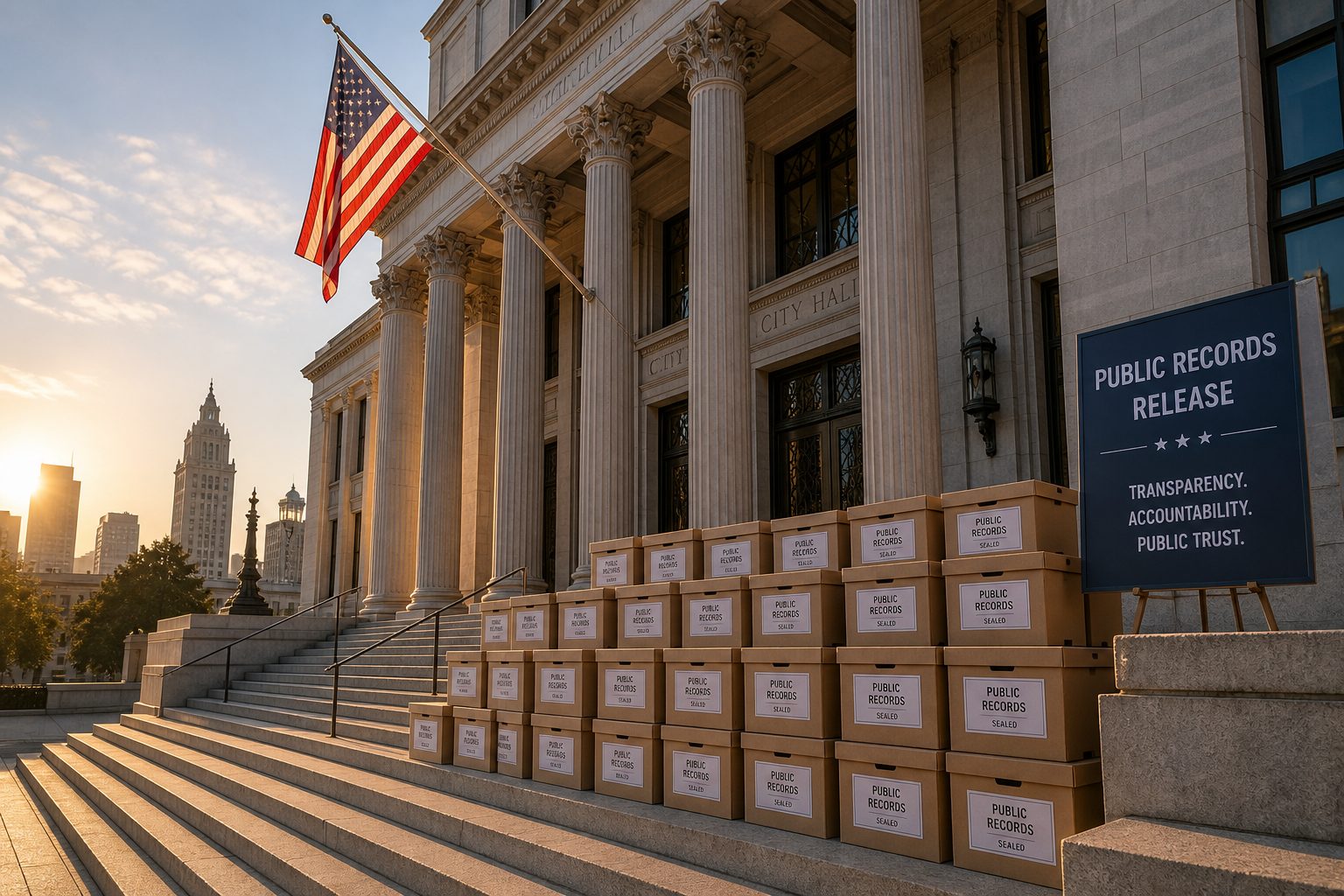
Three days before the 25th anniversary of the September 11 attacks, Mayor Zohran Mamdani stood at City Hall with Jon Stewart and announced that New York City was putting roughly 170,000 pages of internal records online, documenting what city officials were writing and saying about the air around Ground Zero in the days when they were telling the public it was safe to breathe.
The release, which went live Tuesday at nyc.gov/sept11docs, includes air quality reports, contamination records, internal correspondence, a collection concerning World Trade Center 7, and a set of files that 9/11 health advocates have pursued for years: the so-called "68 boxes" of toxin-related records the city says it did not locate until 2025, and the frequently referenced Harding Memo, which according to Axios predicted lawsuits tied to toxic exposure. The documents matter because the question they bear on has never been fully answered. More Fire Department of New York members have now died of 9/11-related illnesses than the 343 killed on the day of the attacks, and for a quarter century the people who breathed that air, along with the families of those it killed slowly, have asked what their government knew while it was reassuring them.
The records published this week are the closest thing yet to the city's own answer. But the release is also a first draft of that answer. The documents became public on Tuesday, the collection will grow substantially over the next year, and the distance between what individual memos show and what officials in 2001 were willing to say aloud is the gap where this story now lives.
What's in the 170,000 pages?
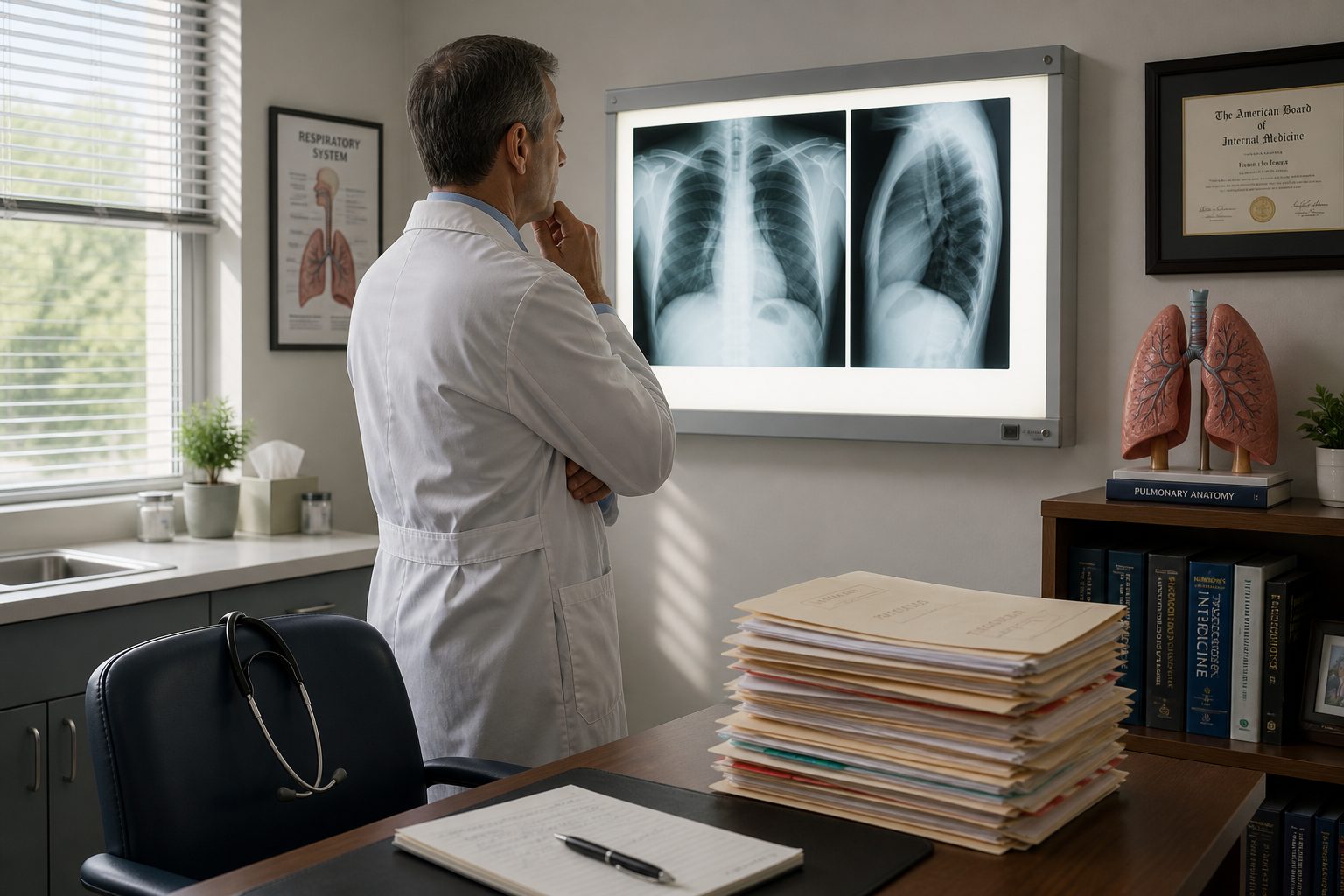
The portal organizes an initial release of approximately 170,000 pages covering health concerns, air quality, and the city's response to the attacks, according to the Mayor's Office. The Law Department worked directly with 9/11 Health Watch, the advocacy group behind the two lawsuits the administration settled alongside the release, to identify and include many of the documents the plaintiffs had sought, while limiting omissions to those necessary, including the redaction of personally identifiable information. Mayor Mamdani's FY27 budget includes $34 million to create and maintain the portal, and the city says it expects substantially more records to be posted over the next 12 months as review and redaction continue.
Corporation Counsel Steven Banks framed the release as an acknowledgment that the city's own files had never before been made public, describing the posted material as "documents that were never previously made available to the public and that are essential to understanding the City's actions and decisions, both during the months after September 11th and in the subsequent years."
The 68 boxes
The most striking provenance detail in the release is also the bluntest explanation for why it took this long. According to the Mayor's Office, the "68 boxes" of records "were not located until 2025 despite multiple Freedom of Information Law (FOIL) requests." ABC7 reported that the boxes were stored in a city office and that many of the documents were only discovered last year, according to city officials. The records contained in them are described as toxin-related.

Whether those boxes sat unsearched through bureaucratic failure, legal resistance, or something more deliberate is one of the open questions the documents themselves may eventually address. For now, the city's account is that they could not be found. The advocates' account is harsher. "Since 9/11, four different mayoral administrations worked to keep the answer from the public, even as city officials at the time continued to say that the air was quote 'safe and acceptable,'" Ben Chevat, executive director of 9/11 Health Watch, said at Tuesday's announcement.
The Harding Memo
The Mayor's Office lists the Harding Memo among the release's headline items, describing it as "frequently referenced" in the years-long fight over the city's 9/11 files. Axios reports that the memo, from former Mayor Rudy Giuliani's office archives, "predicted lawsuits related to toxic exposure." A document in which the city anticipated litigation over the very exposures it was publicly minimizing would cut to the heart of the liability question. What it says in full, who wrote it, and what decision it informed will require the document-level review now beginning in newsrooms and research offices across the city.
What did officials tell New Yorkers in September 2001?
The most famous reassurance of that September came from the federal government. On September 18, 2001, seven days after the towers fell, EPA Administrator Christie Todd Whitman issued a statement announcing that monitoring results near the World Trade Center and the Pentagon "indicate that these vital resources are safe." The original release, preserved by Yale Law School's Avalon Project, reads: "Given the scope of the tragedy from last week, I am glad to reassure the people of New York and Washington, D.C. that their air is safe to breath and their water is safe to drink."
That same release conceded important limits inside its own text. Of 50 air samples, "the vast majority" were non-detectable or below levels of concern for asbestos, lead, and volatile organic compounds, and "the highest levels of asbestos have been detected within one-half block of ground zero." The financial district had reopened on September 17, one day before Whitman's statement, and documents later obtained by the New York Committee for Occupational Safety and Health and reported by ProPublica showed that a warning that people should not report to work on Water Street in Lower Manhattan "was rewritten and workers instead were urged to return to their offices as soon as the financial district opened."

City officials, per Chevat's account, echoed the reassurance with their own formulation: that the air was "safe and acceptable." What the newly released city records appear to show, according to city officials who reviewed them ahead of publication, is that the reassurance was issued against a backdrop of internal alarm. ABC7 reports that records from 2001 "indicate officials were concerned about potential lawsuits tied to chemical exposure even as the city continued to reassure the public that the air was safe."
Mamdani offered the administration's verdict in unambiguous terms: "People got sick because the leaders they trusted lied and told them they were safe to breathe in toxic air." Stewart, who became the most visible national advocate for 9/11 responders, put the timeline more crudely: "The city began covering their ass three weeks in."
What was happening behind the public statements?
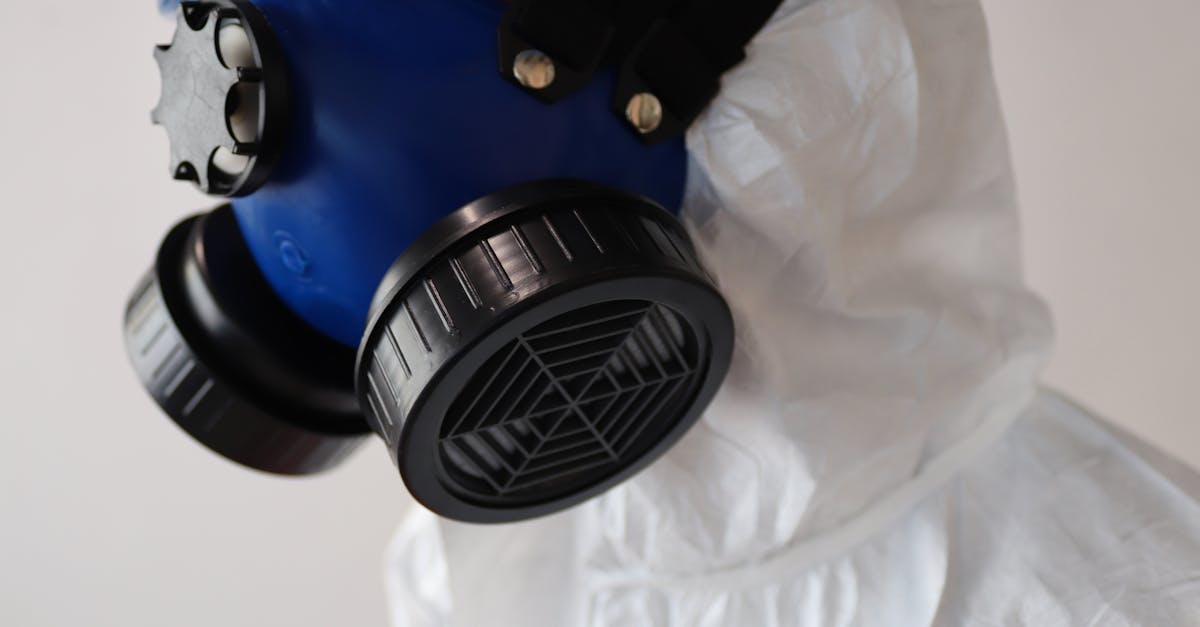
Some of the answer has been part of the public record for years, and it concerns the federal government more directly than City Hall. In 2003, the EPA's Office of Inspector General concluded that the agency had recast some of its public communications at the behest of the White House Council on Environmental Quality, that cautionary language about downtown air safety had been removed from EPA statements, and that the agency had made general assurances about the air in the first weeks after the attacks before it had the data to support them, including Whitman's "safe to breathe" line. The report prompted Senators Hillary Clinton and Joseph Lieberman to demand that President Bush explain "why New Yorkers were given incomplete information," the Washington Post reported at the time.
In 2011, ProPublica and the Guardian published internal emails showing additional detail: White House environmental council staff coordinating messaging to EPA and OSHA, OSHA's administrator being warned that senators were asking about the agency's role at Ground Zero, and the rewritten Water Street warning. ProPublica's account, however, carried a crucial caveat that remains relevant to how the new city documents should be read: "The documents do not reveal how, or whether, federal officials explicitly weighed the competing goals of ensuring New Yorkers' safety and projecting an image of a city and nation unbowed."
The named officials have contested the darker reading. Whitman told a House subcommittee in 2007 that "every statement I made was based on what experts, who had a great deal of experience in these things, conveyed to me," and defended the agency against the charge that it set out to mislead the public. A decade later, Axios notes, she told the Guardian she was wrong to have assured New Yorkers the air was safe. Samuel Thernstrom, the environmental council communications official, said his goal was "to help ensure that EPA's statements were as clear and accurate as possible." The EPA's formal response to the criticism has been that its staff "worked tirelessly under nearly impossible conditions to respond to an unprecedented disaster," while acknowledging that "some things could have been done better."

The new city records now add a second, less-examined layer of institutional knowledge to that history. Congressman Jerry Nadler, who has represented the Ground Zero area and pushed for transparency for decades, asserted on Tuesday that the documents show City Hall under Giuliani "predicted that thousands of responders and community members would face devastating long-term health impacts from these toxins," and accused the former mayor of "intentional obfuscation." That is a political interpretation of records the public has had for hours, not a settled finding. The coming review of the 170,000 pages, and of the additional files the city says it will release, is where the distinction between Nadler's charge and what the paper actually says will be tested.
Where this story sits
5 related pieces
Hover a story · click to read
 No. 42 · Sep 7, 2026After the Last Dollar: What Actually Catches People at Zero
 No. 77 · Oct 21, 2026Police Drones at Protests: The Tools, the Limits, the Records
 No. 65 · Oct 11, 2026Wagner's Sahel Drone War: What Three Years of Evidence Actually Show
 No. 52 · Sep 21, 2026The Sahel Juntas' Post-Wagner Arsenal: Drones, Air Defenses and What They Changed
 No. 21 · Aug 30, 2026The air base decides: Niger's 24-hour mutiny and the technology of regime survival in the Sahel
Who breathed the air, and what did it do to them?

The collapse and burning of the towers produced what researchers describe as a complex, alkaline mixture of pulverized concrete, glass, plastic, paper, and wood fibers, with testing of airborne and settled dust detecting heavy metals and asbestos. An estimated 91,000 rescue workers, volunteers, contractors, and others arrived to work at or near the site on 9/11 or in the days and months that followed, and nearly half a million people in total are considered at increased risk of health effects from the exposure, according to the federal World Trade Center Health Program's research arm.
The broadest early population measure came from the World Trade Center Health Registry, which enrolled 71,437 people, roughly 17 percent of the estimated 410,000 eligible, between September 2003 and November 2004. Interviews conducted two to three years after the attacks found that 67 percent of adult enrollees reported new or worsening respiratory symptoms, 3 percent reported newly diagnosed asthma, 16 percent screened positive for probable post-traumatic stress disorder, and 8 percent for serious psychological distress. Extrapolated against the full eligible population, the Registry's researchers estimated that between 3,800 and 12,600 adults experienced newly diagnosed asthma and between 34,600 and 70,200 adults experienced PTSD after the attacks.
The burden has not dissipated with time. By mid-2020 the World Trade Center Health Program counted 105,272 enrolled members, and the published research literature on WTC-related conditions, spanning the attacks through June 2020, had grown to 944 articles, 291 of them funded by the program itself. Mount Sinai had screened more than 25,000 Ground Zero responders for suspected dust-related illnesses by 2011, and its community and preventative medicine chairman, Dr. Philip Landrigan, told ProPublica that "the misleading communications by civic leaders and their failure to insist on respiratory protection in the days, weeks and months after the initial rescue operation ended undoubtedly contributed and will continue to contribute to sickness in the rescue and recovery workers and in the citizens of Lower Manhattan."

The starkest tally is the Fire Department's. Axios reports that more FDNY members have now died of 9/11-related illnesses than the 343 firefighters and paramedics killed on the day of the attacks.
Why is this coming out now, 25 years later?
The short answer is that advocates sued, kept suing, and eventually found an administration willing to stop fighting them. 9/11 Health Watch pursued two lawsuits over the records; its executive director says four different mayoral administrations worked to keep the answer from the public. The Mamdani administration settled both suits as part of Tuesday's announcement, ending what the Mayor's Office called a "multi-year legal battle." Before this, the principal legal reckoning over Ground Zero exposure came through mass tort litigation brought by thousands of rescue and recovery workers against the city and its contractors, cases consolidated in federal court and resolved with a settlement approved in 2010.
The political timing is deliberate. The announcement lands in the first year of Mamdani's term and in the week of the quarter-century anniversary, with the city's most famous 9/11 advocate at the podium. Mamdani framed the release as restitution for 25 years of resistance. "The very least our city owes the families, survivors and first responders whose lives were forever changed by the September 11th attacks is transparency and accountability," he said. "For too long, New Yorkers have had to fight for access to records that should have been available to them in the first place."
What health programs did the exposure crisis produce?
The federal government's structural answer arrived a decade after the attacks. On January 2, 2011, President Obama signed the James Zadroga 9/11 Health and Compensation Act, which created the World Trade Center Health Program to monitor and treat responders and survivors and reopened the September 11th Victim Compensation Fund. Congress later made the fund permanent in 2019. Since its 2011 reopening, the compensation fund has awarded more than $16.8 billion to over 71,000 claimants, per its most recent annual report.
Eligibility for both programs depends on documenting presence in the New York City Exposure Zone, and that documentation requirement is where Tuesday's announcement has its most immediate practical consequence for people alive today. As part of the settlement, the administration will appoint dedicated personnel at the Department of Citywide Administrative Services and New York City Public Schools to help New Yorkers retrieve the records establishing their presence in the zone, and to promote enrollment in both federal programs for responders and survivors.
What is still unresolved?
The release answers the question of where the records are. It has not yet answered what they mean. Several gaps remain visible even on day one.
The first is scale. Roughly 170,000 pages were published on Tuesday, the city says substantially more will follow within a year, and no independent reviewer has yet had time to assess the trove. The early characterizations come from city officials, plaintiffs' advocates, and a mayor making an argument about accountability. Their interpretations deserve scrutiny alongside the documents themselves.
The second is the line between institutional failure and deliberate deception. The Harding Memo's apparent anticipation of litigation, 2001 correspondence about liability, and 68 boxes that could not be found for 24 years all support serious questions about what the city's priorities were. Whether the documents will show officials affirmatively telling the public the opposite of what they believed, as Mamdani and Nadler assert, or will show a government that feared the worst, relied on federal assurances, and chose confidence over caution, is exactly the distinction a documentary record exists to settle. Neither history is flattering. Only one of them is a lie.
The third is where the papers go next. The inclusion of World Trade Center 7 files will draw scrutiny from a quarter century of speculation about that building's collapse, and the rolling release schedule means Tuesday's conclusions are provisional by design. What is fixed is the part that needed no memo: the Registry data, the FDNY death toll, the $16.8 billion in compensation, and the nearly half a million people considered at increased risk of illness from the exposure.
For the people who breathed the dust, the argument about what the city knew has always been abstract. The air was never abstract. On Tuesday, for the first time, those New Yorkers can read, page by page, what was being written about that air inside their own government while they were being told to go back to work, back to school, and back home.
Sources / References
- NYC Mayor's Office, "25 Years Later, Mamdani Administration Opens City's 9/11 Records to the Public and Settles Multi-Year Legal Battle," September 8, 2026. https://www.nyc.gov/mayors-office/news/2026/09/25-years-later--mamdani-administration-opens-city-s-9-11-records
- Avery Lotz, "NYC unveils records suggesting officials knew air was unsafe after 9/11," Axios, September 8, 2026. https://www.axios.com/2026/09/08/nyc-records-911-air-safety-mamdani
- Phil Taitt, "Mamdani administration releasing 170,000 pages of post-9/11 air quality documents," ABC7 New York, September 8, 2026. https://abc7ny.com/story/mamdani-administration-releasing-170000-pages-post-911-air-quality-documents/19805098/
- U.S. Environmental Protection Agency, "Whitman Details Ongoing Agency Efforts to Monitor Disaster Sites, Contribute to Cleanup Efforts," September 18, 2001, via Yale Law School Avalon Project. https://avalon.law.yale.edu/sept11/epa_002.asp
- ProPublica (co-published with The Guardian), "New Docs Detail How Feds Downplayed Ground Zero Health Risks," September 8, 2011. https://www.propublica.org/article/new-docs-detail-how-feds-downplayed-ground-zero-health-risks
- Marc Kaufman, "Details on 9/11 Air Quality Questioned," The Washington Post, August 27, 2003. https://www.washingtonpost.com/archive/politics/2003/08/27/details-on-911-air-quality-questioned/6f8971ed-85e3-477c-ad2a-9fcdf3953fe9/
- Santiago-Colón A., Daniels R.D., Reissman D.B., et al., "World Trade Center Health Program: First Decade of Research," International Journal of Environmental Research and Public Health, October 6, 2020. https://doi.org/10.3390/ijerph17197290
- Farfel M., DiGrande L., Brackbill R., et al., "An Overview of 9/11 Experiences and Respiratory and Mental Health Conditions among World Trade Center Health Registry Enrollees," Journal of Urban Health, September 10, 2008. https://pmc.ncbi.nlm.nih.gov/articles/PMC2587652/
Comments (6)
Continue exploring
Wagner's Sahel Drone War: What Three Years of Evidence Actually Show
Russian jets, Turkish drones and untested air defenses have reshaped the war in Mali, Burkina Faso and Niger since 2022, but the…
The Sahel Juntas' Post-Wagner Arsenal: Drones, Air Defenses and What They Changed
Mali, Burkina Faso and Niger expelled Western forces and built their own arsenal. The documented inventory shows what arrived…
The air base decides: Niger's 24-hour mutiny and the technology of regime survival in the Sahel
When mutinous soldiers attacked Niamey's Air Base 101 in August 2026, Russia's Africa Corps, not Niger's own army, settled the…
I was working two blocks from the site in late September 2001 and being told by my building's management that everything was fine, so the rewritten Water Street warning tracks exactly with what I remember hearing on the ground.
Once the full text of the Harding Memo lands in the portal, can you do a follow-up that walks through what decision it actually informed inside Giuliani's office? The Axios summary is too thin to evaluate.
The section on the 68 boxes was the most useful part of the piece for me, because it lays out a concrete timeline of how those records stayed hidden across four mayoral administrations and gives the real scandal underneath the release.
Framing roughly 170,000 pages as the city's own answer feels generous when a meaningful chunk of the release is still pending review and redaction. If the Law Department is the same office that allegedly failed to locate the 68 boxes for years, having it decide what gets blacked out is a real conflict of interest. The Chevat quote about four administrations working to keep the answer from the public cuts directly against the celebratory framing of this rollout. I'd hold off on calling it transparency until the full upload actually lands over the next 12 months.
Holding four administrations responsible for actively hiding these records is a serious accusation — what evidence backs that up beyond the 68 boxes not being found until 2025?
The piece on the Water Street warning being rewritten fits with what ProPublica has been reporting for years around the Lower Manhattan occupational safety story. It also tracks with the inspector general findings from 2003 that Whitman's safe to breathe language wasn't supported by her own sampling data. The fact that the city's internal archives now include the air quality reports Chevat was demanding is going to make the long-running dust litigation much harder to settle cheaply. Anyone who has followed this beat should be reading the portal closely as it expands over the next year.